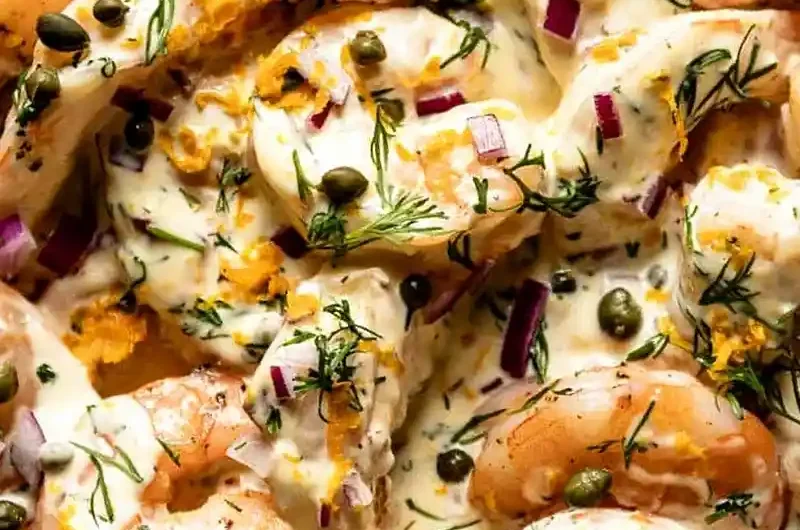
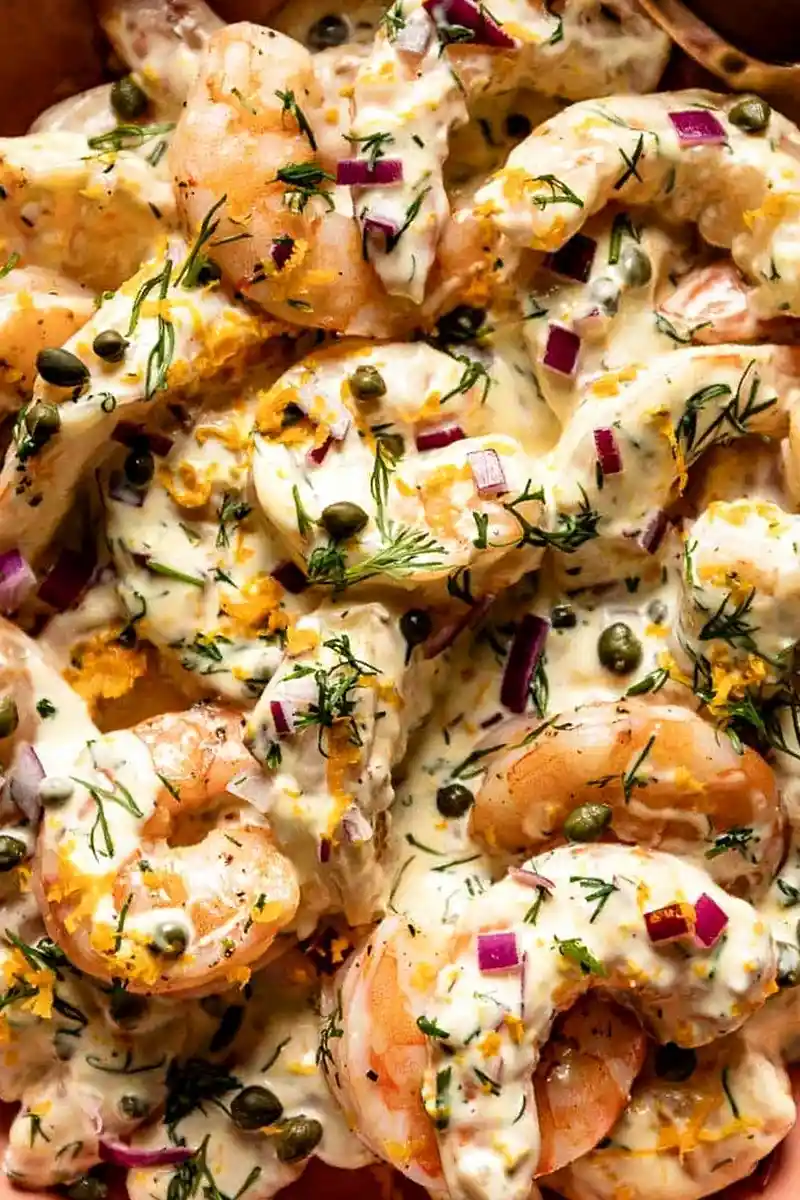
This bright and zesty roasted shrimp salad combines warm seafood with a creamy citrus dressing. It is a versatile dish that works perfectly as a light lunch or a sophisticated party appetizer.
List of ingredients
- 2 lbs shrimp (16-20 or 21-25 count, peeled and deveined) – use large shrimp for better texture.
- 1 tablespoon olive oil – for roasting the shrimp.
- 1/2 teaspoon kosher salt – to enhance the natural shrimp flavor.
- 1/4 teaspoon black pepper – for a subtle spicy note.
- 1/2 cup mayonnaise – the base for the creamy dressing.
- 1 tablespoon orange zest (from 2 oranges) – adds a bright, aromatic citrus punch.
- 2 tablespoons freshly squeezed orange juice – provides a sweet and tangy liquid base.
- 1 tablespoon apple cider vinegar – adds a sharp acidic balance.
- 1/4 cup chopped fresh dill – provides a classic herbal freshness.
- 2 tablespoons capers, drained – adds salty, briny pops of flavor.
- 2 tablespoons red onion, small diced – contributes a sharp crunch and color.
step-by-step instructions
- Preheat Oven: Set your oven to 400 degrees Fahrenheit to ensure it is fully hot before roasting.
- Prepare Shrimp: Pat the shrimp dry on both sides using paper towels to remove excess moisture. Spread them in a single layer on a sheet pan, drizzle with olive oil, and sprinkle with salt and pepper, tossing gently to coat every piece.
- Roast Shrimp: Bake for 6-8 minutes, flipping the shrimp halfway through the process. Once they are pink and curled, remove them from the oven and let them cool slightly in a large bowl.
- Make the salad dressing: In a separate mixing bowl, whisk together the mayonnaise, orange zest, orange juice, and apple cider vinegar. Stir in the chopped dill, drained capers, and diced red onion until well combined.
- Toss and Rest: Pour the prepared dressing over the warm shrimp and toss gently to coat. Cover the bowl with plastic wrap and let it rest at room temperature for 30 minutes to allow the flavors to meld before serving.
Professional Preparation Techniques
Patting Shrimp Dry for Better Searing
Moisture on the surface of the shrimp creates steam when it hits the heat. By using paper towels to thoroughly dry the shrimp, you allow them to roast and brown properly rather than boiling in their own juices.
Managing Oven Hot Spots
Every oven has areas that heat more quickly than others. Rotate your sheet pan 180 degrees halfway through the roasting process to ensure every shrimp receives equal heat exposure.
Recognizing the Perfect Cook
Shrimp are done when they curl into a ‘C’ shape and turn opaque pink. If they curl tightly into an ‘O’ shape, they are likely overcooked and will have a rubbery texture.
Optimal Shrimp Sizing for Texture
Using a 16-20 or 21-25 count ensures the shrimp are large enough to withstand the roasting process. Smaller shrimp cook too quickly and can become tough before the outside develops any color.
Avoiding Parchment Paper for Higher Heat
While parchment paper is convenient, placing shrimp directly on a preheated metal sheet pan provides better conduction. This direct contact helps the shrimp cook more evenly and quickly.
Ingredient Modifications and Substitutions
Citrus Alternatives to Orange
If oranges are unavailable, you can substitute them with fresh lemon or lime. Lemon provides a sharper, more traditional seafood flavor, while lime offers a tropical twist.
Selecting the Right Vinegar
Apple cider vinegar is an excellent choice for a mild tang. You can also use white distilled vinegar for a cleaner acidity or red wine vinegar for a slightly deeper flavor profile.
Herb Alternatives to Fresh Dill
Fresh parsley is a great alternative that provides a clean, grassy taste. Chives or a small amount of chopped cilantro can also work depending on the desired flavor direction.
Modifying the Capers
If you find capers too salty, you can replace them with finely diced dill pickles. Alternatively, omit them entirely if you prefer a smoother, less briny flavor.
Taming the Red Onion
To reduce the sharp bite of raw red onion, soak the diced pieces in cold water for 10 minutes before adding them. Drain them well so they do not thin out the dressing.
Adjusting Mayonnaise Levels
Depending on your preference for creaminess, you can increase or decrease the mayonnaise. Start with a half cup and add more one tablespoon at a time until the desired consistency is reached.
Flavor Enhancements and Variations
Adding a Spicy Kick
For those who enjoy heat, add a teaspoon of Old Bay seasoning or a pinch of red pepper flakes to the roasting step. Cayenne pepper mixed into the dressing also adds a subtle warmth.
Incorporating Savory Depth
A teaspoon of Dijon mustard stirred into the mayonnaise dressing adds a sophisticated, savory complexity. This helps emulsify the dressing and adds a slight tang.
Creamy Avocado Additions
Fold in one diced ripe avocado just before serving to add a rich, buttery texture. Avoid adding the avocado during the resting phase to prevent it from oxidizing and turning brown.
Fresh Vegetable Mix-ins
To add more crunch and nutrients, stir in diced English cucumbers or halved cherry tomatoes. Diced red bell peppers also add a sweetness that complements the orange zest.
Using Different Seasoning Blends
Experiment with blackened seasoning or garlic powder during the roasting stage. These additions provide a bolder, more savory crust to the shrimp before the citrus dressing is added.
Serving and Presentation Ideas
Pairing with Artisanal Breads
Serve the salad alongside a warm, crusty French baguette or toasted sourdough slices. The crunch of the bread provides a satisfying contrast to the creamy seafood mixture.
Serving as a Garnish on Greens
Place a generous scoop of the shrimp salad on a bed of mixed baby greens or sliced romaine. This turns the appetizer into a light, refreshing meal.
Creating a Hearty Grain Bowl
Combine the roasted shrimp salad with cooked quinoa, wild rice, or couscous. This addition makes the dish more filling and adds a nutty flavor to the meal.
Coordinating with Chilled Soups
This salad pairs beautifully with cold soups, such as a chilled cucumber or gazpacho. The temperature contrast creates a refreshing dining experience.
Platter Arrangement for Parties
Arrange the salad in a large glass bowl and garnish with extra sprigs of fresh dill and orange slices. Surrounding the bowl with crackers and veggie sticks makes it an ideal party centerpiece.
Storage and Preservation Guide
Preparing the Salad in Advance
This recipe can be made up to 24 hours before you plan to serve it. Allow the shrimp and dressing to cool completely before sealing the container for the fridge.
Maximum Refrigeration Time
Keep the salad in an airtight container for no more than two days. Beyond this time, the acidity of the vinegar may begin to break down the texture of the shrimp.
Preventing Sauce Separation
It is common for the dressing to settle at the bottom of the container during storage. Give the salad a gentle stir with a spoon to redistribute the sauce before serving.
Bringing the Salad to Temperature
If the salad has been refrigerated, remove it from the fridge 30 minutes before eating. Serving it slightly above ice-cold temperatures allows the citrus flavors to be more prominent.
Using Airtight Containers
Use glass containers with locking lids to prevent the salad from absorbing other odors in the refrigerator. This helps maintain the delicate aroma of the orange zest and dill.
Troubleshooting Common Issues
Fixing a Watery Consistency
If the dressing seems too thin, it is often due to under-dried shrimp or undrained capers. Next time, ensure the shrimp are patted very dry and capers are thoroughly strained.
Preventing Rubbery Shrimp
Rubbery shrimp are the result of overcooking. Use a timer and start checking the shrimp at the 6-minute mark to ensure they are removed as soon as they turn pink.
Balancing Too Much Acidity
If the dressing tastes too sharp, stir in an extra tablespoon of mayonnaise or a tiny pinch of sugar. This helps neutralize the acidity of the vinegar and orange juice.
Managing Strong Onion Bites
If the red onion overpowers the other flavors, use scallions or green onions instead. These provide a milder onion flavor that doesn’t compete with the citrus.
Ensuring Even Dressing Distribution
Always add the dressing to the shrimp in a large bowl rather than adding shrimp to a small bowl of sauce. This provides more room to toss the ingredients without breaking the shrimp.
Frequently Asked Questions
Can I use frozen shrimp?
Yes, you can use frozen shrimp. Ensure they are completely thawed by placing them in a bowl of cold water for 30 minutes and pat them dry before roasting.
What is the best way to zest an orange?
Use a microplane or a fine grater to remove only the bright orange outer layer. Avoid grating into the white pith, as it has a bitter taste that can ruin the dressing.
Is it okay to use pre-cooked shrimp?
While possible, it is not recommended. Pre-cooked shrimp are already firm; roasting them further often leads to a rubbery texture. If using them, skip the roasting and toss them directly with the dressing.
How do I store leftovers safely?
Store leftovers in a clean, airtight container in the coldest part of your refrigerator. Always use a clean spoon for serving to avoid introducing bacteria into the salad.
Can I use a different oil for roasting?
You can use any neutral oil with a high smoke point, such as avocado oil or grapeseed oil. Olive oil is preferred for the flavor, but neutral oils work just as well for roasting.
Print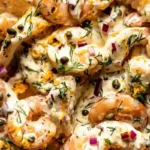
Citrus Roasted Shrimp Salad
- Total Time: 48 minutes
- Yield: 6 servings 1x
- Diet: General
Description
Ina Garten’s roasted shrimp salad is a deli-style salad perfect for BBQs, picnics, potlucks, and holidays all year round. Surprisingly delicious, thanks to the addition of orange juice and orange zest.
Ingredients
- 2 lbs shrimp (16–20 or 21–25 peeled and deveined)
- 1 tablespoon olive oil
- ½ teaspoon kosher salt
- ¼ teaspoon black pepper
- ½ cup mayonnaise
- 1 tablespoon orange zest (from 2 oranges)
- 2 tablespoons orange juice (freshly squeezed)
- 1 tablespoon apple cider vinegar
- ¼ cup chopped fresh dill
- 2 tablespoons capers (drained)
- 2 tablespoons red onion (small diced)
Instructions
- Preheat Oven: Preheat the oven to 400 degrees Fahrenheit.
- Prepare Shrimp: Using a sheet of paper towel, pat dry the shrimp on both sides. Transfer onto a sheet pan. Spread the shrimp on a single layer, drizzle with olive oil, and sprinkle with salt and pepper. Toss together to ensure that the shrimp is evenly coated with oil and seasoning.
- Roast Shrimp: Roast for 6-8 minutes, flipping them halfway through roasting. Remove from the oven and let it cool for a few minutes. Transfer to a large bowl and set it aside.
- Make the salad dressing: Whisk together the mayonnaise, orange zest, orange juice, and vinegar in a mixing bowl. Add the dill, capers, and red onion and mix to combine.
- Toss, rest and serve: Pour the dressing over the shrimp and toss to combine. Cover with stretch film and let it rest at room temperature for 30 minutes before serving.
Notes
This recipe makes 4-5 cups of salad. It can be made up to 1 day in advance; store in the fridge and remove 30 minutes before serving.
- Prep Time: 10 minutes
- Cook Time: 8 minutes
- Category: Seafood Salad
- Method: Roasting
- Cuisine: American
Nutrition
- Serving Size: 1 serving
- Calories: 276 kcal
- Sugar: 1 g
- Sodium: 556 mg
- Fat: 15 g
- Saturated Fat: 2 g
- Unsaturated Fat: 2.5 g
- Trans Fat: 0.01 g
- Carbohydrates: 3 g
- Fiber: 0.3 g
- Protein: 31 g
- Cholesterol: 243 mg
Keywords: roasted shrimp salad, seafood salad, Barefoot Contessa, Ina Garten, orange shrimp