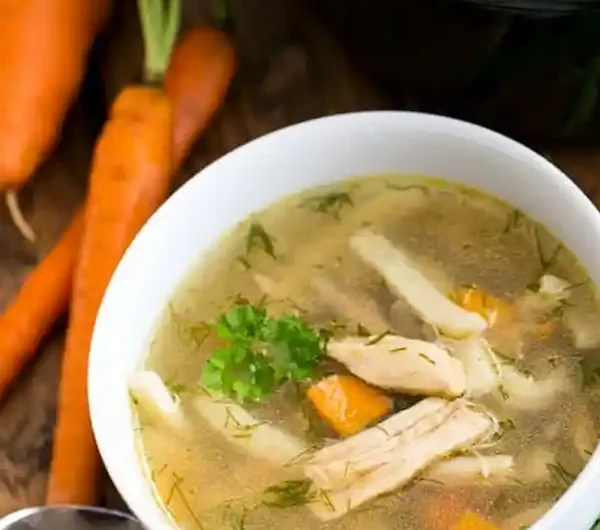
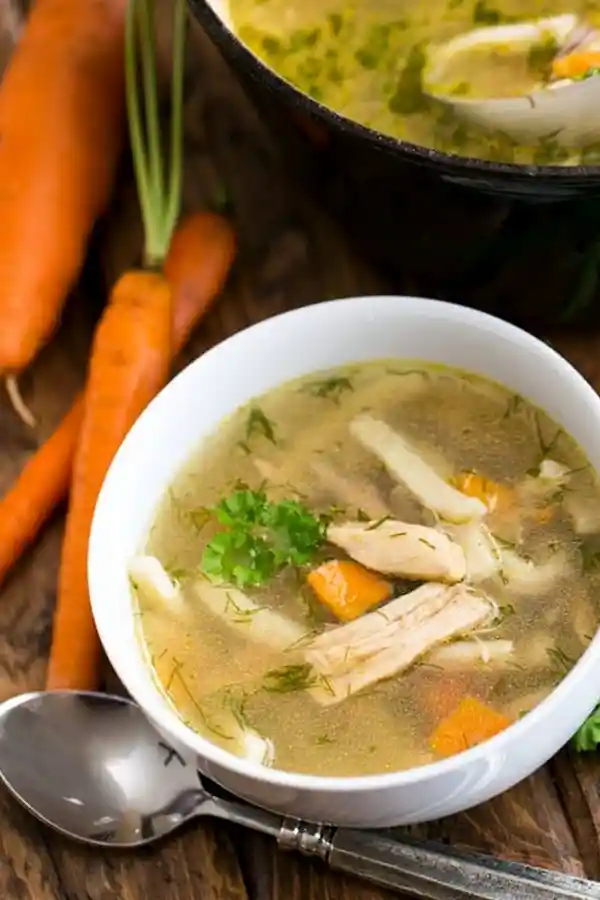
This hearty chicken noodle soup is built on a foundation of rich, homemade stock and tender egg noodles. It is a practical and comforting meal that provides essential nutrients and warmth during cold seasons.
List of ingredients
- 2 lb chicken pieces (bone-in, skin-on) – use a mix of drums, thighs, and wings for maximum flavor.
- 2 bay leaves – adds a subtle herbal depth to the broth.
- 1 small onion, halved (or 1/2 medium onion) – provides a base aromatic layer for the stock.
- 2 garlic cloves, pierced – allows flavors to infuse without the clove disintegrating.
- 1 tsp dried thyme (or 2 sprigs fresh thyme) – adds earthy, lemony notes.
- 5 Quarts water – the primary liquid for simmering the chicken.
- 12-16 oz egg noodles – choose wide noodles that can hold up to the broth.
- 3 celery sticks, finely diced – adds a classic savory crunch.
- 2 large carrots, quartered and thinly sliced – provides sweetness and color.
- 1 medium onion, finely diced – for the sautéed vegetable base.
- 1 Tbsp sea salt (or to taste) – essential for enhancing all other flavors.
- 1/4 tsp black pepper (or to taste) – provides a mild spicy kick.
- 4 Tbsp fresh parsley, chopped – adds brightness and freshness at the end.
- 4 Tbsp fresh dill, chopped – provides a distinct, aromatic finish.
step-by-step instructions
- Prepare the chicken: Separate the chicken into pieces like wings and drums, leaving the skin on. Trim any excess fat, then use a heavy knife to cut or chop along the center of the bones to expose the marrow and release iron-rich nutrients into the broth.
- Simmer the stock: In a large soup pot of at least 8 quarts, combine the chicken pieces, halved onion, bay leaves, pierced garlic cloves, and thyme. Pour in 5 quarts of water and bring the mixture to a boil.
- Clarify the liquid: Use a large spoon to skim and discard any foam that rises to the surface during the initial boil. Reduce the heat to a low simmer, keep the pot partially covered, and cook for 1.5 hours until the meat is tender and the broth is infused.
- Extract the meat: Remove the chicken pieces from the pot. Once cooled enough to handle, separate the meat from the bones and discard the bones. Keep the meat covered with foil or a lid to prevent it from drying out.
- Filter the broth: Strain the broth through a sieve lined with a large paper towel into a heat-proof bowl. This method effectively captures excess fat and impurities for a cleaner finish.
- Sauté the aromatics: Rinse the pot and place it over medium heat with 2 Tbsp of olive oil. Add the finely diced celery, sliced carrots, and diced onion, sautéing for about 5 minutes until softened.
- Combine and season: Pour the strained chicken broth back into the pot and add the sea salt and black pepper. Bring the liquid to a light boil and continue cooking for another 15 minutes to meld the vegetable flavors.
- Cook the noodles: Stir in the shredded chicken and egg noodles. Simmer until the noodles are cooked through, which typically takes about 20 minutes depending on the noodle brand.
- Final touch: Turn off the heat and stir in the fresh chopped parsley and dill. Ladle the soup immediately into warm bowls.
Professional Secrets for a Clearer Broth
The Importance of Skimming Foam
When chicken first boils, proteins called albumens coagulate and float to the top as grey or white foam. Removing this foam prevents the broth from having a cloudy appearance and removes potential bitter impurities.
Using Paper Towels for Filtration
Lining a sieve with a paper towel creates a finer filter than a mesh screen alone. The paper fibers trap small droplets of rendered fat and tiny particles, resulting in a translucent, professional-looking stock.
Controlling the Simmer Temperature
Maintaining a gentle simmer rather than a rolling boil is critical for clarity. High heat causes the fat to emulsify into the water, which turns the broth milky and opaque instead of clear.
Exposing the Bone Marrow
Chopping through the bones increases the surface area of the marrow exposed to the water. This releases more collagen and minerals, which improves the body and mouthfeel of the soup without adding artificial thickeners.
Ingredient Substitutions and Adjustments
Alternative Noodle Options
If egg noodles are unavailable, use ditalini or rotini for a different texture. For a gluten-free version, replace the noodles with rice noodles or spiralized zucchini, adding them in the final 5 minutes of cooking.
Vegetable Variations
Parsnips or turnips can be added alongside carrots for a more complex, earthy flavor profile. Leeks can replace the diced onion in the sauté step to provide a milder, sweeter taste.
Choosing Different Chicken Cuts
While a mix of pieces is ideal, chicken backs and necks are excellent for maximizing the gelatin content of the broth. If using skinless breasts, be aware that the broth will be less rich and you may need more salt for flavor.
Herbal Swaps for Dill and Parsley
If dill is too strong, replace it with fresh cilantro or extra parsley. Fresh chives added at the very end can also provide a subtle onion-like brightness that complements the chicken.
Serving and Presentation Ideas
Maintaining Serving Temperature
Warm your soup bowls in a low oven or with hot water before ladling. This prevents the soup from cooling down rapidly, keeping the fats in a liquid state and the noodles tender.
Adding Fresh Garnishes
Top each bowl with a sprinkle of fresh cracked black pepper or a wedge of lemon. A squeeze of lemon juice just before eating cuts through the richness of the chicken fat and brightens the overall flavor.
Complementary Side Dishes
Serve the soup with a crusty sourdough baguette or toasted rye bread to soak up the broth. A light side salad with a vinaigrette provides a crisp contrast to the soft textures of the noodles and carrots.
Storage and Preservation Guidelines
Proper Refrigeration Techniques
Allow the soup to cool completely before transferring it to airtight containers. Store it in the refrigerator for up to 4 days, ensuring the containers are not overfilled to allow for even cooling.
Freezing for Long-Term Use
If freezing, it is highly recommended to freeze the broth and chicken separately from the noodles. Noodles tend to absorb too much liquid and become mushy when frozen and thawed.
Managing Noodle Absorption
Noodles will continue to absorb broth even after the heat is turned off. To prevent the soup from becoming a thick stew, store the cooked noodles in a small amount of oil or cook them fresh when reheating the broth.
Reheating Techniques for Best Quality
Stovetop Reheating Method
Warm the soup slowly over medium-low heat on the stove. This allows the flavors to reintegrate without boiling the chicken meat, which can make it tough if overheated.
Microwave Heating Tips
Heat the soup in short intervals of 2 minutes, stirring in between. This prevents hot spots and ensures the noodles are heated evenly throughout the bowl.
Adjusting Liquid Levels
Since noodles absorb liquid during storage, you may find the soup too thick upon reheating. Add a small splash of water or store-bought chicken stock to restore the original consistency.
Make-Ahead and Meal Prep Advice
Preparing Stock in Advance
The broth can be made 2-3 days ahead of time and stored in the fridge. This reduces the final assembly time to just sautéing the vegetables and cooking the noodles.
Cooking Noodles Separately
For those who meal prep for the week, cook the egg noodles in a separate pot of salted water. Portion the noodles into containers and pour the hot soup over them just before serving.
Batch Cooking Strategy
Double the recipe to freeze multiple portions of the base broth. Having homemade stock ready in the freezer makes it easy to whip up smaller batches of soup throughout the month.
Troubleshooting Common Issues
Correcting Over-Salty Broth
If the soup becomes too salty after simmering, add a peeled, halved potato to the pot for 15 minutes. The potato absorbs some of the excess salt before you remove it.
Fixing Mushy Noodles
If the noodles overcook, there is no way to reverse the texture. To prevent this, always check the noodle package for minimum cook time and pull them off the heat one minute early.
Enhancing Weak Flavor
If the broth tastes bland despite adding salt, simmer it for an additional 20 minutes without the lid. This reduces the liquid, concentrating the chicken and vegetable flavors.
Frequently Asked Questions
Can I use store-bought broth instead of making my own?
Yes, you can substitute the homemade stock with 5 quarts of low-sodium chicken broth. However, you will lose the depth of flavor and the gelatinous body that comes from simmering bone-in chicken.
Which chicken pieces provide the most flavor?
Drumsticks, thighs, and wings are the best because they contain more connective tissue and fat. These elements melt into the broth, creating a richer and more satisfying soup.
How long does the soup stay fresh in the fridge?
The soup is generally safe and tasty for 3 to 4 days when stored in an airtight container at 40°F (4°C) or below.
Why do I need to pierce the garlic cloves?
Piercing the cloves allows the aromatic oils to seep out into the water during the long simmer. This ensures the garlic flavor is distributed evenly throughout the broth without needing to mince it.
Can I use a slow cooker for this recipe?
You can adapt the stock-making process for a slow cooker by simmering the chicken and aromatics on low for 8 hours. Follow the remaining sautéing and noodle steps on the stovetop for the best texture.
Print
Classic Homemade Chicken Noodle Soup
- Total Time: 2 hours 30 minutes
- Yield: 12 servings 1x
- Diet: General
Description
Homemade Old-Fashioned chicken noodle soup with a homemade chicken stock and plump egg noodles, is the ultimate comfort food.
Ingredients
- 2 lb chicken pieces (bone-in, skin-on)
- 2 bay leaves
- 1 small onion, halved
- 2 garlic cloves, pierced
- 1 tsp dried thyme
- 5 quarts water
- 12–16 oz egg noodles
- 3 celery sticks, finely diced
- 2 large carrots, quartered and thinly sliced
- 1 medium onion, finely diced
- 1 Tbsp sea salt
- 1/4 tsp black pepper
- 4 Tbsp fresh parsley, chopped
- 4 Tbsp fresh dill, chopped
- 2 Tbsp olive oil
Instructions
- Step 1: Separate chicken into pieces leaving the skin on and trim excess fat; cut along the center of the bones to expose bone marrow.
- Step 2: In a large soup pot, combine chicken pieces with halved onion, 2 bay leaves, 2 pierced garlic cloves, 1 tsp dried thyme, and 5 quarts water; bring to a boil, skim foam, then simmer partially covered for 1 1/2 hours.
- Step 3: Remove chicken pieces, separate the meat from the bones, and discard the bones.
- Step 4: Strain the broth through a sieve lined with a large paper towel into a heat-proof bowl.
- Step 5: Rinse the pot, place over medium heat, add 2 Tbsp olive oil, and sauté celery, carrots, and diced onion for 5 minutes until softened.
- Step 6: Add chicken broth, salt, and pepper back to the pot, bring to a light boil, and cook for another 15 minutes.
- Step 7: Add shredded chicken and egg noodles and continue cooking until noodles are cooked through.
- Step 8: Turn off heat and stir in fresh parsley and dill.
Notes
Use chicken drum sticks, thighs, wing, neck, or a whole small chicken.
- Prep Time: 20 minutes
- Cook Time: 2 hours 10 minutes
- Category: Soup
- Method: Simmering
- Cuisine: American
Nutrition
- Serving Size: 1 serving
- Calories: 232 kcal
- Sugar: 1 g
- Sodium: 651 mg
- Fat: 9 g
- Saturated Fat: 2 g
- Unsaturated Fat: 7 g
- Trans Fat: 0 g
- Carbohydrates: 23 g
- Fiber: 1 g
- Protein: 13 g
- Cholesterol: 62 mg
Keywords: Old Fashioned Chicken Noodle Soup, soup, chicken, egg noodles