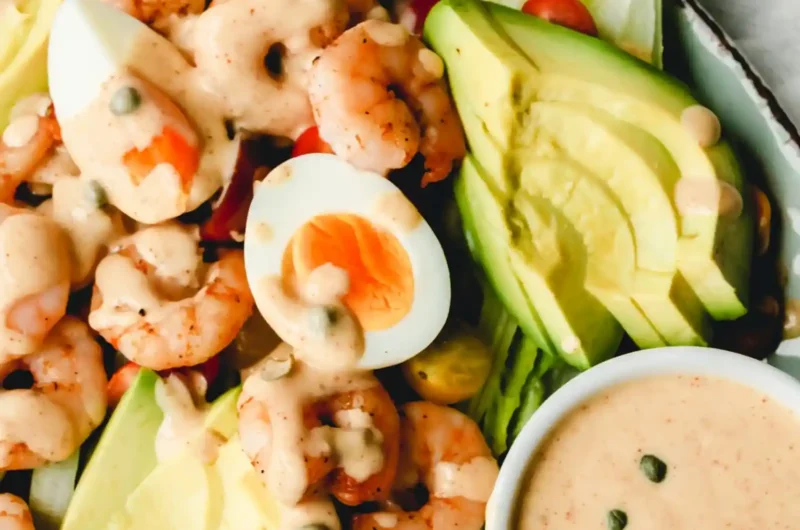
This bright and refreshing salad is a coastal classic that balances savory proteins with crisp, cool vegetables. It serves as an excellent light lunch or a substantial dinner option for any occasion.
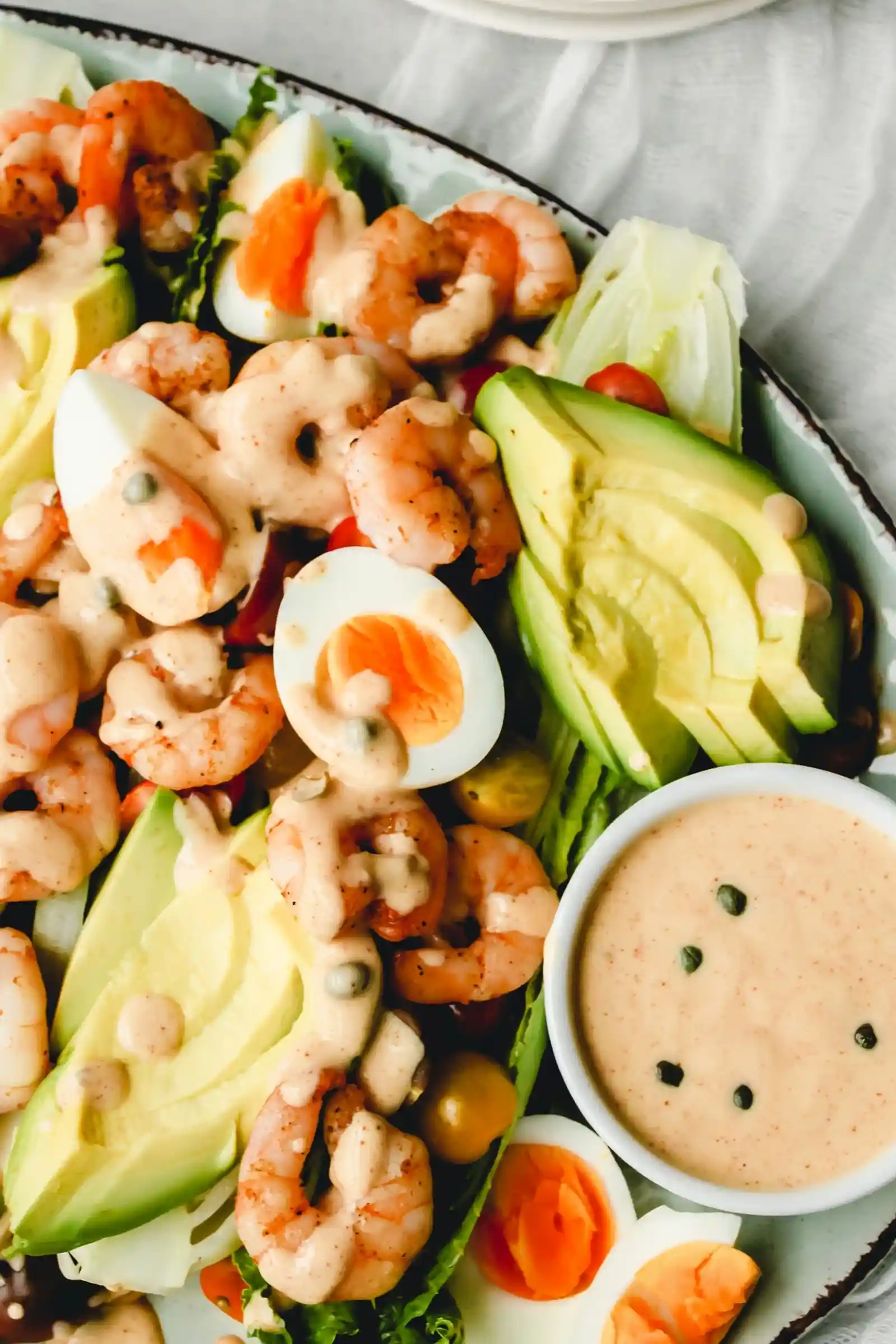
List of ingredients
- 2 Romaine lettuce hearts, chopped – provides a crisp, fresh base for the salad.
- 1 Ripe avocado, sliced – adds a rich, creamy texture to every bite.
- 4 Hard boiled eggs, halved or quartered – contributes protein and a smooth consistency.
- 2 cups Cherry tomatoes, halved – adds a burst of acidity and bright color.
- 1 lb Raw shrimp – the primary protein, peeled and deveined.
- 1 tsp Cajun seasoning – adds a zesty, spiced flavor to the shrimp.
- 1 spray Olive oil spray – used to prevent the shrimp from sticking to the pan.
- Creamy homemade Louie salad dressing – the signature tangy sauce that ties the dish together.
- Lemon wedges, for serving – provides a final touch of citrus brightness.
step-by-step instructions
- Season the Shrimp: Blot the raw shrimp dry using a paper towel in a medium bowl. Toss the dried shrimp with the Cajun seasoning until they are evenly coated.
- Sauté the Shrimp: Heat a non-stick skillet over medium heat and apply olive oil spray. Sauté the seasoned shrimp until they are fully cooked and opaque, which typically takes a few minutes, then remove them from the pan to cool.
- Prepare the Base: Chop the vegetables and place the chopped Romaine lettuce in a large mixing bowl. Toss in the cherry tomatoes and other vegetables, excluding the avocado.
- Combine Components: Add the cooled sautéed shrimp, sliced avocado, and the creamy Louie dressing to the bowl. Toss the ingredients gently to ensure everything is evenly coated without bruising the avocado.
- Plate the Salad: Divide the salad into individual small bowls for serving. Place the sliced hard-boiled eggs carefully on the side of each portion.
- Final Touch: Squeeze fresh lemon juice from the wedges over each serving just before eating to enhance the overall flavor.
Mastering the Shrimp Sear
Drying the Shrimp Thoroughly
Blotting shrimp with paper towels is essential for achieving a proper sear. Excess moisture on the surface of the protein creates steam in the pan, which prevents the Cajun seasoning from adhering and inhibits browning. Ensure each shrimp is completely dry to allow the olive oil to transfer heat efficiently.
Managing Pan Temperature
Maintaining a medium heat is key to preventing the shrimp from toughening. If the pan is too hot, the exterior will burn before the interior is cooked through. If it is too cool, the shrimp will boil in their own juices rather than searing.
Preventing Overcooking
Shrimp cook very quickly and can become rubbery if left on the heat for too long. Remove them from the skillet the moment they turn opaque and form a slight ‘C’ shape. Overcooking causes the muscle fibers to tighten, which ruins the tender texture of the dish.
Optimizing Vegetable Preparation
Selecting the Best Romaine
Choose Romaine hearts that are firm and bright green without any brown edges. To maintain maximum crunch, wash the leaves in cold water and dry them thoroughly using a salad spinner. Wet lettuce will dilute the dressing and cause the salad to become watery.
Choosing a Ripe Avocado
A ripe avocado should yield slightly to gentle pressure but not feel mushy. To check for ripeness, remove the small stem cap at the top; if it is green underneath, the avocado is ready. If it is brown, the avocado is likely overripe.
Slicing Cherry Tomatoes
Halving cherry tomatoes instead of slicing them into quarters prevents them from releasing too much juice into the salad. Use a sharp serrated knife to slice through the skin easily without crushing the interior. This keeps the salad looking neat and professional.
Perfecting the Hard-Boiled Eggs
Achieving the Ideal Yolk
For a classic Louie salad, the yolks should be fully set but still creamy. Place eggs in a pot of cold water, bring to a boil, then remove from heat and cover for 10 to 12 minutes. This method prevents the green ring from forming around the yolk.
Peeling Eggs with Ease
Immediately transfer boiled eggs into an ice bath for five minutes to stop the cooking process. The sudden temperature change causes the egg to contract away from the shell. Gently crack the shell all over and peel under cool running water for a smooth finish.
Professional Egg Slicing
To get clean halves or quarters, use a very sharp non-serrated knife or a dedicated egg slicer. Slicing the eggs just before serving prevents the yolks from drying out. Placing them on the side ensures the yolks do not blend into the dressing during tossing.
Dressing Customization and Tips
Creating a Balanced Emulsion
A good Louie dressing relies on a stable emulsion of fat and acid. Ensure your mayonnaise and ketchup are at room temperature before mixing to prevent the sauce from separating. Stir in the flavorings slowly to maintain a smooth, creamy consistency.
Adjusting the Tanginess
If the dressing tastes too sweet from the ketchup, add a teaspoon of lemon juice or white wine vinegar. If it is too acidic, a pinch of sugar or a small amount of extra mayonnaise can balance the flavor. Taste and adjust in small increments.
Storing Extra Dressing
Keep unused dressing in an airtight glass jar in the refrigerator for up to one week. Before using it again, stir it vigorously or shake the jar to reintegrate any separated oils. Bring the dressing to room temperature for a few minutes for better pourability.
Expanding Your Ingredient Options
Adding Red Onion for Sharpness
Thinly sliced red onions add a pungent contrast to the creamy dressing and rich avocado. To reduce the harshness of raw onions, soak the slices in cold water for ten minutes before adding them to the salad. This removes the sulfurous bite while keeping the crunch.
Substituting with Dungeness Crab
For a variation known as Crab Louie, replace the shrimp with lump Dungeness crab meat. Ensure the crab is well-drained to prevent the salad from becoming soggy. Crab has a sweeter profile that pairs exceptionally well with the lemon wedges.
Incorporating Sliced Green Peppers
Green bell peppers add an earthy flavor and a distinct snap to the texture. Slice them into thin julienne strips to match the scale of the other vegetables. This adds visual appeal and an extra layer of freshness to the dish.
Using Black Olives for Saltiness
Sliced black olives provide a briny, salty element that complements the richness of the eggs. Use high-quality Kalamata or canned sliced olives, ensuring they are patted dry. This adds a Mediterranean touch to the San Francisco style salad.
Presentation and Plating Strategies
Plating for Large Groups
When serving a crowd, arrange the chopped Romaine on a large platter instead of using individual bowls. Place the shrimp, avocado, and tomatoes in organized sections over the lettuce. Drizzle the dressing over the top just before guests arrive to keep the greens crisp.
Choosing the Right Serving Bowls
Use chilled glass or ceramic bowls to keep the salad cool during the meal. Small, wide-rimmed bowls are ideal for individual servings as they allow the ingredients to be spread out. This prevents the heavy ingredients from crushing the lettuce at the bottom.
Using Lemon Wedges as Garnish
Place a fresh lemon wedge on the rim of each bowl for an elegant presentation. This allows guests to control the amount of acidity they want in their salad. The bright yellow color of the lemon also provides a nice visual contrast to the green lettuce.
Storage and Freshness Guidelines
Maintaining Lettuce Crispness
Never dress the salad until the moment of serving, as the acid and salt in the dressing break down the cell walls of the Romaine. If preparing in advance, store the chopped lettuce in a container lined with a damp paper towel. This keeps the leaves hydrated and crunchy.
Preventing Avocado Oxidation
Avocados brown quickly once exposed to air due to enzymatic browning. To prevent this, toss the sliced avocado in a small amount of lemon juice before adding it to the salad. Alternatively, add the avocado as the very last step before serving.
Storing Cooked Shrimp
Cooked shrimp can be stored in an airtight container in the refrigerator for up to three days. When ready to use, let them come to room temperature or warm them slightly in a pan. Avoid microwaving shrimp, as this can make them rubbery.
Make-Ahead Preparation Advice
Pre-Cooking the Proteins
You can boil the eggs and sauté the shrimp a day in advance to save time. Store them in separate containers to prevent flavor transfer. This allows you to simply assemble the fresh produce and toss the salad quickly when it is time to eat.
Preparing Vegetable Kits
Chop the Romaine and halve the cherry tomatoes ahead of time and store them in a sealed bag with a piece of paper towel. This absorbs excess moisture and extends the shelf life. Do not slice the avocado or add the dressing until the actual serving time.
Pre-Mixing the Dressing
The Louie dressing actually improves in flavor if it sits in the refrigerator for a few hours. This allows the seasonings to meld and the flavors to deepen. Simply stir it well before adding it to the fresh salad components.
Troubleshooting Common Issues
Fixing Rubbery Shrimp
If your shrimp have become too tough, it is usually a sign of overcooking. While they cannot be made tender again, you can mask the texture by cutting them into smaller pieces. In the future, use a meat thermometer to ensure they reach an internal temperature of 120 degrees Fahrenheit.
Correcting Thick Dressing
If the dressing is too thick to toss evenly, stir in a teaspoon of water or lemon juice. This thins the consistency without significantly altering the flavor profile. Add the liquid slowly to ensure you do not make the dressing too runny.
Managing Excess Moisture
If the salad becomes watery, it is often because the vegetables were not dried properly after washing. To fix this, use a slotted spoon to lift the salad out of the bowl and discard any accumulated liquid at the bottom. Always use a salad spinner for the best results.
Frequently Asked Questions
Can I use frozen shrimp?
Yes, frozen shrimp are an excellent option as long as they are fully thawed and patted dry. Thawing should be done in the refrigerator overnight or under cold running water to maintain the best texture.
What is the best substitute for Romaine?
Iceberg lettuce provides a similar crunch, though it has fewer nutrients. Butter lettuce is a softer alternative that pairs well with the creamy dressing, though it may wilt faster than Romaine.
How long does the assembled salad last?
The assembled salad should be consumed within two hours because the dressing causes the lettuce to wilt. For longer storage, keep the dressing, proteins, and vegetables in separate containers until serving.
Can I use a store-bought dressing?
A high-quality Thousand Island dressing is a suitable commercial substitute for the Louie dressing. To make it taste more authentic, stir in a small amount of fresh lemon juice and a dash of alcohol-free Worcestershire sauce.
Print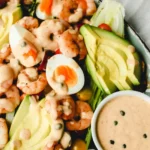
Classic San Francisco Shrimp Louie Salad
- Total Time: 25 minutes
- Yield: 5 servings 1x
- Diet: General
Description
Classic Shrimp Louie Salad is a fresh and bright meal for a healthy lunch or delicious dinner. This San Francisco delight will surely be a family favorite enjoyed by all!
Ingredients
- 2 Romaine lettuce hearts, chopped
- 1 Ripe avocado, sliced
- 4 Hard boiled eggs, halved or quartered
- 2 cups Cherry tomatoes, halved
- 1 lb Raw shrimp
- 1 tsp Cajun seasoning
- 1 spray Olive oil spray
- Creamy homemade Louie salad dressing
- Lemon wedges, for serving
Instructions
- Step 1: In a medium bowl, blot your shrimp dry with a paper towel. Toss together the shrimp and Cajun seasoning.
- Step 2: Heat a non-stick skillet on medium heat. Once the pan is hot, spray with olive oil spray and sauté the seasoned shrimp until fully cooked.
- Step 3: Remove the shrimp from the skillet and set aside to cool.
- Step 4: Chop your veggies, and in a large mixing bowl, toss all of the veggies except for the avocado.
- Step 5: Add your cooked shrimp, avocado, and signature Shrimp Louie dressing and toss again.
- Step 6: Scoop to put your salad for each serving in a small bowl and add the sliced eggs to the side.
- Step 7: Squeeze the lemon wedges over each bowl and serve immediately.
Notes
A traditional Californian salad originating from San Francisco. For a variation, you can substitute the shrimp with lump crab meat to make Crab Louie.
- Prep Time: 5 minutes
- Cook Time: 20 minutes
- Category: Lunch, Dinner
- Method: Sautéing
- Cuisine: American
Nutrition
- Serving Size: 1 bowl
- Calories: 470 kcal
- Sugar: 9 g
- Sodium: 620 mg
- Fat: 31 g
- Saturated Fat: 7 g
- Unsaturated Fat: 24 g
- Trans Fat: 0 g
- Carbohydrates: 16 g
- Fiber: 6 g
- Protein: 29 g
- Cholesterol: 215 mg
Keywords: Shrimp Louie Salad, San Francisco salad, shrimp salad, healthy lunch, Californian cuisine