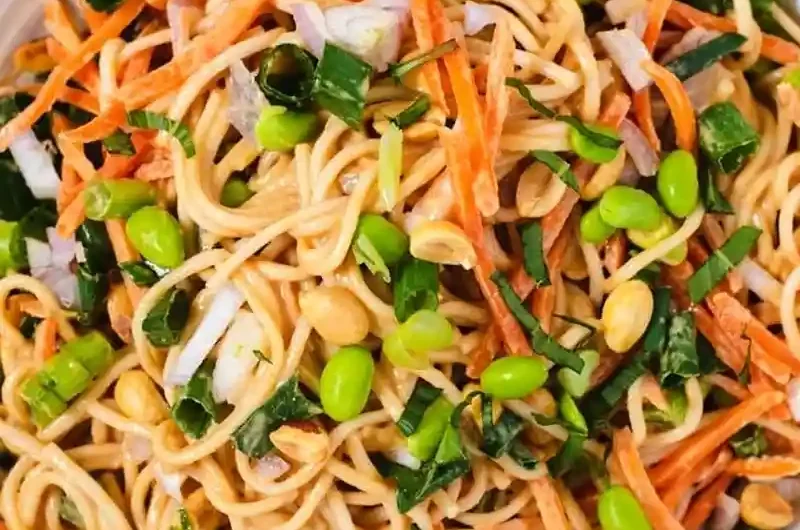
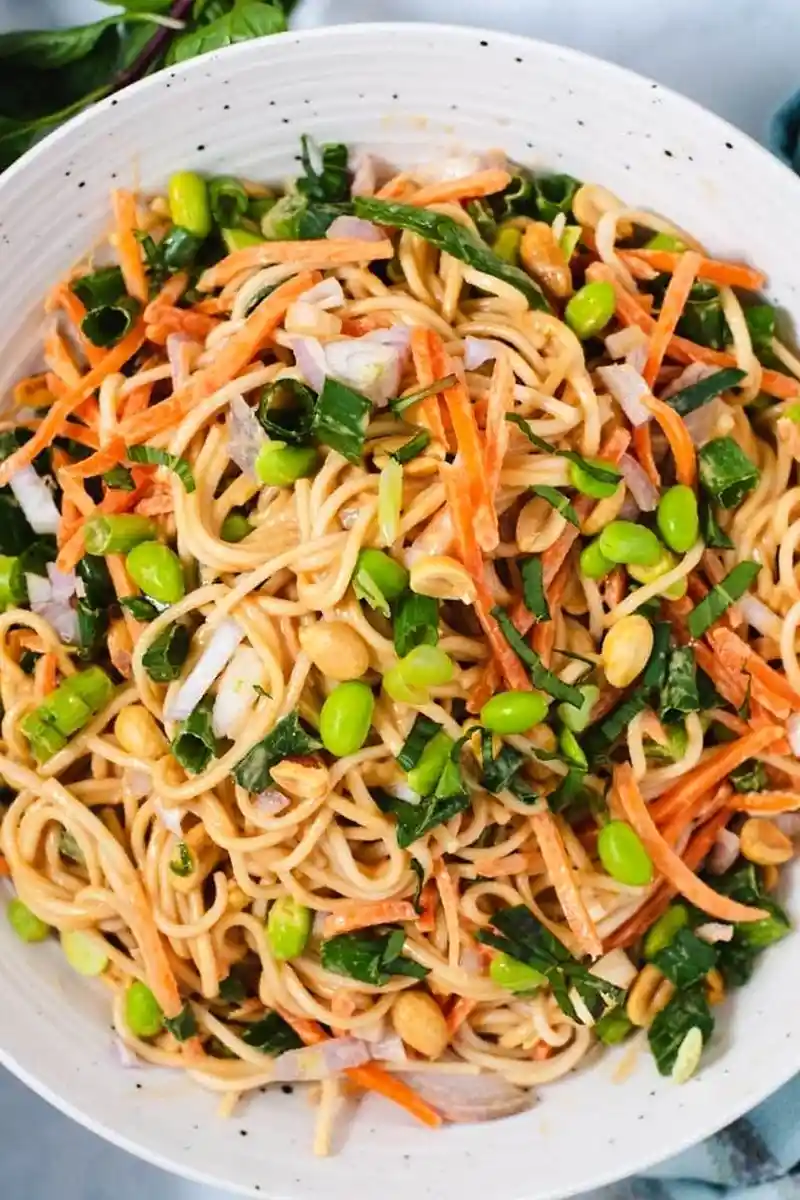
This refreshing cold peanut noodle salad combines tender wheat noodles with a velvety, tangy sauce and an array of crunchy vegetables. It offers a balanced profile of savory, sweet, and bright citrus notes, making it an excellent choice for a light main dish or a satisfying side. Whether you are hosting a summer gathering or meal prepping for the work week, this simple dish delivers vibrant texture and deep flavor in every bite.
List of ingredients
- 8 ounces dry udon noodles
- 1/2 cup creamy peanut butter
- 3 tablespoons reduced sodium soy sauce
- 3 tablespoons rice vinegar
- 2 tablespoons lime juice
- 1 tablespoon honey or agave
- 1 tablespoon toasted sesame oil
- vegetable broth or water (as needed to thin sauce)
- 1 cup edamame (thawed)
- 1 cup matchstick carrots
- 1/4 cup unsalted roasted peanuts
- 1 shallot (diced finely)
- 1 bunch green onions (sliced thinly)
- 1/4 cup thinly sliced Thai basil
- spicy chili crisp (optional)
step-by-step instructions
- Step: Cook noodles according to package instructions. When the noodles are finished cooking, drain noodles in a colander and rinse under gently running cold water until cool.
- Step: While the noodles are cooking, prepare the sauce. In a small bowl whisk together the creamy peanut butter, soy sauce, rice vinegar, lime juice, honey, and sesame oil until smooth. It should have a pourable, dressing-like consistency. If needed, add 1 tablespoon water at a time to thin.
- Step: In a large bowl, toss the chilled noodles with the peanut sauce using a spatula or silicon salad tongs.
- Step: Add the thawed edamame, carrots, toasted peanuts, shallot, green onions, and basil to the salad. Toss to combine. Garnish with dollops of spicy chili crisp (optional; adds heat and crunch). Enjoy!
Practical Preparation Strategies
Maintaining Noodle Texture During Chilling
To ensure your udon noodles remain springy and do not clump after cooking, be diligent during the rinsing process. Using a gentle stream of cold water helps remove excess surface starch that can lead to gummy results. If you prefer a completely dry noodle before adding the sauce, toss the rinsed noodles with a half teaspoon of sesame oil to create a protective barrier between the strands.
Achieving the Perfect Sauce Consistency
The thickness of peanut butter varies by brand and specific batch, so relying on a fixed amount of liquid is often insufficient. Start by creating a base with your primary liquid ingredients and assess the texture before thinning. When adding water or broth to adjust the consistency, do so in very small increments to ensure you do not make the sauce too thin or diluted in flavor.
Enhancing the Vegetable Crunch
To keep the matchstick carrots and fresh aromatics as crisp as possible, wait until the final assembly stage to add them to the noodles. If you are preparing this dish for later, store the chopped vegetables in a separate airtight container until just before you are ready to serve. This prevents the vegetables from soaking up too much moisture from the sauce while sitting in the refrigerator.
Refining Your Salad Components
Flavor Profile Customizations
If you find the sauce is missing a specific balance, consider the ratio of your acids and sweets. A splash of extra rice vinegar can sharpen the profile if the peanut butter feels too heavy, while a small additional amount of honey can soften the intensity of the ginger or chili elements. Always taste the dressing on a single noodle strand before finalizing the seasoning to ensure the salt level from the soy sauce is where you prefer it.
Substitutions for Common Ingredients
When Thai basil is unavailable, standard Italian basil or even finely shredded fresh mint can serve as a substitute. While they offer different aromatic notes, both provide a fresh herbal quality that mimics the brightness of the original ingredient. For the shallot, a small amount of finely minced red onion or white parts of green onions can be used if you need a quick pantry replacement.
Balancing Protein and Heartiness
While edamame provides a solid protein base, you can easily supplement this dish for a more substantial meal. Tofu that has been pressed and pan-seared until golden brown makes an excellent addition, as it absorbs the peanut sauce exceptionally well. Alternatively, chickpeas or lightly steamed snap peas can be tossed in to add fiber and bulk without requiring complex cooking techniques.
Storage and Make-Ahead Advice
Proper Refrigeration Techniques
If you have leftovers or are preparing this salad in advance, store the dish in an airtight glass or plastic container. Because peanut sauce tends to absorb into starches over time, the salad may appear slightly drier the next day. To remedy this, add a tiny splash of water or a small amount of toasted sesame oil to the container and toss vigorously before serving to loosen the noodles.
Managing Sauce Separation
It is normal for the fats in natural peanut butter to separate or for the sauce to thicken significantly when chilled. Before using stored sauce, let it come to room temperature for ten minutes and give it a vigorous whisk. If the texture is still too stiff, adding a teaspoon of warm water will quickly restore the desired creamy, dressing-like consistency.
Maximum Freshness Window
For the highest quality experience, try to consume the salad within 24 to 48 hours of preparation. While it remains safe to eat for up to four days, the texture of the noodles may soften beyond the ideal point. Keeping the herbs and crunchy peanuts separate until the moment of serving significantly preserves the sensory appeal of the salad over longer periods.
Frequently Asked Questions
Can I serve these noodles warm instead of cold?
Yes, you can serve this dish warm by skipping the rinsing step after boiling the noodles. Drain the noodles and immediately return them to the pot with the sauce and vegetables over low heat, stirring constantly until the ingredients are heated through. Be careful not to overheat, as the peanut sauce can break or lose its creamy emulsion if subjected to high temperatures for too long.
What is the best way to keep the noodles from sticking?
Rinsing the noodles under cold water is the most effective way to stop the cooking process and remove excess starch. If you notice they are still sticking after being rinsed, a light coating of neutral oil will help keep the strands separated. Always mix the sauce into the noodles as soon as they are drained and cooled to ensure they stay coated and loose.
Is this recipe suitable for those with dietary restrictions?
This recipe is naturally vegetarian and can be made vegan by substituting the honey with agave nectar or maple syrup. For those requiring a gluten-free version, ensure your soy sauce is replaced with a certified gluten-free tamari and verify that your noodles are made from rice, buckwheat, or another gluten-free grain. Always check package labels to ensure no wheat-based ingredients are present in the noodle selection.
Print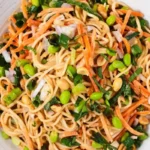
Cold Peanut Noodle Salad
- Total Time: PT23M
- Yield: 4 servings 1x
- Diet: Vegetarian
Description
Packed with tangy flavors and a deliciously creamy peanut sauce, this peanut noodle salad is so easy to make! Vegetarian as-is, vegan and gluten-free optional.
Ingredients
- 8 ounces dry udon noodles
- 1/2 cup creamy peanut butter
- 3 tablespoons reduced sodium soy sauce
- 3 tablespoons rice vinegar
- 2 tablespoons lime juice
- 1 tablespoon honey or agave
- 1 tablespoon toasted sesame oil
- vegetable broth or water (as needed to thin sauce)
- 1 cup edamame (thawed)
- 1 cup matchstick carrots
- 1/4 cup unsalted roasted peanuts
- 1 shallot (diced finely)
- 1 bunch green onions (sliced thinly)
- 1/4 cup thinly sliced Thai basil
- spicy chili crisp (optional)
Instructions
- Step: Cook noodles according to package instructions. When the noodles are finished cooking, drain noodles in a colander and rinse under gently running cold water until cool.
- Step: While the noodles are cooking, prepare the sauce. In a small bowl whisk together the creamy peanut butter, soy sauce, rice vinegar, lime juice, honey, and sesame oil until smooth. It should have a pourable, dressing-like consistency. If needed, add 1 tablespoon water at a time to thin.
- Step: In a large bowl, toss the chilled noodles with the peanut sauce using a spatula or silicon salad tongs.
- Step: Add the thawed edamame, carrots, toasted peanuts, shallot, green onions, and basil to the salad. Toss to combine. Garnish with dollops of spicy chili crisp (optional; adds heat and crunch). Enjoy!
Notes
Cooling method: Rinsing the noodles with cool water is the easiest option, but you can also toss the noodles with oil and chill them in the fridge for 1-2 hours. If using wheat noodles, they can be swapped for rice or glass noodles for a gluten-free version. Store leftovers in a closed container in the refrigerator for 3-4 days.
- Prep Time: PT15M
- Cook Time: PT8M
- Category: Salad
- Method: Boiling
- Cuisine: Vegetarian
Nutrition
- Serving Size: 1 bowl
- Calories: 563 kcal
- Sugar: 16 g
- Sodium: 1256 mg
- Fat: 28 g
- Saturated Fat: 5 g
- Unsaturated Fat: 20 g
- Trans Fat: 0 g
- Carbohydrates: 61 g
- Fiber: 9 g
- Protein: 24 g
- Cholesterol: 0 mg
Keywords: peanut noodle salad, cold noodles, vegetarian salad, quick dinner