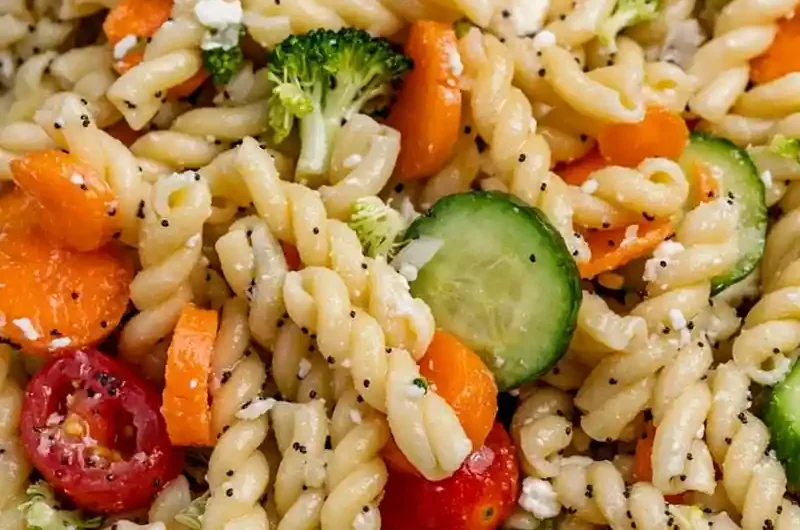
This poppy seed pasta salad is a refreshing and vibrant side dish ideal for warm weather gatherings. It combines a variety of crisp vegetables and salty feta cheese with a sweet and tangy homemade dressing.
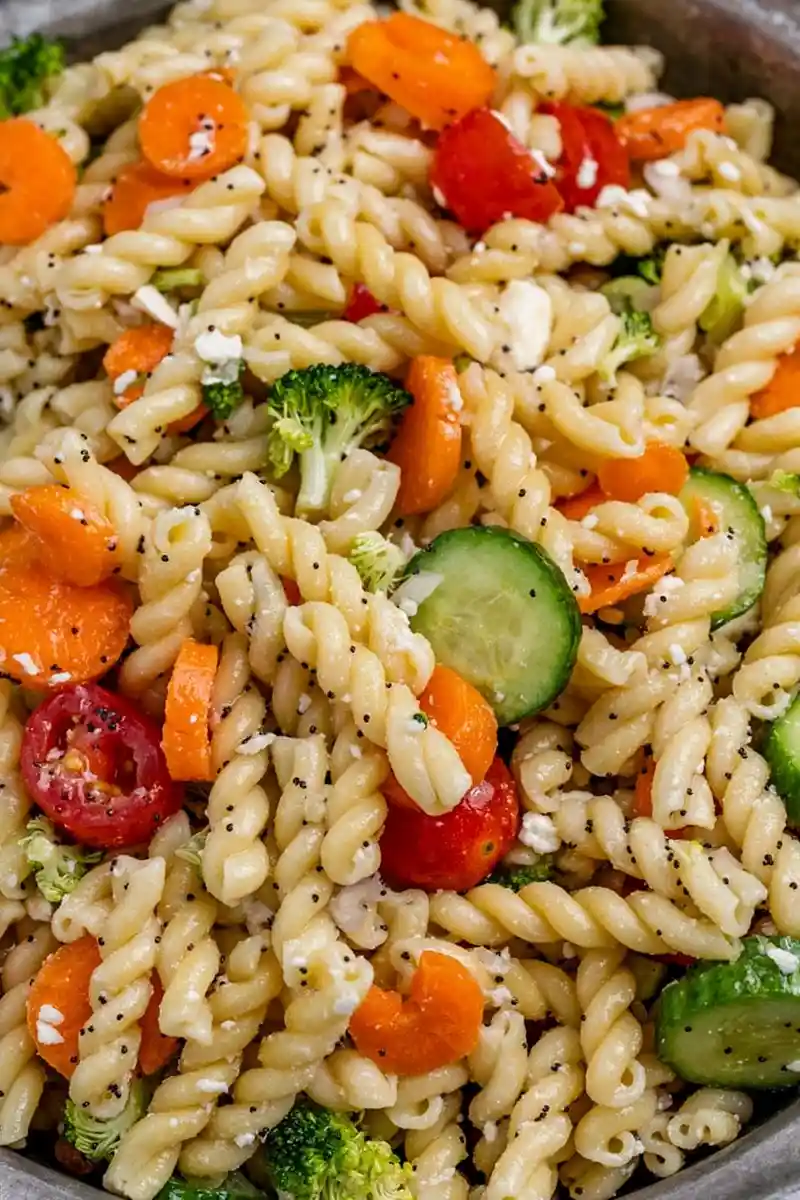
List of ingredients
- 16 ounces gemelli pasta – a twisted spiral shape that captures the dressing.
- 1 cup broccoli florets – cut into small, bite-sized pieces.
- 1 cup sliced carrots – thinly sliced into rounds for a consistent crunch.
- 1 cup sliced cucumber – sliced into half-moons.
- 1 cup halved cherry tomatoes – cut lengthwise to prevent them from rolling.
- 1/2 cup chopped green onions – sliced thinly for a mild onion flavor.
- 1 cup feta cheese – crumbled into small pieces.
- 1/2 cup mild olive oil – used as the base for the dressing emulsion.
- 1/4 cup apple cider vinegar – provides a balanced acidity.
- 3 tablespoons granulated sugar – adds a touch of sweetness to offset the vinegar.
- 1 tablespoon minced shallot – adds a subtle, sharp flavor.
- 1 tablespoon poppy seeds – provides texture and the signature look.
- 1 teaspoon minced garlic – enhances the depth of the dressing.
- 1/2 teaspoon ground mustard – acts as a stabilizer for the dressing.
- 1/2 teaspoon salt – enhances all the individual flavors.
step-by-step instructions
- Prepare the pasta: Cook the gemelli pasta according to the package directions. Once cooked, drain it and rinse immediately with cold water to stop the cooking process and remove excess starch.
- Combine base ingredients: Place the cooled pasta in a large mixing bowl. Add the broccoli, carrots, cucumber, cherry tomatoes, green onions, and crumbled feta cheese.
- Mix the dressing: In a separate bowl or a shaker jar, combine the olive oil, apple cider vinegar, sugar, minced shallot, poppy seeds, minced garlic, ground mustard, and salt. Shake or whisk vigorously until the sugar is dissolved and the oil and vinegar are emulsified.
- Final assembly: Pour the prepared poppy seed dressing over the pasta and vegetable mixture. Toss gently to ensure everything is evenly coated.
- Chill and serve: Place the salad in the refrigerator until serving. For the best results, refrigerate for at least 2 hours. If you prefer the vegetables to stay extra crisp, pour the dressing over the salad right before serving.
Professional Preparation Tips
Rinsing Pasta to Prevent Clumping
Rinsing the pasta under cold water immediately after draining is a critical step for pasta salads. This process removes the surface starch that causes noodles to stick together in a clump. It also ensures the pasta is cold, which prevents the fresh vegetables from wilting when mixed.
Uniform Vegetable Chopping
To ensure every bite has a balance of flavors, chop your vegetables into uniform sizes. Cut the broccoli florets into very small pieces and slice the carrots thinly. This allows the dressing to coat all surfaces evenly and makes the salad easier to eat.
Using a Shaker Jar for Emulsion
Using a mason jar or a similar shaker for the dressing is more effective than stirring with a spoon. The vigorous shaking forces the oil and apple cider vinegar to emulsify, creating a smooth consistency. This prevents the dressing from separating and ensures the poppy seeds are evenly distributed.
Ingredient Substitutions
Using Honey Instead of Granulated Sugar
If you prefer a more natural sweetener, you can replace the granulated sugar with honey or maple syrup. Use an equal amount by volume, although you may need to shake the dressing a bit longer to incorporate the thicker liquid. Honey adds a slightly deeper, floral note to the salad.
Alternative Pasta Shapes
While gemelli is recommended for its ability to hold dressing in its twists, other shapes work well. Rotini, fusilli, or farfalle (bowtie) pasta are excellent alternatives. Avoid using very small pasta like orzo if you want to maintain a chunky, vegetable-forward texture.
Swapping Feta for Other Cheeses
If you want a different flavor profile, you can replace feta with crumbled goat cheese or small cubes of fresh mozzarella. Goat cheese provides a creamier, more tart flavor, while mozzarella offers a milder taste. Ensure the cheese is a microbial-rennet variety for a consistent plant-based additive profile.
Vinegar Alternatives for Acidity
Apple cider vinegar provides a fruity tang, but white wine vinegar or champagne vinegar can also be used. White wine vinegar is slightly sharper, while champagne vinegar is more delicate. Maintain the same 1/4 cup measurement to keep the acid-to-oil ratio correct.
Recipe Variations
Adding Protein for a Full Meal
To transform this side dish into a main course, add a protein source like grilled chicken breast or chickpeas. Cut the chicken into cubes and toss it in just before serving to keep it tender. Chickpeas add an earthy flavor and extra plant-based protein to the mix.
Incorporating Fresh Fruits
Poppy seed dressings pair exceptionally well with fruit. Consider adding halved red grapes, mandarin orange segments, or dried cranberries to the mix. The sweetness of the fruit complements the tang of the feta and the acidity of the vinegar.
Adding Crunchy Elements
For additional texture, fold in toasted walnuts, pecans, or slivered almonds. Add these nuts immediately before serving so they remain crunchy and do not absorb moisture from the dressing. This adds a nutty depth that pairs well with the poppy seeds.
Increasing Volume with Leafy Greens
If you need to feed a larger crowd, fold in chopped romaine lettuce or baby spinach. Add the greens at the very last moment before serving to prevent them from becoming soggy. This turns the pasta salad into a more traditional garden salad with a pasta base.
Serving and Presentation
Pairing with Main Dishes
This salad pairs best with grilled proteins such as lemon-garlic chicken, baked salmon, or veggie burgers. The acidity of the poppy seed dressing cuts through the richness of grilled meats. It also works well alongside a platter of fresh grilled asparagus or zucchini.
Plating for Large Gatherings
When serving at a picnic, use a wide, shallow bowl rather than a deep one. This prevents the heavier ingredients, like feta and pasta, from settling at the bottom. Gently toss the salad one last time before placing it on the table to redistribute the dressing.
Garnishing for Visual Appeal
To make the salad look more professional, garnish the top with a few extra poppy seeds and freshly chopped parsley. A sprinkle of paprika or a few thin slices of red onion can also add a pop of color. These small additions make the dish more appetizing for guests.
Storage and Maintenance
Optimal Storage Containers
Store leftovers in an airtight glass container to preserve the freshness of the vegetables. Glass is preferable to plastic because it does not absorb odors from the vinegar and oil. Ensure the lid is sealed tightly to prevent the salad from drying out in the refrigerator.
Maximum Refrigeration Time
This salad is best consumed within three to five days of preparation. Over time, the salt in the dressing will draw moisture out of the cucumbers and tomatoes, making the salad more watery. The pasta may also soften significantly after the third day.
How to Refresh Old Salad
If the salad seems dry after a day in the fridge, do not add more oil alone. Instead, whisk together a small amount of apple cider vinegar and olive oil to create a quick refresh dressing. Toss it gently into the salad to restore the glossy coating and tanginess.
Common Preparation Questions
Why is my dressing separating?
Natural vinaigrettes separate because oil and vinegar do not mix permanently. To fix this, shake the dressing again right before pouring it over the pasta. Using a bit of ground mustard, as included in this recipe, helps act as an emulsifier to keep the mixture stable longer.
Can I use frozen vegetables?
It is not recommended to use frozen broccoli or carrots for this specific recipe. Frozen vegetables release more water and have a softer texture once thawed. For the best crunch and flavor, always use fresh, raw vegetables.
How do I stop the vegetables from getting soggy?
The best way to maintain crunch is to store the cooked pasta and chopped vegetables together, but keep the dressing in a separate jar. Combine them only an hour before serving or immediately before the meal. This prevents the acid in the vinegar from breaking down the cell walls of the vegetables.
Is there a substitute for poppy seeds?
If you do not have poppy seeds, you can use sesame seeds for a similar visual effect and a nuttier taste. While the flavor is different, the texture remains similar. Alternatively, you can omit them entirely and the salad will still be delicious.
Can I make this recipe dairy-free?
Yes, you can easily make this dairy-free by omitting the feta cheese. To replace the salty, tangy element, add some sliced kalamata olives or capers. These provide the necessary brine that balances the sweetness of the poppy seed dressing.
Print
Colorful Poppy Seed Pasta Salad
- Total Time: 2 hours 30 minutes
- Yield: 8 servings 1x
- Diet: Vegetarian
Description
This poppyseed pasta salad is the perfect picnic side dish. Loaded with veggies, feta cheese and homemade poppy seed dressing.
Ingredients
- 16 ounces gemelli pasta
- 1 cup broccoli florets
- 1 cup sliced carrots
- 1 cup sliced cucumber
- 1 cup halved cherry tomatoes
- ½ cup chopped green onions
- 1 cup feta cheese
- 1/2 cup mild olive oil
- 1/4 cup apple cider vinegar
- 3 tablespoons granulated sugar
- 1 tablespoon minced shallot
- 1 tablespoon poppy seeds
- 1 teaspoon minced garlic
- ½ teaspoon ground mustard
- ½ teaspoon salt
Instructions
- Step 1: Cook pasta according to package directions, then drain and rinse with cold water.
- Step 2: Place the pasta in a large bowl. Add the chopped vegetables and feta cheese to the cooled pasta.
- Step 3: In a bowl or shaker jar, combine the dressing ingredients. Shake well. Pour over the pasta salad. Mix to combine.
- Step 4: Refrigerate until serving. (If you want the salad really cold, refrigerate for 2 hours. Pour the dressing over the top right before serving.)
Notes
Store any leftovers in an airtight container in the refrigerator. For extra crunch, try adding walnuts, pecans, or crunchy almonds. You can also add red grapes, mandarin oranges, or dried cranberries for a fruity twist.
- Prep Time: 20 minutes
- Cook Time: 10 minutes
- Category: Side Dish
- Method: Mixing
- Cuisine: American
Nutrition
- Serving Size: 1 serving
- Calories: 424 kcal
- Sugar: 8 g
- Sodium: 381 mg
- Fat: 19 g
- Saturated Fat: 5 g
- Unsaturated Fat: 14 g
- Trans Fat: 0 g
- Carbohydrates: 52 g
- Fiber: 3 g
- Protein: 11 g
- Cholesterol: 17 mg
Keywords: easy pasta salad, picnic salad