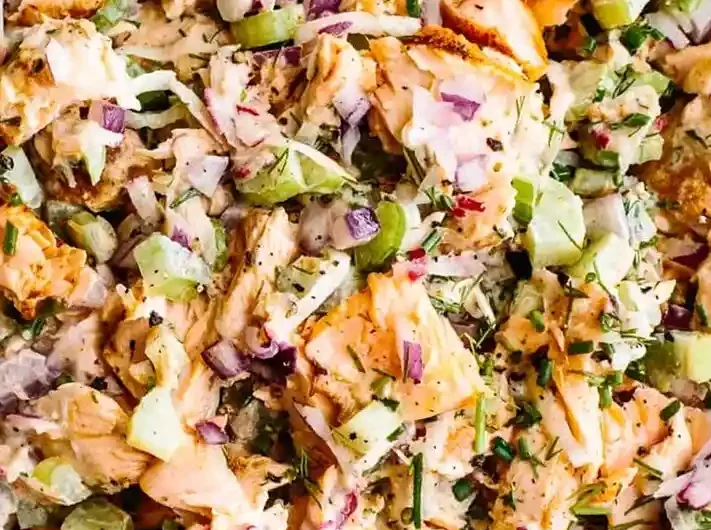
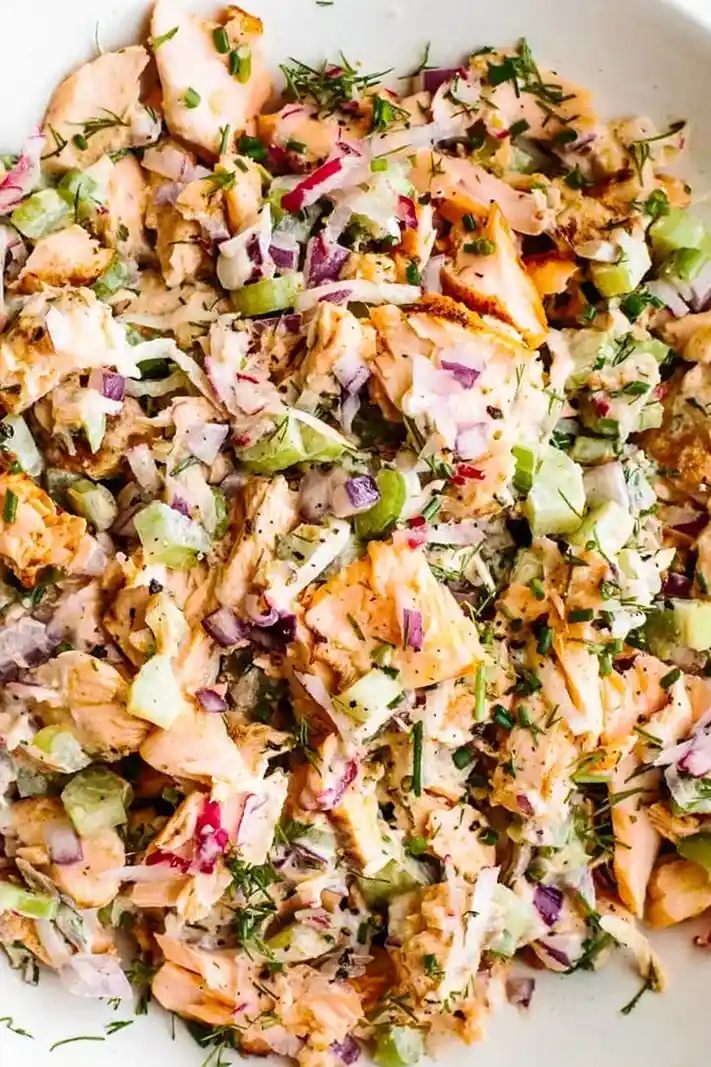
This nutritious salmon salad combines flaky baked fish with crisp vegetables and a zesty lemon dressing. It serves as an excellent option for a light dinner or a protein-rich meal prep lunch.
List of ingredients
- 1 ¼ pounds salmon filet – choose a high-quality piece for the best flavor and texture.
- ½ tablespoon olive oil – used to coat the fish for roasting.
- 1 teaspoon smoked paprika – adds a subtle smoky dimension to the salmon.
- Kosher salt and freshly ground black pepper – used to season the fish to taste.
- ¼ cup mayonnaise – provides the creamy base for the salad dressing.
- ½ lemon, zested and juiced (about ½ tablespoon of zest and 1 ¼ tablespoons juice) – adds acidity and bright citrus notes.
- 2 teaspoons Dijon mustard – introduces a sharp tang and helps emulsify the dressing.
- 1 garlic clove, minced – adds a pungent, aromatic quality.
- Kosher salt and freshly ground black pepper – used to season the dressing to taste.
- ½ small red onion, finely diced – provides a mild bite and vibrant color.
- 3 large radishes, grated – adds a peppery flavor and crisp texture.
- 2 stalks celery, small diced – contributes a fresh, watery crunch.
- 2 tablespoons finely chopped fresh dill – offers a classic herbal pairing for salmon.
- 2 tablespoons finely chopped fresh chives – adds a mild onion-like herbal finish.
step-by-step instructions
- Prepare the salmon: Preheat your oven to 375°F (190°C). Line a baking sheet with parchment paper and place the salmon filet on top. Drizzle the filet with olive oil and season evenly with smoked paprika, salt, and pepper.
- Bake and flake the fish: Bake the salmon for 16 to 18 minutes, depending on the thickness of the filet, until it flakes easily with a fork. Allow the salmon to cool to room temperature, then flake it into chunks in a bowl. Chill the flaked salmon in the refrigerator for 5 to 10 minutes.
- Combine vegetables: Add the finely diced red onion, grated radishes, diced celery, chopped dill, and chopped chives directly into the bowl with the chilled salmon.
- Prepare the dressing: In a separate small mixing bowl, stir together the mayonnaise, lemon zest, lemon juice, Dijon mustard, and minced garlic. Add salt and pepper to taste.
- Mix the salad: Pour the prepared dressing over the salmon and vegetable mixture. Gently stir everything together until evenly coated, ensuring you do not over-stir to keep the salmon in large, flaky chunks.
- Serve the dish: Serve the salad chilled directly from the bowl, scooped into butter lettuce leaves, or used as a filling for sandwiches and wraps.
Expert Salmon Cooking Tips
Determine Doneness Using a Fork
To ensure the salmon is cooked through without becoming dry, use a fork to gently press the thickest part of the filet. If the fish separates easily along the natural lines of the muscle, it is fully cooked. Overcooking leads to a rubbery texture, which can negatively affect the final salad consistency.
Standardize Filet Thickness
If your salmon filet is uneven in thickness, use a meat mallet or a heavy skillet to gently press the thicker end. This ensures the fish cooks evenly across the entire piece. Even cooking prevents the thin edges from drying out while the center remains raw.
Use Parchment Paper for Easy Release
Lining your baking sheet with parchment paper prevents the salmon from sticking to the pan. This allows you to remove the fish intact without breaking the delicate flesh. It also significantly reduces the amount of cleanup required after roasting.
Chill Salmon Before Mixing
Chilling the flaked salmon for 10 minutes before adding the dressing is a critical step. Cold fish holds its structure better when tossed with creamy ingredients. This prevents the salmon from turning into a paste and preserves those desirable large chunks.
Ingredient Substitutions
Replacing Mayonnaise with Greek Yogurt
For a tangier and higher-protein version, replace the mayonnaise with plain Greek yogurt or sour cream. This substitution reduces the overall fat content while maintaining a creamy consistency. You may need to add an extra pinch of salt to balance the acidity of the yogurt.
Using Jicama Instead of Radishes
If you prefer a milder flavor than the peppery bite of radishes, use grated jicama. Jicama provides a similar crisp texture and keeps the salad fresh. It is an excellent neutral alternative that allows the lemon and dill to stand out more.
Alternative Fresh Herb Options
If dill or chives are unavailable, fresh parsley or tarragon are suitable replacements. Parsley adds a clean, grassy brightness, while tarragon provides a slight anise flavor that pairs well with fish. Use the same quantity as specified for the original herbs.
Substituting Dijon Mustard
Whole grain mustard can be used instead of Dijon for a more rustic texture and a milder heat. If you have no mustard at all, a small amount of lemon juice and a pinch of turmeric can mimic some of the acidity and color. However, the emulsifying property of mustard is best for the dressing’s stability.
Creative Serving Ideas
Butter Lettuce Wraps
Using butter lettuce leaves as a vessel provides a light, low-carb way to enjoy the salad. The soft, buttery texture of the lettuce contrasts well with the crunch of the celery and radishes. This method keeps the meal feeling fresh and airy.
Whole Grain Crackers and Crostini
For an appetizer or a light snack, serve small scoops of the salmon salad on toasted crostini or seeded whole grain crackers. The saltiness of the crackers complements the creamy lemon dressing. This is an ideal presentation for gatherings or parties.
Salmon Salad Sandwiches
Spread the salad on toasted sourdough or multi-grain bread for a filling lunch. Adding a slice of cucumber or a leaf of spinach can add extra freshness to the sandwich. To prevent the bread from becoming soggy, place a lettuce leaf between the bread and the salmon mixture.
Stuffed Avocado Halves
Scoop the salmon salad into the center of a halved avocado. The creaminess of the avocado enhances the richness of the salmon and adds healthy fats to the meal. Squeeze a bit of extra lemon juice over the top to prevent the avocado from browning.
Storage and Preservation
Refrigeration Guidelines
Store the completed salmon salad in an airtight container in the refrigerator for up to 3 to 4 days. Keep the container tightly sealed to prevent the salad from absorbing other odors from the fridge. Ensure the salad is cooled completely before sealing to avoid condensation.
Freezing and Thawing Instructions
This salad can be frozen in a freezer-safe container for up to 3 months. Remove as much air as possible from the container to prevent freezer burn. Thaw the salad slowly in the refrigerator overnight before serving to maintain the best texture.
Preventing Ingredient Oxidation
To keep the vegetables crisp and the colors bright, avoid mixing the salad too far in advance. If preparing for a party, you can mix the dressing and vegetables separately and combine them with the salmon just before serving. This prevents the salt in the dressing from drawing too much moisture out of the vegetables.
Troubleshooting Common Issues
Preventing a Watery Salad
If your salad becomes too watery, it is often due to the moisture in the grated radishes or celery. To prevent this, pat the diced vegetables dry with a paper towel before adding them to the bowl. You can also strain the grated radishes in a fine-mesh sieve to remove excess liquid.
Adjusting an Overly Acidic Dressing
If the lemon juice makes the dressing too tart, add an extra tablespoon of mayonnaise or a tiny pinch of sugar. This helps neutralize the acidity and rounds out the flavor profile. Stir in small increments and taste frequently until the balance is correct.
Fixing Bland Flavors
If the salad tastes flat, increase the amount of lemon zest or add a small pinch of extra salt. Freshly ground black pepper can also add the necessary depth to wake up the other ingredients. Ensure you are using fresh lemon rather than bottled juice for the best aromatic result.
Dealing with Mushy Salmon
Mushiness usually occurs if the salmon was over-stirred or not chilled enough before mixing. To avoid this in the future, use a rubber spatula to fold the ingredients together gently. Avoid using a whisk or a fork to stir the final mixture.
Frequently Asked Questions
Can I use canned salmon instead of fresh?
While canned salmon is an option, it is not recommended for this specific recipe. Canned salmon typically contains bones and skin, and it lacks the chunky, flaky texture provided by a fresh baked filet. For a premium salad experience, fresh baked salmon is the superior choice.
Is this recipe suitable for meal prep?
Yes, this recipe is ideal for meal prep as it stores well and tastes great cold. You can prepare the baked salmon and the dressing separately and combine them on the day of consumption. This keeps the vegetables at their peak crispness.
Can I bake the salmon in an air fryer?
Yes, you can use an air fryer for the salmon to save time. Cook the seasoned filet at 375°F for about 8 to 12 minutes, depending on the thickness. Check the internal temperature or use the fork-flake test to ensure it is fully cooked.
How do I store the leftover salmon filet?
If you have leftover baked salmon that hasn’t been mixed into the salad, store it in an airtight container for 3 to 4 days. You can flake and mix it into the salad dressing later. Reheating is not necessary as this salad is intended to be served cold.
Print
Creamy Baked Salmon Salad
- Total Time: 45 minutes
- Yield: 4 servings 1x
- Diet: General
Description
This salmon salad has it all – flaky baked salmon, red onion, radishes, celery, and herbs, tossed in a creamy lemony dressing.
Ingredients
- 1 ¼ pounds salmon filet
- ½ tablespoon olive oil
- 1 teaspoon smoked paprika
- kosher salt and freshly ground black pepper (to taste)
- ⅓ cup mayonnaise
- ½ lemon, zested and juiced (about ½ tablespoon of zest and 1 ½ tablespoons juice)
- 2 teaspoons Dijon mustard
- 1 garlic clove, minced
- kosher salt and freshly ground black pepper (to taste)
- ½ small red onion, finely diced
- 3 large radishes, grated
- 2 stalks celery, small diced
- 2 tablespoons finely chopped fresh dill
- 2 tablespoons finely chopped fresh chives
Instructions
- Prep the salmon: Preheat the oven to 375°F (190°C). Line a baking sheet with parchment paper and place the salmon on top. Drizzle the salmon with olive oil and season with smoked paprika, salt, and pepper.
- Bake and flake the salmon: Bake the salmon for 16 to 18 minutes (depending on size and thickness), or until it flakes easily with a fork. Let it cool to room temperature, then flake the salmon into chunks and place in a bowl. Chill the flaked salmon for 5 to 10 minutes in the fridge.
- Dice the vegetables: Top the flaked salmon with the onion, radish, celery, dill, and chives.
- Make the dressing: In a separate small bowl make the dressing. Stir together the mayonnaise, lemon zest and juice, mustard, garlic, salt, and pepper.
- Stir it all together: Pour the dressing on top of the salad, and gently stir to combine.
- Serve: Serve the salmon salad chilled straight out of the bowl, on butter lettuce leaves, or as a sandwich or wrap.
Notes
You can substitute mayonnaise with yogurt or sour cream. For different crunch, grated turnip or jicama can replace radishes.
- Prep Time: 15 minutes
- Cook Time: 20 minutes
- Category: Dinner
- Method: Baking
- Cuisine: American
Nutrition
- Serving Size: 1 serving
- Calories: 361 kcal
- Sugar: 1 g
- Sodium: 227 mg
- Fat: 25 g
- Saturated Fat: 4 g
- Unsaturated Fat: 19 g
- Trans Fat: 0.04 g
- Carbohydrates: 4 g
- Fiber: 1 g
- Protein: 29 g
- Cholesterol: 86 mg
Keywords: salmon salad, healthy dinner, baked salmon, creamy salmon, meal prep