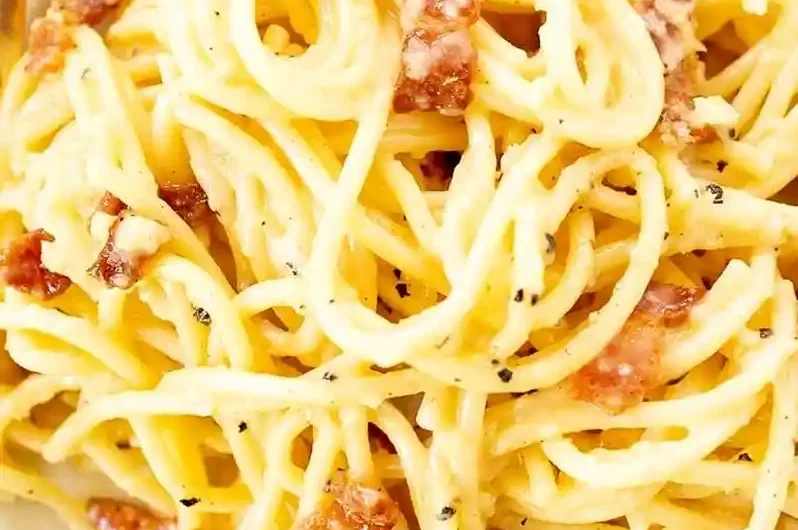
This rich and indulgent pasta dish combines a creamy egg-based sauce with savory beef bacon and sharp cheese. It is a straightforward meal that uses common pantry staples to create a high-end dinner experience in under thirty minutes.
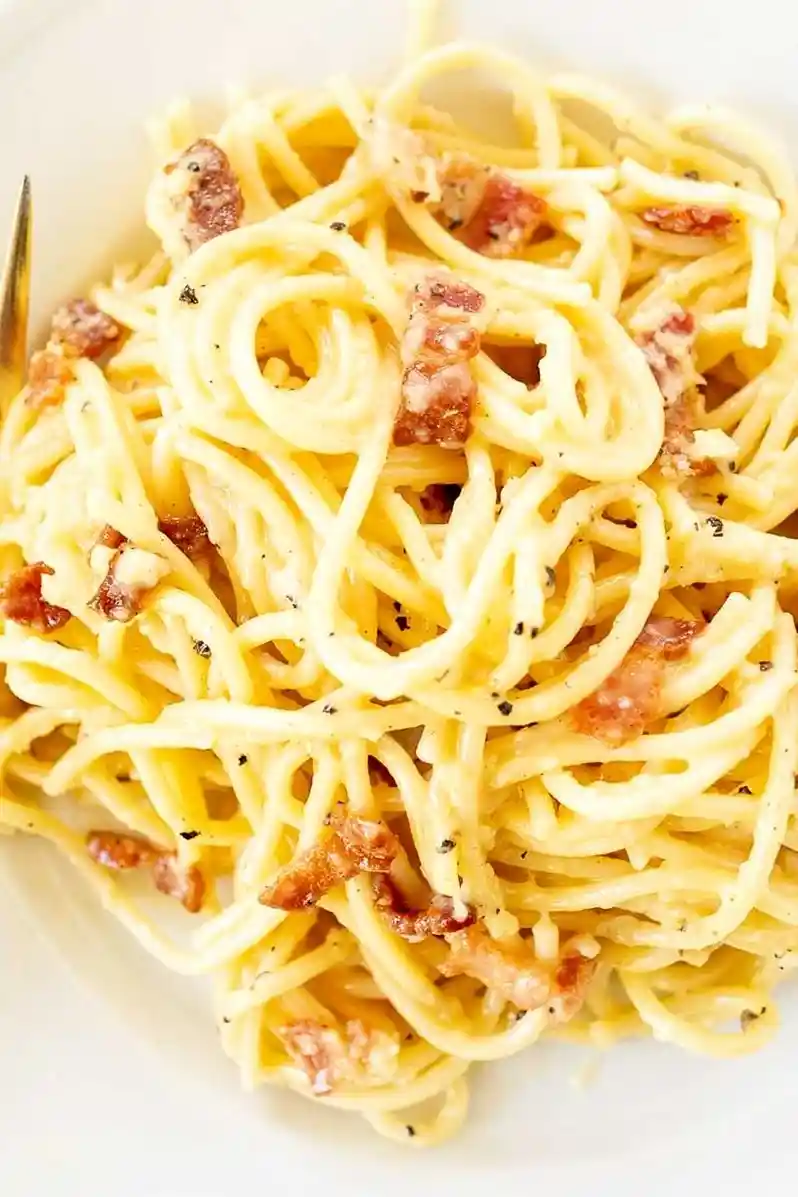
List of ingredients
- 1 pound pasta (any shape, spaghetti is traditional) – provides the hearty base for the meal.
- 8 ounces beef bacon (cooked and cut into pieces) – adds a smoky, salty depth to the dish.
- 1/4 cup butter (salted) – creates a glossy finish and rich flavor.
- 4 large eggs (whisked) – the primary thickening agent for the emulsion.
- 1/4 cup whipping cream – enhances the sweetness and smoothness of the sauce.
- 1 cup parmesan (grated) – delivers a sharp, salty contrast to the cream.
- 1 teaspoon minced garlic – adds a subtle aromatic pungency.
- Black pepper – used for seasoning and as a final garnish.
step-by-step instructions
- Boil Pasta: Bring a large pot of water to a boil. Prepare pasta al dente according to package directions.
- Warm the Bowl: Preheat the oven to 200 degrees and place a large, empty, oven-safe bowl in it for future tossing of the pasta.
- Sauté Aromatics: In a saucepan over medium heat, cook the beef bacon and garlic until fragrant and browned.
- Mix Sauce Base: In a small bowl, whisk together the eggs and whipping cream until smooth.
- Combine Pasta and Butter: Drain the pasta and immediately add it to the warm bowl with butter. Toss well to ensure every strand is coated.
- Emulsify Sauce: Gradually stir in the egg and cream mixture until the sauce is fully emulsified and creamy.
- Fold in Extras: Toss in the cooked beef bacon and grated parmesan, reserving a small amount of each for garnish.
- Final Touch: Serve immediately with fresh cracked black pepper on top.
Cooking Secrets for the Perfect Emulsion
Maintain Al Dente Texture
Always cook your pasta slightly under the recommended package time. Because the pasta is tossed in a warm bowl with a rich sauce, it continues to cook for a few minutes. This prevents the noodles from becoming mushy and keeps a firm bite.
Utilize Starchy Pasta Water
Hold back a small amount of the salty pasta water before draining the pot. If your sauce appears too thick or sticky, stir in a tablespoon of this water. The starch helps bind the fat and liquid, creating a professional, silky consistency.
Temperature Control with the Mixing Bowl
Using a bowl warmed in a 200-degree oven provides a gentle, indirect heat source. This ensures the sauce reaches a safe temperature without the risk of the eggs scrambling. It is the most reliable way to achieve a smooth, creamy texture.
Temper the Egg Mixture
To further prevent curdling, stir a few tablespoons of the hot pasta water into the egg and cream mixture before adding it to the noodles. This raises the temperature of the eggs gradually. It reduces the thermal shock when the mixture hits the hot pasta.
Slow and Steady Incorporation
Pour the egg and cream mixture into the pasta very slowly while stirring constantly. Rapidly adding the liquid can cause the eggs to cook unevenly. A steady stream ensures the proteins emulsify into a smooth sauce rather than clumps.
Ingredient Alternatives and Customizations
Exploring Different Pasta Shapes
While spaghetti is the traditional choice, fettuccine or linguine offer a wider surface area for the sauce to cling to. For a heartier meal, try using penne or rigatoni. The creamy sauce works effectively with any shape that can trap the cheese and beef bacon.
Swapping the Cheese Variety
Pecorino Romano is an excellent alternative to Parmesan if you prefer a saltier, sharper flavor. This cheese is made from sheep’s milk and provides a more pungent kick. You can also use a 50/50 blend of both for a balanced taste profile.
Choosing Alternative Proteins
If beef bacon is unavailable, smoked turkey strips or a plant-based bacon alternative work well. Ensure the protein is cooked until crisp to provide the necessary textural contrast. This keeps the dish savory and smoky regardless of the meat source.
Adjusting the Creaminess
For a lighter version, you can substitute half and half for heavy whipping cream. While the sauce will be slightly less rich, it remains creamy. For those avoiding cream entirely, increasing the amount of pasta water and cheese can still create a thick emulsion.
Serving and Pairing Suggestions
Fresh Herb Enhancements
Top the finished pasta with chopped fresh parsley, basil, or rosemary. These herbs add a bright pop of color and a fresh, earthy contrast to the heavy fats of the sauce. A sprinkle of chives also complements the garlic and beef bacon.
Complementary Side Dishes
Serve this carbonara with a crisp Italian green salad tossed in a light vinaigrette. The acidity of the salad cuts through the richness of the cream and cheese. Garlic cheese bread is another classic accompaniment that adds a satisfying crunch.
Adapting for Brunch
This dish is surprisingly effective for a brunch menu due to the combination of eggs and beef bacon. Serve it in smaller portions alongside a platter of fresh fruit skewers. This creates a luxurious morning meal that is both filling and sophisticated.
Storage and Reheating Guidelines
Short-Term Room Temperature Storage
The pasta can be left at room temperature for up to two hours while serving guests. Because of the egg and cream content, it should not be left out longer than this. Always keep it covered to prevent the sauce from skinning over.
Refrigeration Best Practices
Store leftovers in an airtight container in the refrigerator for up to three days. Allow the pasta to cool at room temperature for about 30 minutes before sealing it. This prevents excessive condensation from forming inside the container.
Freezing Instructions
You can freeze carbonara for up to three months in an airtight, freezer-safe container. Be aware that the emulsion may separate slightly during the freezing process. Thaw the pasta completely in the refrigerator before attempting to reheat it.
Optimal Stovetop Reheating
Reheating on the stove is superior to using a microwave for this dish. Place the pasta in a skillet over medium heat and add a splash of water or cream. Toss gently for five minutes until heated through to restore the creamy texture.
Thawing Process for Frozen Pasta
Transfer the pasta from the freezer to the refrigerator 24 hours before you plan to eat it. This slow thaw preserves the integrity of the noodles. Once thawed, follow the stovetop reheating method for the best results.
Common Troubleshooting Solutions
Addressing Scrambled Eggs
If your sauce looks like scrambled eggs, the heat was too high when the eggs were added. To fix this in the future, ensure you are using a warm bowl rather than a scorching hot pan. Slowing down the stirring process also helps maintain a smooth emulsion.
Fixing a Sauce That is Too Thick
A sauce that is too thick often lacks enough moisture to flow over the pasta. Slowly stir in reserved pasta water one tablespoon at a time. Continue this process until the sauce reaches a luscious, pourable consistency.
Reducing Excessive Saltiness
Between the beef bacon and the Parmesan, it is possible for the dish to become too salty. Add a small pinch of sugar or extra cracked black pepper to balance the flavors. You can also stir in a bit of unsalted butter to mellow the salt.
Frequently Asked Questions
Is cream traditionally used in carbonara?
In authentic Italian recipes, cream is not used; the creaminess comes solely from the emulsion of eggs and cheese. However, adding a small amount of cream provides a richer, sweeter flavor and makes the sauce more stable for home cooks.
Can I use milk instead of heavy cream?
Using milk is not recommended because it lacks the fat content necessary to create a thick, stable sauce. If heavy cream is unavailable, half and half is a suitable substitute that provides a similar consistency.
Why is my carbonara sauce not thickening?
The sauce may fail to thicken if the pasta or the mixing bowl was not warm enough to cook the eggs slightly. Ensure the bowl has been preheated and the pasta is added immediately after draining to provide the necessary heat.
How do I make this recipe gluten-free?
Simply replace the traditional wheat pasta with your favorite gluten-free alternative, such as corn or brown rice pasta. The sauce ingredients—eggs, cream, cheese, and beef bacon—are naturally gluten-free.
Can this be made into a vegetarian dish?
Yes, you can omit the beef bacon entirely or replace it with sautéed mushrooms or sun-dried tomatoes. This maintains the savory, umami element of the dish while making it suitable for vegetarians.
Print
Creamy Beef Bacon Carbonara
- Total Time: 20 minutes
- Yield: 6 servings 1x
- Diet: General
Description
This recipe is incredibly easy, consists mostly of staple ingredients and requires very little effort.
Ingredients
- 1 pound pasta (any shape, spaghetti is traditional)
- 8 ounces smoked turkey breast (cooked and cut into pieces)
- ¼ cup salted butter
- 4 large eggs (whisked)
- ¼ cup whipping cream
- 1 cup grated parmesan
- 1 teaspoon minced garlic
- black pepper
Instructions
- Step: Bring a large pot of water to a boil. Prepare pasta al dente.
- Step: Preheat the oven to 200 degrees and place a large, empty, oven-safe bowl in it for future tossing of the pasta carbonara recipe.
- Step: In a saucepan over medium heat, cook the smoked turkey breast and garlic.
- Step: In a small bowl, whisk the eggs and cream.
- Step: Drain pasta and add to warm bowl with butter. Toss to combine. Gradually stir in the egg and cream mixture until fully emulsified.
- Step: Toss in smoked turkey breast and parmesan, reserving some for garnish.
- Step: Serve with fresh cracked pepper.
Notes
Always cook your pasta al dente. Reserve a little of the pasta water and add it back into your sauce if it needs to be thinned out. Slowly add the cream and egg mixture to avoid scrambling the eggs.
- Prep Time: 5 minutes
- Cook Time: 15 minutes
- Category: Main Course
- Method: Stovetop
- Cuisine: Italian American
Nutrition
- Serving Size: 1 serving
- Calories: 655 kcal
- Sugar: 2 g
- Sodium: 623 mg
- Fat: 35 g
- Saturated Fat: 16 g
- Unsaturated Fat: 19 g
- Trans Fat: 0 g
- Carbohydrates: 58 g
- Fiber: 2 g
- Protein: 25 g
- Cholesterol: 183 mg
Keywords: Pasta Carbonara, Creamy Pasta, Spaghetti, Comfort Food, Italian American