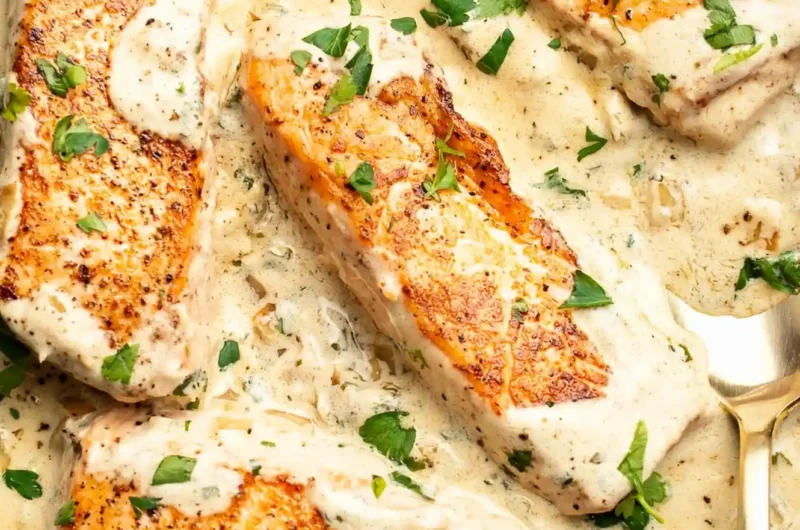
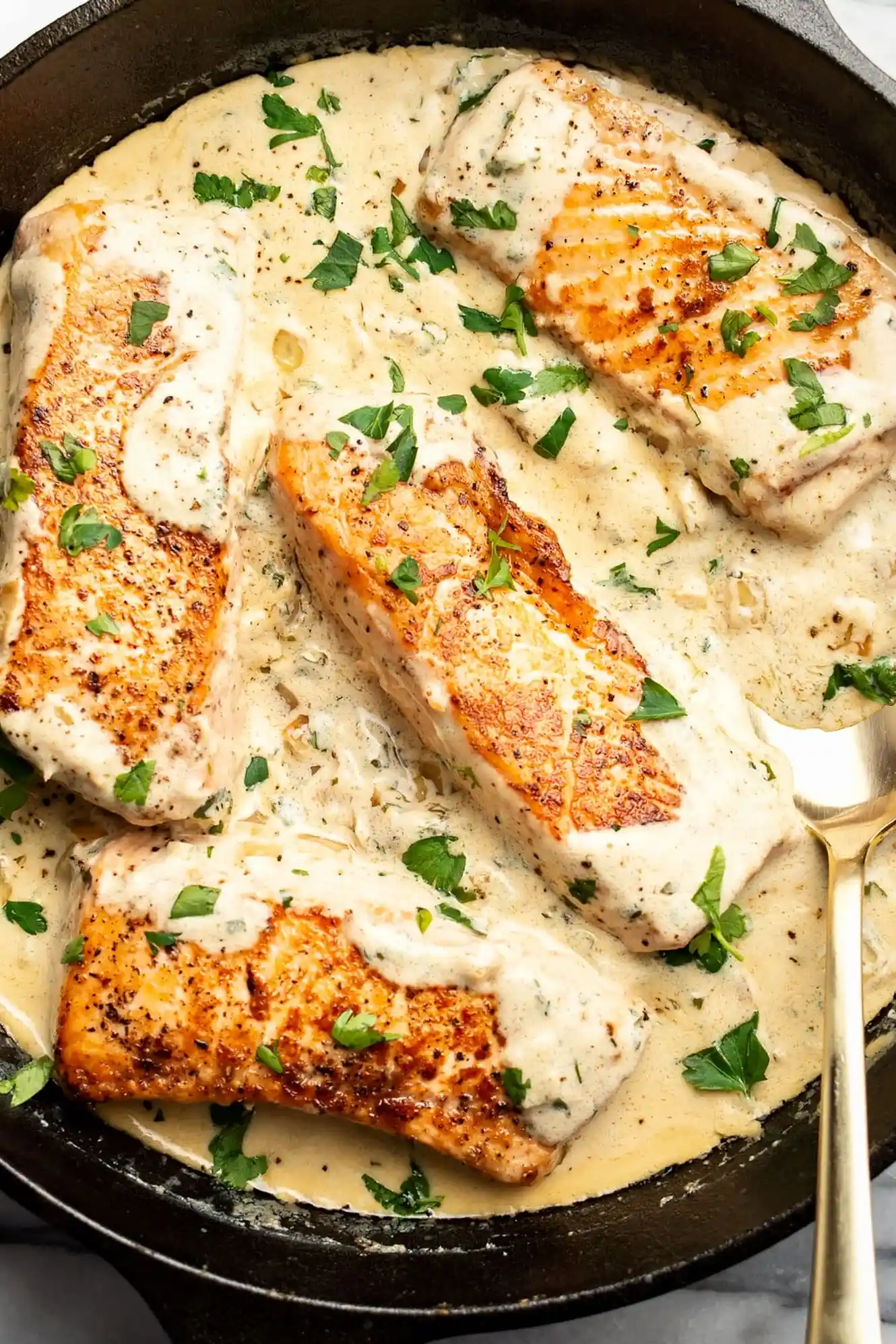
This quick recipe delivers a rich, creamy sauce and perfectly seared salmon in just 30 minutes. It is an ideal weeknight dinner for those who love a blend of fresh herbs and garlic.
List of ingredients
- 1 pound fresh salmon, cut into 4 pieces – ensure they are of similar thickness for even cooking.
- 1/2 teaspoon garlic powder – provides a consistent savory base.
- Salt & pepper, to taste – used for primary seasoning.
- 1 tablespoon olive oil – helps prevent sticking and raises the smoke point.
- 1 tablespoon butter – adds richness and aids in browning.
- 1/2 medium onion, chopped – creates a flavor foundation for the sauce.
- 3/4 cup chicken broth – use low sodium if you are monitoring salt intake.
- 1 teaspoon fresh lemon juice – adds a necessary hit of acidity.
- 1 package (5.2 oz/150g) Boursin Fine Herbs & Garlic cheese, softened – the primary thickening and flavoring agent.
- 1-2 tablespoons chopped parsley – adds a fresh, herbal finish.
step-by-step instructions
- Prepare the Fish: Remove the salmon from the refrigerator 15-30 minutes before cooking. Cut into 4 equal pieces, pat them dry with paper towels, and season each piece with garlic powder, salt, and pepper.
- Sear the Salmon: Heat the butter and olive oil in a skillet over medium-high heat. Once hot, add the salmon and cook for 3-4 minutes per side until lightly browned. Remove the fish from the pan and set it on a plate, noting that it should not be fully cooked yet.
- Sauté the Aromatics: In the same skillet, add the chopped onions. Sauté for approximately 5 minutes until they are softened and have turned a light golden color.
- Create the Creamy Sauce: Pour in the chicken broth and lemon juice, then add the softened Boursin cheese. Stir continuously until the cheese melts and the sauce is smooth. Let the mixture bubble for 4-5 minutes, then stir in the chopped parsley.
- Finish Cooking: Place the seared salmon pieces back into the skillet. Reduce the heat and simmer for another 3-5 minutes until the fish flakes easily with a fork and the sauce has thickened.
- Final Touch: Taste the sauce and add additional salt or pepper if needed. Serve immediately while hot.
Pan-Searing Mastery
The Benefit of Room Temperature Salmon
Taking the fish out of the fridge 15-30 minutes early ensures more even cooking. Cold salmon can drop the pan temperature too quickly, which prevents a proper sear and can lead to an unevenly cooked center.
Managing the Searing Heat
Use medium-high heat to achieve the Maillard reaction, which creates the browned crust on the fish. If the pan is too cold, the fish will steam in its own juices rather than searing, resulting in a pale color and softer texture.
Preventing Fish from Sticking
Avoid moving the salmon immediately after placing it in the pan. The fish will naturally release from the surface once a proper crust has formed; forcing it too early will tear the delicate flesh.
Identifying the Perfect Doneness
Watch for the color to shift from a deep, vibrant pink to a lighter, opaque shade of pink. The salmon is finished when it flakes easily under the pressure of a fork but remains moist in the center.
Ingredient Selection and Substitutions
Choosing the Best Salmon Cut
Center-cut fillets are generally the best choice because they maintain a consistent thickness. This ensures that all four pieces cook at the same rate during both the searing and simmering stages.
Exploring Different Boursin Flavors
While the Fine Herbs and Garlic variety is classic, you can experiment with Cracked Black Pepper or Caramelized Onion versions. These variations change the flavor profile of the sauce without requiring changes to the cooking method.
Broth Alternatives for Different Diets
If you prefer not to use chicken broth, a high-quality vegetable broth works perfectly. This substitution maintains the depth of flavor and the liquid ratio needed to emulsify the cheese.
The Role of Fresh Lemon Juice
The acidity from the lemon juice is critical for cutting through the richness of the Boursin cheese. It brightens the overall taste and prevents the creamy sauce from feeling too heavy on the palate.
Serving and Pairing Suggestions
Ideal Pasta Pairings
Penne, fettuccine, or linguine are excellent choices to soak up the herb sauce. Toss the cooked pasta directly into the pan with the sauce for a cohesive meal.
Rice and Potato Options
Fluffy basmati rice or garlic mashed potatoes provide a neutral base that complements the savory cheese. These starches balance the acidity of the lemon and the saltiness of the Boursin.
Complementary Vegetable Sides
Roasted green beans, steamed asparagus, or sautéed spinach add a fresh element to the plate. These vegetables provide a crisp texture that contrasts with the tender, flaky salmon.
Fresh Salad Combinations
A light arugula salad with a simple vinaigrette or a classic Caesar salad works well. The bitterness of arugula or the crunch of romaine helps cleanse the palate between bites of creamy fish.
Storage and Reheating Guidelines
Safe Refrigeration Limits
Store leftover salmon in an airtight container in the refrigerator for up to 2-3 days. For the best quality and food safety, seafood is ideally consumed within 48 hours of cooking.
Airtight Container Importance
Using a sealed container prevents the salmon from absorbing other fridge odors and stops the sauce from drying out. It also protects the fish from oxidation, which can affect the flavor.
Slow Reheating Method
Reheat the salmon and sauce slowly in a saucepan over low heat. Adding a tiny splash of water or broth can help the sauce regain its creamy consistency without separating.
Freezing Limitations
This dish is not recommended for freezing due to the high dairy content in the Boursin cheese. Freezing and thawing typically causes the cream sauce to break and the salmon to become rubbery.
Troubleshooting Common Issues
Fixing a Sauce That Is Too Thick
If the sauce reduces too much and becomes overly thick, stir in a tablespoon of chicken broth. Do this over low heat to ensure the liquid incorporates smoothly without clumping.
Preventing Overcooked Salmon
Keep a close eye on the fish during the final simmering stage. Overcooking salmon leads to a dry, chalky texture, so remove the pan from the heat as soon as the fish flakes.
Managing Sauce Separation
If the sauce appears to separate or look oily, keep the heat low and stir constantly. Ensuring the Boursin cheese is softened before adding it to the pan also helps create a stable emulsion.
Handling Skin-On Fillets
If your salmon has skin and you prefer not to eat it, simply peel it off after the initial searing step. The skin helps protect the fish during the first sear but is not necessary for the sauce stage.
Recommended Kitchen Equipment
Choosing the Right Skillet
A cast iron skillet is ideal for this recipe because it retains heat exceptionally well, providing a superior sear. Stainless steel is also a great option for creating a fond that flavors the sauce.
Using a Silicone Spatula
A flexible silicone spatula allows you to flip the salmon gently without breaking the fillet. It is also useful for scraping the bottom of the pan to incorporate all the browned bits into the sauce.
Measuring for Accuracy
Use standard measuring cups and spoons to ensure the ratio of broth to cheese is correct. This balance is essential for achieving a sauce that is creamy rather than liquid or paste-like.
Nutritional Balance
Protein Content and Quality
Salmon provides high-quality protein and omega-3 fatty acids, which are essential for heart health. This makes the dish a nutrient-dense main course that is both satisfying and healthy.
Managing Sodium Levels
Because Boursin cheese and chicken broth contain salt, use low-sodium broth if you are sensitive to salt. Taste the dish before adding any extra salt during the final seasoning step.
Healthy Fat Integration
The combination of olive oil and omega-3s from the salmon provides a range of beneficial fats. These fats help the body absorb fat-soluble vitamins present in the accompanying vegetable sides.
Common Questions
Can I use frozen salmon for this recipe?
Yes, but it must be completely thawed in the refrigerator overnight. Cooking frozen salmon directly leads to excess water release, which will prevent searing and dilute the sauce.
What is the best way to tell if the salmon is done?
The most reliable method is to press the top of the fillet with a fork; if the layers separate easily, it is cooked. You can also use a meat thermometer to check for an internal temperature of 145°F.
Can I substitute Boursin with another cheese?
You can use a mixture of softened cream cheese, dried parsley, garlic powder, and a pinch of salt. However, the flavor will not be as complex as the original Boursin cheese.
How do I stop the sauce from curdling?
Avoid boiling the sauce on extremely high heat once the cheese is added. Keeping the heat at a gentle simmer ensures the dairy remains smooth and emulsified.
Does this recipe work with other types of fish?
This sauce works well with halibut or cod, though these fish cook faster than salmon. Adjust the searing and simmering times to avoid overcooking the leaner white fish.
Print
Creamy Boursin Herb Salmon
- Total Time: 30 minutes
- Yield: 4 servings 1x
- Diet: General
Description
This 30-minute Boursin salmon recipe has a creamy lemon herb sauce, and it’s perfectly flaky and tender and simple to make.
Ingredients
- 1 pound fresh salmon (cut into 4 pieces)
- 1/2 teaspoon garlic powder
- Salt & pepper (to taste)
- 1 tablespoon olive oil
- 1 tablespoon butter
- 1/2 medium onion (chopped)
- 3/4 cup chicken broth
- 1 teaspoon fresh lemon juice
- 1 (5.2 oz/150g) package Boursin Fine Herbs & Garlic cheese (softened)
- 1–2 tablespoons chopped parsley
Instructions
- Step 1: Take the salmon out of the fridge 15-30 minutes prior to starting the recipe if possible. Cut it into 4 pieces. Pat each piece dry and season with the garlic powder and some salt & pepper.
- Step 2: Add the butter and olive oil to a skillet over medium-high heat. When it’s hot, add the salmon. Cook for 3-4 minutes/side or until lightly browned. Transfer the salmon to a plate.
- Step 3: To the skillet, add the onions and sauté for about 5 minutes or until softened and lightly golden.
- Step 4: Add the chicken broth, lemon juice, and the Boursin to the skillet. Stir until you’ve got a smooth sauce. Let it bubble for about 4-5 minutes, then stir in the chopped parsley.
- Step 5: Put the salmon back into the skillet. Cook for another 3-5 minutes on low heat or until it’s cooked through, flakes easily with a fork, and the sauce has thickened.
- Step 6: Season with salt & pepper if needed and serve immediately.
Notes
This recipe is designed for salmon approximately 1″ thick. If the salmon has skin and you prefer not to eat it, peel it off after the searing step. If the sauce becomes too thick, add a splash more chicken broth.
- Prep Time: 10 minutes
- Cook Time: 20 minutes
- Category: Main Course
- Method: Pan-frying
- Cuisine: American
Nutrition
- Serving Size: 1 portion
- Calories: 380 kcal
- Sugar: 2 g
- Sodium: 466 mg
- Fat: 29 g
- Saturated Fat: 14 g
- Unsaturated Fat: 9 g
- Trans Fat: 0.1 g
- Carbohydrates: 3 g
- Fiber: 0.3 g
- Protein: 26 g
- Cholesterol: 109 mg
Keywords: Boursin salmon, creamy salmon, lemon herb sauce, pan-seared salmon