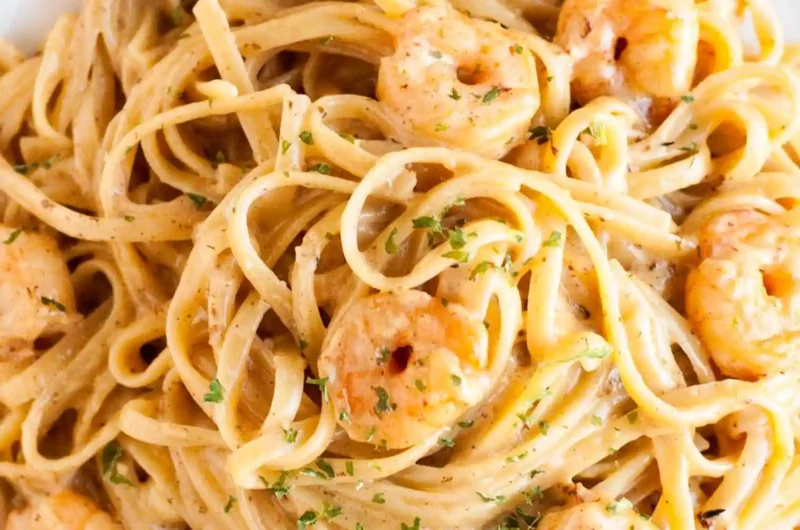
This creamy Cajun shrimp pasta is a fast weeknight meal that combines bold, spicy seasoning with a rich, velvety sauce. It comes together in about 40 minutes using a simple cornstarch-thickened broth base for a professional consistency.
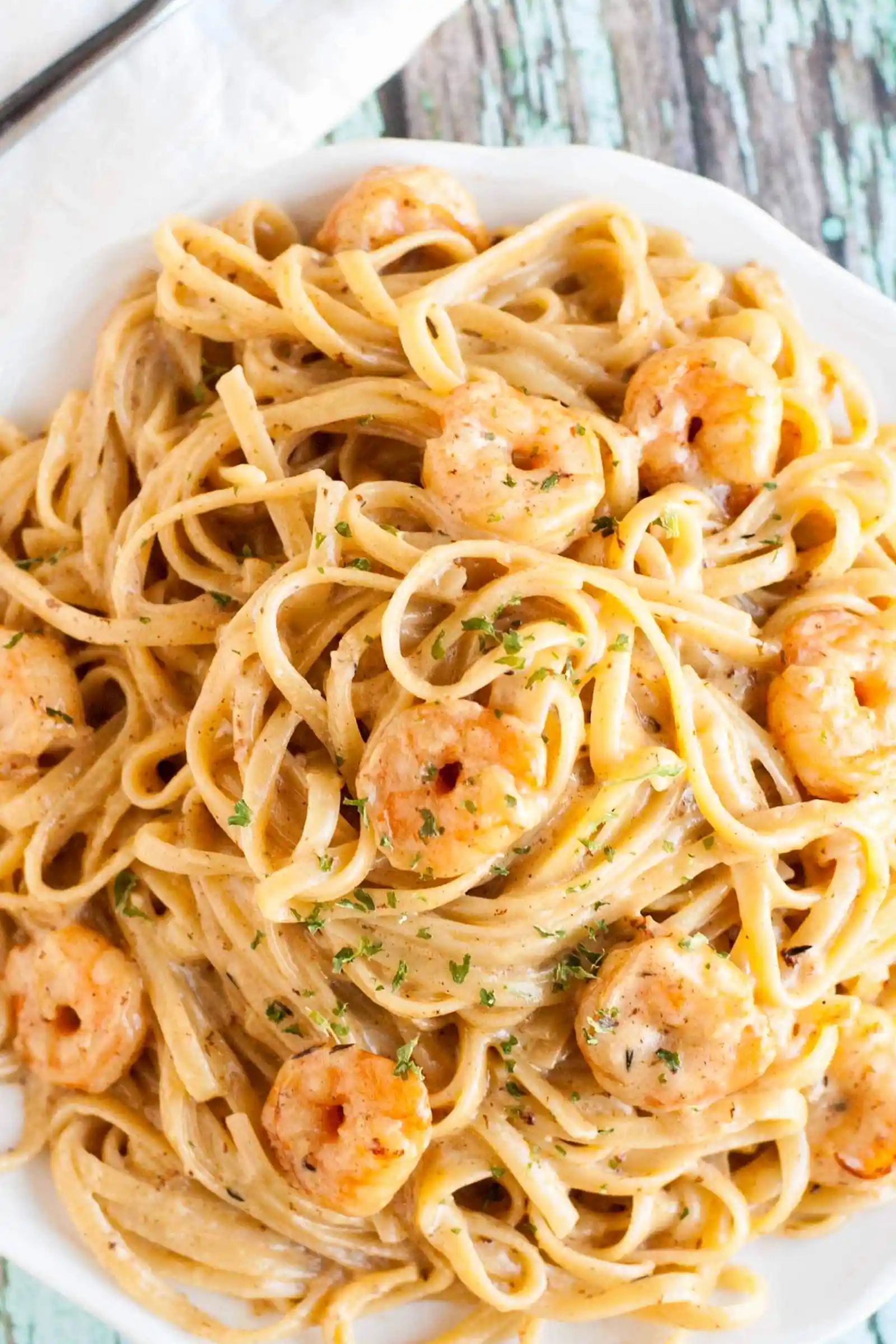
List of ingredients
- 16 oz shrimp – peeled and deveined, tails removed, thawed if frozen
- 2 tablespoons butter – used for sautéing the aromatics
- 1/2 small yellow onion – finely diced
- 3 cloves garlic – minced
- 2 teaspoons cajun seasoning blend – adjust quantity based on heat preference
- 2 1/2 cups chicken broth – forms the base of the sauce
- 1 tablespoon cornstarch mixed with 1 tablespoon water – whisked together until smooth to create a slurry
- 3/4 cup heavy cream – adds richness and creaminess
- 12 oz dried linguine pasta – cooked according to package directions
- Fresh parsley – chopped, for optional garnish
step-by-step instructions
- Sauté Aromatics: Melt the butter in a large skillet over medium-high heat. Add the diced onion and sauté for 4 to 5 minutes until the pieces are softened.
- Cook Shrimp: Stir in the minced garlic and shrimp. Sauté for 6 to 8 minutes until the shrimp are fully cooked and the onions and garlic begin to caramelize.
- Season: Add the cajun seasoning blend. Start with 1 teaspoon and add the remaining amount depending on your desired spice level, stirring to coat everything evenly.
- Simmer Broth: Slowly pour in the chicken broth and bring the mixture to a simmer.
- Thicken Sauce: Stir in the cornstarch slurry. Continue to simmer for 5 to 8 minutes, or until the broth has reduced by approximately half and thickened.
- Add Cream: Stir in the heavy cream and bring the sauce back to a simmer. Let it cook for another 3 to 4 minutes to heat through and thicken further.
- Combine: Add the cooked linguine pasta to the skillet and toss thoroughly to coat the noodles in the sauce.
- Finish: Remove the skillet from the heat and garnish with fresh parsley if desired.
Professional Cooking Techniques for Better Results
Searing Shrimp Quickly to Prevent Overcooking
Cook shrimp over medium-high heat to ensure they sear quickly. Avoid overcrowding the pan, as too many shrimp can release excess moisture and cause them to steam rather than brown. Remove them from the heat as soon as they form a ‘C’ shape to avoid a rubbery texture.
Preparing a Lump-Free Cornstarch Slurry
Always mix cornstarch with cold water before adding it to a hot liquid. Whisk the slurry vigorously in a small bowl until no white clumps remain. Adding dry cornstarch directly into the simmering broth will cause immediate clumping that is difficult to stir out.
Balancing Spicy and Creamy Flavors
Cajun seasonings vary in salt and heat levels between brands. Taste the sauce after adding the first teaspoon of seasoning and before adding the cream. The heavy cream will naturally mellow the spice, so adjust the seasoning level slightly higher if you prefer a sharper kick.
Ingredient Substitutions and Swaps
Using Alternative Pasta Shapes
While linguine is traditional, penne or fettuccine work well for this recipe. Short pastas like penne are excellent for trapping the thick sauce in their centers. Wide noodles like fettuccine provide more surface area for the cream sauce to cling to.
Low-Fat Cream Alternatives
If you prefer a lighter sauce, replace heavy cream with half-and-half or whole milk. If using milk, increase the cornstarch slurry by one teaspoon to maintain the desired thickness. For a dairy-free version, full-fat coconut milk provides a similar creamy consistency.
Substituting Different Proteins
This recipe works well with sliced chicken breast or sea scallops. If using chicken, sauté the pieces for 5 to 7 minutes before adding the garlic. Scallops should be seared quickly and added back to the sauce at the very end to prevent overcooking.
Vegetable-Based Broth Options
You can replace chicken broth with vegetable broth for a different flavor profile. Ensure the vegetable broth is low-sodium to avoid clashing with the salt in the Cajun seasoning. Mushroom broth also adds a deeper, earthy undertone to the sauce.
Flavor Variations
Adding Roasted Bell Peppers
Diced red or yellow bell peppers add a sweet contrast to the spicy Cajun seasoning. Sauté them along with the onions at the beginning of the process. Roasted peppers can be stirred in at the end for a smokier flavor.
Incorporating Fresh Spinach
Stir in two cups of fresh baby spinach just before adding the pasta. The heat from the sauce will wilt the spinach in about 60 seconds. This adds color and nutrients without significantly altering the flavor of the dish.
Adding a Hint of Lemon
Squeeze half a fresh lemon over the finished pasta before serving. The acidity cuts through the richness of the heavy cream and brightens the shrimp flavor. You can also add a pinch of lemon zest during the final toss.
Increasing the Heat Level
For those who prefer more heat, add a pinch of cayenne pepper or red pepper flakes during the sautéing phase. Alternatively, use a ‘Hot’ labeled Cajun blend. Adding a few drops of hot sauce at the end also provides a vinegary tang and extra spice.
Serving and Pairing Suggestions
Best Side Dishes for Creamy Pasta
Serve this dish with a side of steamed broccoli or roasted asparagus to balance the richness. A simple side of sautéed kale with garlic also complements the Cajun flavors. Avoid other heavy starches like mashed potatoes to keep the meal balanced.
Pairing with Fresh Green Salads
A crisp garden salad with a light vinaigrette is the ideal accompaniment. Use mixed greens, cucumbers, and cherry tomatoes with a lemon-olive oil dressing. The acidity of the salad cleanses the palate between bites of the creamy pasta.
Garnishing for Visual Appeal
Beyond parsley, use sliced green onions or a sprinkle of paprika for color. A dusting of freshly grated parmesan cheese adds a salty punch and a professional look. Arrange the shrimp on top of the pasta mound rather than mixing them all in for a better presentation.
Storage and Reheating Guidelines
Proper Refrigeration Methods
Store leftovers in an airtight container in the refrigerator for up to three days. Keep the pasta and sauce combined, but be aware that the noodles will absorb some of the sauce over time. Cool the dish quickly before sealing the lid to prevent condensation.
Reheating Without Breaking the Sauce
Reheat the pasta in a skillet over low to medium heat. Add a splash of chicken broth or water to the pan to loosen the sauce and restore its creaminess. Avoid using a microwave on high power, as this can cause the cream to separate and the shrimp to toughen.
Freezer Suitability
This dish is not recommended for freezing due to the heavy cream and cornstarch. Freezing and thawing often causes dairy-based sauces to break and become grainy. The shrimp may also lose their texture and become mushy after thawing.
Make-Ahead Strategies
Prepping the Aromatics
Dice the onions and mince the garlic several hours in advance. Store them in a small container in the refrigerator. This reduces the active prep time during the actual cooking process.
Cooking Pasta in Advance
Cook the linguine slightly under ‘al dente’ if preparing it ahead of time. Drain the pasta and toss it with a small amount of olive oil to prevent sticking. When you are ready to eat, the pasta will finish cooking as it simmers in the sauce.
Preparing the Sauce Base
You can prepare the sauce up to the point of adding the cream and pasta. Store the reduced broth and shrimp mixture in the fridge. When ready to serve, reheat the base, stir in the cream, and then toss with fresh pasta.
Troubleshooting Common Issues
Fixing a Sauce That is Too Thick
If the sauce becomes too thick during the reduction process, stir in a tablespoon of chicken broth or water at a time. Do this slowly while stirring over low heat. This will thin the sauce without diluting the flavor too much.
Correcting an Overly Salty Sauce
If the Cajun seasoning makes the sauce too salty, add an extra splash of heavy cream or a squeeze of lemon juice. The fat in the cream and the acid in the lemon help mask excess sodium. Adding more unsalted cooked pasta also helps balance the saltiness.
Managing Shrimp Texture
If the shrimp are curling into tight ‘O’ shapes, they are overcooked. To prevent this, remove the shrimp from the pan once they are pink and opaque, and set them aside on a plate. Stir them back into the sauce only during the final minute of cooking.
Frequently Asked Questions
Can I use frozen shrimp?
Yes, but ensure they are fully thawed and patted dry with paper towels before sautéing. Excess water from frozen shrimp will prevent them from searing and may make the sauce too watery.
Which Cajun seasoning is best?
Use a blend that contains paprika, garlic powder, onion powder, and cayenne. A low-sodium blend is often preferred since chicken broth also contains salt.
Can I make this dairy-free?
Yes, replace the butter with olive oil or plant-based butter and use full-fat coconut milk or a cashew-based cream instead of heavy cream.
Can I use a different type of broth?
Vegetable broth is a great substitute. If you use seafood broth, reduce the amount of Cajun seasoning slightly as seafood broths can be very intensely flavored.
How do I prevent the sauce from separating?
Keep the heat on medium or low once the cream is added. Avoid boiling the sauce vigorously after the dairy has been incorporated, as high heat can cause the fats to separate from the liquid.
Print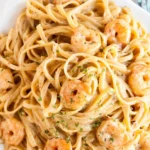
Creamy Cajun Shrimp Pasta
- Total Time: 40 minutes
- Yield: 6 servings 1x
- Diet: General
Description
Want a quick weeknight recipe that you can cook up in minutes with a made from scratch sauce that is to die for? This Cajun Shrimp Pasta will quickly become your new favorite when you are craving something creamy and spicy!
Ingredients
- 16 oz shrimp (peeled and deveined with tail off)
- 2 tablespoons butter
- 1/2 small yellow onion (diced)
- 3 cloves garlic (minced)
- 2 teaspoons cajun seasoning blend
- 2 1/2 cups chicken broth
- 1 tablespoon cornstarch + 1 tablespoon water (whisked until smooth)
- 3/4 cup heavy cream
- 12 oz dried linguine pasta (cooked according to package directions)
- Fresh parsley for garnish (optional)
Instructions
- Step: Melt butter in skillet over medium high heat
- Step: Add onion and sauté until softened, about 4-5 minutes
- Step: Add garlic and shrimp and sauté until shrimp is fully cooked and onions are garlic start to caramelize (about 6-8 minutes)
- Step: Add cajun seasoning blend (start with 1 teaspoon and add more if more spice is desired)
- Step: Stir to coat well
- Step: Slowly stir in broth and bring to a simmer
- Step: Add cornstarch slurry and let continue to simmer and thicken until broth is reduced by about half (about 5-8 minutes)
- Step: Stir in cream and let come back to simmer to heat through and thicken
- Step: Let continue to simmer for about 3-4 minutes
- Step: Add pasta and toss to coat
- Step: Remove from heat and garnish with parsley if desired
Notes
This recipe can be customized by adding chicken or vegetables. Adjust the Cajun seasoning to control the spice level.
- Prep Time: 10 minutes
- Cook Time: 30 minutes
- Category: Main Course
- Method: Stovetop
- Cuisine: American
Nutrition
- Serving Size: 1 serving
- Calories: 453 kcal
- Sugar: 2 g
- Sodium: 666 mg
- Fat: 17 g
- Saturated Fat: 9 g
- Unsaturated Fat: 8 g
- Trans Fat: 0 g
- Carbohydrates: 48 g
- Fiber: 2 g
- Protein: 25 g
- Cholesterol: 241 mg
Keywords: Cajun shrimp pasta, creamy pasta, spicy shrimp, quick weeknight meal