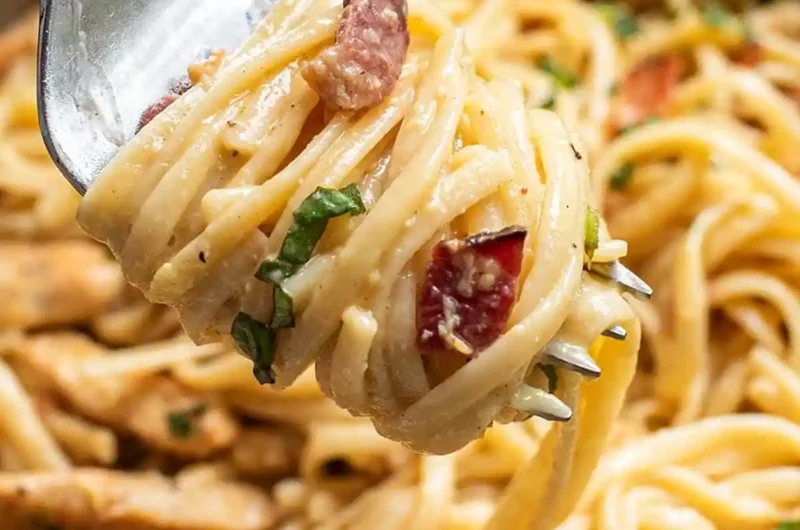
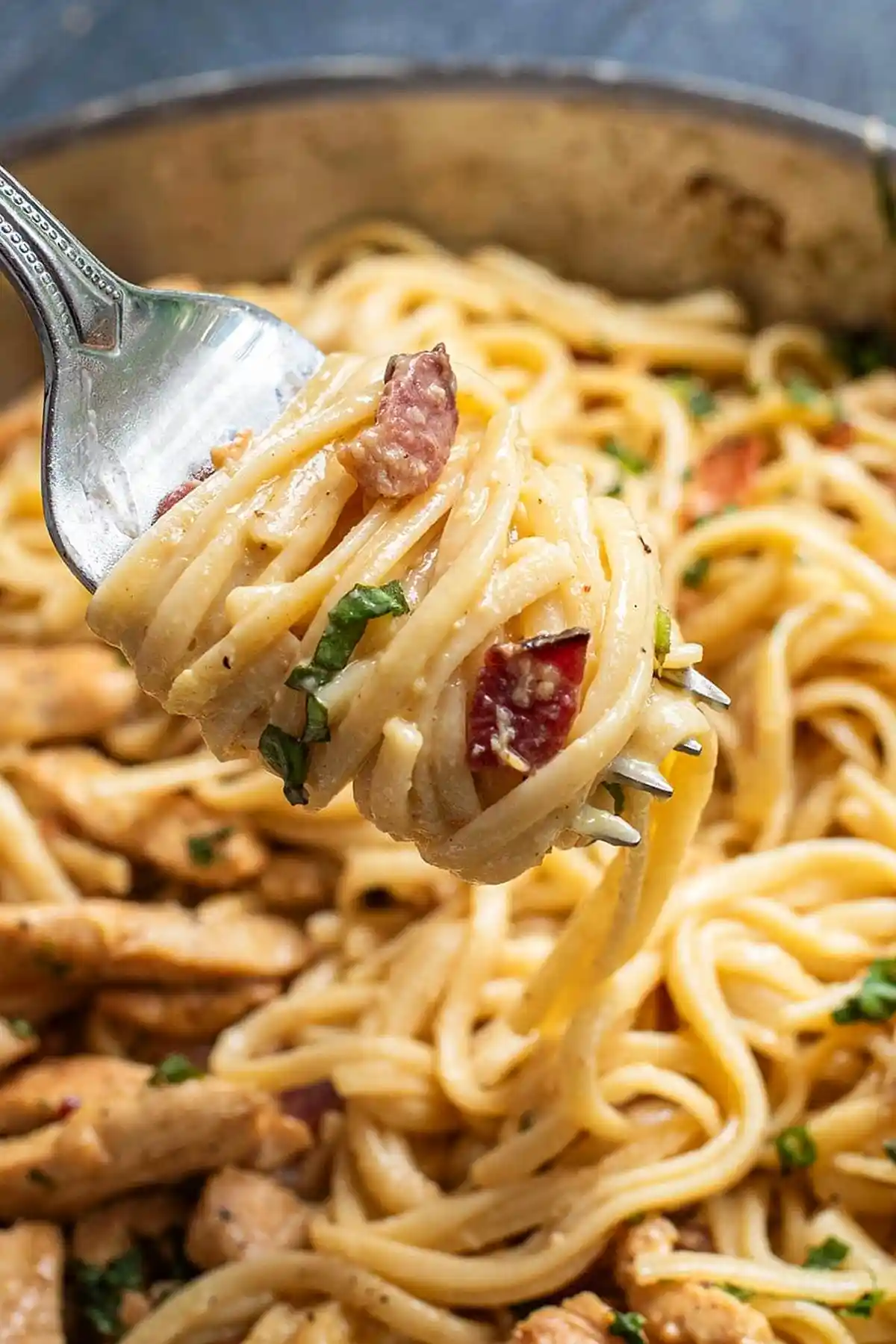
This creamy chicken carbonara combines savory proteins with a rich, egg-based sauce for a filling dinner. It is a modified version of the classic Roman pasta that incorporates chicken for added heartiness.
List of ingredients
- 2 boneless skinless chicken breasts – cut into bite-sized strips for even cooking.
- 12-14 ounces linguine or spaghetti – use a high-quality durum wheat pasta.
- 4 strips thick-cut beef bacon – chopped into 1/2 inch pieces as a savory alternative.
- 2 cloves garlic – very finely grated to create a smooth paste.
- 1-2 tablespoons chopped fresh basil – adds a bright, herbal finish.
- Salt and fresh cracked pepper – used to taste throughout the dish.
- 4 eggs – use 2 whole eggs and 2 yolks only for extra creaminess.
- 3/4 cup grated Parmesan cheese – or Pecorino Romano made with microbial rennet.
- 1/3 cup heavy cream – optional, for those who prefer a richer texture.
step-by-step instructions
- Boil the Pasta: Bring a large pot of salted water to a boil and cook the linguine until it reaches an al dente texture. Reserve 1/2 cup of the starchy pasta water before straining the noodles.
- Prepare the Sauce Base: In a medium-sized bowl, combine the eggs, grated Parmesan cheese, a pinch of salt, and pepper. If using heavy cream, whisk it in now until the mixture is thoroughly blended and set aside.
- Fry the Beef Bacon: Heat a large stainless pan or cast iron skillet over medium heat. Cook the beef bacon until fully rendered and crisp, then remove it to a paper towel-lined plate. Retain 1-2 tablespoons of the rendered fat in the skillet and discard the excess.
- Cook the Chicken: Add the chicken strips to the skillet and season with salt and pepper. Sauté until the chicken is fully cooked through, typically 5-7 minutes, allowing the beef bacon fat to brown the meat. In the final 1-2 minutes of cooking, stir in the grated garlic and a pinch of olive oil until fragrant.
- Combine and Emulsify: Reduce the heat to low and let the pan cool for 2-3 minutes, or remove it from the heat entirely to prevent the eggs from scrambling. Return the cooked beef bacon to the pan and add the warm linguine. Pour in the egg mixture and 1/4 cup of the reserved pasta water, tossing continuously until the sauce is creamy and coats the pasta. Add more pasta water if the consistency is too thick.
- Final Touch: Garnish the dish with fresh basil and serve immediately. Provide extra Parmesan cheese on the side for additional flavor.
Optimal Pasta Selection
Use Linguine for Better Sauce Adherence
Linguine is an ideal choice for carbonara because its flat, narrow shape provides a larger surface area than spaghetti. This allows the heavy egg and cheese emulsion to cling more effectively to each strand. You will find that the sauce distributes more evenly across the dish.
Try Bucatini for a Chewier Texture
Bucatini is a thicker, hollow pasta that offers a satisfying chew. The hole in the center of the pasta allows some of the creamy sauce to enter the noodle, providing a burst of flavor in every bite. It is a great alternative for those who prefer a heartier mouthfeel.
Spaghetti as a Versatile Alternative
Spaghetti is the most common substitute and works well due to its classic profile. While it has slightly less surface area than linguine, it still carries the sauce efficiently. Ensure you cook it precisely to al dente to maintain structure against the rich sauce.
Ingredient Alternatives and Adjustments
Using Pecorino Romano for Saltier Flavor
Pecorino Romano is a sheep’s milk cheese that provides a sharper, saltier profile than cow’s milk Parmesan. If you use this cheese, reduce the additional salt added to the pasta water and the sauce to maintain balance. It adds a traditional Roman depth to the flavor profile.
Adjusting the Egg Ratio for Richness
The ratio of whole eggs to yolks determines the thickness and color of the sauce. Increasing the number of yolks makes the sauce more golden and velvet-like because yolks contain more fats and emulsifiers. Using only yolks creates a denser, richer experience.
Adding Heavy Cream for Extra Texture
While traditional carbonara relies solely on eggs and cheese, heavy cream can be added for a more stable sauce. Cream prevents the eggs from curdling as easily and adds a luxurious smoothness. This is particularly helpful for beginners who are worried about the heat of the pan.
Substituting Chicken with Other Proteins
If you wish to vary the protein, you can use sliced turkey breast or sautéed shrimp. Ensure the protein is cooked fully before adding the pasta to the pan. Keep in mind that different proteins may require slightly different seasoning adjustments to complement the cheese.
Technical Cooking Advice
Mastering the Egg Tempering Process
The most critical part of carbonara is ensuring the eggs do not scramble. This happens if the pan is too hot when the egg mixture is added. By removing the pan from the heat and letting it cool for a few minutes, you ensure the eggs thicken into a sauce rather than frying into clumps.
The Role of Starchy Pasta Water
Pasta water contains starch released from the noodles during the boiling process. When whisked into the egg and cheese mixture, this starch acts as an emulsifier, binding the fats from the beef bacon and cheese together. This creates a smooth, cohesive sauce that doesn’t separate.
Achieving the Perfect Chicken Sear
To get the best flavor from the chicken, allow the beef bacon fat to heat up before adding the meat. This promotes the Maillard reaction, which browns the chicken and creates a savory crust. Avoid crowding the pan, as this can lead to steaming instead of searing.
Grating Cheese Freshly for Better Melting
Always grate your Parmesan or Pecorino from a block rather than using pre-shredded versions. Pre-shredded cheeses are coated in cornstarch or cellulose to prevent clumping in the bag. These additives interfere with the melting process and can result in a grainy sauce.
Serving Suggestions
Pairing with Fresh Greens
Because carbonara is very rich, it pairs well with a side of bitter greens. A simple arugula salad with a lemon vinaigrette provides a sharp contrast that cuts through the creaminess of the eggs and cheese. This balances the overall meal and refreshes the palate.
Adding Extra Pepper for Aroma
Freshly cracked black pepper is a cornerstone of the carbonara flavor profile. To enhance the aroma, toast the pepper briefly in the pan with the beef bacon before adding the pasta. This releases the essential oils in the pepper for a more pungent taste.
Garnish with Fresh Basil Leaves
Fresh basil adds a peppery, sweet note that complements the savory beef bacon and chicken. Tear the leaves by hand rather than chopping them to prevent bruising and oxidation. Add the basil at the very end to keep the flavor bright and the color vibrant.
Preservation and Reheating
Storing Leftovers in Airtight Containers
Store any remaining pasta in an airtight container in the refrigerator for up to three days. Keep the pasta in a single layer if possible to prevent it from compressing. Ensure the container is sealed tightly to prevent the pasta from drying out.
Reheating with Added Liquid
Egg-based sauces tend to thicken and tighten when cooled. When reheating, add a tablespoon of water, milk, or cream to the pan. This helps loosen the sauce and restores the creamy consistency without overcooking the eggs.
Avoiding Overcooking During Reheat
Use low heat when reheating carbonara to avoid scrambling the eggs a second time. A microwave can work, but stirring every 30 seconds is necessary to distribute the heat evenly. A skillet on low heat is the preferred method for the best results.
Troubleshooting Common Issues
What to Do if the Eggs Scramble
If you notice small clumps of cooked egg, you can try to whisk in a bit more warm pasta water quickly. While you cannot completely undo scrambled eggs, adding liquid and tossing vigorously can smooth out the sauce. In the future, ensure the pan is completely off the heat before adding the eggs.
Fixing a Sauce That is Too Thick
If the sauce feels too heavy or sticky, incrementally add more reserved pasta water. Stir constantly while adding the water to ensure it emulsifies into the sauce. Stop adding water once the sauce glides smoothly over the pasta strands.
Addressing a Bland Flavor Profile
If the dish tastes flat, increase the amount of freshly cracked black pepper or add a small squeeze of lemon juice. The acidity of the lemon can brighten the heavy fats and make the cheese flavor pop. Always taste and adjust the salt levels at the very end.
Frequently Asked Questions
Can I make this dairy-free?
You can replace the Parmesan cheese with a nutritional yeast-based alternative and swap the heavy cream for a cashew-based cream. However, the eggs are essential for the traditional structure of the sauce, so they cannot be easily replaced without changing the recipe’s nature.
Is this dish suitable for meal prep?
Carbonara is best served immediately and does not meal prep as well as other pasta dishes. The emulsion can break during reheating, leading to a less creamy texture. If preparing in advance, undercook the pasta slightly so it doesn’t become mushy when reheated.
Why do I need to reserve pasta water?
The starchy water is the secret to a glossy sauce. It helps the fat from the cheese and eggs bond together, preventing the sauce from separating into oil and clumps. Without it, the sauce may appear dry or greasy rather than creamy.
Print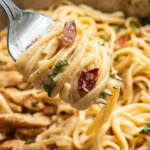
Creamy Chicken Carbonara
- Total Time: 30 minutes
- Yield: 6 servings 1x
- Diet: General
Description
Creamy chicken carbonara is inspired by a classic Italian pasta dish made with smoked turkey bacon, whisked egg, and hard cheese. It’s creamy, delicious, date-night worthy, and will rock your world.
Ingredients
- 2 boneless skinless chicken breasts (cut into bite-sized strips)
- 12–14 ounces linguine (or spaghetti)
- 4 strips thick-cut smoked turkey bacon (chopped into 1/2 inch pieces)
- 2 cloves garlic (very finely grated)
- 1–2 tablespoons chopped fresh basil
- salt and fresh cracked pepper (to taste)
- 4 eggs (2 yolk only, 2 whole)
- 3/4 cup grated microbial-rennet Parmesan cheese (or Pecorino Romano)
- 1/3 cup heavy cream (optional)
Instructions
- Step 1: Bring a large pot of salted water to a boil and cook linguine al dente. Reserve 1/2 cup of pasta water before straining.
- Step 2: Combine eggs, Parmesan cheese, a pinch of salt, and pepper, and optional cream in a medium-sized bowl. Whisk thoroughly and set aside.
- Step 3: Meanwhile, cook smoked turkey bacon in a large stainless pan or cast iron skillet on medium heat until fully cooked, remove from the skillet, and place on a paper towel-lined plate to drain. Keep 1-2 tablespoons of turkey bacon grease in the skillet and discard the rest.
- Step 4: Add sliced chicken. Season with salt and pepper and cook until chicken is fully cooked through (about 5-7 minutes). The turkey bacon fat should brown the chicken. In the last 1-2 minutes, add garlic and a pinch of olive oil. Cook until fragrant.
- Step 5: Turn the heat down to low and let the pan cool for 2-3 minutes. Remove from the heat if necessary. Return the smoked turkey bacon to the pan and add the warm linguine. Add the egg mixture to the pan along with 1/4 cup of pasta water. Toss with the pasta until fully mixed and creamy. Add more pasta water if sauce feels too thick.
- Step 6: Top with fresh basil and serve immediately with extra Parmesan cheese and garnish with fresh basil.
Notes
Prep makes a big difference in this recipe. Cutting the chicken and turkey bacon before you start anything else makes the recipe move quickly and smoothly. Don’t forget to reserve starchy pasta water. This helps activate the cheese/egg mixture to form a creamy sauce that coats the entire dish. Classic carbonara does not contain cream.
- Prep Time: 15 minutes
- Cook Time: 15 minutes
- Category: Dinner
- Method: Stovetop
- Cuisine: Italian
Nutrition
- Serving Size: 1 serving
- Calories: 706 kcal
- Sugar: 0.3 g
- Sodium: 906 mg
- Fat: 20.7 g
- Saturated Fat: 7.4 g
- Unsaturated Fat: 13.3 g
- Trans Fat: 0 g
- Carbohydrates: 37.2 g
- Fiber: 2 g
- Protein: 35 g
- Cholesterol: 363 mg
Keywords: creamy chicken carbonara, Italian pasta, dinner, quick meals, smoked turkey bacon