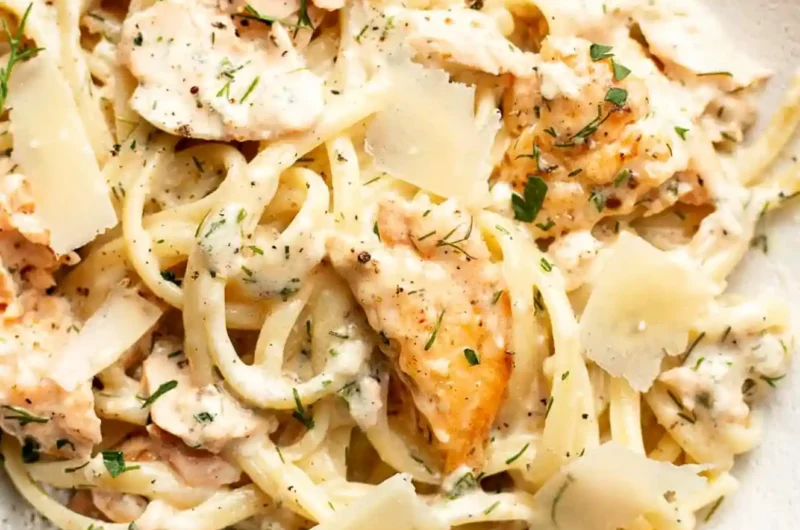
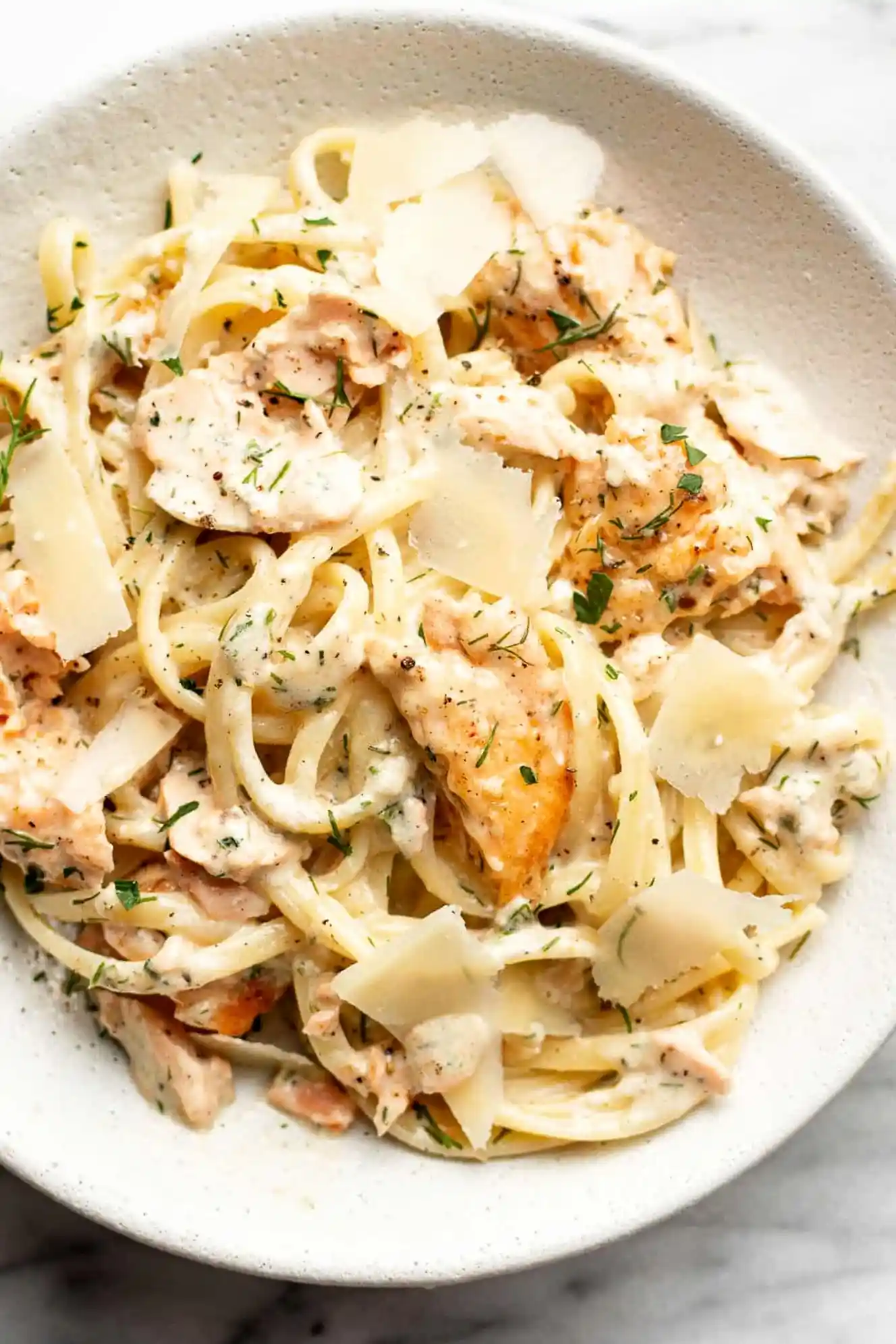
This elegant pasta dish combines tender seared salmon with a bright, creamy lemon and dill sauce. It is a sophisticated meal that comes together in just 20 minutes, making it ideal for busy weeknights.
List of ingredients
- 4 ounces uncooked pasta – long shapes like linguine or fettuccine are recommended.
- 1/2 pound fresh salmon – skin-on or skinless depending on preference.
- Salt and pepper – used to taste for seasoning the fish.
- Flour – used for dredging the salmon fillets.
- 1 tablespoon olive oil – for searing the fish.
- 1 tablespoon butter – to add richness to the pan sauce.
- 1/4 cup chicken broth – provides a savory liquid base for the sauce.
- 1 teaspoon lemon juice – adds essential acidity and brightness.
- 2 cloves garlic, minced – for a fragrant aromatic base.
- 1/2 cup heavy or whipping cream – creates a thick and luxurious texture.
- 1 tablespoon chopped fresh dill – gives the dish its signature herbal flavor.
- Fresh parsley and parmesan cheese – optional for garnishing the final plate.
step-by-step instructions
- Boil the Pasta: Bring a pot of salted water to a boil. Cook the pasta until it is al dente according to the package directions. It is efficient to begin the sauce while the water is boiling.
- Prepare the Salmon: Season the fresh salmon fillets with salt and pepper. Lightly coat the fish in flour to ensure a better sear.
- Sear the Fish: Heat the olive oil and butter in a skillet over medium-high heat. Once the pan is hot, add the salmon and cook for 2 minutes per side. Remove the fish from the pan and set it aside on a plate.
- Deglaze the Pan: Add the chicken broth, lemon juice, and minced garlic to the skillet. Let the mixture bubble for approximately 30 seconds, then reduce the heat to medium.
- Simmer the Sauce: Stir in the heavy cream and fresh dill. Return the seared salmon to the pan and use a spoon to break the fish into bite-sized pieces. Cook for a few more minutes until the salmon is cooked through and the sauce has reduced and thickened.
- Combine and Serve: Drain the cooked pasta and add it directly into the skillet. Toss the pasta thoroughly to coat it in the sauce and serve immediately, topping with parsley and parmesan cheese if desired.
Professional Cooking Techniques
The Importance of Dredging Salmon
Lightly coating the salmon in flour before searing creates a thin crust that helps the fish brown evenly. This flour also acts as a subtle thickening agent when the chicken broth and cream are added, resulting in a more cohesive sauce.
Managing Pan Temperature
Using medium-high heat for the initial sear ensures the salmon develops a golden exterior without overcooking the center. Switching to medium heat for the sauce prevents the dairy from boiling too aggressively, which protects the emulsion.
Achieving the Perfect Pasta Texture
Cooking the pasta for one minute less than the package suggests ensures it remains al dente. Because the noodles finish cooking while tossing in the sauce, they absorb the flavors without becoming soft or mushy.
Practical Ingredient Substitutions
Alternative Pasta Varieties
While linguine and fettuccine are the best choices for this creamy sauce, spaghetti or angel hair also work well. For a different experience, use penne or farfalle, though you may need a slightly thinner sauce to coat shorter shapes.
Using Dried Herbs
If fresh dill is not available, replace one tablespoon of fresh dill with one teaspoon of dried dill. Stir the dried herbs into the pan slightly earlier than the fresh ones to allow the flavors to bloom in the heat.
Creamy Texture Alternatives
For a different richness, you can use half-and-half, but be careful as it is more likely to curdle when mixed with lemon juice. A high-fat coconut cream can serve as a dairy-free alternative, although it will introduce a subtle coconut flavor to the dish.
Flavor Variations and Additions
Incorporating Leafy Greens
Stir in two cups of fresh baby spinach during the final minute of simmering. The residual heat of the sauce will wilt the greens perfectly, adding color and nutritional value to the meal.
Adding Sweet Pea Accents
Add a half-cup of frozen peas along with the heavy cream and dill. The peas add a pop of sweetness and a bright green color that complements the lemon and salmon beautifully.
Adding Briny Capers
Stir in a tablespoon of drained capers for a salty and tangy contrast. Capers pair naturally with salmon and lemon, enhancing the overall brightness and complexity of the sauce.
Serving Suggestions
Pairing with a Fresh Salad
Serve this creamy pasta with a side of mixed greens tossed in a light balsamic or lemon vinaigrette. The acidity of a fresh salad helps cut through the richness of the cream and butter.
Garlic Bread Accompaniments
Toasted baguette slices topped with garlic butter provide a satisfying crunchy texture. These are excellent for scooping up any remaining lemon dill sauce left on the plate.
Roasted Vegetable Sides
Roasted asparagus or broccolini makes for an elegant and healthy side dish. These vegetables mirror the earthy tones of the dill and provide a balanced plate.
Storage and Reheating Guide
Safe Refrigeration Practices
Store any remaining pasta in an airtight container in the refrigerator for up to three days. To maintain the integrity of the dish, keep the salmon pieces intact to avoid them breaking down further during storage.
Optimal Reheating Methods
Reheat the pasta slowly on the stovetop over low heat rather than in the microwave. Add a small splash of water or cream to the pan to emulsify the sauce, as the pasta will naturally absorb moisture while chilling.
Freezing Considerations
This specific recipe is not recommended for freezing because the cream sauce and fish texture degrade. Upon thawing, the sauce is likely to separate and the salmon may become rubbery.
Troubleshooting Common Issues
Preventing Sauce Curdling
Avoid boiling the cream sauce on high heat, as the acidity of the lemon juice can cause the dairy to separate. Keep the heat at a gentle simmer to maintain a smooth, velvety emulsion.
Avoiding Overcooked Salmon
Do not overcook the fish during the initial sear or the final simmering stage. Salmon is perfectly cooked when it just begins to flake with a fork and is opaque in the center.
Fixing a Watery Sauce
If the sauce appears too thin, let it simmer for an additional two to three minutes without a lid. This allows the liquid to reduce, which concentrates the flavor and thickens the texture of the cream.
Frequently Asked Questions
Can I use frozen salmon?
Yes, frozen fillets can be used as long as they are completely thawed and patted dry with paper towels. Excess moisture on the surface of the fish will prevent it from searing properly in the pan.
Which type of lemon is best for this recipe?
Standard Eureka or Lisbon lemons provide the necessary tartness for this dish. If you use Meyer lemons, keep in mind they are sweeter and you may need an extra squeeze of juice for balance.
Can I increase the amount of garlic?
Yes, increasing the garlic to three or four cloves will provide a stronger aromatic base. Just ensure you sauté the extra garlic carefully so it does not burn, which would make the sauce taste bitter.
Print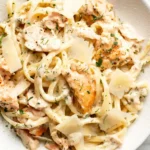
Creamy Lemon Dill Salmon Pasta
- Total Time: 20 minutes
- Yield: 2 servings 1x
- Diet: General
Description
This 20-minute lemon dill salmon pasta recipe makes an easy and elegant weeknight dinner. It has a gorgeous creamy sauce that’s bursting with fresh dill in each bite!
Ingredients
- 4 ounces uncooked pasta
- 1/2 pound fresh salmon
- Salt & pepper to taste
- Flour for dredging
- 1 tablespoon olive oil
- 1 tablespoon butter
- 1/4 cup chicken broth
- 1 teaspoon lemon juice
- 2 cloves garlic, minced
- 1/2 cup heavy/whipping cream
- 1 tablespoon chopped fresh dill
- Fresh parsley, for garnish
- Parmesan cheese, for garnish
Instructions
- Step 1: Boil a salted pot of water for your pasta. Cook it al dente according to package directions. I suggest starting the sauce once the water’s boiling.
- Step 2: Season the salmon with salt & pepper and coat it in the flour.
- Step 3: Add the oil and butter to a skillet over medium-high heat. Once the pan is hot, add the salmon and cook it for 2 minutes/side, then take the fish out of the pan and set it aside.
- Step 4: Add the chicken broth, lemon juice, and garlic to the pan. Let it bubble for about 30 seconds. Reduce the heat to medium.
- Step 5: Add the cream, dill, and salmon back into the pan. Break the fish up with your spoon into bite-size pieces. Cook it for a few more minutes until it’s cooked through and the sauce has reduced and thickened a bit.
- Step 6: Drain the pasta and add it to the skillet. Toss it & serve immediately with parsley and parmesan cheese if desired.
Notes
You can use skinless or skin-on salmon. If using skin-on, it’s easy to peel off when you flip it over after searing it. Can’t get fresh dill? Try 1 teaspoon dried dill instead. I don’t recommend substituting the cream for milk or half-and-half because the lemon juice will likely curdle the sauce.
- Prep Time: 5 minutes
- Cook Time: 15 minutes
- Category: Main Course
- Method: Pan-searing
- Cuisine: American
Nutrition
- Serving Size: 1 serving
- Calories: 709 kcal
- Sugar: 2 g
- Sodium: 234 mg
- Fat: 43 g
- Saturated Fat: 20 g
- Unsaturated Fat: 22 g
- Trans Fat: 1 g
- Carbohydrates: 48 g
- Fiber: 2 g
- Protein: 32 g
- Cholesterol: 159 mg
Keywords: lemon dill salmon pasta, creamy salmon pasta, quick dinner, 20 minute meal