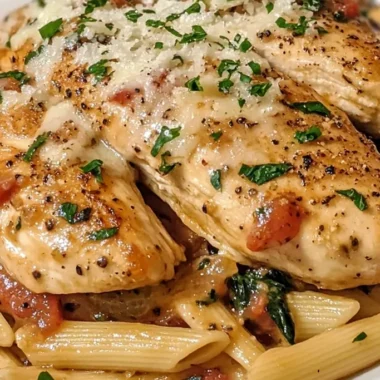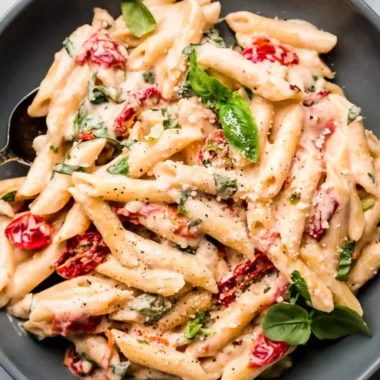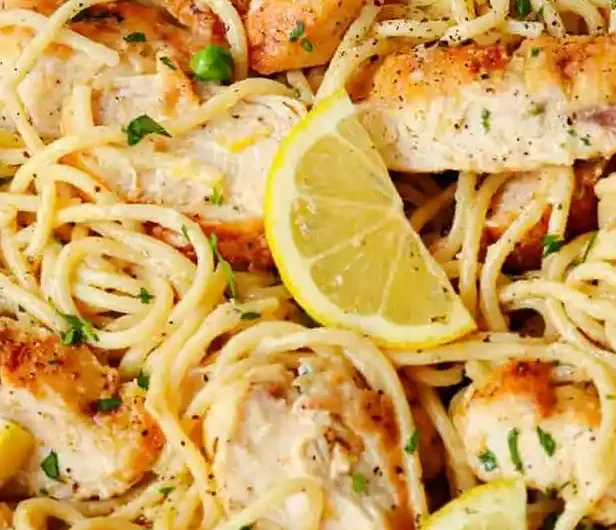
This creamy lemon chicken pasta features tender, breaded chicken breasts and a rich, savory Parmesan sauce. It is a balanced meal that combines bright citrus notes with creamy elements for a satisfying dinner.
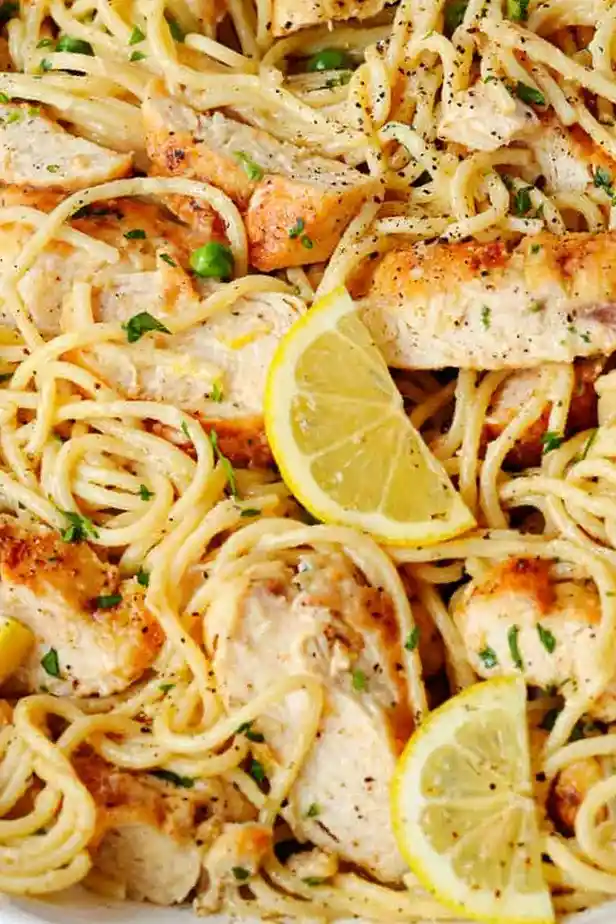
List of ingredients
- 2 large boneless skinless chicken breasts – cut in half lengthwise to create four thinner cutlets.
- 1/4 cup all-purpose flour – used for dredging the chicken to create a light crust.
- 3/4 cup fresh grated parmesan cheese – divided, used both in the breading and the sauce.
- 2 teaspoons lemon pepper – provides the primary zesty seasoning for the chicken.
- 3 tablespoons olive oil – divided, for pan-frying the chicken and sautéing garlic.
- 12 ounces spaghetti pasta – the base of the dish.
- 3 cloves garlic – minced finely for aromatic flavor.
- 1 1/4 cups heavy cream – creates the rich, velvety texture of the sauce.
- 1/2 cup low sodium chicken broth – used to thin and flavor the cream sauce.
- 2/3 cup frozen peas – adds color and a touch of sweetness.
- 1 lemon – both zested and juiced for acidity.
- 2 tablespoons butter – cut into small cubes to finish the sauce for a glossy sheen.
- 2 tablespoons fresh chopped Italian parsley – used as a fresh garnish.
- Salt and black pepper – added to taste for final seasoning.
step-by-step instructions
- Prepare the breading: Combine the flour, 1/4 cup of the Parmesan cheese, and lemon pepper in a shallow bowl. Dredge each chicken breast piece thoroughly in the mixture to coat all sides.
- Cook the chicken: Heat 2 tablespoons of olive oil in a large skillet over medium heat. Fry the chicken until golden brown and cooked through, approximately 3-4 minutes per side. Transfer the chicken to a plate and cover loosely with aluminum foil to keep warm.
- Boil the pasta: Bring a large pot of salted water to a boil. Cook the spaghetti according to the package directions until al dente, then drain well.
- Sauté the aromatics: Wipe the skillet clean and heat 1 tablespoon of olive oil over medium-low heat. Add the minced garlic and stir constantly for 1 minute until fragrant.
- Reduce the cream: Pour in the heavy cream and bring it to a simmer. Slowly add the chicken broth in small amounts, allowing the cream to reduce and thicken.
- Add citrus and peas: Stir in the frozen peas, lemon zest, and lemon juice. Continue simmering the mixture until the liquid has reduced by about one-third.
- Melt the cheese: Reduce the heat to the lowest setting. Gradually stir in the remaining 1/2 cup of Parmesan cheese in small increments until completely melted and smooth.
- Combine components: Add the cooked spaghetti to the skillet and toss to coat every strand. Stir in the butter cubes until melted and incorporated, then mix in the fresh parsley. Season with salt and black pepper to taste.
- Final assembly: Slice the cooked chicken into bite-sized strips. Place the sliced chicken on top of the pasta and serve immediately.
Customizing Your Pasta and Protein
Selecting Pasta Shapes for Optimal Sauce Adherence
While spaghetti is the standard choice, other pasta shapes can change the texture of the dish. Penne or rigatoni are excellent options because their hollow centers trap the creamy lemon sauce. Fettuccine provides a wider surface area for the sauce to cling to, while angel hair cooks faster but requires a thinner sauce to avoid clumping.
Using Chicken Cutlets for Faster Cooking
If you prefer not to slice breasts lengthwise, you can purchase pre-made chicken cutlets. These are typically thinner and cook more evenly and quickly. Ensure they are of uniform thickness to prevent some pieces from drying out while others remain undercooked.
Substituting Shrimp for a Lighter Protein
Shrimp is a natural alternative that pairs perfectly with lemon and cream. Sauté the shrimp in olive oil for 2-3 minutes per side until pink, then set them aside. Add the shrimp back into the pasta at the very end to prevent them from becoming rubbery.
Mastering the Cream Sauce
Controlling Heat During the Cream Reduction Process
Reducing heavy cream requires patience to avoid curdling or boiling over. Keep the heat at a gentle simmer, looking for small, fine bubbles around the edges of the skillet. Stir frequently to ensure the heat is distributed evenly across the pan.
Integrating Parmesan Cheese Without Clumping
Adding cheese to a boiling sauce can cause it to separate or form clumps. Always reduce the heat to the lowest possible setting before stirring in the Parmesan. Add the cheese in small handfuls, stirring completely after each addition until the sauce is silky.
Using Pasta Water to Balance Sauce Thickness
If the sauce becomes too thick after adding the pasta, use a small amount of reserved pasta water. The starch in the water helps emulsify the sauce and makes it smoother. Add the water one tablespoon at a time until the desired consistency is reached.
The Role of Butter in the Final Emulsion
Adding cold butter cubes at the end of the cooking process is a technique called monter au beurre. This creates a glossy finish and adds a layer of richness to the lemon acidity. Stir the butter in quickly over low heat for the best results.
Adding Fresh Produce and Flavor Enhancements
Incorporating Fresh Baby Spinach for Color
Fresh baby spinach can be stirred into the sauce during the final minute of simmering. The residual heat will wilt the leaves without overcooking them. This adds a nutritional boost and a vibrant green contrast to the dish.
Using Roasted Asparagus Tips
Roasted asparagus adds a sophisticated, earthy flavor that complements the lemon. Roast the tips in the oven with olive oil and salt before adding them to the final plated dish. Avoid stirring them into the pasta to keep the tips crisp.
Adding Sliced Mushrooms for Earthiness
Cremini or button mushrooms can be sautéed in the skillet before adding the garlic. Brown the mushrooms until their moisture has evaporated and they are golden. This adds a savory depth that balances the brightness of the citrus.
Maximizing Lemon Flavor with Proper Zesting
Use a microplane or fine grater to remove only the yellow outer layer of the lemon. Avoid grating into the white pith, as this introduces a bitter taste to the cream sauce. Zesting the lemon fresh ensures the essential oils provide a potent aroma.
Serving and Plating Recommendations
Pairing with an Arugula and Lemon Salad
A peppery arugula salad provides a refreshing contrast to the rich cream sauce. Toss the greens with a simple dressing of olive oil, fresh lemon juice, and a pinch of salt. This cleanse the palate between bites of the creamy pasta.
Selecting the Right Bread Side
Garlic bread or warm buttered rolls are ideal for soaking up the remaining sauce. A crusty baguette toasted with garlic butter and parsley mirrors the flavors in the pasta. For a different twist, serve with cheddar bay biscuits for added richness.
Plating for Professional Presentation
Use tongs to twirl the pasta into a high mound in the center of the plate. Arrange the sliced chicken strips neatly on top of the pasta mound. Garnish with an extra sprinkle of fresh parsley and a lemon wedge for a polished look.
Preserving and Reheating Your Meal
Proper Refrigeration for Maximum Freshness
Store leftover pasta in an airtight container to prevent it from drying out. The chicken and pasta can be stored together, but keep the container sealed tightly. Refrigerate immediately after the meal has cooled slightly to maintain safety.
Freezing Cream-Based Pasta Safely
Cream sauces can sometimes separate when frozen, but they can be preserved for up to two months. Use heavy-duty freezer bags and remove as much air as possible to prevent freezer burn. Defrost the meal in the refrigerator overnight before reheating.
Reheating Methods to Restore Sauce Texture
Reheat the pasta in the microwave at 50% power to avoid breaking the emulsion of the sauce. Stir the pasta every minute to ensure even heating. If the sauce appears too thick, stir in a splash of milk or chicken broth to loosen it.
Resolving Common Cooking Challenges
Fixing a Broken or Separated Sauce
If the sauce separates into oil and solids, whisk in a tablespoon of warm chicken broth or heavy cream. Do this over low heat while stirring vigorously. This helps re-bind the fats and liquids into a smooth consistency.
Preventing the Chicken from Drying Out
Avoid slicing the chicken until the moment you are ready to serve. Slicing too early allows the juices to escape, resulting in dry meat. Use a meat thermometer to ensure the chicken reaches an internal temperature of 165 degrees Fahrenheit.
Adjusting a Sauce That Is Too Tart
If the lemon juice makes the sauce too acidic, balance the flavor with a bit more fat. Stir in an extra tablespoon of butter or a splash of heavy cream. A pinch of sugar can also neutralize excessive tartness without changing the overall flavor profile.
Frequently Asked Questions
Can I use whipping cream instead of heavy cream?
Yes, whipping cream can be used as a substitute, though it has a lower fat content. Because it is thinner, you may need to simmer the sauce for a few extra minutes to achieve the same thickness. You can also add a small amount of cornstarch slurry if it remains too thin.
How do I keep the chicken moist while making the sauce?
Cover the cooked chicken with a loose tent of aluminum foil. This traps the heat and moisture without steaming the breading, keeping the exterior crisp. Let the chicken rest for a few minutes before slicing to allow juices to redistribute.
Can I use dried parsley instead of fresh?
Dried parsley can be used if fresh is unavailable, but the flavor is less potent. Use about one-third of the amount of dried parsley compared to fresh. Add the dried herbs earlier in the sauce-making process so they have time to hydrate.
What is the best way to mince garlic for this recipe?
Use a sharp chef’s knife to crush the clove first, then mince it into very small pieces. This releases the aromatic oils more effectively than using a garlic press. Ensure the pieces are uniform so they cook evenly without burning.
Print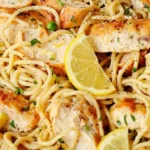
Creamy Lemon Pepper Chicken Pasta
- Total Time: 40 minutes
- Yield: 4 servings 1x
- Diet: General
Description
Lemon Chicken Pasta is loaded with lightly breaded lemon pepper seasoned chicken breasts, lemon cream sauce with Parmesan cheese, and sweet peas.
Ingredients
- 2 large boneless skinless chicken breasts cut in half lengthwise
- ¼ cup all-purpose flour
- ¾ cup fresh grated parmesan cheese
- 2 teaspoons lemon pepper
- 3 tablespoons olive oil
- 12 ounces spaghetti pasta
- 3 cloves garlic minced
- 1¼ cups heavy cream
- ½ cup low sodium chicken broth
- ⅔ cup frozen peas
- 1 lemon zested and juiced
- 2 tablespoons butter cut in small cubes
- 2 tablespoons fresh chopped Italian parsley
- Salt and black pepper to taste
Instructions
- Step: Combine the flour, ¼ cup Parmesan Cheese, and lemon pepper in a shallow bowl.
- Step: Dredge the chicken breasts in the flour mixture.
- Step: Heat 2 tablespoons olive oil in a large skillet over medium heat. Cook the chicken until it is golden brown on both sides and cooked through; 3-4 minutes each side. Plate the chicken and cover it with a loose aluminum foil tent.
- Step: Bring a large pot of water to boil and cook the pasta according to the package directions. Drain well.
- Step: Wipe the skillet fairly clean and heat 1 tablespoon olive oil over medium low heat. Add the minced garlic and cook for 1 minute while stirring constantly.
- Step: Add the heavy cream and bring it to a simmer. Add the chicken broth a little at a time while the cream reduces.
- Step: Add the peas, lemon zest, and lemon juice and continue simmering until the mixture is reduced by about ⅓.
- Step: Reduce the heat to low and stir in ½ cup Parmesan Cheese in small increments until it is melted.
- Step: Add the cooked pasta to the sauce and toss to coat.
- Step: Add the butter, stirring until melted and incorporated.
- Step: Stir in the fresh parsley and season with salt and black pepper to taste. Slice the chicken and add it to the pasta.
Notes
Store leftovers in an airtight container in the refrigerator for up to 3 days. Reheat in the microwave at 50% power, stirring several times. Freeze in an airtight container or heavy-duty freezer bag for up to 2 months. Defrost in the refrigerator overnight, then reheat in the microwave at reduced power.
- Prep Time: 10 minutes
- Cook Time: 30 minutes
- Category: main meal chicken
- Method: stovetop
- Cuisine: American
Nutrition
- Serving Size: 1 serving
- Calories: 916 kcal
- Sugar: 7 g
- Sodium: 449 mg
- Fat: 51 g
- Saturated Fat: 26 g
- Unsaturated Fat: 21 g
- Trans Fat: 0.2 g
- Carbohydrates: 80 g
- Fiber: 5 g
- Protein: 35 g
- Cholesterol: 148 mg
Keywords: lemon chicken pasta, creamy chicken pasta, lemon pepper chicken, American dinner, pasta with peas