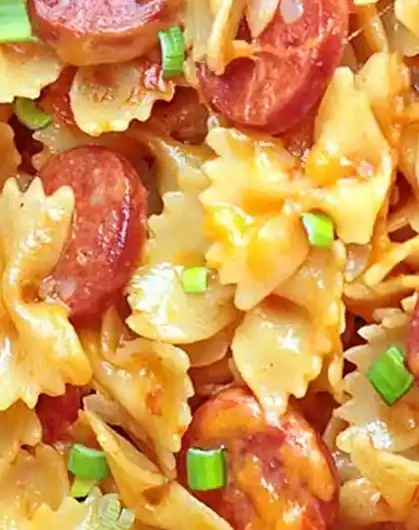
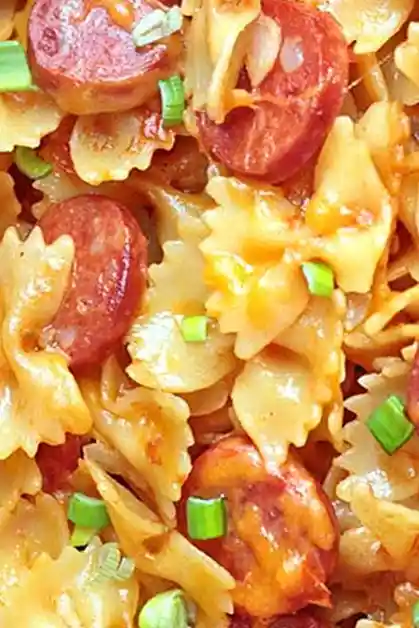
This easy one-pot meal combines savory smoked sausage and tender pasta in a rich, cheesy sauce. It is an ideal solution for busy weeknights when you want a filling dinner with minimal cleanup.
List of ingredients
- 1 tbsp olive oil – used for sautéing the sausage and onions.
- 1 lb smoked turkey or chicken sausage – sliced 1/4 inch thick for even cooking.
- 1.5 cups diced onion – provides a sweet and savory aromatic base.
- 2 cloves garlic – minced finely to release flavor.
- 2 cups low-sodium chicken broth – the primary liquid for simmering the pasta.
- 1 10 oz can diced tomatoes – adds acidity and a chunky texture to the sauce.
- 8 oz dry small pasta – such as macaroni, ditalini, or small shells.
- 1/2 cup milk or heavy cream – creates a smooth, creamy consistency.
- 1/2 tsp salt – to enhance all the savory flavors.
- 1/2 tsp pepper – adds a subtle hint of spice.
- 1 cup shredded Cheddar cheese – divided for stirring in and topping.
- 1/3 cup thinly sliced scallions – used as a fresh garnish.
step-by-step instructions
- Sauté aromatics: Add olive oil to a 4-5 quart saute pan over medium high heat. Fry the smoked turkey or chicken sausage and diced onions until they are well browned.
- Add garlic: Stir in the minced garlic and cook for approximately 30 seconds. Ensure the garlic becomes fragrant but does not burn.
- Combine liquids and pasta: Pour in the chicken broth, diced tomatoes, heavy cream, dry pasta, and salt and pepper. Stir well to ensure the pasta is submerged.
- Simmer: Allow the mixture to simmer for about 15 minutes. Cook until the pasta is tender and the liquid has reduced into a thick sauce.
- Incorporate cheese: Remove the skillet from the heat. Stir in 1/2 cup of the shredded Cheddar cheese until completely melted.
- Melt topping: Sprinkle the remaining 1/2 cup of cheese over the surface. Cover the pan with a lid until the cheese is melted, spotty brown, and bubbly.
- Finish and serve: Sprinkle the sliced scallions over the top. Serve immediately while the cheese is hot and gooey.
Expert Cooking Tips for Success
Select the Best Pasta Shape
Small pasta shapes like ditalini, elbow macaroni, or small shells work best for this recipe. These shapes have a high surface-area-to-volume ratio, which helps them absorb the broth and cream more efficiently.
Avoid using large noodles or long pasta like spaghetti, as they can clump together in a one-pot method. Smaller shapes ensure that every bite is evenly coated in the cheesy sauce.
Avoid Overcooking the Pasta
Start checking the pasta texture around the 12-minute mark. Since the pasta continues to cook in the residual heat after you remove the pan from the stove, it is best to pull it off while it is slightly al dente.
If the pasta becomes too soft, the dish can lose its structure and become mushy. Proper timing ensures a professional texture that holds up against the heavy cream and cheese.
Use a Heavy-Bottomed Pan
A 4-5 quart saute pan with a heavy base is essential for this recipe. Heavy-bottomed pans distribute heat more evenly, which prevents the sauce from scorching at the bottom during the simmering process.
Thin pans often create hot spots that can burn the cream or the garlic. A sturdy pan allows for a consistent simmer and an easier cleanup process.
Brown the Sausage Properly
Ensure the sausage is well-browned before adding the other liquids. This process, known as the Maillard reaction, creates deep, savory flavors that permeate the entire dish.
If the sausage is just heated through without browning, the final dish will lack depth. Sautéing the onions at the same time helps them caramelize in the fats released by the sausage.
Ingredient Substitutions
Alternative Protein Options
While smoked turkey or chicken sausage is the standard, you can use high-quality beef smoked sausage for a richer taste. Ensure the sausage is pre-cooked or smoked to maintain the intended flavor profile.
For those avoiding meat, a plant-based smoked sausage alternative works well. Just ensure the plant-based version can withstand 15 minutes of simmering without breaking apart.
Dairy-Free Cream Alternatives
If you need a dairy-free option, replace the heavy cream or milk with full-fat coconut milk or cashew cream. These provide a similar thickness and richness without the use of animal dairy.
Be aware that coconut milk may add a slight coconut flavor to the dish. Cashew cream is generally more neutral and blends seamlessly with the cheddar and broth.
Different Cheese Varieties
Cheddar is used for its sharp flavor and melting properties, but you can substitute it with Monterey Jack or Gruyère. Monterey Jack provides a milder taste and an exceptionally smooth melt.
Gruyère adds a sophisticated, nutty flavor that pairs beautifully with smoked sausage. You can also use a blend of these cheeses to create a more complex flavor profile.
Substituting the Broth
Low-sodium chicken broth is recommended to control the salt levels, but beef broth can be used for a heartier, darker sauce. Vegetable broth is an excellent alternative for those who prefer it.
If you do not have broth, you can use water combined with a teaspoon of bouillon powder. This provides the necessary liquid and salt without changing the overall flavor of the recipe.
Creative Recipe Variations
Adding Extra Vegetables
To increase the nutritional value, stir in a handful of baby spinach or frozen peas during the last two minutes of simmering. These vegetables cook quickly and add vibrant color to the dish.
Diced bell peppers or carrots can be sautéed along with the onions at the start. This adds a subtle sweetness and a bit of crunch to the creamy pasta.
Increasing the Spice Level
For a kick of heat, add a pinch of crushed red pepper flakes when you add the garlic. This infuses the oil with spice, distributing the heat evenly throughout the sauce.
Alternatively, you can stir in a teaspoon of smoked paprika. This enhances the smokiness of the sausage and adds a warm, earthy tone to the cream sauce.
Making it Extra Creamy
If you prefer a thicker, more indulgent sauce, stir in a tablespoon of cream cheese along with the shredded cheddar. Cream cheese acts as a stabilizer and adds a tangy richness.
You can also increase the amount of heavy cream by a quarter cup. If the sauce becomes too thick, simply stir in a small amount of additional broth to reach your desired consistency.
Using Different Garnishes
While scallions provide a sharp, fresh contrast, chopped fresh parsley is a great alternative. Parsley adds a clean, herbal note that cuts through the richness of the cheese.
For a more intense flavor, try topping the dish with a sprinkle of parmesan cheese or a dash of fresh cracked black pepper. These additions enhance the visual appeal and the taste.
Serving and Pairing Suggestions
Complementary Side Salads
A crisp arugula salad with a lemon vinaigrette is an ideal pairing. The bitterness of the arugula and the acidity of the lemon balance the heavy cream and cheese of the pasta.
A classic Caesar salad also works well. The garlicky dressing complements the flavors in the one-pot pasta while adding a refreshing crunch to the meal.
Garlic Bread Pairings
Serve this dish with toasted baguette slices brushed with garlic butter and herbs. The crunchy texture of the bread provides a great contrast to the soft pasta.
You can wrap the bread in foil and warm it in the oven while the cheese on the pasta is melting. This ensures everything is served hot and fresh.
Vegetable Side Dishes
Roasted broccoli or sautéed zucchini are excellent choices to serve alongside this meal. These vegetables add essential vitamins and a different texture to the plate.
Steam some asparagus with a squeeze of lime juice for a lighter side. The bright, citrusy flavor helps cleanse the palate between bites of the rich pasta.
Storage and Reheating Instructions
Refrigeration Guidelines
Store any leftovers in an airtight container in the refrigerator for up to 3 to 4 days. Ensure the pasta has cooled slightly before sealing the container to prevent excess condensation.
Keep the garnish separate if you have leftovers. Adding fresh scallions only when serving keeps them from wilting in the fridge.
Freezer Storage
This pasta can be frozen for up to two months. Portion the meal into freezer-safe bags or containers and press out as much air as possible to prevent freezer burn.
Note that the texture of the pasta may change slightly after freezing. The sauce might also separate, which is normal and can be fixed during the reheating process.
Best Way to Reheat
Reheating on the stovetop is the most effective method. Place the pasta in a pan over low heat and add a splash of milk or chicken broth to loosen the sauce.
If using a microwave, heat in short intervals and stir in between. This prevents the edges from drying out and ensures the cheese is melted evenly throughout.
Adjusting Sauce Consistency
Pasta tends to absorb liquid as it sits in the fridge, often making the leftovers thicker than the original dish. Always add a tablespoon of liquid when reheating to restore the creaminess.
Stir gently to avoid breaking the pasta noodles. The addition of a small amount of butter can also help bring back the glossy sheen of the sauce.
Make-Ahead Strategies
Prepping Ingredients in Advance
You can dice the onions, mince the garlic, and slice the sausage a day in advance. Store them in separate containers or one large prep bowl in the refrigerator.
Having the ingredients ready significantly reduces the active cooking time. It allows you to move quickly through the sautéing phase without pausing to chop.
Storing the Base Sauce
You can cook the sausage, onions, garlic, and tomatoes ahead of time and store this mixture in the fridge. When you are ready to eat, simply add the broth, cream, and pasta to the pan.
This method reduces the cook time on the day of serving to just the simmering phase. It is a great way to prep for a week of easy meals.
Common Troubleshooting Questions
Why is my sauce too thin?
If the sauce is too thin after 15 minutes, simmer it for an additional 2 to 3 minutes without the lid. This allows more liquid to evaporate, concentrating the sauce.
Ensure you are using the correct amount of pasta, as the starch from the noodles is what naturally thickens the liquid. If you used too little pasta, a teaspoon of cornstarch mixed with water can help.
Why is the pasta too mushy?
Mushy pasta usually results from simmering for too long or using a pasta shape that is too small for the cook time. Always test the pasta a few minutes before the timer goes off.
Avoid stirring the pasta too vigorously during the simmering process. Over-stirring can break the noodles and release too much starch, leading to a gummy texture.
What if the cheese doesn’t melt smoothly?
If the cheese is clumping, ensure you have removed the pan from the direct heat before stirring in the first half. The residual heat is usually enough to melt the cheese without separating the fats.
Using freshly shredded cheese instead of pre-shredded bags can also help. Pre-shredded cheeses are coated in potato starch to prevent clumping in the bag, which can hinder a smooth melt.
How do I prevent the garlic from burning?
Garlic burns quickly at high temperatures, which can make the entire dish taste bitter. Always add the garlic after the sausage and onions have already browned.
Cook the garlic for only 30 seconds or until it just becomes fragrant. Immediately adding the chicken broth and tomatoes drops the temperature of the pan and stops the garlic from burning.
Print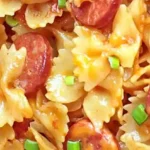
Creamy One Pot Turkey Sausage Pasta
- Total Time: 30 minutes
- Yield: 4 servings 1x
- Diet: General
Description
A hearty and comforting one-pot meal featuring smoked turkey sausage, tender pasta, and melted cheddar cheese.
Ingredients
- 1 tbsp olive oil
- 1 lb smoked turkey or chicken sausage, sliced 1/4 inch thick
- 1.5 cups diced onion
- 2 cloves garlic (minced)
- 2 cups low-sodium chicken broth
- 1 10 oz can diced tomatoes
- 8 oz dry small pasta
- 1/2 cup milk or heavy cream
- 1/2 tsp salt
- 1/2 tsp pepper
- 1 cup shredded Cheddar cheese
- 1/3 cup thinly sliced scallions
Instructions
- Heat: Add olive oil to a 4-5 quart saute pan over medium high heat.
- Fry: Fry the smoked turkey or chicken sausage and onions.
- Sauté: Add garlic and cook until fragrant, about 30 seconds.
- Simmer: Add chicken broth, tomatoes, heavy cream, pasta, and seasonings.
- Cook: Simmer for 15 minutes, or until pasta is tender.
- Mix: Remove skillet from heat and stir in 1/2 cup cheese.
- Melt: Top with remaining cheese and cover until cheese is melted, spotty brown, and bubbly.
- Garnish: Sprinkle with sliced scallions and serve.
Notes
This only makes 4 large servings, so if you are feeding a larger group or want leftovers, I’d recommend doubling the recipe, it’s well worth it!
- Prep Time: 10 minutes
- Cook Time: 20 minutes
- Category: Main Course
- Method: One Pot
- Cuisine: American
Nutrition
- Serving Size: 1 serving
- Calories: 540 kcal
- Sugar: 7 g
- Sodium: 880 mg
- Fat: 26 g
- Saturated Fat: 11 g
- Unsaturated Fat: 15 g
- Trans Fat: 0 g
- Carbohydrates: 44 g
- Fiber: 4 g
- Protein: 28 g
- Cholesterol: 65 mg
Keywords: one pot pasta, smoked turkey sausage, cheesy pasta, quick dinner