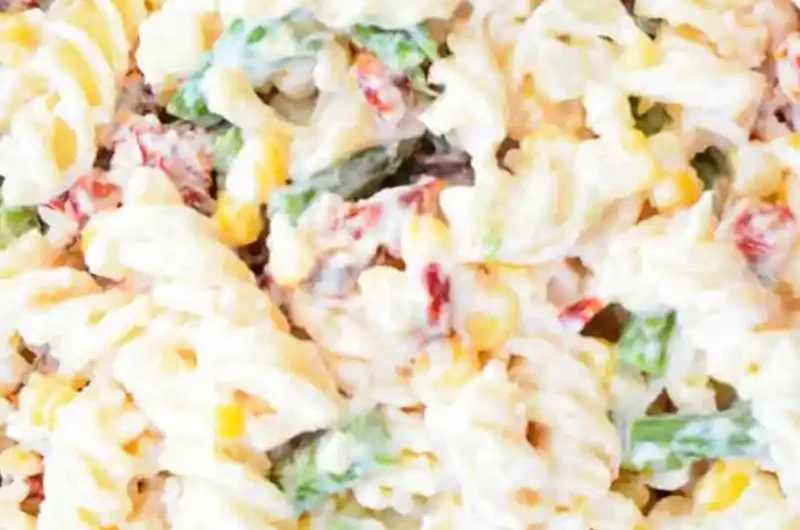
This refreshing pasta salad combines crisp blanched vegetables with a tangy, rich parmesan dressing. It serves as an excellent cold side dish for summer gatherings, potlucks, or family barbecues.
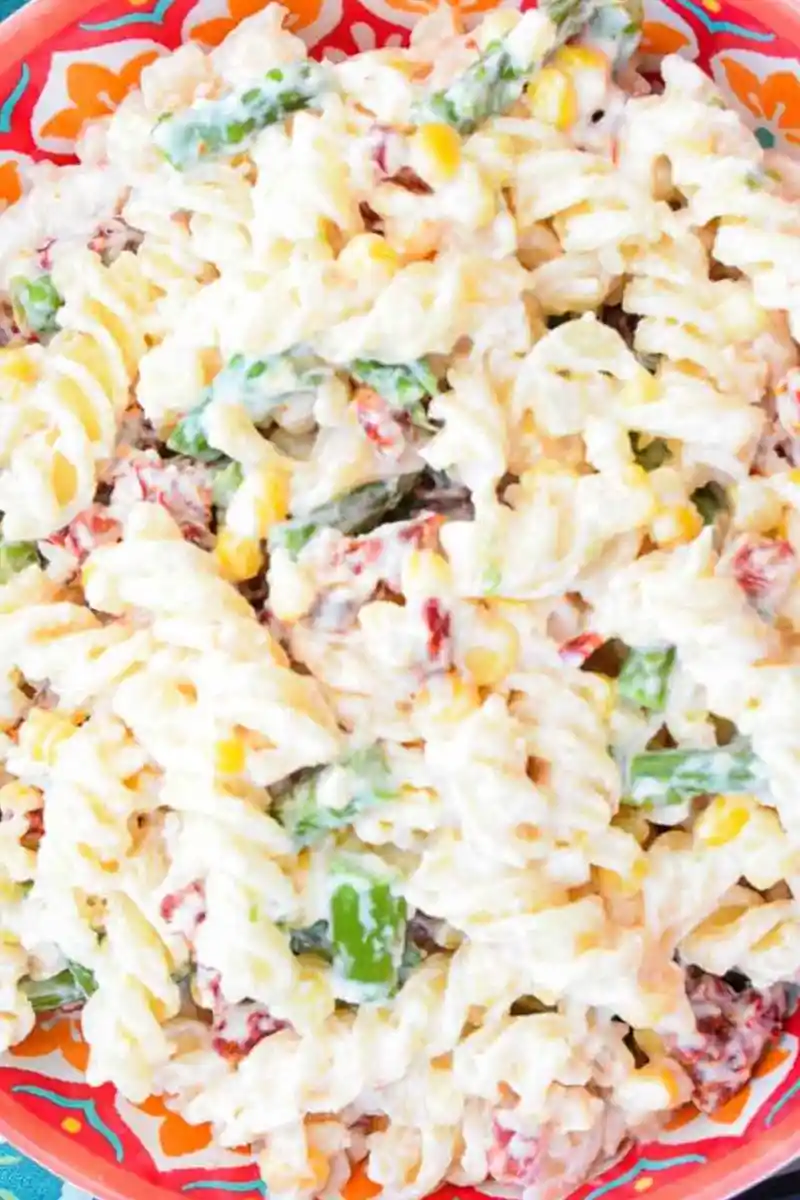
List of ingredients
- 1/2 lb dried fusilli pasta – spirals are ideal for holding the creamy dressing.
- 1/2 cup sun-dried tomatoes – sliced into thin strips for concentrated tartness.
- 2 ears fresh corn on the cob – blanched, cold shocked, and stripped from the cob.
- 1 lb asparagus – blanched, cold shocked, and cut into bite-sized pieces.
- 1/2 cup mayonnaise – provides a smooth and rich base for the sauce.
- 1/2 cup sour cream – adds a slight tang and lightness to the dressing.
- 2 tbsp lemon juice – balances the richness with bright acidity.
- 1 large garlic clove – finely grated to distribute flavor evenly.
- 3/4 cup grated parmesan cheese – made with microbial rennet for a salty finish.
step-by-step instructions
- Blanch the vegetables: Bring a large pot of salted water to a boil. Add the corn and asparagus to the water and cook for exactly 2 minutes, then immediately transfer them to a large bowl of ice water to shock them and maintain their vibrant color.
- Cook the pasta: Boil the fusilli pasta according to the package directions. Drain the pasta in a colander and rinse it thoroughly under cold running water to stop the cooking process and prevent sticking.
- Prepare the dressing: In a small mixing bowl, combine the mayonnaise, sour cream, lemon juice, finely grated garlic, and grated parmesan cheese. Stir until the mixture is completely smooth and well combined.
- Assemble the salad: Drain any remaining ice water from the blanched vegetables. In a large mixing bowl, combine the cold pasta, blanched corn, blanched asparagus, and sun-dried tomato strips.
- Combine and coat: Pour the prepared parmesan dressing over the pasta and vegetable mixture. Fold the ingredients together gently with a spoon until every piece is evenly coated with sauce.
- Chill and serve: Cover the bowl and place it in the refrigerator for at least 2 hours. This allows the flavors to meld together before serving.
Pro Techniques for Vegetable Preparation
Using the Ice Bath Method for Color
Shocking vegetables in ice water immediately after boiling stops the cooking process. This preserves the bright green of the asparagus and the yellow of the corn. Without this step, the vegetables may continue to cook and turn a dull olive color.
Cutting Asparagus for Even Bites
Trim the woody ends off the asparagus stalks before blanching. Cut the remaining spears into one-inch pieces so they are roughly the same size as the pasta spirals. This ensures a consistent texture in every spoonful of the salad.
Efficiently Stripping Corn Kernels
To remove kernels, place the corn cob stem-down on a stable cutting board. Hold the top of the cob firmly and use a sharp knife to cut downward in a sawing motion. This removes the corn cleanly while keeping the kernels intact.
Managing Moisture in Blanched Veggies
Ensure the blanched vegetables are thoroughly drained before adding them to the pasta. Excess water can dilute the parmesan dressing, making it runny. Patting the vegetables with a paper towel can help maintain the dressing’s thickness.
Pasta Selection and Cooking Tips
Choosing Spiral Pasta for Sauce Adhesion
Fusilli or rotini are the best choices because their twists trap the creamy dressing. Other shapes like penne or farfalle also work well, but smooth pastas may allow the sauce to slide off. Always use pasta that provides a surface for the cheese and cream to cling to.
Preventing Pasta Clumping with Cold Rinsing
Unlike hot pasta dishes where you keep the starch, cold pasta salads require rinsing. Rinsing the fusilli under cold water removes excess surface starch. This prevents the noodles from sticking together into a mass as they chill in the fridge.
Cooking to Al Dente Texture
Boil the pasta until it is just tender but still has a slight bite. Overcooked pasta becomes mushy once the dressing is added and the salad is chilled. Al dente pasta maintains its structural integrity against the weight of the vegetables.
Adjusting Pasta Quantities for Groups
If doubling the recipe, ensure you use a larger pot to prevent the pasta from crowding. Crowded pasta cooks unevenly and is more likely to break. Keep the ratio of dressing to pasta consistent to avoid a dry final product.
Dressing Customization and Flavor Balance
Balancing Richness with Lemon Juice
The combination of mayonnaise and sour cream is quite heavy. Fresh lemon juice cuts through this fat, providing a necessary acidic contrast. If the dressing feels too heavy, adding an extra teaspoon of lemon juice can brighten the flavor.
Adding Zest for More Depth
For an extra layer of citrus flavor, grate the zest of the lemon before juicing it. Stir the zest directly into the parmesan mixture. This adds a fragrant, aromatic quality that enhances the fresh taste of the asparagus.
Using Greek Yogurt as a Sour Cream Alternative
Plain, full-fat Greek yogurt is an excellent substitute for sour cream. It provides a similar tang and creamy consistency while adding a bit more protein. Ensure the yogurt is strained and thick to prevent the dressing from becoming too watery.
Incorporating Fresh Herbs for Aromatics
Freshly chopped parsley or basil can be folded into the salad at the end. These herbs complement the parmesan and sun-dried tomatoes perfectly. Add them just before chilling to keep the leaves from wilting too quickly.
Ingredient Substitutions and Variations
Swapping Sun-Dried Tomatoes for Peppers
If you prefer a milder flavor, replace the sun-dried tomatoes with finely diced red bell pepper. This maintains the color contrast and adds a sweet crunch. Ensure the peppers are seeded and diced small to match the corn kernels.
Using Different Cheese Varieties
While parmesan is traditional, Pecorino Romano offers a saltier, sharper profile. You can also use a blend of parmesan and a small amount of mild white cheddar for a different creaminess. Always ensure the cheese is finely grated for a smooth texture.
Adding Hearty Plant Proteins
To make the salad more filling, stir in a can of drained chickpeas or some toasted pine nuts. These additions provide a nutty flavor and extra substance without overpowering the vegetables. Fold them in during the final assembly stage.
Whole Wheat Pasta for Added Fiber
Substituting white fusilli with whole wheat fusilli adds a nuttier flavor and more nutrients. Whole wheat pasta typically requires a slightly longer cooking time. Be careful not to overcook it, as whole grain pasta can become soft more quickly.
Storage and Preservation Guidelines
Optimal Refrigeration Containers
Store the pasta salad in a glass or BPA-free plastic airtight container. An airtight seal prevents the pasta from absorbing odors from other foods in the refrigerator. It also keeps the dressing from drying out on the surface.
Understanding the Five-Day Storage Window
This salad is best consumed within five days when kept refrigerated. After this period, the vegetables may lose their crunch and the dressing may separate. Always keep the salad chilled until the moment of serving.
Why Freezing is Not Recommended
Mayonnaise and sour cream are emulsions that break down when frozen and thawed. This results in a curdled, oily texture that cannot be fixed. To preserve the quality of the dressing, keep this dish strictly refrigerated.
Reviving Dry Pasta Salad
Pasta acts like a sponge and absorbs the dressing over time. If the salad seems dry after a day in the fridge, stir in a tablespoon of mayonnaise and sour cream. This restores the creamy consistency without altering the flavor profile.
Serving Suggestions and Pairings
Pairing with Grilled Proteins
This salad pairs exceptionally well with grilled lemon-herb chicken or seared salmon. The creaminess of the pasta balances the charred flavors of grilled meats. It also works as a side for vegetable skewers or grilled portobello mushrooms.
Platter Presentation for Parties
For a party, spread the salad on a wide platter rather than serving it from a deep bowl. This prevents the vegetables from being crushed and showcases the colors of the corn and asparagus. Garnish with extra parmesan shavings on top.
Combining with Other Cold Salads
Serve this alongside a light vinaigrette-based green salad or a fresh fruit platter. The contrast between the rich parmesan dressing and a light balsamic glaze on greens creates a balanced meal. This variety prevents the palate from becoming overwhelmed by creaminess.
Temperature Control for Serving
While the salad is stored cold, let it sit at room temperature for about 10 to 15 minutes before serving. This slightly softens the fats in the dressing, allowing the flavors of the garlic and parmesan to be more prominent on the tongue.
Common Troubleshooting and FAQs
Why is my dressing separating?
Separation usually happens if the ingredients were not whisked thoroughly or if the salad was left at room temperature for too long. To fix this, stir the salad vigorously with a spoon to re-emulsify the fats and acids. Keeping the salad chilled helps maintain the emulsion.
How do I stop the asparagus from getting mushy?
The key is the exact timing of the blanching process. Cooking asparagus for more than two or three minutes can lead to an overcooked, soft texture. Using the ice bath immediately after cooking locks in the firm, snappy texture.
Can I use frozen corn instead of fresh?
Yes, you can use frozen corn kernels if fresh corn is unavailable. Thaw the corn first, then blanch it for one minute in boiling water. Cold shock it just as you would with the fresh corn to ensure the best texture.
Can this be made a day in advance?
Making the salad 24 hours in advance is actually recommended. The pasta has more time to absorb the flavors of the lemon, garlic, and parmesan. Just remember to add a splash of extra dressing before serving if it has thickened too much.
Is it safe to leave out at a picnic?
Because of the mayonnaise and sour cream, this salad should not sit out for more than two hours. To keep it safe and cold, place the serving bowl inside a larger bowl filled with ice. This maintains a safe temperature during outdoor events.
How can I make the dressing more zesty?
Increase the amount of grated garlic or add a pinch of red pepper flakes for a subtle heat. A small amount of Dijon mustard can also be whisked into the dressing to add a sharp, piquant note that complements the parmesan.
What if I don’t have a grater for the garlic?
If you lack a grater, mince the garlic as finely as possible using a sharp knife. Let the minced garlic sit in the lemon juice for a few minutes before adding the mayo and sour cream. This helps distribute the garlic flavor more evenly throughout the sauce.
Can I use a different type of oil-packed tomato?
Sun-dried tomatoes packed in oil are an excellent choice. Drain the oil thoroughly before slicing them into strips. You can even use a teaspoon of the tomato-infused oil in the dressing for extra depth of flavor.
How do I adjust the saltiness?
Parmesan cheese varies in salt content depending on the brand. Taste the salad after mixing in the dressing before adding any extra salt. If it is too salty, add a bit more sour cream or a squeeze of lemon juice to balance it out.
What is the best way to store leftovers?
Transfer leftovers to a clean, airtight container immediately after serving. Do not leave the salad in the serving bowl if it has been exposed to air for several hours. This ensures the remaining portions stay fresh and safe to eat.
Print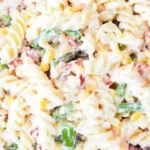
Creamy Parmesan Pasta Salad with Asparagus and Corn
- Total Time: 25 minutes
- Yield: 8 servings 1x
- Diet: General
Description
This easy pasta salad features a creamy parmesan dressing paired with the fresh taste of blanched corn and asparagus, complemented by the tang of sun-dried tomatoes.
Ingredients
- 1/2 lb dried fusilli pasta
- 1/2 cup sun-dried tomato, cut into thin strips
- 2 ears fresh corn on the cob, blanched, cold shocked and stripped from cob
- 1 lb asparagus, blanched, cold shocked, and cut into bite sized pieces
- 1/2 cup mayonnaise
- 1/2 cup sour cream
- 2 tbsp lemon juice
- 1 large garlic clove, finely grated
- 3/4 cup grated parmesan cheese (microbial rennet)
Instructions
- Blanch: Bring a large pot of salted water to a boil. Add corn and asparagus and cook for 2 minutes, then drain and transfer to ice water to shock.
- Cook: Cook pasta according to package directions, drain, and rinse under cold water.
- Mix Dressing: In a small bowl, combine mayonnaise, sour cream, lemon juice, garlic, and grated parmesan cheese.
- Combine: In a large mixing bowl, combine the blanched vegetables, sun-dried tomatoes, and cooked pasta.
- Fold: Fold the creamy parmesan dressing into the pasta mixture until completely coated.
- Chill: Refrigerate for at least 2 hours before serving to allow the flavors to blend.
Notes
Always rinse hot cooked pasta with cold water for cold salads to stop the cooking process. If the salad seems dry after sitting, stir in 1/4 cup each of mayonnaise and sour cream.
- Prep Time: 15 minutes
- Cook Time: 10 minutes
- Category: Side Dish
- Method: Boiling
- Cuisine: American
Nutrition
- Serving Size: 1 serving
- Calories: 272 kcal
- Sugar: 4 g
- Sodium: 324 mg
- Fat: 17 g
- Saturated Fat: 5 g
- Unsaturated Fat: 12 g
- Trans Fat: 0 g
- Carbohydrates: 24 g
- Fiber: 3 g
- Protein: 8 g
- Cholesterol: 22 mg
Keywords: parmesan pasta salad, pasta, salad, side dish