
This one-pan meal combines tender-crisp spring vegetables with a rich Parmesan cream sauce. It is a fast and flexible dinner option that maximizes fresh produce while minimizing cleanup.
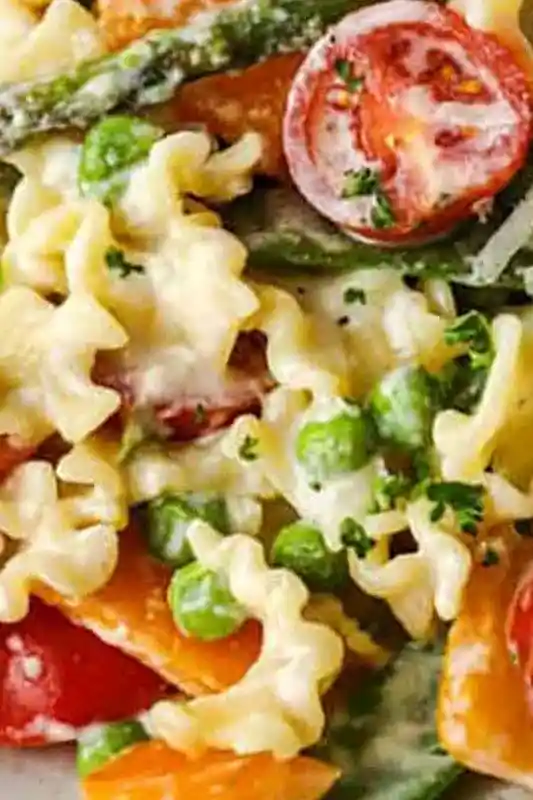
List of ingredients
- 12 ounces medium pasta, cooked – use shapes like penne or rotini for better sauce adhesion.
- 3 tablespoons butter – provides a rich base for the sauté.
- 1 teaspoon minced garlic – adds aromatic depth to the sauce.
- 1 cup sliced zucchini – cut into uniform rounds to ensure even cooking.
- ½ cup chopped asparagus – trimmed of woody ends and cut into thirds.
- ½ cup diced bell pepper – red, yellow, or orange varieties offer the best sweetness.
- 1 cup chicken broth – used for simmering vegetables and creating the slurry.
- 1 cup heavy whipping cream – creates the silky, rich texture of the sauce.
- ½ cup petite peas – frozen peas are convenient and maintain a bright color.
- ½ cup snow peas – strings should be removed before adding to the pan.
- ⅔ cup grape tomatoes or cherry tomatoes – add late to keep them from bursting.
- 1½ tablespoons cornstarch – the primary thickening agent for the sauce.
- ½ cup shredded Parmesan cheese – adds a salty, nutty finish to the dish.
step-by-step instructions
- Prepare the pasta: Cook the pasta al dente according to the package instructions and set it aside.
- Sauté aromatics: Melt the butter in a large skillet over medium heat, then add the minced garlic and cook for about one minute until fragrant.
- Cook hardy vegetables: Add the sliced zucchini, chopped asparagus, and diced bell peppers; sauté for one minute. Pour in the chicken broth, bring to a simmer, and cook for 2 to 3 minutes until the vegetables are tender-crisp.
- Simmer with cream: Stir in the heavy whipping cream, petite peas, and tomatoes, then simmer for another 2 to 3 minutes.
- Thicken the sauce: Create a slurry by mixing the cornstarch with 1 tablespoon of broth or water. Whisk this mixture into the skillet and stir until the sauce thickens.
- Final assembly: Stir in the shredded Parmesan cheese and the cooked pasta. Season with salt and pepper to taste and serve immediately.
Optimizing Vegetable Texture and Selection
Choosing the Ideal Pasta Shape
Select a pasta variety that can effectively hold the creamy sauce. Penne and rotini are excellent choices because their ridges and spirals trap the sauce and small vegetables like peas. Farfalle is also a strong option as the center fold provides a sturdy texture that stands up well to the mix of vegetables.
Preparing Asparagus for Even Cooking
To ensure the asparagus cooks at the same rate as the other vegetables, snap off the woody bottom ends where the spear becomes tough. Cut the remaining spears into uniform one-inch pieces. This prevents some pieces from being overcooked while others remain raw.
Cutting Zucchini for Consistency
Slice zucchini into rounds approximately a quarter-inch thick. If the slices are too thin, they will break down and become mushy during the simmering process. Thicker slices maintain a tender-crisp bite that contrasts well with the creamy sauce.
Selecting the Best Bell Peppers
Use red, orange, or yellow bell peppers instead of green ones for a sweeter flavor profile. These colors also make the dish more visually appealing. Dice them into small, uniform pieces so they distribute evenly throughout the pasta.
Managing Snow Peas and Sugar Snaps
Always trim the tough strings from the sides of snow peas before adding them to the skillet. If you prefer a crunchier texture, you can substitute snow peas with sugar snap peas. Both options provide a fresh, snap-like quality to the primavera.
Timing the Addition of Tomatoes
Add grape or cherry tomatoes toward the end of the cooking process. This prevents them from disintegrating completely into the sauce. By simmering them for only a few minutes, they stay juicy and provide bursts of acidity that cut through the richness of the cream.
Advanced Sauce Techniques
Creating a Stable Cornstarch Slurry
Never add dry cornstarch directly into the hot pan, as this will cause immediate clumping. Always mix the cornstarch with a small amount of cold broth or water first to create a smooth liquid. This ensures the starch granules are separated and will thicken the sauce uniformly.
Adjusting the Creaminess Level
Heavy whipping cream provides the most stability and richness for this sauce. If you prefer a lighter version, you can substitute half-and-half, though this will result in a thinner consistency. If using a lighter cream, you may need to increase the cornstarch slightly to maintain the desired thickness.
Preventing Parmesan from Clumping
Add the shredded Parmesan cheese after removing the skillet from the heat or when the heat is very low. High temperatures can cause the cheese proteins to tighten and separate from the fats, leading to a grainy or clumpy sauce. Stirring it in at the end ensures a smooth, emulsified finish.
Correcting Sauce Consistency
If the sauce becomes too thick after adding the cheese and pasta, whisk in a tablespoon of broth, milk, or reserved pasta water. If the sauce is too thin, allow it to simmer for an additional minute after adding the slurry but before adding the cheese. This allows the starch to reach its full thickening potential.
Enhancing the Broth Base
Chicken broth adds a savory depth that complements the vegetables. For a different flavor profile, vegetable broth can be used for a cleaner, more garden-centric taste. Ensure the broth is low-sodium to maintain control over the final seasoning of the dish.
Protein Additions and Flavor Variations
Incorporating Grilled Chicken
To add chicken, sear bite-sized pieces of chicken breast in the skillet before melting the butter for the vegetables. Cook the chicken until fully browned and cooked through, then remove it from the pan. Stir the cooked chicken back into the pasta at the final stage of assembly.
Adding Sautéed Shrimp
Shrimp cooks very quickly and can become rubbery if overdone. Sauté the shrimp in butter for about two minutes per side until pink, then set them aside. Add them to the skillet at the same time as the Parmesan cheese to keep them tender.
Using Chickpeas for Plant-Based Protein
For a meat-free protein boost, add a can of rinsed and drained chickpeas. Stir them in along with the zucchini and asparagus. Chickpeas hold their shape well during simmering and absorb the flavors of the garlic and broth.
Adapting for Winter Produce
When spring vegetables are unavailable, substitute them with winter options like diced carrots, cauliflower florets, and frozen peas. Carrots and cauliflower should be added earlier in the process or parboiled, as they take longer to soften than zucchini.
Adding Bright Citrus Notes
A small squeeze of fresh lemon juice or a pinch of lemon zest added right before serving can elevate the dish. The acidity of the lemon cuts through the heavy cream and Parmesan, highlighting the fresh taste of the vegetables.
Storage and Reheating Advice
Proper Refrigeration Practices
Store leftover pasta primavera in an airtight container in the refrigerator for up to three days. Ensure the pasta is completely cooled before sealing the lid to prevent excess condensation, which can make the noodles soggy.
Best Methods for Stovetop Reheating
The best way to reheat this dish is in a skillet over medium-low heat. Add a splash of milk or broth to the pan to loosen the sauce, which has likely thickened in the fridge. Stir gently until the sauce becomes creamy again and the pasta is heated through.
Microwave Reheating Tips
When using a microwave, heat the pasta in short 30-second intervals. Stir the pasta between each interval to redistribute the sauce and prevent hot spots. Adding a teaspoon of water or milk before heating helps restore the sauce’s original consistency.
Freezing and Thawing Limitations
Cream-based sauces often separate when frozen and thawed, leading to a grainy texture. While you can freeze the dish, it is recommended to only freeze the cooked pasta and vegetables without the sauce. Prepare a fresh batch of cream sauce when you are ready to serve.
Troubleshooting and Common Questions
Why is my sauce grainy?
Graininess usually occurs if the Parmesan cheese was added to a boiling sauce or if the cornstarch was not properly dissolved in a slurry. To fix a grainy sauce, try whisking in a small amount of warm milk over low heat to re-emulsify the ingredients.
How do I stop the vegetables from getting mushy?
Avoid overcooking the vegetables during the simmering stage. They should be tender-crisp, meaning they have a slight resistance when bitten. Remove the pan from the heat as soon as the vegetables reach this state, as they will continue to cook slightly in the hot sauce.
Can I use a different cheese?
Pecorino Romano is a great substitute for Parmesan, though it is saltier, so you should reduce the added salt. Gruyere or Fontina can be used for a meltier, more pungent sauce, but they may change the traditional primavera flavor profile.
What can I use instead of cornstarch?
All-purpose flour can be used as a thickener, but it must be cooked longer to remove the raw flour taste. Alternatively, you can reduce the sauce by simmering it longer without a lid, though this may overcook the vegetables.
Can I use whole wheat pasta?
Yes, whole wheat pasta works well in this recipe. However, whole wheat noodles often require a slightly longer cooking time and have a nuttier flavor. Be sure to cook them exactly al dente, as they can become soft more quickly when tossed in sauce.
Print
Creamy Pasta Primavera with Fresh Spring Vegetables
- Total Time: 40 minutes
- Yield: 4 servings 1x
- Diet: General
Description
Creamy pasta primavera is packed with tender-crisp spring veggies in a silky Parmesan cream sauce, all made in one skillet.
Ingredients
- 12 ounces medium pasta (cooked)
- 3 tablespoons butter
- 1 teaspoon minced garlic
- 1 cup sliced zucchini
- ½ cup chopped asparagus (trimmed and cut into thirds)
- ½ cup diced bell pepper (red, yellow or orange)
- 1 cup chicken broth
- 1 cup heavy whipping cream
- ½ cup petite peas
- ½ cup snow peas
- ⅔ cup grape tomatoes (or cherry tomatoes)
- 1½ tablespoons cornstarch
- ½ cup shredded Parmesan cheese
Instructions
- Step 1: Cook pasta al dente according to package directions and set aside.
- Step 2: In a large skillet add butter and melt over medium heat. Add garlic and cook until fragrant, about one minute.
- Step 3: Add zucchini, asparagus, peppers and cook 1 minute more. Add broth, bring to a simmer and let cook 2 to 3 minutes or until vegetables are tender-crisp.
- Step 4: Stir in heavy cream, peas and tomatoes and simmer an additional 2 to 3 minutes.
- Step 5: Make a slurry by combining cornstarch with 1 tablespoon of broth or water. Whisk the cornstarch into the pan until the sauce thickens.
- Step 6: Stir in parmesan and pasta. Season with salt & pepper to taste. Serve immediately.
Notes
Store leftovers in an airtight container in the fridge for up to 3 days. Reheat on the stovetop with a little milk to thin out the sauce.
- Prep Time: 20 minutes
- Cook Time: 20 minutes
- Category: Pasta
- Method: Stovetop
- Cuisine: Italian-American
Nutrition
- Serving Size: 1 serving
- Calories: 695 kcal
- Sugar: 6 g
- Sodium: 523 mg
- Fat: 35 g
- Saturated Fat: 21 g
- Unsaturated Fat: 12 g
- Trans Fat: 1 g
- Carbohydrates: 75 g
- Fiber: 5 g
- Protein: 19 g
- Cholesterol: 113 mg
Keywords: Pasta Primavera, creamy pasta, spring vegetables, one-skillet meal