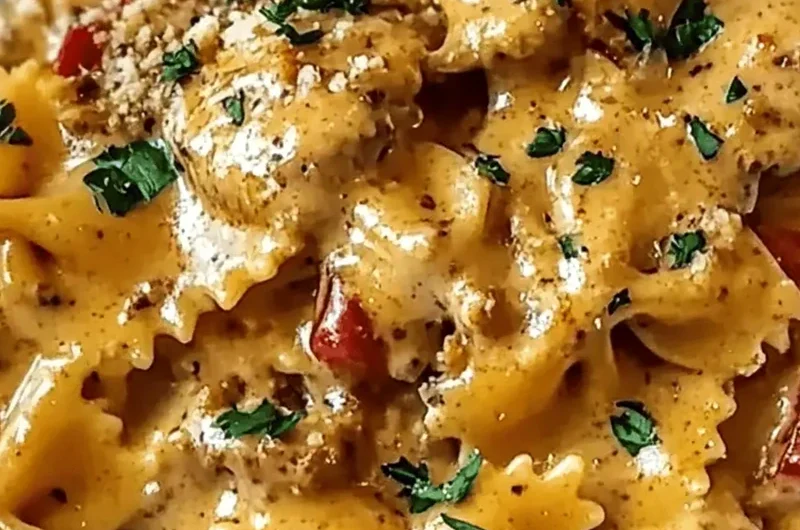
This hearty meal combines tender chicken and roasted red peppers in a rich, garlic-infused cream sauce. It is a satisfying dinner option that takes only 30 minutes to prepare from start to finish.
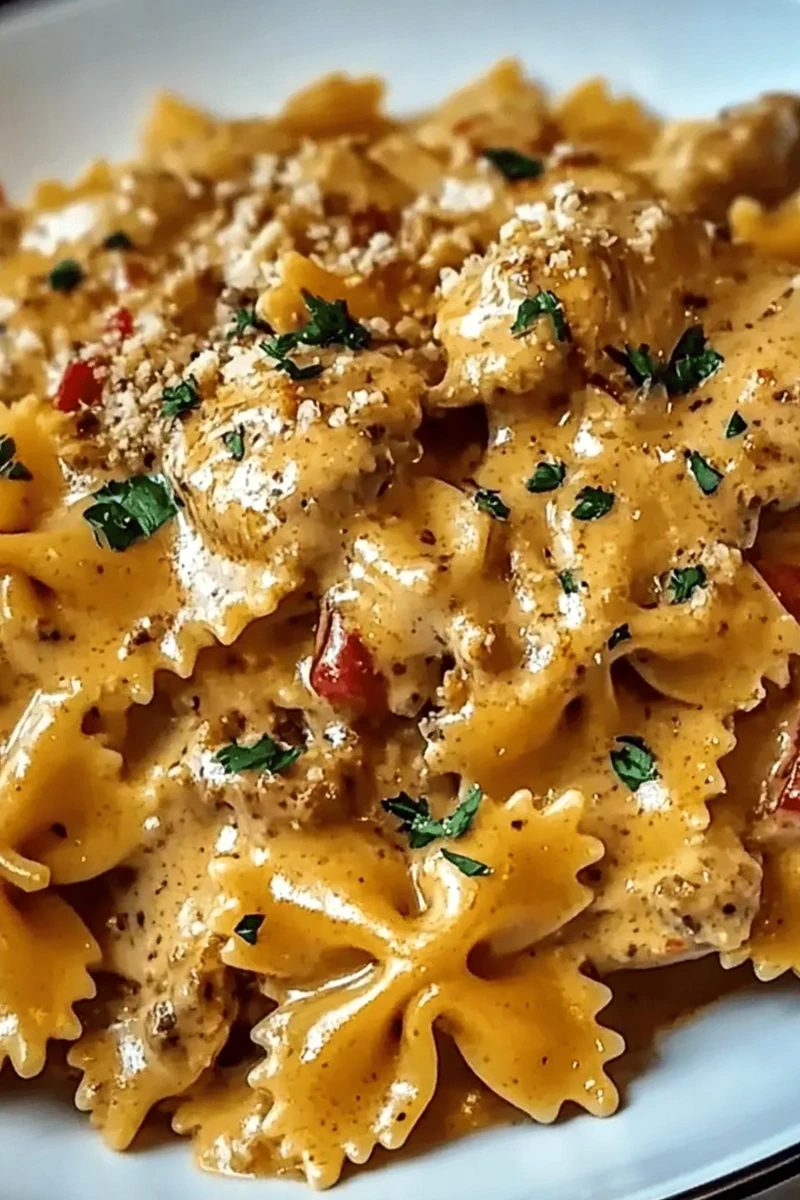
List of ingredients
- 12 oz bowtie pasta – holds the sauce well (use gluten-free pasta as a substitute)
- 1 lb boneless skinless chicken breast – slice thinly for fast, even cooking
- Salt and black pepper – essential for basic seasoning
- 1 tsp garlic powder – adds a mellow depth to the chicken
- 1 tbsp olive oil – used for searing the chicken to a golden brown
- 2 tbsp butter – creates a rich base for the cream sauce
- 4 cloves garlic, minced – provides a fragrant aroma
- 1/2 cup roasted red peppers – adds a sweet and smoky flavor (jarred or homemade)
- 3/4 cup heavy cream – essential for a smooth, luscious texture
- 2 oz cream cheese – increases richness and thickness
- 3/4 cup grated Parmesan cheese – adds a nutty flavor and helps thicken the sauce
- 1/2 tsp Italian or Southern herb blend – provides an earthy balance to the cream
- Fresh parsley or basil – used for a bright, fresh garnish
- Red pepper flakes or balsamic drizzle – optional additions for heat or acidity
step-by-step instructions
- Boil the Pasta: Bring a large pot of salted water to a rolling boil. Add 12 oz of bowtie pasta and cook according to the package directions until al dente, typically 10-12 minutes. Reserve 1/2 cup of the starchy pasta water before draining the pasta through a colander.
- Sear the Chicken: Thinly slice the 1 lb of chicken breast. Heat 1 tablespoon of olive oil in a large skillet over medium-high heat. Add the seasoned chicken and cook for 6-7 minutes until golden brown and cooked through, then remove the chicken from the skillet and set it aside.
- Prepare the Sauce Base: In the same skillet, melt 2 tablespoons of butter over medium heat. Sauté the 4 cloves of minced garlic for about 1 minute. Stir in 1/2 cup of roasted red peppers, then pour in 3/4 cup of heavy cream. Stir in 2 oz of cream cheese until the mixture is completely smooth.
- Thicken with Cheese and Herbs: Stir 3/4 cup of grated Parmesan cheese and 1/2 teaspoon of the herb blend into the sauce. Continue stirring gently until the cheese has melted and the sauce has reached a thick, creamy consistency.
- Combine the Components: Add the cooked chicken and drained bowtie pasta back into the skillet. Toss everything together to ensure the pasta is fully coated. If the sauce is too thick, gradually stir in the reserved pasta water until the desired consistency is achieved.
- Garnish and Serve: Plate the pasta while hot. Garnish with fresh parsley or basil, and optionally add red pepper flakes for heat or a balsamic drizzle for tanginess. Serve immediately.
Cooking Tips for Optimal Results
Pat Chicken Dry Before Searing
Always use a paper towel to pat the chicken breasts dry before seasoning them. Removing surface moisture prevents the chicken from steaming in the pan and allows it to develop a proper golden-brown crust. This process enhances the overall flavor and texture of the meat.
Utilize Reserved Pasta Water for Sauce Consistency
The starchy water from the pasta pot acts as an emulsifier when added to the cream sauce. If the sauce becomes too thick or separates, a few tablespoons of this water will smooth it out. It helps the sauce cling better to the pasta shapes.
Add a Splash of Lemon Juice for Balance
Adding a small amount of fresh lemon juice to the chicken just before combining it with the pasta can brighten the dish. The acidity cuts through the richness of the heavy cream and Parmesan. This creates a more balanced flavor profile on the palate.
Monitor Internal Chicken Temperature
Use a digital meat thermometer to ensure the chicken reaches an internal temperature of 165°F. This ensures the meat is safe to eat while remaining juicy. Overcooking the chicken can lead to a rubbery texture that clashes with the creamy sauce.
Sauté Garlic Carefully to Avoid Burning
Keep the heat at a medium level when sautéing the minced garlic. Garlic can burn quickly, which introduces a bitter taste to the entire sauce. Once the garlic becomes fragrant, immediately add the red peppers or cream to stop the cooking process.
Ingredient Substitutions and Variations
Substitute Gluten-Free Pasta for Dietary Needs
You can replace the traditional bowtie pasta with brown rice or corn-based gluten-free alternatives. These alternatives hold up well in cream sauces. Be sure to follow the specific boiling instructions for gluten-free pasta to avoid mushiness.
Swap Protein for Different Flavors
Shrimp or sliced Italian-style chicken sausages are excellent alternatives to chicken breast. If using shrimp, sauté them quickly for 2-3 minutes per side to avoid overcooking. Sausages add a saltier, more robust flavor to the dish.
Create a Vegetarian Version
Remove the chicken and replace it with sliced mushrooms or chickpeas for a plant-based protein source. Sauté the mushrooms in the butter until they are browned before adding the garlic. This maintains the savory depth of the meal without using meat.
Use Dairy-Free Cream Alternatives
For a dairy-free version, replace heavy cream with full-fat coconut milk or cashew cream. Substitute the Parmesan and cream cheese with nutritional yeast or a vegan Parmesan alternative. These swaps maintain the creaminess while removing animal-derived dairy.
Increase the Spice Level with Peppers
Add diced jalapeños or a larger pinch of red pepper flakes during the sauce-making step. This introduces a sharp heat that contrasts well with the sweet roasted red peppers. You can also use spicy roasted peppers for an integrated heat.
Experiment with Alternative Pasta Shapes
While bowtie pasta is recommended, penne or rigatoni are also great choices because they have holes that trap the sauce. Fettuccine is another option for a more classic Italian feel. The sauce works effectively with any medium-to-thick pasta shape.
Serving Suggestions and Pairings
Pair with Crusty Garlic Bread
Toasted garlic bread is an ideal accompaniment for soaking up any remaining cream sauce on the plate. Use a baguette sliced lengthwise, brushed with garlic butter, and broiled until crisp. This adds a crunch that complements the soft pasta.
Serve with a Fresh Green Salad
A side of mixed greens with a light lemon vinaigrette provides a refreshing contrast to the rich pasta. Arugula or baby spinach works well because their slight bitterness balances the creaminess. Avoid heavy dressings to keep the meal from feeling too weighted.
Include Roasted Seasonal Vegetables
Roasted carrots or asparagus add nutritional value and a touch of sweetness to the dinner. Toss the vegetables in olive oil and salt, then roast at 400°F until tender. Their caramelized edges pair perfectly with the roasted red peppers in the sauce.
Add Steamed Broccoli for Texture
Steamed broccoli florets offer a crisp texture and a vibrant color to the plate. The broccoli can be served on the side or mixed directly into the pasta. This addition introduces a fresh, earthy element to the dish.
Arrange an Antipasto Platter
For a larger gathering, serve the pasta alongside an antipasto platter featuring olives, marinated artichokes, and microbial-rennet cheeses. This echoes the Mediterranean flavors of the main course. It is a great way to start the meal with light, salty appetizers.
Complement with a Refreshing Beverage
A sparkling water with a squeeze of fresh lime or a crisp non-alcoholic cider pairs well with this dish. The bubbles and acidity help cleanse the palate between bites of the rich Parmesan sauce. This keeps the meal tasting fresh throughout.
Storage and Reheating Guide
Store Leftovers in the Refrigerator
Place any remaining pasta in an airtight container and store it in the fridge for up to 3 days. Ensure the container is sealed tightly to prevent the pasta from drying out. Keep the container in the coldest part of the fridge for maximum safety.
Freeze the Dish for Long-Term Storage
Transfer the pasta to a freezer-safe container and store it for up to 3 months. Let the dish cool completely before freezing to avoid ice crystals. Thaw the container in the refrigerator overnight before you plan to reheat it.
Reheat Gently on the Stovetop
Avoid using a microwave, as it can cause the cream sauce to separate or the chicken to become tough. Instead, heat the pasta in a skillet over low heat. Add a splash of milk or cream to restore the original silky texture of the sauce.
Observe Safe Room Temperature Limits
Do not leave the cooked pasta at room temperature for more than two hours. Because of the high dairy and protein content, it can become a breeding ground for bacteria if left out. Always move leftovers to the fridge immediately after the meal.
Make-Ahead Strategies
Pre-Cook Protein and Pasta
You can sear the chicken and boil the pasta up to 24 hours before you intend to serve the meal. Store them in separate airtight containers in the refrigerator. This reduces the active cooking time on the night of the dinner to just the sauce preparation.
Prepare the Garlic Cream Sauce in Advance
The sauce can be made completely and stored in the fridge for up to 3 days. When you are ready to eat, reheat the sauce gently in a pan. Stir in a small amount of cream if the sauce has thickened too much during storage.
Assemble the Final Dish Quickly
If the components are pre-prepared, simply warm the sauce and toss in the chilled pasta and chicken. The residual heat from the sauce will warm the other ingredients. This allows you to serve a restaurant-quality meal in under 10 minutes.
Common Troubleshooting
Fixing a Separated Sauce
If the sauce looks grainy or has split into oil and cream, whisk in a tablespoon of warm milk or reserved pasta water. Do this over low heat while stirring constantly. This helps re-emulsify the fats and liquids into a smooth mixture.
Preventing Overcooked Chicken
If the chicken is drying out, reduce the heat of the skillet or slice the breasts even thinner. Thin slices cook faster and are less likely to dry out on the outside before the inside is done. Avoid overcrowding the pan to maintain a high searing temperature.
Adjusting Overall Saltiness
Since Parmesan cheese and pasta water are both salty, taste the sauce before adding extra salt. If the dish is too salty, add a splash more heavy cream or a pinch of sugar. This helps neutralize the excess sodium without altering the flavor profile.
Frequently Asked Questions
How do I pick the best chicken breasts?
Look for breasts that are plump, uniform in size, and a pale pink color without any bruising. Avoid any chicken that has a strong odor or feels slimy. Fresh, high-quality meat will ensure the best texture after searing.
How long do leftovers stay fresh?
When stored in an airtight container in the refrigerator, the pasta remains fresh for up to 3 days. Beyond this point, the dairy may begin to sour and the pasta may lose its structure. Always smell and inspect the food before reheating.
Can this dish be frozen?
Yes, the dish can be frozen for up to 3 months. However, be aware that cream-based sauces can sometimes change texture upon thawing. Adding a bit of extra cream during the reheating process usually fixes any consistency issues.
What if the sauce is too thick?
Gradually stir in the reserved starchy pasta water one tablespoon at a time. If you have already drained the water, a small amount of milk or heavy cream will also work. Continue stirring over low heat until the sauce reaches your desired thickness.
How can I adapt this for dairy allergies?
Replace the heavy cream with coconut cream and the cream cheese with a plant-based substitute. Use nutritional yeast or a vegan Parmesan alternative for the cheese component. These substitutions provide the necessary creaminess without the dairy.
How do I know the chicken is done?
The most reliable method is using a meat thermometer to check for a reading of 165°F at the thickest part of the meat. Visually, the chicken should be golden brown on the outside and no longer pink in the center. Cut into the largest piece to verify the color.
Print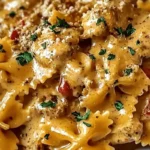
Creamy Roasted Red Pepper and Parmesan Chicken Pasta
- Total Time: 30 minutes
- Yield: 4 servings 1x
- Diet: General
Description
Savor the Best Parmesan Roasted Red Pepper Chicken with pasta, a cozy dish perfect for chilly evenings.
Ingredients
- 12 oz bowtie pasta
- 1 lb boneless skinless chicken breast
- salt & black pepper
- 1 tsp garlic powder
- 1 tbsp olive oil
- 2 tbsp butter
- 4 cloves garlic, minced
- ½ cup roasted red peppers
- ¾ cup heavy cream
- 2 oz cream cheese
- ¾ cup grated Parmesan cheese
- ½ tsp Italian or Southern herb blend
- fresh parsley or basil
- red pepper flakes or balsamic drizzle
Instructions
- Step 1: Bring a large pot of salted water to a boil, cook bowtie pasta until al dente, reserve ½ cup pasta water, and drain.
- Step 2: Thinly slice chicken breasts and sear in 1 tablespoon olive oil over medium-high heat for 6–7 minutes until golden brown; remove and set aside.
- Step 3: Melt 2 tablespoons butter in the same skillet, sauté minced garlic for 1 minute, stir in roasted red peppers, then pour in heavy cream and cream cheese, stirring until smooth.
- Step 4: Stir in grated Parmesan cheese and Italian herb blend until the cheese has melted and the sauce has thickened.
- Step 5: Return chicken and pasta to the skillet, tossing to coat; add reserved pasta water if the sauce is too thick.
- Step 6: Plate the dish and garnish with fresh parsley, basil, red pepper flakes, or a balsamic drizzle.
Notes
Pat chicken dry before searing for a golden crust. Reserve pasta water to adjust sauce consistency. A splash of lemon juice over the sautéed chicken adds brightness.
- Prep Time: 10 minutes
- Cook Time: 20 minutes
- Category: Dinner
- Method: Stovetop
- Cuisine: Italian
Nutrition
- Serving Size: 1 serving
- Calories: 600 kcal
- Sugar: 2 g
- Sodium: 800 mg
- Fat: 30 g
- Saturated Fat: 15 g
- Unsaturated Fat: 9 g
- Trans Fat: 0 g
- Carbohydrates: 45 g
- Fiber: 3 g
- Protein: 45 g
- Cholesterol: 150 mg
Keywords: Parmesan, roasted red pepper, chicken, bowtie pasta, creamy garlic sauce, dinner