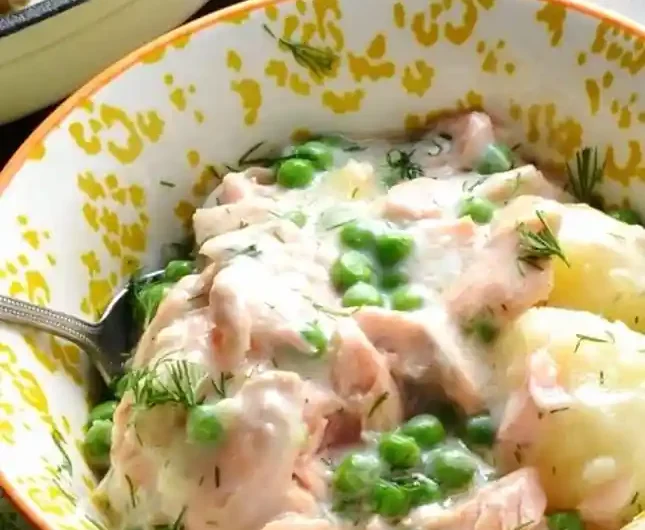
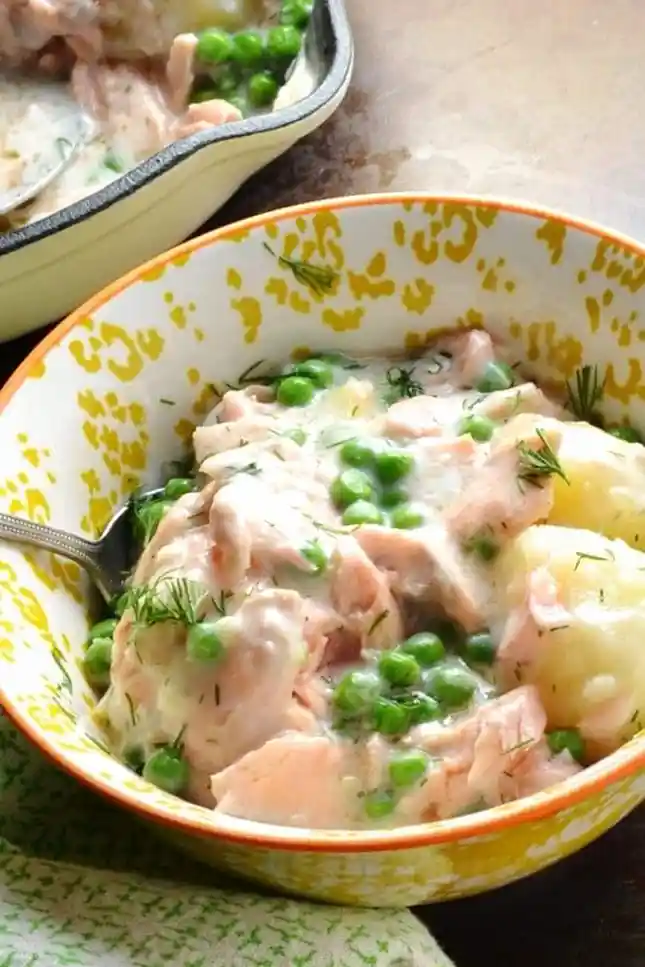
This salmon and potato bake is a nutritious one-pot meal that is both comforting and efficient. It is designed for quick preparation using either canned salmon or cooked leftovers, making it an ideal weeknight dinner.
List of ingredients
- 1.1 pounds salmon (ready-to-eat) – Use leftover cooked fillets or canned salmon.
- 2.2 pounds small potatoes – Waxy varieties like baby potatoes work best.
- ⅔ cup petits pois or garden peas (frozen) – No need to defrost before adding.
- 1 bay leaf – Added to the boiling water for aromatics.
- 1¼ cups milk – Used as the liquid base for the white sauce.
- 2⅙ tablespoons butter – For creating the roux.
- 3 tablespoons flour – Used to thicken the sauce.
- 2 tablespoons fromage frais, fromage blanc, or sour cream – Adds tang and creaminess.
- 1 teaspoon dijon mustard – Provides a sharp flavor contrast.
- 1 tablespoon dill (finely chopped, optional) – A classic pairing for salmon.
- Sea salt and pepper – To taste for seasoning.
step-by-step instructions
- Boil the potatoes: Peel the potatoes and boil them in salted water with the bay leaf for approximately 10 minutes. Drain the water, discard the bay leaf, and set the potatoes aside, ensuring they are cooked but not mushy.
- Preheat the oven: While the potatoes are boiling, set your oven to 400 F / 200 C / fan 200 / gas mark 6.
- Prepare the white sauce: Melt the butter in a saucepan over low heat. Add the flour and whisk quickly until the mixture thickens and the flour is no longer visible. Gradually add a small amount of milk, increase the heat, and whisk until thickened. Pour in the remaining milk, fromage frais, and mustard, whisking until the sauce is smooth and begins to bubble. Remove from heat and season with salt and pepper.
- Assemble the dish: Place the cooked potatoes in an oven-safe dish. Top with the shredded salmon and frozen petits pois. Pour the white sauce evenly over the top, using a fork to poke the surface and ensure the sauce penetrates the layers.
- Bake and serve: Place the dish on the top oven shelf and bake for 15 minutes. Serve the casserole immediately while hot.
Optimizing Component Textures
Select Waxy Potatoes for Better Texture
Waxy potatoes, such as Charlotte, Red Bliss, or baby potatoes, are essential for this recipe. These varieties have lower starch content than floury potatoes, allowing them to hold their shape during the boiling and baking process. This prevents the casserole from becoming a mash.
Using Canned Salmon Effectively
If using canned salmon, drain the liquid thoroughly to prevent the casserole from becoming watery. Gently flake the fish with a fork to remove any large bones or skin before layering. This ensures an even distribution of protein throughout the dish.
Whisking for a Lump-Free Sauce
Always use a wire whisk rather than a spoon when incorporating milk into the butter and flour roux. Rapid whisking breaks up clumps of flour and incorporates air, resulting in a glossy, smooth consistency. If lumps persist, you can briefly strain the sauce through a fine-mesh sieve.
Ingredient Alternatives and Customizations
Substituting Fromage Frais
If fromage frais or fromage blanc is unavailable, plain Greek yogurt or sour cream are excellent substitutes. These options provide the same tangy profile and creamy texture. Ensure the substitute is at room temperature before whisking it into the sauce to avoid curdling.
Changing the Herb Profile
While dill is the traditional choice, fresh parsley provides a cleaner, milder taste. For a more floral and sophisticated aroma, stir one teaspoon of dried tarragon into the white sauce. These herbs complement the richness of the fish and the creaminess of the sauce.
Adding Extra Vegetables
To increase the nutritional density, stir in a handful of chopped baby spinach or thoroughly drained frozen spinach during the sauce preparation. Cooked broccoli florets can also be layered with the potatoes. These additions introduce more fiber and vitamins without altering the cooking time significantly.
Using Different Milk Options
You can replace cow’s milk with unsweetened almond or soy milk for a different flavor profile. Note that plant-based milks may vary in thickening power, so you might need to simmer the sauce for an extra minute. Avoid using sweetened versions as they will clash with the savory ingredients.
Serving Recommendations
Pairing with Acidic Salads
The richness of the white sauce is balanced well by a zesty, acidic side dish. A sauerkraut salad or a pickled red cabbage slaw provides a sharp contrast that cuts through the creaminess. Cold beet salad is another traditional pairing that adds earthiness to the meal.
Adding Fresh Steamed Greens
For a lighter side, serve the bake with steamed broccoli or cauliflower. These vegetables add volume to the meal while keeping the calorie count manageable. Lightly seasoning them with lemon juice and salt enhances the overall flavor of the fish.
Complementary Grains for Extra Bulk
While the potatoes provide ample carbohydrates, serving a small portion of quinoa or brown rice on the side can make the meal more filling. This is particularly useful when serving the dish to active adults or teenagers who require more energy.
Storage and Preservation
Refrigeration Guidelines
Store any leftover salmon and potato casserole in an airtight container in the refrigerator. It remains safe for consumption for up to 3 days. Ensure the container is sealed tightly to prevent the fish from absorbing other odors in the fridge.
Freezing the Casserole
This dish can be frozen for up to 3 months. To freeze, allow the casserole to cool completely before placing it in a freezer-safe container. Label the container with the date and contents to track freshness.
Preventing Sauce Separation
When storing the dish, the sauce may thicken or slightly separate due to the cooling process. To fix this, add a tablespoon of milk or water before reheating. This re-emulsifies the fats and liquids, restoring the original creamy texture.
Reheating and Make-Ahead Strategies
Microwave Reheating Method
For the fastest result, place a portion of the casserole in a microwave-safe dish and cover it with a lid or damp paper towel. Heat on medium power in 1-minute intervals, stirring gently between each session. This prevents the edges from overcooking while the center remains cold.
Oven Reheating for Crispiness
To maintain the texture of the potatoes, reheat the dish in the oven at 325 F (160 C). Cover the dish with aluminum foil to trap moisture and prevent the top from burning. Heat for 15-20 minutes until the center is piping hot.
Preparing Components in Advance
You can save time by boiling the potatoes and preparing the white sauce a day ahead. Store them in separate airtight containers in the refrigerator. When ready to assemble, reheat these components in the microwave before layering them in the dish to ensure the final bake is hot throughout.
Troubleshooting Common Issues
Solving a Too-Thin Sauce
If the sauce appears too runny after the initial whisking, continue to simmer it over medium-low heat for another 2-3 minutes. The constant evaporation of moisture will concentrate the flour’s thickening power. Stir continuously to prevent the bottom from scorching.
Preventing Overcooked Potatoes
Overboiling the potatoes leads to a mushy casserole. Test the potatoes with a fork; they should be tender but offer slight resistance in the center. Because they will cook further in the oven for 15 minutes, undercooking them slightly during the boil is safer.
Handling Dry Salmon
If using older leftovers or canned salmon that feels dry, increase the amount of sauce slightly. You can add an extra tablespoon of butter and milk to the roux. Ensuring the salmon is fully submerged in the sauce before baking helps lock in moisture.
Frequently Asked Questions
Can I use frozen potatoes?
Yes, you can use frozen diced potatoes, but you must skip the initial boiling step. Increase the baking time by 10-15 minutes to ensure the frozen potatoes are fully cooked through and tender.
Is this dish suitable for meal prep?
This casserole is excellent for meal prep because it holds its structure well. Divide the baked dish into individual portions for easy transport and reheating throughout the work week.
Can I add cheese to the topping?
Adding a layer of microbial-rennet shredded mozzarella or cheddar on top before baking adds extra flavor. Bake until the cheese is golden brown and bubbling for a more indulgent version of the recipe.
Which salmon is best for this recipe?
Cooked salmon fillets are the gold standard for texture, but canned salmon is the most convenient. For a more intense flavor, you can mix a small amount of smoked salmon into the shredded ready-to-eat salmon.
Print
Creamy Salmon and Potato Bake (Healthy)
- Total Time: 30 minutes
- Yield: 6 servings 1x
- Diet: General
Description
This salmon and potato bake is a simple one-pot dish that’s creamy, comforting and low in fat. Easy to make using either salmon leftovers or canned salmon it comes together in as little as 30 minutes!
Ingredients
- 1.1 pounds salmon (ready-to-eat)
- 2.2 pounds small potatoes
- ⅔ cup petits pois or garden peas (frozen)
- 1 bay leaf
- 1¼ cups milk
- 2⅙ tablespoons butter
- 3 tablespoons flour
- 2 tablespoons fromage frais/fromage blanc (or sour cream)
- 1 teaspoon dijon mustard
- 1 tablespoon dill (finely chopped, optional)
- sea salt and pepper to taste
Instructions
- Step: Peel the potatoes and boil in salted water with the bay leaf for about 10 minutes. Drain, discard the bay leaf and set aside.
- Step: Preheat the oven to 400 F/ 200 C/fan 200/ gas mark 6.
- Step: In a saucepan, melt the butter over a low heat. Add the flour and quickly whisk until the mixture thickens and the flour is no longer visible. Add a bit of milk, increase the heat and whisk until the sauce thickens. Pour in the rest of the milk along with the fromage frais and mustard and continue whisking until the sauce thickens and starts bubbling up. Remove from the heat, season to taste and set aside.
- Step: Place the potatoes in your oven dish, top with shredded salmon, frozen petits pois/peas and pour over the sauce, poking the surface with a fork to ensure the sauce gets inside the casserole too.
- Step: Bake for 15 minutes on the top oven shelf. Serve immediately.
Notes
I recommend using salad potatoes (e.g., Charlotte, baby potatoes, or Red Bliss) as they hold their shape well. You can use ready-to-eat salmon leftovers or canned salmon. Potatoes and white sauce can be prepared in advance and refrigerated overnight.
- Prep Time: 12 minutes
- Cook Time: 18 minutes
- Category: Dinner
- Method: Baking
- Cuisine: European
Nutrition
- Serving Size: 1 serving
- Calories: 314 kcal
- Sugar: 4 g
- Sodium: 126 mg
- Fat: 11 g
- Saturated Fat: 4 g
- Unsaturated Fat: 7 g
- Trans Fat: 0 g
- Carbohydrates: 29 g
- Fiber: 5 g
- Protein: 24 g
- Cholesterol: 62 mg
Keywords: salmon, potato bake, healthy dinner, creamy fish casserole, easy one-pot meal