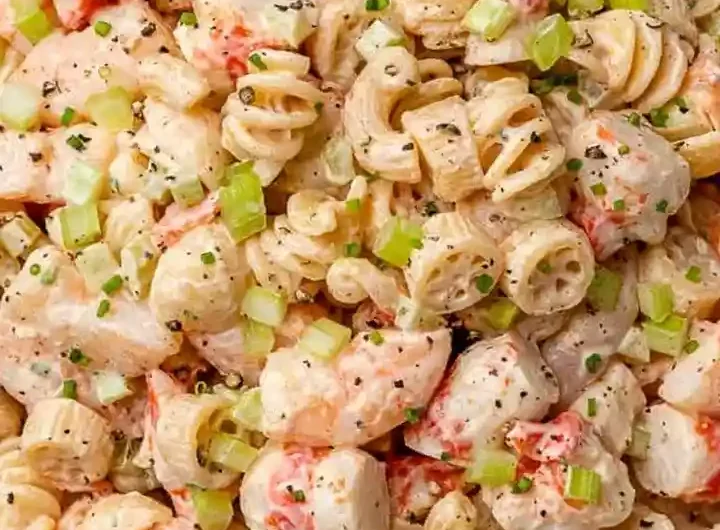
This creamy seafood pasta salad combines shrimp and crab for a protein-rich, refreshing meal. It is a fast recipe that takes only 30 minutes from start to finish and works well for lunches or potlucks.
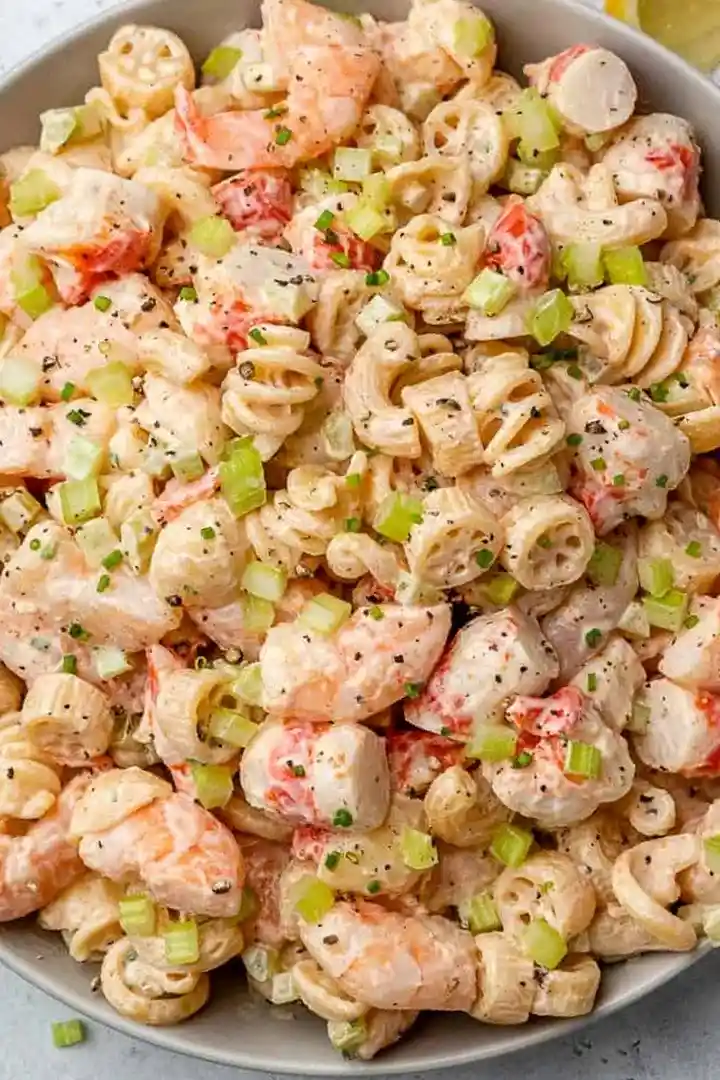
List of ingredients
- 8 ounces wheat short pasta – provides a hearty base and extra fiber.
- 1 teaspoon salt – for seasoning the pasta water.
- 1 teaspoon olive oil – prevents pasta from sticking together.
- 2/3 cup plain Greek yogurt – creates a creamy, high-protein dressing.
- 1 lemon (juice & zest of) – adds essential acidity and brightness.
- 1 teaspoon Old Bay seasoning – provides a classic seafood flavor profile.
- 2 tablespoons chopped chives – adds a mild onion-like freshness.
- salt and pepper (to your taste) – used for final seasoning adjustments.
- 8 ounce crab meat (cut into bite-size pieces) – adds sweetness and texture.
- 8 ounce pre-cooked shrimp (cut into bite-size pieces) – the main protein source.
- 1/2 cup celery finely diced – provides a necessary crunch.
step-by-step instructions
- Boil the water: Heat a large pot of water and add 1 teaspoon of salt and a drizzle of 1 teaspoon of olive oil.
- Cook the pasta: Add 8 ounces of wheat short pasta, stir well, and cook until al dente, typically 8-10 minutes or according to the package directions. Once cooked, drain the pasta in a colander and run it under cold water; set aside.
- Prepare the dressing: In a salad bowl, whisk together 2/3 cup plain Greek yogurt, the juice and zest of 1 lemon, 1 teaspoon Old Bay seasoning, 2 tablespoons chopped chives, and salt and pepper. Stir in the cooled pasta and toss until evenly coated.
- Combine seafood and vegetables: Add 8 ounces of pre-cooked shrimp, 8 ounces of crab meat, and 1/2 cup of finely diced celery, then gently fold the ingredients together. Taste and adjust the salt and pepper as needed.
- Chill the salad: Place the salad in the refrigerator for 30 minutes to chill and allow the flavors to meld before serving.
Optimizing Pasta Selection
Whole Wheat Pasta Benefits
Using whole wheat pasta increases the fiber content of the dish compared to refined white pasta. It provides a nuttier flavor and a firmer texture that holds up well during the chilling process. This choice makes the salad more filling and nutritionally dense.
Best Pasta Shapes for Seafood Salads
Short pasta shapes are ideal because they are easier to eat in a salad format. Rotini, fusilli, and farfalle are excellent choices because their spirals and folds trap the Greek yogurt dressing effectively. Penne or macaroni are also suitable options if you prefer a more traditional look.
Achieving the Perfect Al Dente Texture
Cooking pasta until al dente ensures it remains firm and does not become mushy after absorbing the dressing. Check the pasta two minutes before the package directions suggest it is done. Firm pasta provides a better structural contrast to the soft shrimp and crab.
The Importance of Rinsing Pasta
Rinsing the cooked pasta under cold water stops the cooking process immediately. This step also removes excess surface starch, which prevents the pasta from clumping together in the fridge. It ensures the dressing coats each piece of pasta individually rather than forming a thick paste.
Seafood Preparation and Handling
Selecting High-Quality Pre-Cooked Shrimp
Choose shrimp that are firm to the touch and have a clean, mild scent. Look for those that are uniformly cooked and free of any discoloration. Ensure they are thoroughly thawed if using frozen varieties before cutting them into pieces.
Choosing the Right Crab Meat
Lump crab meat provides larger, more luxurious pieces, while claw meat offers a stronger flavor. Ensure the crab is well-drained to prevent excess moisture from thinning out the Greek yogurt dressing. Check for any stray shell fragments before adding the meat to the bowl.
Cutting Seafood for Even Distribution
Cutting both the shrimp and crab into consistent, bite-size pieces ensures that every forkful contains a mix of both proteins. Aim for pieces roughly the size of the pasta shapes used. This creates a balanced mouthfeel and an aesthetically pleasing appearance.
Ensuring Seafood is Properly Chilled
Cold seafood is safer and tastier in a pasta salad. Keep your shrimp and crab refrigerated until the moment you are ready to fold them into the pasta. This helps the overall salad maintain a crisp, refreshing temperature during serving.
Mastering the Creamy Dressing
Why Use Greek Yogurt Over Mayonnaise
Greek yogurt provides a similar creaminess to mayonnaise but with significantly more protein and less fat. It adds a subtle tang that complements the seafood and lemon juice. This substitution makes the recipe lighter while maintaining a rich texture.
Balancing Acid with Lemon Juice and Zest
The lemon juice provides a sharp acidity that cuts through the richness of the yogurt. The zest contains aromatic oils that add a deeper, more complex citrus flavor without adding more liquid. Using both ensures a bright, balanced taste.
The Role of Old Bay Seasoning
Old Bay is a classic blend of celery salt, paprika, and other spices that specifically enhances the flavor of shellfish. It provides the signature savory and slightly spicy notes associated with coastal seafood dishes. Using a consistent measurement prevents the seasoning from overpowering the delicate crab.
Customizing Salt and Pepper Levels
Since pre-cooked shrimp and crab can vary in saltiness, it is important to season at the end. Taste the fully assembled salad before adding final pinches of salt. Freshly cracked black pepper adds a mild heat that complements the lemon and chives.
Vegetable Additions and Textures
Adding Crunch with Diced Celery
Celery provides a necessary textural contrast to the soft pasta and seafood. Fine dicing ensures that the crunch is distributed evenly throughout the salad. It also adds a mild, watery freshness that keeps the dish from feeling too heavy.
Incorporating Fresh Chives for Flavor
Chives offer a delicate onion flavor that is less aggressive than raw white or red onions. They provide a pop of green color that makes the dish visually appealing. Chop them finely so the flavor is integrated into the dressing.
Including Blanched Green Beans
For extra nutrition, you can add blanched green beans cut into one-inch pieces. Briefly boil them for two minutes and then plunge them into ice water to retain their bright green color. This adds a snap and freshness to every bite.
Adding Broccoli or Cauliflower Florets
Tiny broccoli or cauliflower florets can be added for more bulk and nutrients. Ensure they are steamed or blanched until tender-crisp before mixing them in. These vegetables hold onto the creamy dressing very well due to their porous structure.
Mixing in Zucchini for Freshness
Finely diced raw zucchini or lightly sautéed zucchini cubes add a mild flavor and soft texture. Zucchini pairs well with lemon and yogurt, making it a seamless addition. Avoid overcooking them to prevent the salad from becoming watery.
Serving and Presentation Suggestions
Serving with Fresh Buns
This salad can be served as a filling inside toasted brioche buns or whole grain rolls. The warmth of the toasted bread contrasts beautifully with the chilled seafood. This transforms the salad into a more substantial sandwich meal.
Pairing as a Side Dish
The salad works excellently as a side for grilled fish or roasted chicken. Its acidity cleanses the palate between bites of richer main courses. It is also a great accompaniment to a fresh garden salad or fruit platter.
Plating for Potluck Success
When serving at a party, use a wide, shallow bowl to prevent the ingredients at the bottom from being crushed. Garnish the top with a few whole shrimp and a sprinkle of fresh chives. This highlights the premium ingredients to the guests.
Garnishing with Fresh Herbs
Beyond chives, a sprinkle of fresh dill or parsley can enhance the seafood flavor. Dill is particularly effective with lemon and shrimp, adding a sophisticated aromatic quality. Add these herbs just before serving to keep them from wilting.
Storage and Preservation
Airtight Container Requirements
Store the salad in a high-quality airtight container to prevent the seafood from absorbing other fridge odors. Glass containers are preferable as they do not retain smells and keep the food colder. Ensure the lid is sealed tightly to prevent the yogurt from drying out.
Optimal Refrigeration Duration
This salad is best consumed within 3 to 4 days of preparation. Over time, the pasta will continue to absorb the dressing, which may make the salad seem dry. The seafood is most fresh and flavorful within the first 72 hours.
Why You Should Not Freeze Pasta Salad
Freezing is not recommended because the Greek yogurt dressing will separate and become grainy upon thawing. Additionally, the texture of the cooked pasta and seafood will degrade, becoming mushy or rubbery. Always keep this dish refrigerated or discard leftovers after a few days.
Managing Moisture During Storage
If the salad becomes too watery after a day in the fridge, you can gently stir in a tablespoon of plain Greek yogurt. This re-emulsifies the dressing and restores the creaminess. Ensure you stir gently to avoid breaking the crab pieces.
Make-Ahead and Prep Tips
Timing the Chilling Process
Allowing the salad to chill for at least 30 minutes is crucial for flavor development. During this time, the pasta absorbs the lemon and Old Bay seasoning. For the best results, prepare the salad 2 to 4 hours before serving.
Preparing Components Separately
If you are prepping for a large event, you can cook the pasta and chop the vegetables a day in advance. Store them in separate containers and mix the dressing and seafood just before the chilling phase. This keeps the vegetables crisp and the seafood fresh.
Marinating the Pasta in Dressing
Mixing the pasta with the yogurt dressing before adding the seafood allows the pasta to marinate. This ensures that the flavor is not just on the surface but penetrated into the wheat pasta. It creates a more cohesive taste profile.
Ingredient Substitutions
Using Lentil Pasta for More Protein
Lentil or chickpea pasta can replace wheat pasta for those seeking a higher protein and gluten-free option. These pastas have a stronger flavor, so you may want to add a touch more lemon juice. Be careful not to overcook them, as they can break apart more easily than wheat pasta.
Dairy-Free Yogurt Alternatives
Unsweetened almond or soy-based Greek-style yogurts can be used for a dairy-free version. Ensure the substitute is plain and unsweetened to avoid a sweet seafood dish. These alternatives maintain the creamy consistency required for the recipe.
Homemade Old Bay Seasoning Blend
If you do not have Old Bay, mix equal parts paprika, celery salt, celery seed, dry mustard, black pepper, nutmeg, cinnamon, and cayenne. This blend mimics the complex, savory profile of the original seasoning. Adjust the cayenne based on your preference for heat.
Replacing Crab with Imitation Crab
Imitation crab is a budget-friendly alternative that provides a similar texture and sweetness. Ensure it is high-quality and well-drained before adding it to the mix. Cut it into small cubes to match the size of the shrimp.
Troubleshooting Common Issues
Fixing a Too-Dry Salad
If the pasta absorbs too much dressing, the salad may look dry. Stir in a small amount of plain Greek yogurt or a teaspoon of olive oil to restore the moisture. A squeeze of fresh lemon juice can also help loosen the consistency.
Correcting Over-Salted Dressing
If the Old Bay or added salt makes the dish too salty, add more diced celery or a bit more yogurt. The neutrality of the yogurt and the water content of the celery help dilute the salinity. Adding a touch of honey or maple syrup can also balance the saltiness.
Preventing Mushy Pasta
Mushy pasta usually results from overcooking or failing to rinse with cold water. Always use a timer and test the pasta early. If the pasta is already too soft, avoid over-stirring the salad to prevent further breakdown of the noodles.
Frequently Asked Questions
Should I rinse shrimp?
Pre-cooked shrimp typically do not need to be rinsed, but you can do so to remove any lingering brine or shell fragments. Use cold water and pat them dry with a paper towel before adding them to the salad to avoid adding excess water to the dressing.
Can you eat shrimp cold?
Yes, shrimp can be served warm or cold. For pasta salads, cold shrimp are preferred as they maintain a firm texture and complement the chilled nature of the Greek yogurt and lemon dressing.
Can you eat shrimp after a week?
No, cooked shrimp should generally be eaten within 3 to 4 days. To prevent foodborne illness, it is best to consume seafood salads quickly or discard any that have been in the refrigerator for more than 5 days.
Print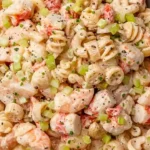
Creamy Shrimp and Crab Pasta Salad
- Total Time: 30 minutes
- Yield: 4 servings 1x
- Diet: General
Description
Simple and creamy pasta salad loaded with cooked shrimp and crab and tossed in with celery, chives, and Greek yogurt.
Ingredients
- 8 ounces wheat short pasta
- 1 teaspoon salt
- 1 teaspoon olive oil
- 2/3 cup plain Greek yogurt
- 1 lemon (juice & zest of)
- 1 teaspoon Old Bay seasoning
- 2 tablespoons chopped chives
- salt and pepper (to your taste)
- 8 ounce crab meat (cut into bite-size pieces)
- 8 ounce pre-cooked shrimp (cut into bite-size pieces)
- 1/2 cup celery finely diced
Instructions
- Boil: Boil the water in a large pot with some 1 teaspoon salt and a drizzle of 1 teaspoon olive oil.
- Cook Pasta: Add the 8 ounces wheat short pasta, stir well and cook until al dente, about 8-10 minutes or according to the package directions. Once done, drain the pasta in a colander and run under cold water; set aside.
- Mix Dressing: Meanwhile, in a salad bowl, whisk 2/3 cup plain Greek yogurt together with the 1 lemon juice, zest, 1 teaspoon Old Bay seasoning, 2 tablespoons chopped chives, and salt and pepper. Stir in the pasta and toss to evenly coat.
- Combine: Add in the 8 ounce pre-cooked shrimp, 8 ounce crab meat, 1/2 cup celery finely diced, and gently fold. Taste for seasoning and adjust with salt and pepper, as needed.
- Chill: Refrigerate for 30 minutes to chill and allow the flavors to meld.
Notes
Substitutes: Use any pasta of choice, try lentil pasta for a healthier protein-packed option. You may use dairy-free yogurt instead of Greek yogurt. Make your own Old Bay seasoning by mixing equal amounts of paprika, celery salt, celery seed, dry mustard, black pepper, nutmeg, cinnamon, and cayenne. Storage: Place leftovers in a container and store in the fridge for 3-4 days.
- Prep Time: 10 minutes
- Cook Time: 20 minutes
- Category: Main Course, Salad
- Method: Boiling
- Cuisine: American
Nutrition
- Serving Size: 1 serving
- Calories: 343 kcal
- Sugar: 2 g
- Sodium: 1523 mg
- Fat: 3 g
- Saturated Fat: 1 g
- Unsaturated Fat: 2 g
- Trans Fat: 0 g
- Carbohydrates: 47 g
- Fiber: 1 g
- Protein: 34 g
- Cholesterol: 168 mg
Keywords: shrimp pasta salad, creamy seafood salad, crab pasta salad, Greek yogurt pasta salad