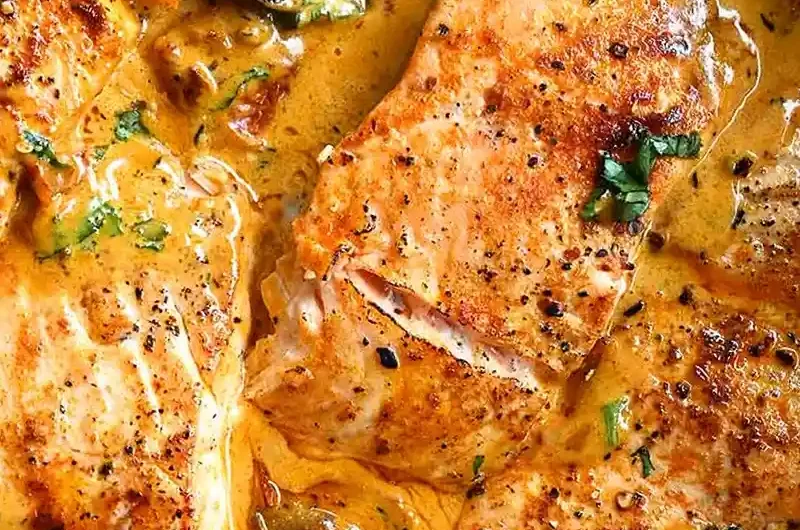
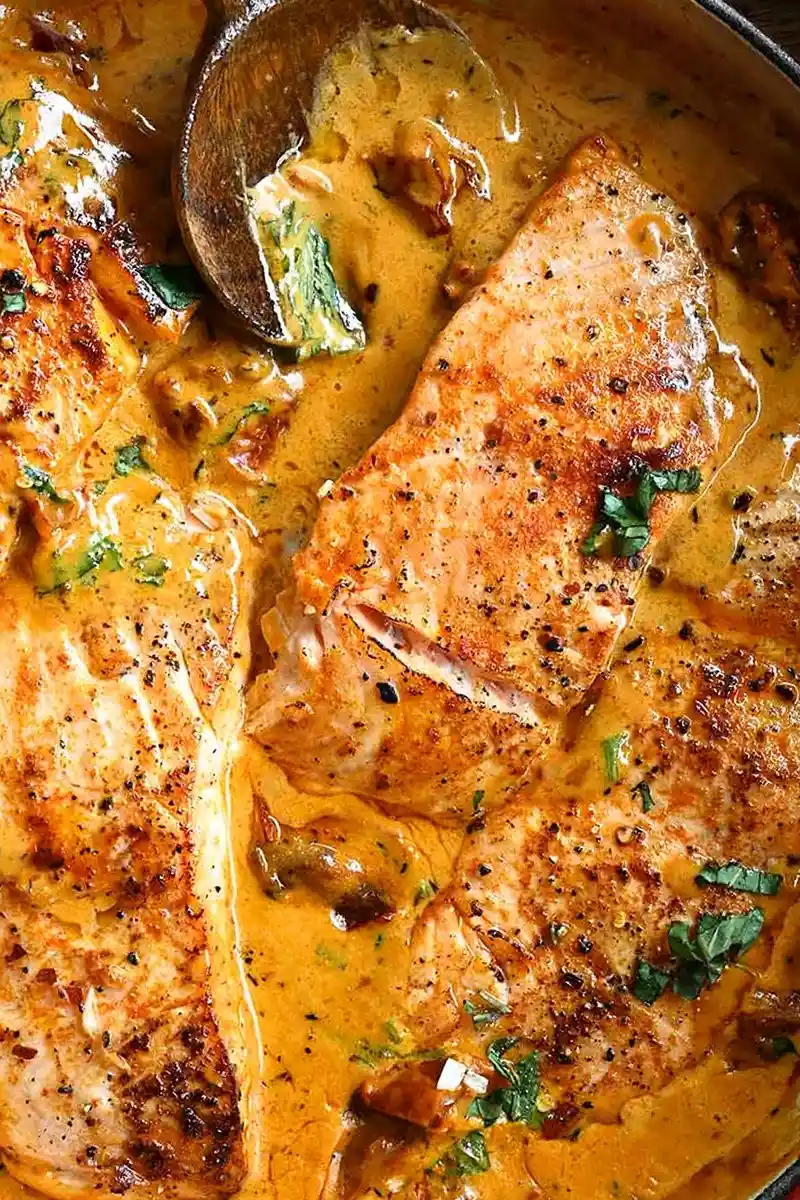
This elegant salmon dish features a rich, creamy sauce infused with Parmesan cheese and tangy sun-dried tomatoes. It is a quick one-pan meal that delivers a sophisticated flavor profile in under 30 minutes.
List of ingredients
- 4 skinless salmon fillets – skinless
- ½ tsp salt – divided
- ½ tsp black pepper – divided
- ½ tsp sweet paprika – for color and mild flavor
- ½ tsp garlic powder – adds savory depth
- 1 tbsp oil from sun-dried tomatoes – flavorful searing oil
- 1 tbsp unsalted butter – adds richness to the sear
- 4 garlic cloves – minced
- 1 cup sun-dried tomatoes – chopped
- 1 tsp dried thyme – aromatic herb
- ½ tsp chili flakes – adds a subtle heat, plus more for topping
- 1 tbsp tomato paste – thickens and deepens the sauce
- 1 tbsp all-purpose flour – used as a thickening agent
- ½ cup vegetable broth – for deglazing the pan
- 1 cup heavy cream – creates the creamy base
- ½ cup grated Parmesan – adds saltiness and body
- 1 tbsp lemon juice – balances the richness with acidity
- ½ cup basil leaves – chopped, plus more for topping
- freshly ground black pepper – for the final garnish
step-by-step instructions
- Prepare the fish and aromatics: Season the salmon fillets with paprika, garlic powder, ½ teaspoon salt, and ½ teaspoon pepper. Mince the garlic cloves, chop the basil leaves, and roughly chop the sun-dried tomatoes.
- Sear the salmon: Heat oil from the sun-dried tomatoes and butter over medium high heat. Add salmon and sear for 3 minutes per side. Remove the fillets from the skillet and place them on a clean plate.
- Sauté the base: Reduce heat to medium low. Add minced garlic and sauté for 1 minute. Stir in the chopped sun-dried tomatoes, dried thyme, chili flakes, and the remaining salt and pepper. Stir in the tomato paste.
- Thicken the sauce: Add the all-purpose flour and stir until fully incorporated. Deglaze the skillet with vegetable broth and simmer for 2 minutes, scraping the brown bits from the bottom with a wooden spoon.
- Finish the cream sauce: Pour in the heavy cream and stir in the grated Parmesan. Bring the sauce to a simmer, then stir in the lemon juice and chopped basil. Taste and adjust the salt as needed.
- Combine and serve: Return the seared salmon fillets to the skillet and simmer for an additional 3 minutes. Top the dish with fresh basil, chili flakes, and freshly ground black pepper.
Recommended Side Dish Pairings
Al Dente Pasta
Fettuccine or linguine are excellent choices for this recipe. The wide surface area of these noodles allows the creamy Parmesan sauce to cling to the pasta effectively. Toss the pasta directly into the pan for a cohesive meal.
Steamed Basmati Rice
Long-grain basmati rice provides a neutral base that absorbs the rich sauce. This pairing helps balance the intensity of the sun-dried tomatoes. Serve the salmon on top of a fluffy mound of rice for a filling presentation.
Creamy Mashed Potatoes
Mashed potatoes with butter and cream complement the luxury of the salmon sauce. The soft texture of the potatoes contrasts well with the flaky fish. Use Yukon Gold potatoes for a naturally buttery flavor.
Sautéed Asparagus Spears
Fresh asparagus adds a bright, earthy element to the plate. Sauté them in a separate pan with a touch of olive oil and salt. The crisp texture of the greens cuts through the richness of the heavy cream.
Garlic Toasted Bread
A piece of crusty baguette toasted with garlic butter is perfect for dipping. Use the bread to soak up every drop of the remaining sauce. This ensures none of the flavorful cream goes to waste.
Practical Ingredient Substitutions
Using Cornstarch Instead of Flour
If you prefer not to use all-purpose flour, you can use cornstarch as a thickener. Mix one teaspoon of cornstarch with a tablespoon of cold water to create a slurry. Stir this into the simmering sauce at the end to achieve the desired thickness.
Alternative Broth Options
While vegetable broth is used here, you can use a light mushroom broth for a deeper earthiness. Ensure the broth is low-sodium to maintain control over the salt levels. Avoid using overly seasoned stocks that might clash with the Parmesan.
Swapping Fresh Basil for Dried
If fresh basil is unavailable, you can use dried basil or Italian seasoning. Use one teaspoon of dried herbs for every tablespoon of fresh basil. Add the dried herbs earlier in the sauté process to allow them to rehydrate.
Adjusting the Spice Level
For a milder version, omit the chili flakes entirely. If you prefer more heat, increase the amount of red pepper flakes or add a pinch of cayenne pepper. Always taste the sauce before adding more spice.
Pro Cooking Techniques for Best Results
Achieving the Perfect Sear
Pat the salmon fillets completely dry with paper towels before seasoning. Moisture on the surface of the fish creates steam, which prevents a golden-brown crust. Use a heavy-bottomed skillet to ensure even heat distribution.
Preventing Overcooked Salmon
Salmon can dry out quickly if left on the heat too long. Use an instant-read thermometer to check that the internal temperature reaches 145°F (63°C). The fish should flake easily with a fork but remain moist in the center.
The Importance of Deglazing
When you add the vegetable broth, make sure to scrape the bottom of the pan thoroughly. Those brown bits, known as fond, contain concentrated flavor from the seared salmon. This process integrates those flavors back into the cream sauce.
Balancing the Richness
The combination of butter, cream, and Parmesan is very heavy. Adding the lemon juice at the end provides essential acidity. This brightness cuts through the fat and enhances the natural flavor of the fish.
Storage and Reheating Guidelines
Optimal Refrigeration
Store any leftover salmon and sauce in an airtight container in the refrigerator. The dish is best consumed within 24 hours for maximum freshness. Ensure the container is sealed tightly to prevent the fish from absorbing other odors.
Gentle Reheating Methods
Avoid using a microwave, as it can make the salmon rubbery and separate the cream sauce. Instead, reheat the fish in a nonstick skillet over medium-low heat. Add a splash of water or broth to loosen the sauce as it warms.
Why You Should Avoid Freezing
Cream-based sauces often separate or become grainy when frozen and thawed. The texture of the salmon also degrades during the freezing process. For the best quality, prepare only the amount needed for one or two meals.
Troubleshooting Common Issues
Fixing a Sauce That is Too Thick
If the sauce becomes too thick after adding the Parmesan, stir in a tablespoon of vegetable broth or water. Add the liquid gradually while stirring over low heat. This will return the sauce to a smooth, pourable consistency.
Preventing Salmon from Sticking
Ensure the oil and butter are shimmering and hot before adding the fish. Do not attempt to flip the salmon too early; it will naturally release from the pan once a crust has formed. Using a fish spatula can help lift the fillets gently.
Managing Sauce Separation
If the sauce looks curdled, it may be due to excessive heat. Lower the temperature immediately and whisk the sauce vigorously. Adding a small amount of cold heavy cream can also help re-emulsify the sauce.
Frequently Asked Questions
Can I use skin-on salmon fillets?
Yes, you can use skin-on fillets. Sear the skin side first for about 3-4 minutes until it is crispy, then flip and sear the other side. The skin helps protect the flesh from overcooking.
Can I substitute heavy cream with milk or half-and-half?
Substituting with milk or half-and-half will result in a thinner sauce that may not thicken properly. If you use these, you will need to increase the amount of flour or cornstarch to maintain the creamy texture.
How do I handle dry-packed sun-dried tomatoes?
If your tomatoes are not packed in oil, soak them in hot water for 20 minutes to rehydrate. Drain them well and pat them dry before chopping. Use a tablespoon of olive oil in the pan to replace the sun-dried tomato oil.
What is the best way to mince garlic for this sauce?
Use a garlic press or a fine knife to mince the garlic into very small pieces. This ensures the garlic distributes evenly throughout the sauce without leaving large, pungent chunks.
Print
Creamy Sun-Dried Tomato Salmon
- Total Time: 30 minutes
- Yield: 4 servings 1x
- Diet: General
Description
Succulent, slightly spicy and full of flavor! Imagine flaky salmon in a creamy Parmesan sun-dried tomato sauce for an impressive dinner.
Ingredients
- 4 skinless salmon fillets
- ½ tsp salt, divided
- ½ tsp black pepper, divided
- ½ tsp sweet paprika
- ½ tsp garlic powder
- 1 tbsp oil from sun-dried tomatoes
- 1 tbsp unsalted butter
- 4 garlic cloves, minced
- 1 cup sun-dried tomatoes, chopped
- 1 tsp dried thyme
- ½ tsp chili flakes
- 1 tbsp tomato paste
- 1 tbsp all-purpose flour
- ½ cup vegetable broth
- 1 cup heavy cream
- ½ cup grated Parmesan
- 1 tbsp lemon juice
- ½ cup basil leaves, chopped
- freshly ground black pepper
Instructions
- Prep: Season the salmon fillets with paprika, garlic powder, ½ teaspoon salt and ½ teaspoon pepper. Mince the garlic cloves, chop the basil leaves and roughly chop the sun-dried tomatoes.
- Sear: Heat oil from sun-dried tomatoes and butter over medium high. Add salmon and sear 3 minutes per side. Remove from skillet and place on a clean plate.
- Sauté: Reduce heat to medium low. Add garlic and sauté for 1 minute. Stir in sun-dried tomatoes, dried thyme, chili flakes and the remaining salt and pepper. Stir in tomato paste. Add flour and stir until incorporated.
- Deglaze: Deglaze with vegetable broth and simmer for 2 minutes, while scraping the brown bits from the bottom of your skillet with a wooden spoon.
- Simmer: Pour in cream and stir in Parmesan. Bring the sauce to a simmer, add lemon juice and basil. Taste and adjust salt. Return salmon to the skillet and simmer for 3 minutes.
- Garnish: Top off with basil, chili flakes and freshly ground black pepper.
Notes
Serve over pasta, rice, mashed potatoes, or polenta. Store leftovers in an airtight container in the refrigerator for up to 1 day.
- Prep Time: 5 minutes
- Cook Time: 25 minutes
- Category: Main Course
- Method: Pan-Searing
- Cuisine: American
Nutrition
- Serving Size: 1 serving
- Calories: 614 kcal
- Sugar: 13 g
- Sodium: 785 mg
- Fat: 40 g
- Saturated Fat: 19 g
- Unsaturated Fat: 17 g
- Trans Fat: 0.1 g
- Carbohydrates: 23 g
- Fiber: 4 g
- Protein: 44 g
- Cholesterol: 179 mg
Keywords: fish, quick meals, salmon, seafood