This aromatic soup blends a savory red curry base with rich coconut milk and a variety of crisp vegetables. It is a comforting, nutrient-dense meal that comes together in just 30 minutes.
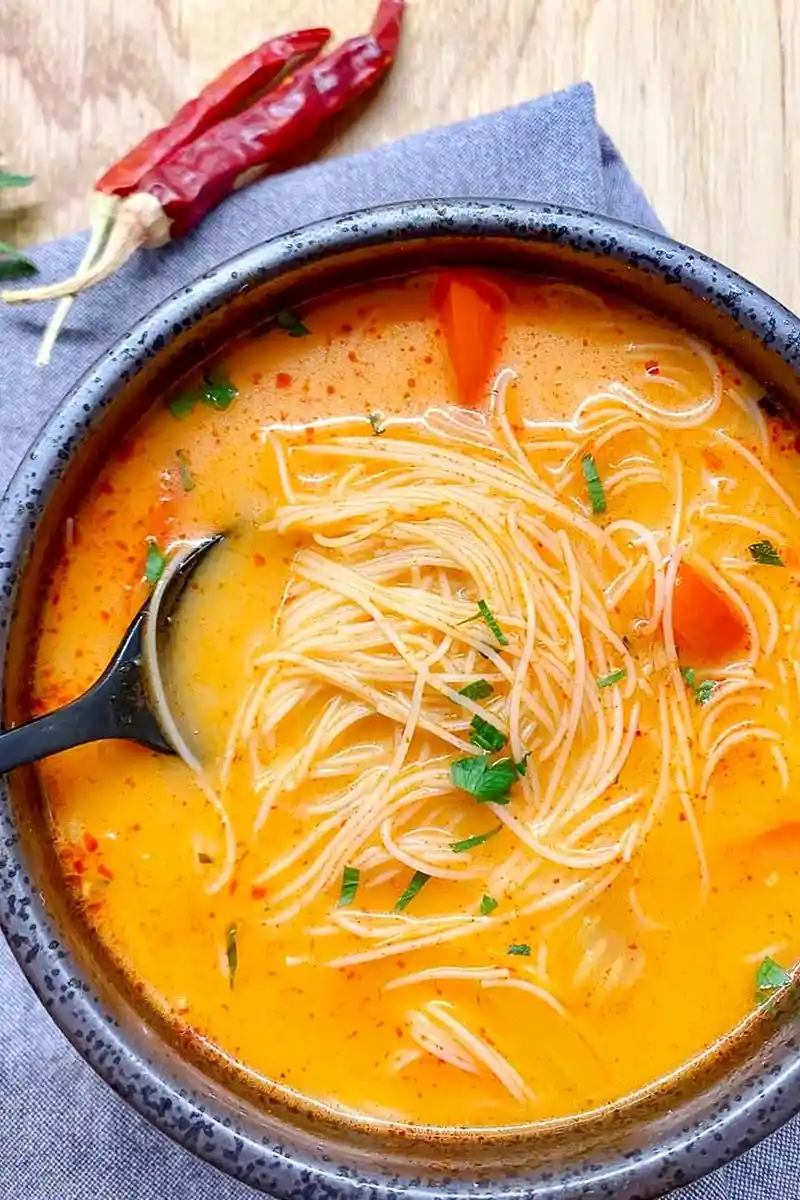
List of ingredients
- 1 pack vermicelli noodles (400-500 grams, rice vermicelli or noodles of choice) – the primary starch for the soup.
- 1 large red bell pepper, thinly sliced – adds sweetness and vibrant color.
- 1 large yellow bell pepper, thinly sliced – provides a complementary mild flavor.
- 1 medium red onion, thinly sliced – contributes a sweet, aromatic base.
- 2 stalks celery, thinly sliced – adds a fresh, herbal note to the broth.
- 2 carrots, medium, thinly sliced – provides earthiness and texture.
- 6 tablespoons Thai red curry paste – the essential flavor and spice component.
- 6 cloves garlic, minced – for deep, pungent aromatics.
- 1 tablespoon fresh ginger, grated – adds a zesty, spicy warmth.
- 4 cups vegetable broth (or chicken broth) – the liquid foundation of the soup.
- 1 can coconut milk (13.5 oz) – creates a rich, creamy consistency.
- 1/4 cup cilantro or parsley, chopped – for a fresh, bright finish.
- 1 lime, juiced – balances the richness with a tangy acidity.
- Salt and pepper to taste – used for final seasoning adjustments.
- Oil – for sautéing the vegetables.
step-by-step instructions
- Sauté Vegetables: Heat a small amount of oil in a large pot over medium heat. Add the sliced bell peppers, onion, carrot, and celery, cooking for 3-4 minutes until they are just tender.
- Bloom Aromatics: Stir in the red curry paste, grated ginger, and minced garlic. Sauté for 1-2 minutes until the mixture becomes fragrant.
- Simmer Broth: Pour in the vegetable or chicken broth and stir until evenly combined. Bring the liquid to a boil, then reduce the heat and simmer for 10-15 minutes to allow flavors to develop.
- Cook Noodles: While the soup simmers, boil a separate pot of water. Cook the vermicelli noodles for 1-2 minutes until just tender, then drain and rinse immediately under cold water. Tip: Use tongs or a fork to stir them frequently to prevent sticking.
- Thicken with Coconut Milk: Stir the coconut milk into the simmering soup. Continue to simmer for about 10 minutes until the broth reduces slightly and thickens.
- Final Assembly: Remove the pot from the heat. Stir in the fresh cilantro and lime juice, then fold in the cooked noodles.
- Season and Serve: Add salt and pepper to taste. Serve the soup immediately while hot.
Optimizing Your Noodle Choice
The Benefits of Rice Vermicelli
Rice vermicelli is the traditional choice for this soup due to its thin profile. These noodles absorb the curry broth quickly, ensuring every bite is flavorful without overpowering the other ingredients.
Using Wide Rice Noodles
If you prefer a heartier texture, wide rice noodles are an excellent alternative. They provide a more substantial chew and are ideal for those who want the soup to feel more like a filling main course.
Substituting with Gluten-Free Pasta
For those who cannot find rice noodles, thin pasta options like spaghettini or capellini work well. Ensure you use a gluten-free version if required, and cook them separately to avoid thickening the soup too much.
Serving Over Jasmine Rice
You can transform this soup into a curry stew by replacing the noodles with cooked jasmine rice. Simply scoop a portion of steamed rice into a bowl and pour the hot coconut curry broth over the top.
Expanding the Vegetable Mix
Adding Bok Choy for Freshness
Bok choy adds a wonderful crunch and a mild cabbage flavor. Add the chopped stalks during the initial sauté and stir in the leafy greens during the final minute of simmering.
Incorporating Mushrooms for Umami
Shiitake or oyster mushrooms add a deep, savory umami quality to the broth. Sauté them along with the carrots and celery to ensure they develop a golden-brown exterior.
Using Broccoli and Cauliflower
Small broccoli or cauliflower florets add bulk and extra nutrients. These vegetables should be added during the broth simmering stage so they soften without becoming mushy.
Adding Shredded Cabbage
Napa cabbage is a great addition for those who enjoy a softer, sweeter vegetable texture. Stir it in during the last 5 minutes of cooking to maintain some structural integrity.
Integrating Fresh Spinach
Baby spinach can be stirred in right before serving. The residual heat from the soup will wilt the leaves perfectly while preserving their bright green color.
Broth and Creaminess Variations
Selecting the Best Broth
Vegetable broth keeps the recipe vegan and light, while chicken broth adds a richer, more savory depth. For a boost in protein, unsalted chicken bone broth is a nutrient-dense alternative.
Managing Sodium Levels
To control the salt content, use low-sodium broths and a low-sodium curry paste. This allows you to control the final seasoning with salt and pepper at the very end.
Full-Fat vs. Light Coconut Milk
Full-fat coconut milk provides the classic creamy mouthfeel associated with Thai cuisine. Light coconut milk can be used to reduce the calorie count, though the soup will be less velvety.
Dairy-Free Milk Alternatives
If you are avoiding coconut, unsweetened almond milk or soy milk can be used. Note that these alternatives will change the flavor profile, moving it away from traditional Thai tastes.
Avoiding Coconut Cream
Do not substitute coconut milk with coconut cream unless you dilute it with water or broth. Coconut cream is far too thick and can cause the soup to become an overly dense sauce.
Mastering the Flavor Balance
Adjusting the Heat Level
Thai red curry paste varies in spice by brand. If the soup is too spicy, add a teaspoon of brown sugar or more coconut milk to mellow the heat.
The Role of Lime Juice
Lime juice is critical for cutting through the richness of the coconut milk. Add it only after removing the soup from the heat to keep the flavor bright and zesty.
Enhancing the Aroma with Ginger
Using fresh grated ginger is superior to powdered ginger for this recipe. The fresh root provides a sharp, clean heat that complements the creaminess of the broth.
Properly Sautéing Garlic
Ensure the garlic is minced finely and sautéed briefly. Overcooking garlic can lead to a bitter taste, so only cook it until it becomes fragrant before adding the broth.
Using Parsley as a Substitute
If you dislike cilantro, flat-leaf parsley is a suitable replacement. While it changes the authentic Thai profile, it still provides the necessary fresh herbal contrast to the curry.
Storage and Preservation
Refrigeration Guidelines
Allow the soup to cool completely before transferring it to an airtight container. Store it in the refrigerator for up to 3 to 4 days to maintain freshness.
Preventing Noodle Mushiness
To avoid soggy noodles, store the broth and the cooked noodles in separate containers. Combine them only when you are ready to reheat and serve the meal.
Freezing the Soup Base
The curry broth freezes exceptionally well for up to 3 months. Avoid freezing the noodles, as they will lose their texture and become overly soft upon thawing.
Safe Thawing Methods
Thaw frozen soup base in the refrigerator overnight. This gradual thawing process helps preserve the emulsion of the coconut milk and prevents the broth from separating.
Reheating and Serving
Stovetop Reheating Method
Place the soup in a pot over medium heat and stir gently until warmed through. This is the best method for maintaining the consistency of the coconut milk.
Microwave Heating Tips
Heat the soup in 30-second intervals, stirring between each session. This ensures the heat is distributed evenly and prevents hot spots in the liquid.
Correcting the Consistency
If the soup has thickened too much during storage, stir in a splash of water or vegetable broth. This restores the original soup-like consistency without diluting the flavor.
Serving Suggestions
Pair this soup with appetizer-style sides like vegetable spring rolls or a crisp cucumber salad. A side of steamed buns also complements the spicy and creamy broth.
Make-Ahead Strategies
Prepping the Vegetable Base
You can slice all the vegetables and mince the garlic and ginger up to 24 hours in advance. Store them in a sealed container to save preparation time on the day of cooking.
Preparing the Broth in Advance
The curry broth can be made a day early and stored in the fridge. This actually allows the flavors to meld and deepen, making the soup even more flavorful.
Last-Minute Noodle Timing
Always cook the vermicelli noodles immediately before serving. Since they only take 2 minutes, this ensures they stay firm and do not absorb all the broth while sitting.
Frequently Asked Questions
Is this recipe vegan and gluten-free?
Yes, this recipe is naturally vegan and gluten-free as long as you use vegetable broth and ensure your red curry paste does not contain shrimp paste.
Can I use a different type of curry paste?
You can use yellow or green curry paste for a different flavor profile. Yellow curry is generally milder and sweeter, while green curry is often spicier and more herbal.
How do I stop the noodles from sticking?
Rinsing the noodles under cold water immediately after draining removes excess starch. Stirring them with tongs during the boiling process also prevents them from clumping.
What if I don’t have a lime?
A teaspoon of lemon juice or a small amount of rice vinegar can provide the necessary acidity. However, lime is the best choice for an authentic Thai taste.
Can I add protein to this soup?
Yes, tofu cubes, chickpeas, or shrimp can be added. Stir them in during the final simmer to ensure they are heated through without overcooking.
Print
Creamy Thai Coconut Curry Soup
- Total Time: 30 minutes
- Yield: 4 servings 1x
- Diet: Vegan, Gluten-Free
Description
Thai Coconut Curry Soup is comfort in a bowl! A rich coconut curry based broth with red peppers, carrot, celery, and vermicelli noodles.
Ingredients
- 1 pack vermicelli noodles (400–500 grams, rice vermicelli)
- 1 large red bell pepper, thinly sliced
- 1 large yellow bell pepper, thinly sliced
- 1 medium red onion, thinly sliced
- 2 stalks celery, thinly sliced
- 2 medium carrots, thinly sliced
- 6 tablespoons Thai red curry paste
- 6 cloves garlic, minced
- 1 tablespoon fresh grated ginger
- 4 cups vegetable broth
- 1 can coconut milk (13.5 oz)
- 1/4 cup chopped cilantro
- 1 lime, juiced
- Salt and pepper to taste
- Oil for cooking
Instructions
- Step 1: On medium heat add a small amount of oil to a large pot.
- Step 2: Add the bell peppers, onion, carrot and celery. Cook until just tender, about 3-4 minutes.
- Step 3: Stir in red curry paste, ginger and garlic until fragrant. Sauté about 1-2 minutes.
- Step 4: Add in the vegetable broth and stir until evenly combined. Bring to a boil. Reduce heat and simmer, about 10-15 minutes.
- Step 5: While the soup is simmering, bring another pot of water to a boil. Cook vermicelli noodles for 1-2 minutes until just cooked through. Drain noodles and rinse under cold water immediately.
- Step 6: Stir in the coconut milk to the soup and simmer until reduced and slightly thickened, about 10 minutes.
- Step 7: Remove from heat. Stir in the cilantro and lime juice. Add in the noodles.
- Step 8: Season with salt and pepper to taste.
Notes
For the best results, add the noodles just before serving to prevent them from becoming too soft. This recipe is naturally vegan and gluten-free.
- Prep Time: 10 minutes
- Cook Time: 20 minutes
- Category: Soup
- Method: Simmering
- Cuisine: Asian
Nutrition
- Serving Size: 1 bowl
- Calories: 655 kcal
- Sugar: 8 g
- Sodium: 1109 mg
- Fat: 23 g
- Saturated Fat: 19 g
- Unsaturated Fat: 3 g
- Trans Fat: 0 g
- Carbohydrates: 104 g
- Fiber: 6 g
- Protein: 9 g
- Cholesterol: 5 mg
Keywords: 30 minute dinner, soup, thai coconut curry, vegan soup