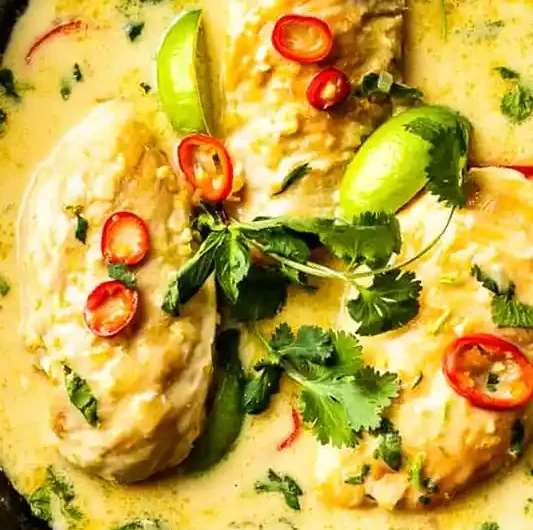
This creamy coconut lime chicken is a quick and flavor-packed meal perfect for busy weeknights. It pairs exceptionally well with steamed rice and roasted vegetables for a complete and satisfying dinner.
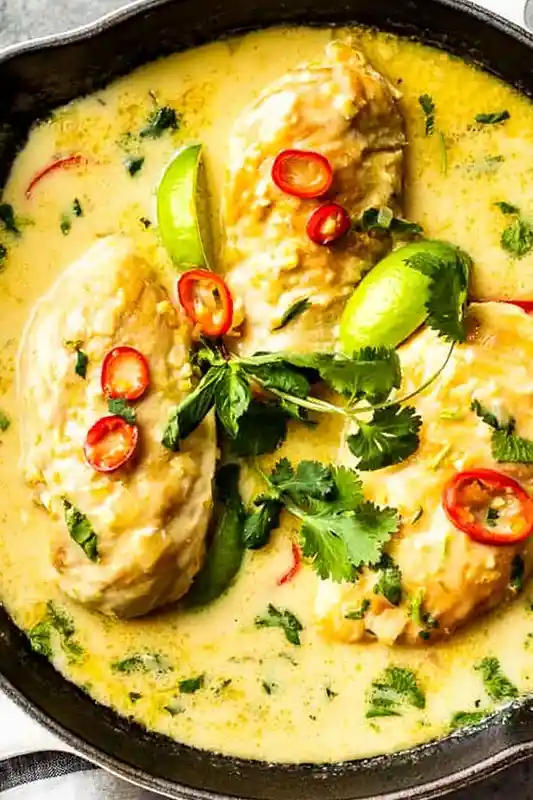
List of ingredients
- 2 tbsp avocado oil – or any cooking oil of your choice.
- 1.5 pounds boneless skinless chicken breasts – approximately 3 large breasts.
- 1/2 cup minced onion – use yellow or white onion.
- 2 cloves garlic – finely minced.
- 1 tbsp minced fresh ginger – peeled and finely grated.
- 1 red chili – thinly sliced, optional for heat.
- 2 tsp lime zest – grated finely with a microplane.
- 1 can full-fat coconut milk – 13.66 oz for a rich texture.
- 1 tbsp fish sauce – provides essential savory depth.
- 2 tbsp freshly squeezed lime juice – added at the end for brightness.
- 1/4 cup chopped fresh cilantro and/or Thai basil – optional for garnish.
- Additional lime wedges – for serving and extra acidity.
- Sliced chili – optional for additional garnish.
step-by-step instructions
- Sear the chicken: Preheat a large skillet (10-12″) over medium-high heat. When the pan is hot but not smoking, add 1 tablespoon of the oil and swirl to coat the bottom. Add the chicken breasts and cook until browned on both sides, about 2-3 minutes per side, then remove them from the pan and set aside.
- Sauté aromatics: Add the remaining tablespoon of oil to the pan along with the minced onion, garlic, and ginger. Lower the heat to medium and cook, stirring frequently, until the onion is softened and lightly browned, which usually takes 4-5 minutes.
- Build the sauce: Stir in the optional sliced chili, lime zest, and full-fat coconut milk. Bring the mixture to a boil and use a wooden spoon to scrape up the browned bits (fond) from the bottom of the pan to incorporate all the flavor.
- Simmer the chicken: Reduce the heat to maintain a simmer and return the chicken breasts to the skillet. Cook for 8-10 minutes, then flip the breasts and cook for another 6-10 minutes, or until an instant-read thermometer registers 165°F.
- Final seasonings: Remove the pan from the heat and stir in the fish sauce and fresh lime juice. Season the sauce with salt to taste.
- Garnish and serve: Sprinkle the chopped fresh cilantro or Thai basil over the top if using. Serve immediately with lime wedges and additional chili slices.
Expert Ingredient Customizations
Using Chicken Thighs for More Moisture
While chicken breasts are standard, boneless skinless chicken thighs offer a richer flavor and are harder to overcook. If using boneless thighs, reduce the simmer time to 10-15 minutes total. For bone-in thighs, the original simmer time of 20 minutes is usually sufficient to ensure they are cooked through.
Selecting the Best Cooking Oil
Avocado oil is ideal due to its high smoke point, which prevents the oil from burning during the initial searing process. Coconut oil is another excellent alternative that complements the Thai flavor profile of the dish. Olive oil can be used as well, though it has a lower smoke point than avocado oil.
Fish Sauce Alternatives for Different Tastes
Fish sauce provides the characteristic salty, umami depth found in Thai cuisine. If you prefer not to use it, coconut aminos are a great substitute that maintains a similar salty-sweet balance. Low-sodium soy sauce also works well, though the flavor profile will shift slightly toward a more general East Asian taste.
Coconut Milk versus Coconut Cream
Full-fat coconut milk provides a balanced creamy consistency that coats the chicken without being overly heavy. If you choose to use coconut cream for an even richer sauce, be mindful that it may separate more easily. Adding a small amount of chicken broth can help stabilize the sauce if it becomes too thick or splits.
Adjusting Heat with Fresh Chilies
The amount of heat in this dish depends entirely on the type and quantity of red chili used. For those who prefer a milder flavor, remove the seeds from the chili before slicing. If fresh chilies are unavailable, a pinch of red pepper flakes can provide a similar spicy kick.
Choosing the Right Fresh Herbs
Cilantro and Thai basil are the traditional choices for this dish, providing a fresh, anise-like contrast to the creamy coconut. If you dislike cilantro, thinly sliced green onions are an excellent substitute. Using both herbs together creates a more complex and authentic flavor profile.
Pro Cooking Techniques
Achieving a Golden Brown Sear
The key to a flavorful sauce is the initial sear on the chicken. Ensure the skillet is truly hot before adding the oil and meat to create a deep golden crust. This process, known as the Maillard reaction, creates the browned bits at the bottom of the pan that later enrich the sauce.
Deglazing the Pan for Depth
When you add the coconut milk to the skillet, it acts as a deglazing agent. Use a wooden spoon to aggressively scrape the bottom of the pan to release the caramelized chicken juices. This step ensures that no flavor is wasted and results in a more complex, savory sauce.
Using a Meat Thermometer for Precision
Chicken breasts can dry out quickly if overcooked by even a few minutes. Using an instant-read thermometer to hit exactly 165°F ensures the meat remains juicy and tender. This is the most reliable method to avoid the rubbery texture associated with overcooked poultry.
Managing Sauce Consistency
The resulting sauce is typically the consistency of a thin curry, which is perfect for soaking into rice. If you prefer a thicker glaze, remove the chicken and continue to simmer the sauce on medium-high heat to reduce it. Alternatively, a small cornstarch slurry mixed with water can thicken the sauce rapidly.
Effective Lime Zesting Methods
Using a microplane or a fine grater is essential for getting the most aromatic part of the lime peel. Avoid grating into the white pith, as this can introduce a bitter taste to the creamy sauce. The fine zest melts into the sauce, distributing the citrus oil evenly throughout the dish.
Serving and Pairing Ideas
Best Rice Accompaniments
Freshly steamed Jasmine rice is the traditional choice because its floral aroma complements the coconut and lime. For a lower-carb option, cauliflower rice provides a great texture and absorbs the sauce well. Roasted sweet potato cubes can also serve as a hearty base in place of grains.
Adding Roasted Vegetable Sides
Roasted broccoli is a classic pairing that adds a charred, earthy element to the meal. Roasted carrots or asparagus also work well, providing a natural sweetness that balances the acidity of the lime. Keep the vegetables slightly crisp to provide a textural contrast to the tender chicken.
Incorporating Fresh Salads
A chilled Asian cucumber salad with rice vinegar and sesame oil provides a refreshing contrast to the warm, creamy chicken. The acidity of the salad cleanses the palate between bites of the rich coconut sauce. A simple slaw with lime and cilantro also pairs beautifully.
Adding Greens Directly to the Sauce
For a one-pan vegetable solution, stir in a few handfuls of fresh baby spinach right at the end of the cooking process. The residual heat of the sauce will wilt the spinach in about 60 seconds. This is an efficient way to add nutrients and color to the plate.
Storage and Reheating Advice
Safe Refrigeration Practices
Place leftover chicken and sauce in an airtight glass or plastic container once cooled. Store it in the refrigerator for up to four days to maintain quality and safety. Ensure the chicken is fully submerged in the sauce to prevent the meat from drying out during storage.
Freezing for Long-Term Use
This dish can be frozen for up to three months in a freezer-safe container. To prevent the chicken from becoming tough during the freezing and thawing process, slice the breasts into strips before freezing. Thaw the container overnight in the refrigerator before reheating.
Best Methods for Reheating
To avoid overcooking the chicken, avoid the microwave if possible. Instead, place the sliced chicken and sauce in a covered skillet over medium-low heat. The cover traps the steam, which helps gently warm the meat without drying it out.
Make-Ahead Meal Planning
You can prepare the sauce and sear the chicken a day in advance. When you are ready to eat, simply combine them in the pan and simmer until the chicken reaches the target temperature. Be cautious not to simmer too long during the second heating phase to maintain the chicken’s juiciness.
Troubleshooting and FAQ
Why did my coconut sauce separate?
Sauce separation usually occurs when the liquid is reduced too far or boiled too aggressively, causing the fat to split from the coconut milk. To fix a broken sauce, remove the chicken and whisk in a tablespoon of chicken broth. If it remains separated, a tiny amount of cornstarch slurry can help re-emulsify the mixture.
Can I use frozen chicken for this recipe?
Yes, but the chicken must be completely thawed before searing. Searing frozen chicken will result in a grey, steamed exterior rather than a golden brown crust and will release excess water into the pan. Thaw the chicken in the refrigerator overnight for the best results.
How do I make the sauce thicker?
To achieve a thicker consistency, remove the chicken from the pan and simmer the sauce on medium-high heat for several minutes to reduce the volume. For an immediate thickener, mix one teaspoon of cornstarch with one teaspoon of cold water and stir it into the simmering sauce.
What is the best way to slice the chicken for serving?
Since large chicken breasts can be difficult to fit in a skillet, cook them whole and slice them into half-inch pieces just before serving. Lay the slices back into the sauce to ensure every piece is well-coated. Alternatively, you can slice the breasts in half lengthwise before cooking to create thinner fillets that cook faster.
Print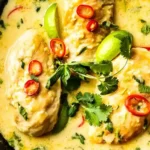
Creamy Thai Coconut Lime Chicken
- Total Time: 40 minutes
- Yield: 6 servings 1x
- Diet: Gluten-Free
Description
This creamy coconut lime sauce simply envelopes the chicken and makes for the tastiest easy dinner paired with steamed rice and some roasted broccoli!
Ingredients
- 2 tbsp avocado oil
- 1.5 pounds boneless skinless chicken breasts
- 1/2 cup minced onion
- 2 cloves garlic, minced
- 1 tbsp minced fresh ginger
- 1 red chili, thinly sliced (optional)
- 2 tsp lime zest
- 1 can full-fat coconut milk (13.66 oz)
- 1 tbsp fish sauce
- 2 tbsp freshly squeezed lime juice
- 1/4 cup chopped fresh cilantro and/or Thai basil (optional)
- Additional lime wedges for serving
Instructions
- Step: Preheat a large skillet over medium-high heat, add 1 tablespoon of the oil and swirl to coat the bottom.
- Step: Add the chicken breasts to the pan and cook until browned on both sides, 2-3 minutes per side, then remove and set aside.
- Step: Add the remaining tablespoon of oil to the pan along with the onion, garlic, and ginger; cook on medium until the onion softens and is lightly browned, 4-5 minutes.
- Step: Add the optional chili, lime zest, and coconut milk; bring the sauce to a boil and scrape up the browned bits from the bottom of the pan.
- Step: Lower the heat to maintain a simmer, add the chicken breasts back to the pan, and cook for 8-10 minutes, then turn the chicken and cook an additional 6-10 minutes until an internal temperature of 165ºF is reached.
- Step: Stir the fish sauce and lime juice into the sauce, season to taste with salt, sprinkle with fresh herbs, and serve.
Notes
For serving, you can remove the finished chicken from the sauce and slice it into 1/2 inch slices before laying it back in the sauce.
- Prep Time: 10 minutes
- Cook Time: 30 minutes
- Category: Dinner
- Method: Sautéing
- Cuisine: Thai
Nutrition
- Serving Size: 1 serving
- Calories: 309 kcal
- Sugar: 1 g
- Sodium: 377 mg
- Fat: 21 g
- Saturated Fat: 13 g
- Unsaturated Fat: 6 g
- Trans Fat: 0.01 g
- Carbohydrates: 5 g
- Fiber: 0.4 g
- Protein: 26 g
- Cholesterol: 73 mg
Keywords: Coconut Lime Chicken, Coconut Lime Chicken Recipe, Creamy Coconut Lime Chicken, Easy Coconut Lime Chicken, One Pan Coconut Lime Chicken, Thai Coconut Chicken, Thai Coconut Lime Chicken