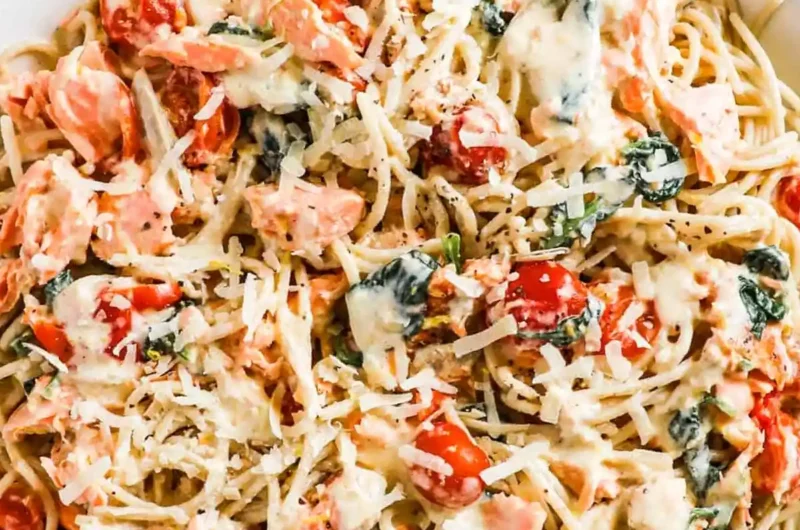
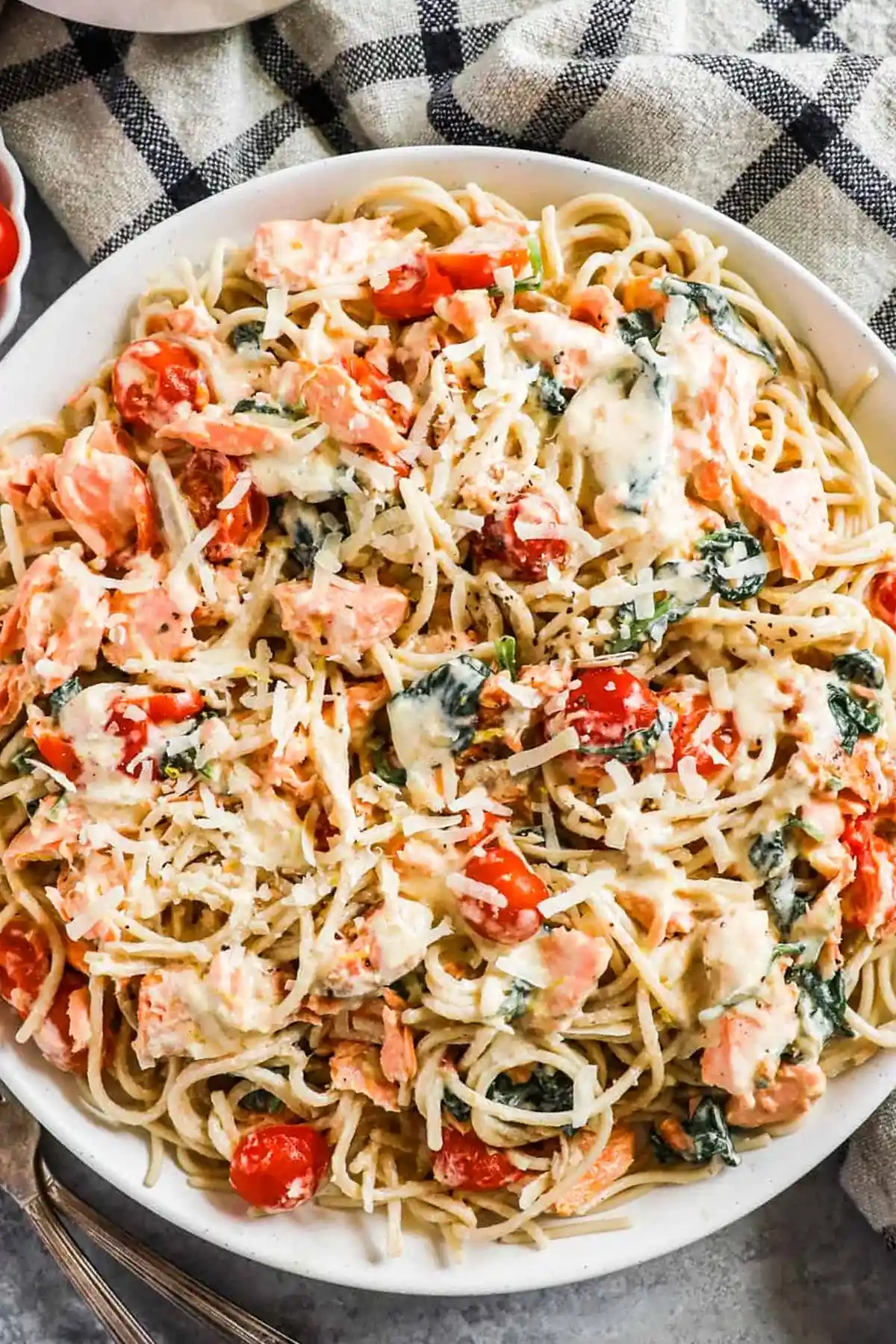
This creamy salmon pasta combines tender flaked fish, fresh baby spinach, and juicy grape tomatoes in a rich parmesan sauce. It is a quick, one-pot meal that is ready in under 25 minutes, making it ideal for a fast dinner.
List of ingredients
- 1/2 lb cooked spaghetti noodles (or linguine) – cooked until al dente.
- 3 garlic cloves (minced) – provides a pungent aromatic base.
- 1 Tbsp olive oil – used for searing and sautéing.
- 1 Tbsp salted butter – adds richness to the seared salmon.
- 1/2 lb salmon fillet – seasoned with salt and pepper.
- 1/2 cup chicken broth – used to deglaze the pan.
- 1 cup heavy cream – creates the thick, creamy sauce base.
- 2 cups baby spinach – adds color and nutrition.
- 2 Tbsp lemon zest – adds a bright, citrusy punch.
- 2 Tbsp lemon juice – used for finishing the dish.
- 1/2 tsp salt – enhances all the savory flavors.
- 1/2 cup grated parmesan cheese – preferably fresh for better melting.
- 1 cup grape tomatoes (sliced in half) – adds sweetness and acidity.
step-by-step instructions
- Cook the pasta: Boil 1/2 lb spaghetti noodles in a large pot of salted water according to package instructions until al dente. Drain the pasta and set it aside.
- Prepare the fish: Season the 1/2 lb salmon fillet with salt and black pepper. Slice the fillet in half if it is too large to fit comfortably in your pan.
- Sear the salmon: Add 1 Tbsp of salted butter and 1 Tbsp of olive oil to a large pan over medium-high heat. Once hot, place the fish skin-side up and sear for 2-4 minutes, then flip and sear for another 2-4 minutes until opaque and cooked through.
- Flake the salmon: Remove the salmon and place it on a plate. Use two forks to flake the fish into large chunks, ensuring you remove and discard the skin.
- Create the base: Add another 1 Tbsp of olive oil to the pan over medium heat with 3 minced garlic cloves and cook for 1 minute. Pour in 1/2 cup chicken broth and scrape the bottom of the pan with a spatula to release the browned bits, letting it reduce for 4-5 minutes.
- Build the sauce: Stir in 1 cup heavy cream, 2 cups baby spinach, 1 cup halved grape tomatoes, 1/2 cup grated parmesan, 2 Tbsp lemon zest, and 1/2 tsp salt. Mix well and cook for 1 minute until the spinach has just softened.
- Combine components: Remove the pan from the heat. Add the cooked pasta and the flaked salmon to the pan, then toss everything together until evenly coated. Sprinkle with extra parmesan if desired.
- Final touch: Scoop the pasta onto serving plates. Drizzle with freshly squeezed lemon juice and a small amount of olive oil, then season with salt and pepper.
Salmon Searing Techniques
Maintaining Optimal Temperature
Ensure the salmon reaches room temperature for 10-20 minutes before cooking. This allows the fish to cook more evenly from the center to the edges. It prevents the exterior from overcooking while the middle remains raw.
Achieving a Golden Crust
Use a combination of butter and olive oil to prevent the butter from burning at high heat. Place the fish in the pan once the oil is shimmering. Avoid moving the fillet too often to allow a proper golden-brown crust to form.
Determining Doneness
Salmon continues to cook for a few minutes after being removed from the heat. Aim to remove the fish when it is just barely opaque in the center. This prevents the salmon from becoming dry or rubbery.
Pasta Selection and Preparation
Choosing the Right Noodle
Linguine or spaghetti are the best choices because their long shape holds onto the creamy sauce effectively. You can also use fettuccine for a wider surface area. Avoid very small pasta shapes that might get lost in the chunky salmon and tomatoes.
Mastering the Al Dente Texture
Cook the pasta for one minute less than the package instructions. This ensures the noodles maintain a firm bite after being tossed in the warm sauce. Overcooked pasta can become mushy when combined with heavy cream.
The Benefit of Rinsing
Rinsing the cooked pasta under cold water stops the cooking process immediately. This is particularly helpful if you are preparing the pasta in advance. It prevents the noodles from sticking together before they hit the pan.
Sauce Customization and Balance
Effective Deglazing
Using chicken broth to deglaze the pan is essential for capturing the fond, which are the browned protein bits from the salmon. These bits provide deep, savory flavor to the cream sauce. Stir constantly to ensure every bit is incorporated.
Integrating the Cream and Cheese
Add the heavy cream and parmesan cheese slowly while stirring. This helps the cheese melt smoothly into the cream without clumping. The result is a velvety texture that coats the pasta evenly.
Balancing Acidity with Citrus
The combination of lemon zest and lemon juice cuts through the richness of the heavy cream. Zest provides a floral aroma, while the juice adds a sharp tang. Adjust the amount of lemon based on your preference for acidity.
Vegetable Substitutions and Additions
Alternative Leafy Greens
If baby spinach is unavailable, you can use chopped kale or Swiss chard. Kale requires a bit more cooking time to soften, so add it slightly before the other vegetables. Spinach is the fastest to wilt and keeps the dish light.
Using Different Tomato Varieties
Sun-dried tomatoes are a great substitute for grape tomatoes to provide a more intense, concentrated flavor. If using fresh tomatoes, cherry tomatoes work equally well. Ensure they are halved to release their juices into the sauce.
Incorporating Additional Vegetables
Blanched asparagus tips or frozen peas can be added during the final minute of sauce cooking. These vegetables complement the salmon and lemon flavors perfectly. Avoid adding watery vegetables like zucchini, which may thin out the sauce.
Serving and Presentation
Plating for Visual Appeal
Use a pair of tongs to swirl the pasta into a high mound in the center of the plate. Place the larger chunks of salmon on top to showcase the protein. Scatter a few halved tomatoes around the edges for a pop of color.
Adding Fresh Garnishes
Freshly chopped parsley or basil added at the end provides a bright contrast to the creamy sauce. A sprinkle of fresh cracked black pepper enhances the visual texture. Extra shaved parmesan adds a professional restaurant finish.
Recommended Side Pairings
A light side salad with a lemon vinaigrette balances the richness of the cream sauce. Roasted broccolini or sautéed green beans are also excellent choices. For a heartier meal, a slice of toasted garlic sourdough bread is ideal for soaking up extra sauce.
Storage and Reheating Advice
Safe Refrigeration
Store leftover pasta in an airtight container in the refrigerator for 3-4 days. Keep the salmon and pasta well-mixed to maintain moisture. Ensure the container is completely sealed to prevent the cream sauce from absorbing fridge odors.
The Best Reheating Method
Reheat the pasta in a pan over medium heat on the stove. This allows you to control the temperature and avoid overcooking the salmon. Stir gently to keep the fish chunks intact.
Reviving the Sauce Consistency
Cream sauces often thicken and separate during refrigeration. Add a splash of heavy cream, milk, or water when reheating to loosen the sauce. This restores the original velvety consistency of the dish.
Troubleshooting Common Issues
Fixing a Separated Sauce
If the sauce looks oily or separated, whisk in a tablespoon of warm pasta water or cream. Keep the heat low to avoid further breaking the emulsion. Constant stirring helps bring the fats and liquids back together.
Preventing Mushy Salmon
Avoid stirring the flaked salmon too vigorously once it is added to the pasta. Fold the fish in gently at the very end. This ensures you have distinct chunks of salmon rather than a shredded paste.
Reducing Excess Liquid
If the sauce is too thin, simmer it for an additional two minutes before adding the pasta. You can also stir in an extra tablespoon of grated parmesan to thicken the consistency. Ensure the chicken broth has reduced sufficiently before adding the cream.
Frequently Asked Questions
Can I use frozen salmon?
Yes, but ensure the salmon is completely thawed and patted dry with paper towels before searing. Moisture on the surface of the fish will cause it to steam rather than sear, preventing a golden crust.
What is the best replacement for heavy cream?
You can use half-and-half for a lighter sauce, though it will be less thick. For a dairy-free option, full-fat coconut milk works, although it will add a slight coconut flavor to the dish.
How long does this pasta last in the fridge?
The cooked salmon and cream sauce are safe to eat for 3 to 4 days when stored at 40°F (4°C) or below. Always reheat the dish until it is steaming throughout.
Can I use a different type of cheese?
Pecorino Romano is a great substitute for parmesan, offering a saltier and sharper taste. Gruyere can also be used for a nuttier, more melted quality, though it changes the traditional flavor profile.
Print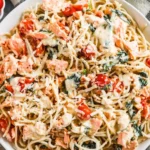
Creamy Tomato Salmon Pasta with Spinach
- Total Time: 25 minutes
- Yield: 6 servings 1x
- Diet: General
Description
The easiest one-pot dinner with linguine noodles in a light cream sauce, with tender flaked salmon, tomatoes and spinach. Ready in under 20 minutes!
Ingredients
- ½ lb cooked spaghetti noodles (or linguine)
- 3 garlic cloves (minced)
- 1 Tbsp olive oil
- 1 Tbsp salted butter
- ½ lb salmon fillet
- ½ cup chicken broth
- 1 cup heavy cream
- 2 cups baby spinach
- 2 Tbsp lemon zest
- 2 Tbsp lemon juice
- ½ tsp salt
- ½ cup grated parmesan cheese
- 1 cup grape tomatoes (sliced in half)
Instructions
- Step 1: Cook ½ lb spaghetti noodles in a large pot of salted water according to package instructions until al dente. Drain and set aside.
- Step 2: Season the ½ lb salmon fillet with salt and black pepper. Slice the fish in half if it’s too big to fit in the pan.
- Step 3: Add 1 Tbsp of salted butter and 1 Tbsp of olive oil to a large pan over medium high heat. Once the pan is hot, place the fish skin-side up and sear for 2-4 minutes. Flip over and sear another 2-4 minutes, or until fish is opaque and cooked.
- Step 4: Remove the salmon and add to a plate. Use two forks to flake the fish into large chunks and remove it from the skin. Set aside for now.
- Step 5: Add another 1 Tbsp of olive oil to the pan over medium heat along with 3 minced garlic cloves. Cook for 1 minute. Pour in the ½ cup chicken broth. Scrape down the bottom of the pan using a spatula to remove any baked-on bits. Let the broth cook for 4-5 minutes to let it reduce.
- Step 6: Now add 1 cup heavy cream, 2 cups baby spinach, 1 cup grape tomatoes, ½ cup grated parmesan, 2 Tbsp lemon zest, and ½ tsp salt. Mix together. Cook for 1 minute to soften the spinach.
- Step 7: Remove the pan from the heat. Add the cooked pasta and flaked salmon. Toss everything together. Sprinkle with more grated parmesan if desired.
- Step 8: Scoop on to serving plates. Drizzle with freshly squeezed lemon juice and a bit of olive oil. Season with salt and pepper.
Notes
Let the salmon sit at room temperature for 10-20 minutes before cooking for more even results. Cook the pasta al dente and rinse under cold water. Store leftovers in an airtight container for 3-4 days. Reheat in a pan over medium heat, adding a splash of cream to rejuvenate.
- Prep Time: 10 minutes
- Cook Time: 15 minutes
- Category: Dinner
- Method: Stovetop
- Cuisine: Italian-inspired
Nutrition
- Serving Size: 1 serving
- Calories: 428 kcal
- Sugar: 3 g
- Sodium: 395 mg
- Fat: 24 g
- Saturated Fat: 12 g
- Unsaturated Fat: 9 g
- Trans Fat: 0.1 g
- Carbohydrates: 33 g
- Fiber: 2 g
- Protein: 17 g
- Cholesterol: 78 mg
Keywords: salmon pasta, creamy salmon, linguine, one-pot dinner, tomato salmon pasta