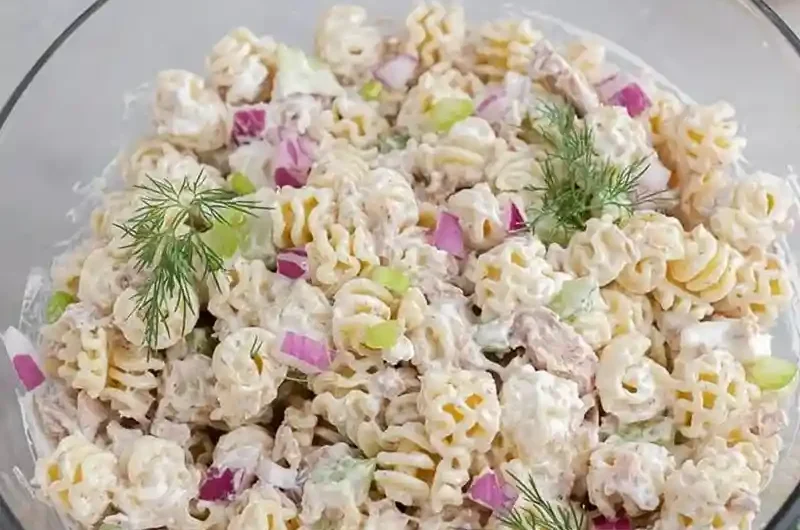
This refreshing tuna pasta salad is a protein-packed dish that works perfectly for lunch prep or social gatherings. It features a creamy blend of Greek yogurt and mayonnaise to balance richness with a light tanginess.
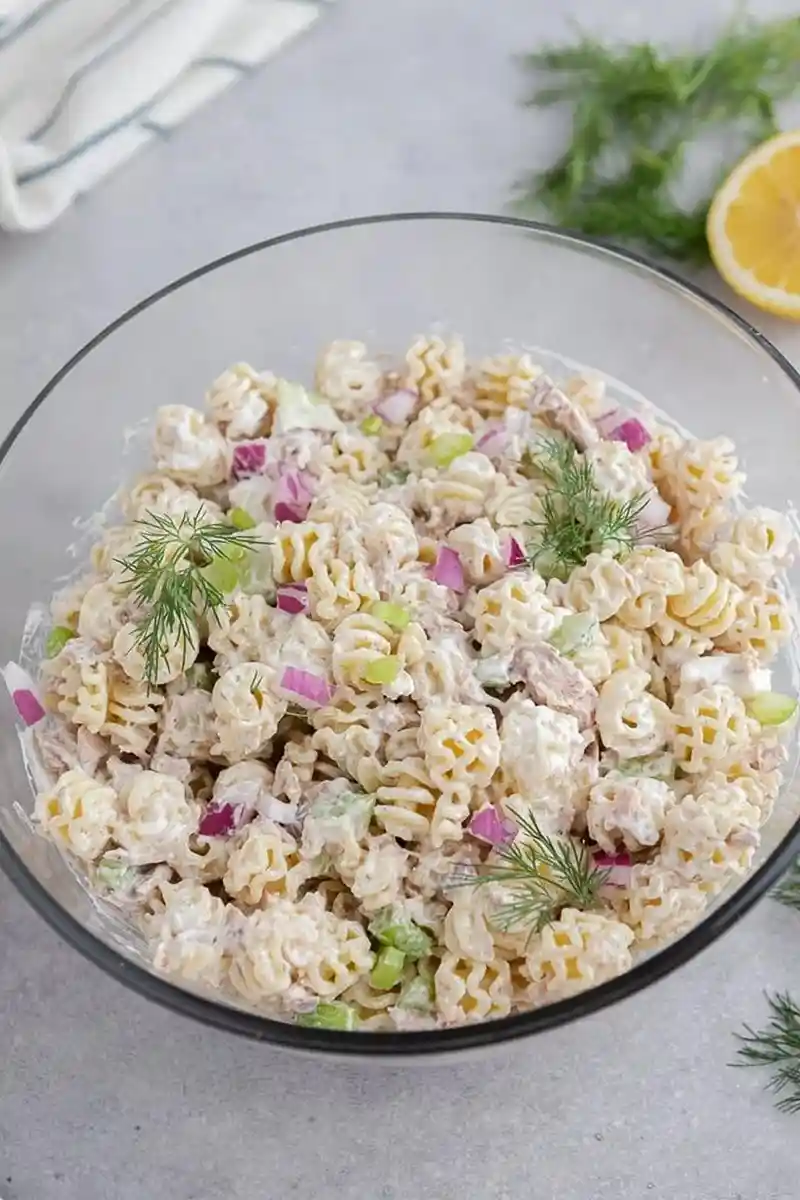
List of ingredients
- 8 oz dry pasta (shells, macaronis, or similar) – provides the base structure.
- 1/2 cup mayonnaise – adds richness and creaminess.
- 1/2 cup greek yogurt – increases protein and adds a tangy note.
- 1/2 tbsp mustard – provides depth and emulsification.
- 2 tbsp lemon juice – adds brightness and acidity.
- 1/2 tsp dried dill – gives a classic herbal flavor.
- 1/2 tsp salt – enhances all other flavors; adjust to taste.
- 1/2 tsp black pepper – adds a subtle spicy warmth.
- 1 stalk celery (chopped) – provides essential crunch.
- 1/4 cup red onion (chopped) – adds sharp, savory notes.
- 1 can tuna (7oz can in water, drained to 6oz) – the primary protein source.
step-by-step instructions
- Cook the Pasta: Boil the noodles to al dente according to the package instructions, drain them thoroughly, and allow them to cool completely.
- Prepare the Dressing: In a mixing bowl, combine the mayonnaise, greek yogurt, mustard, lemon juice, dried dill, salt, and black pepper. Whisk until the mixture is completely smooth.
- Combine Ingredients: Place the cooled pasta, chopped celery, and chopped red onion into a large mixing bowl.
- Final Mix: Pour the dressing over the pasta and vegetables, stirring until everything is evenly coated. Serve immediately or chill.
Optimizing Your Pasta Texture
Achieving the Perfect Al Dente Bite
Cook your pasta for one minute less than the package suggests for al dente. This prevents the noodles from becoming mushy when they absorb the creamy dressing over time.
The Importance of Rapid Cooling
Cooling the pasta before mixing is critical to prevent the mayonnaise and yogurt from melting. If the pasta is too hot, the sauce will break and become oily rather than creamy.
Selecting the Best Pasta Geometry
Use shapes with ridges or hollow centers, such as shells, fusilli, or macaroni. These shapes trap the dressing and small bits of onion and celery, ensuring every bite is flavorful.
Refining the Creamy Dressing
Balancing Mayo and Greek Yogurt
The equal split between mayonnaise and Greek yogurt reduces the overall fat content while maintaining a luxurious mouthfeel. The yogurt introduces a lactic acidity that cuts through the richness of the mayo.
Enhancing the Acid Profile with Lemon Juice
Fresh lemon juice provides a sharp contrast to the tuna. This acidity helps to neutralize any strong fishy notes and brightens the overall flavor profile of the salad.
Utilizing Mustard for Depth
Mustard acts as both a flavor enhancer and a stabilizer. It adds a subtle piquant quality and helps the oil in the mayonnaise emulsify better with the yogurt and lemon juice.
Incorporating Dried Dill
Dried dill is a classic pairing for tuna and lemon. It provides an earthy, slightly citrusy herbal note that defines the character of the salad.
Vegetable Preparation Techniques
Precision Chopping for Celery
Dice the celery into small, uniform pieces. This ensures that you get a consistent crunch in every spoonful without any single piece dominating the texture.
Managing Red Onion Pungency
To reduce the sharp bite of raw red onions, you can soak the chopped pieces in cold water for ten minutes before draining. This removes some of the sulfur compounds while keeping the color.
Ensuring Even Distribution
Mix the vegetables into the pasta before adding the sauce. This ensures the celery and onion are spread evenly throughout the bowl rather than clumping together.
Protein Management and Selection
Choosing Water-Packed Tuna for Leaner Results
Tuna canned in water is preferred for this recipe to keep the calories lower. It also allows the flavor of the homemade dressing to shine without interference from canning oils.
Ensuring Thorough Drainage
Press the tuna firmly against the lid of the can or use a fine-mesh strainer to remove all excess water. Excess liquid will dilute the dressing and make the salad watery.
Flaking the Tuna Properly
Use a fork to break the tuna into small flakes before adding it to the bowl. This avoids large chunks and allows the protein to integrate seamlessly with the pasta.
Customization and Substitutions
Low-Calorie Dressing Alternatives
To further reduce calories, you can replace the mayonnaise entirely with more Greek yogurt. You may need to add an extra teaspoon of lemon juice to maintain the flavor balance.
Swap Tuna for Canned Salmon
Canned salmon is an excellent substitute for tuna, offering a richer flavor and more omega-3 fatty acids. Follow the same draining and flaking process as you would with tuna.
Vegetable Variations
You can add diced red bell peppers or shredded carrots for extra color and nutrients. These additions complement the celery and onion without altering the core flavor profile.
Storage and Food Safety
Using Airtight Containers
Store the salad in a glass or BPA-free plastic container with a tight-sealing lid. This prevents the salad from absorbing other odors in the refrigerator and keeps the ingredients fresh.
Determining the Maximum Refrigeration Window
This salad is best consumed within four days. Because it contains mayonnaise, yogurt, and fish, it is susceptible to spoilage if kept beyond this timeframe.
Safe Temperature Handling
Keep the salad refrigerated at all times until serving. If taking it to a potluck, place the serving bowl inside a larger bowl filled with ice to maintain a safe temperature.
Reviving Your Salad
Correcting Dryness After Refrigeration
Pasta absorbs moisture as it sits, which can lead to a dry texture. To fix this, stir in one to two tablespoons of Greek yogurt or mayonnaise just before serving.
Adjusting Seasoning Post-Chill
Cold temperatures can dull the perception of salt and pepper. Taste the salad after it has chilled and add a small pinch of salt or a crack of black pepper to brighten the flavors.
Serving Recommendations
Plating for Potlucks
Transfer the salad to a shallow bowl rather than a deep one. This prevents the pasta at the bottom from being crushed and allows the ingredients to be seen more clearly.
Complementary Side Dish Pairings
Serve this tuna pasta salad alongside fresh mixed greens or sliced cucumbers. It also pairs well with a light fruit salad, such as watermelon or berries, for a balanced meal.
Finishing Touches and Garnishes
Garnish the final dish with a sprinkle of fresh parsley or a dusting of paprika. This adds visual appeal and a hint of freshness to the presentation.
Troubleshooting Common Issues
Fixing an Overly Sour Sauce
If the lemon juice or yogurt makes the sauce too tart, add a small amount of extra mayonnaise. The fat in the mayo helps neutralize the acidity.
Addressing Clumping Pasta
If the pasta sticks together after boiling, rinse it under cold water immediately after draining. This removes excess starch and prevents the noodles from forming clumps.
Reducing Overall Sodium
To lower the sodium content, use a low-sodium canned tuna and replace the salt with extra lemon juice or a pinch of garlic powder for flavor.
Frequently Asked Questions
How to store leftover tuna pasta salad?
Place the salad in an airtight container and keep it in the refrigerator for up to 4 days. Let it sit at room temperature for a few minutes before serving if you prefer it not to be ice-cold.
My pasta is dry, how can I fix that and keep it moist?
Pasta absorbs the sauce over time. Simply stir in a few more tablespoons of Greek yogurt and mayonnaise to restore the creamy consistency before serving.
Can I use another pasta shape?
Yes, any short pasta works well. Macaroni, fusilli, and shells are the best options because they hold onto the sauce more effectively than long noodles.
What kind of canned tuna should I use?
Tuna canned in water is the best choice to keep the calories low and the flavors clean. Ensure it is well-drained to avoid making the salad watery.
Print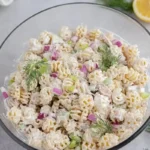
Creamy Tuna Pasta Salad
- Total Time: 20 minutes
- Yield: 6 servings 1x
- Diet: General
Description
This easy tuna pasta is so much better than its store bought counterpart. It is made with simple ingredients, is packed with protein and tastes delicious.
Ingredients
- 8 oz dry pasta (shells, macaronis, or similar)
- 1/2 cup mayonnaise
- 1/2 cup greek yogurt
- 1/2 tbsp mustard
- 2 tbsp lemon juice
- 1/2 tsp dried dill
- 1/2 tsp salt
- 1/2 tsp black pepper
- 1 stalk celery, chopped
- 1/4 cup red onion, chopped
- 1 can (7oz) tuna in water, drained
Instructions
- Step 1: Cook the noodles to al dente according to the package instruction, drain, and let them cool down.
- Step 2: In a bowl, mix the mayonnaise, greek yogurt, mustard, lemon juice, dried dill, salt, and black pepper until smooth.
- Step 3: In a large bowl, add in the cooled-down pasta, chopped celery and onion, and the sauce. Mix everything together to evenly coat the pasta salad. Serve.
Notes
Store in an airtight container in the fridge for up to 4 days. If the pasta becomes dry, stir in a few more tablespoons of greek yogurt and mayonnaise before serving.
- Prep Time: 10 minutes
- Cook Time: 10 minutes
- Category: Salad
- Method: Mixing
- Cuisine: American
Nutrition
- Serving Size: 1 serving
- Calories: 307 kcal
- Sugar: 2 g
- Sodium: 411 mg
- Fat: 15 g
- Saturated Fat: 2 g
- Unsaturated Fat: 12 g
- Trans Fat: 1 g
- Carbohydrates: 30 g
- Fiber: 2 g
- Protein: 13 g
- Cholesterol: 19 mg
Keywords: tuna pasta salad, easy side dish, protein pasta salad, summer picnic recipes