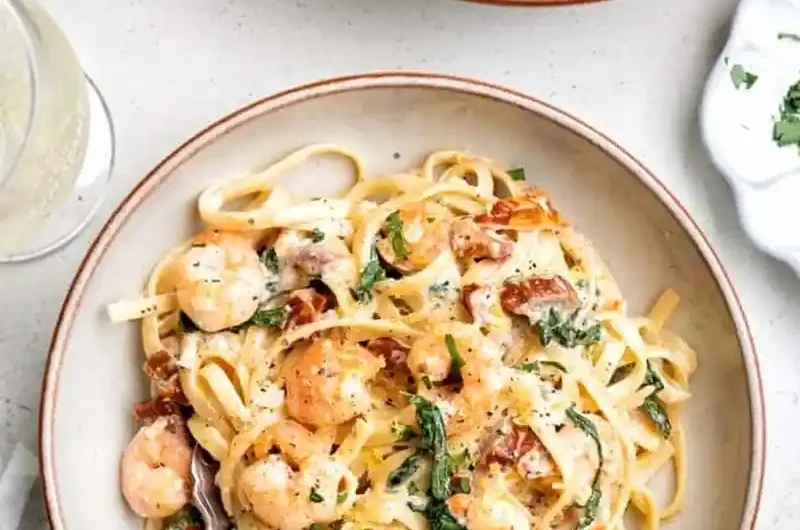
This rich pasta dish combines succulent shrimp with a velvety cream sauce infused with sun-dried tomatoes and fresh spinach. It is a sophisticated yet simple meal that comes together in just 20 minutes, making it perfect for quick dinners.
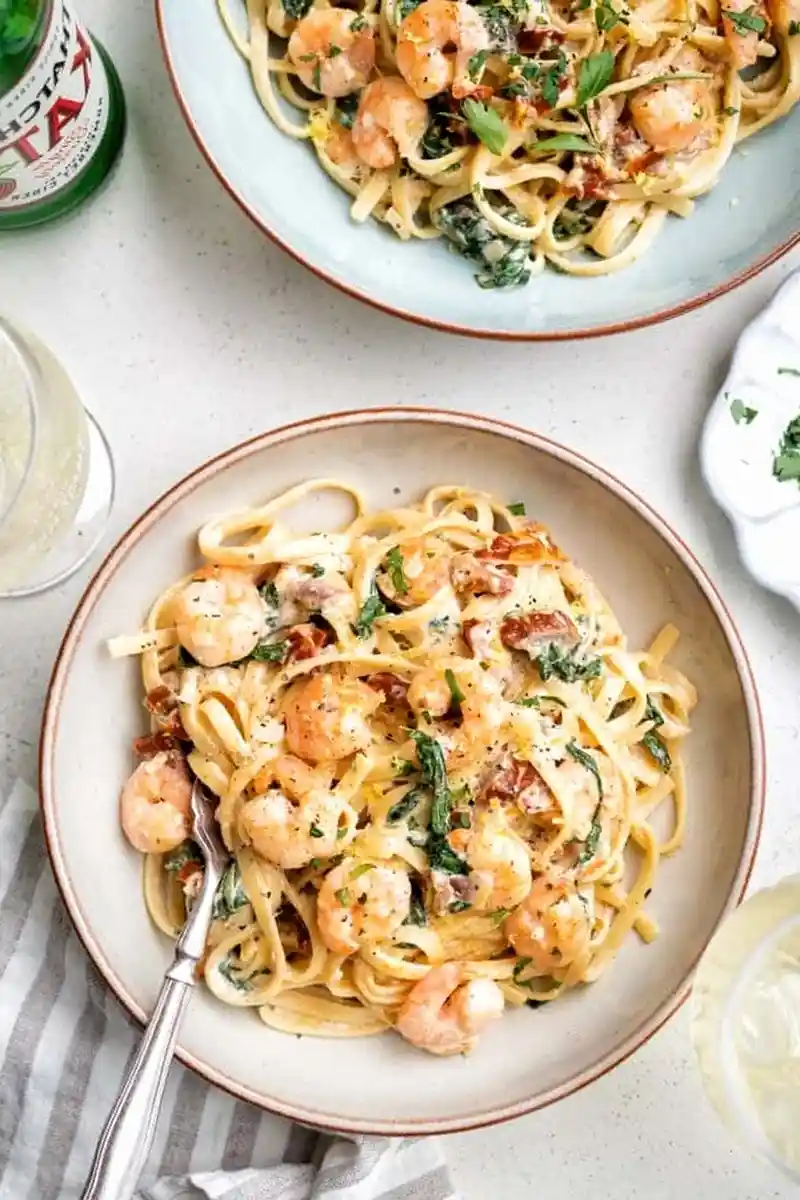
List of ingredients
- 1 pound (450g) raw shrimp, peeled and deveined – ensure they are patted dry.
- 1 tsp salt – for seasoning the protein.
- 1 tsp garlic granules – adds a concentrated garlic base.
- ¼ tsp ground black pepper – provides a subtle spicy bite.
- 2 tbsp olive oil – used for searing the shrimp.
- 4 large garlic cloves, minced – for fresh aromatic depth.
- splash vegetable stock – used for deglazing the pan.
- 1 tbsp butter – adds richness to the sautéed shallots.
- 1 shallot, finely diced – offers a milder flavor than onion.
- 3 ½ oz (150g) sun-dried tomatoes, chopped – provides tangy, concentrated sweetness.
- 1 ½ cups (300g) cream, pouring or single – creates the creamy base.
- 3 handfuls baby spinach – adds color and nutrients.
- Zest of 1 lemon – cuts through the richness of the cream.
- 2 tbsp chopped fresh parsley – used for a fresh finish.
- 10 ½ oz (300g) dried linguine, cooked till al dente – the ideal pasta shape for this sauce.
step-by-step instructions
- Season the Shrimp: Pat the shrimp dry with kitchen paper, place in a bowl and add the salt, pepper and garlic granules. Stir to combine.
- Sauté Garlic: Heat the olive oil in a large pan and fry the garlic over medium-low heat for a couple of minutes.
- Sear Protein: Add the shrimp and stir for 2 minutes until the shrimp turns pink. Use a large slotted spoon to remove from the pan.
- Deglaze Pan: Add a splash of vegetable stock to deglaze the pan, scraping any browned bits with a wooden spoon.
- Prepare Aromatics: Add the butter and melt over medium heat. Sáuté the shallot for 5 minutes and then add the sun-dried tomatoes. Cook for a further 2 minutes then lower the heat.
- Simmer Sauce: Stir in the cream, add the shrimp and bring to a gentle simmer for a couple of minutes. Add the spinach, stirring it in until it wilts.
- Combine with Pasta: Taste and season with salt and pepper. Stir in the cooked pasta so that it is coated in the sauce.
- Final Touch: Add the lemon zest and chopped parsley and serve immediately.
Professional Cooking Tips
Patting Shrimp Dry for Better Searing
Removing surface moisture from the shrimp is essential for a proper sear. If the shrimp are wet, they will steam rather than brown, which results in a less flavorful crust. Use heavy-duty paper towels to press both sides thoroughly before seasoning.
Identifying Perfect Shrimp Doneness
Shrimp cook very quickly and can become rubbery if overdone. Watch for the shrimp to curl into a “C” shape and turn opaque pink. If they curl tightly into an “O” shape, they are likely overcooked.
Managing Garlic Temperature
Garlic burns quickly, which introduces a bitter taste to the entire sauce. Keep the heat at medium-low when frying the minced garlic. Remove the garlic or add the next ingredient as soon as it becomes fragrant.
The Importance of Deglazing
The browned bits stuck to the bottom of the pan, known as fond, contain concentrated flavor. Using vegetable stock to deglaze lifts these particles and incorporates them back into the sauce. This adds depth and complexity to the final dish.
Timing the Spinach Incorporation
Baby spinach wilts almost instantly when exposed to heat. Stir it in at the very end of the simmering process. This ensures the leaves maintain a vibrant green color and a slight structural integrity.
Adding Zest at the End
Lemon zest contains volatile oils that provide a fresh, citrusy aroma. Adding the zest just before serving prevents the flavor from dissipating during the simmering process. This provides a bright contrast to the heavy cream.
Ingredient Modifications and Swaps
Using Salmon Instead of Shrimp
Salmon fillets cut into bite-sized cubes work excellently in this Tuscan sauce. Sear the salmon chunks similarly to the shrimp, removing them once they are golden brown. Return them to the pan during the final simmering stage.
Substituting Chicken Breast
Thinly sliced chicken breast strips are a hearty alternative to seafood. Sauté the chicken until fully cooked through before removing it from the pan. Ensure the chicken is seasoned with the same garlic and pepper blend.
Replacing Spinach with Kale
Kale is a more robust green that provides a different texture than baby spinach. Since kale takes longer to cook, add it to the cream sauce a few minutes earlier. This allows the leaves to soften sufficiently.
Using Roasted Red Peppers
If you prefer a different flavor profile, replace sun-dried tomatoes with jarred roasted red peppers. These offer a smokier, milder sweetness. Chop them finely to ensure they distribute evenly throughout the cream.
Dairy-Free Coconut Cream Alternative
For a dairy-free version, replace the pouring cream with full-fat coconut cream. Use a plant-based butter substitute for the shallot sauté. The coconut flavor is subtle and pairs well with the acidity of the lemon zest.
Substituting Greek Yogurt for Cream
Greek yogurt can be used for a tangier, higher-protein sauce. To prevent the yogurt from curdling, stir it in off the heat or over very low heat. Temper the yogurt by mixing in a small amount of warm sauce first.
Switching to Whole Grain Linguine
Whole wheat linguine adds a nutty flavor and more fiber to the meal. Be mindful that whole grain pasta often requires a slightly longer cooking time. Ensure it is still al dente to prevent it from becoming mushy in the sauce.
Gluten-Free Pasta Options
Corn or brown rice based linguine are suitable gluten-free alternatives. These pastas can overcook rapidly, so check them frequently. Toss them into the sauce immediately after draining to prevent sticking.
Serving Suggestions and Pairings
Pairing with Garlic Knots
Warm garlic knots are a classic accompaniment that helps soak up the extra cream sauce. Brush them with melted butter and fresh garlic before baking. Serve them hot on the side of the pasta bowl.
Adding a Bitter Arugula Salad
A simple arugula salad with a lemon-olive oil vinaigrette balances the richness of the dish. The peppery notes of the arugula contrast well with the creamy sauce. This provides a refreshing palate cleanser between bites.
Garnishing with Fresh Basil
While parsley is in the recipe, adding a few torn leaves of fresh basil adds an aromatic Italian touch. Basil pairs naturally with sun-dried tomatoes and cream. Add the basil at the very end for maximum fragrance.
Incorporating Red Pepper Flakes
For those who enjoy a hint of heat, sprinkle red pepper flakes over the finished dish. The spice cuts through the fat of the cream and butter. This adds a dynamic layer of flavor to the mild sauce.
Optional Parmesan Cheese Addition
Adding freshly grated Parmesan cheese can enhance the saltiness and thickness of the sauce. Stir it in during the final step before adding the pasta. This creates a more traditional Alfredo-style consistency.
Serving with Fresh Lemon Wedges
Provide extra lemon wedges on the side of the plate. A final squeeze of fresh lemon juice right before eating brightens the entire flavor profile. This is especially helpful if the sauce feels too heavy.
Preservation and Reheating Guide
Using Airtight Glass Containers
Store leftovers in glass containers with tight-fitting lids to prevent odors from entering. Glass is preferable to plastic as it does not absorb the strong scent of garlic and shrimp. Cool the pasta slightly before sealing the lid.
Managing the Cool-Down Process
Do not leave the creamy pasta at room temperature for more than two hours. Rapidly cool the dish and place it in the refrigerator to prevent bacterial growth. This preserves the quality of the seafood.
Loosening the Sauce During Reheating
Creamy sauces naturally thicken and absorb liquid as they sit in the fridge. Add a tablespoon of water, milk, or extra cream when reheating. This restores the original silky consistency of the sauce.
Gentle Reheating Methods
Avoid boiling the pasta during the reheating process, as this can cause the cream to separate. Use a stovetop on low heat or a microwave on medium power. Stir frequently to ensure even heating without scorching.
Refrigeration Shelf Life
This dish is best enjoyed within two to three days of preparation. Beyond this time, the shrimp may lose their texture and the cream may break down. Always check for freshness before consuming leftovers.
Why Freezing is Not Recommended
Cream-based sauces and shrimp do not freeze well. The freezing process breaks the emulsion of the cream, leading to a grainy texture upon thawing. Additionally, shrimp can become rubbery and lose their snap.
Common Kitchen Troubleshooting
Fixing a Separated Cream Sauce
If the sauce breaks and looks oily, it is usually due to excessive heat. Lower the temperature immediately and whisk in a small amount of warm pasta water. This helps re-emulsify the fats and liquids.
Adjusting Sauce Thickness
If the sauce is too thin, simmer it for an additional minute to reduce the liquid. If it is too thick, stir in a splash of the starchy water used to boil the linguine. This is the most effective way to achieve a glossy finish.
Balancing Bland Flavors
If the dish tastes flat, it likely needs more acidity or salt. Add a small pinch of salt or an extra grating of lemon zest. This awakens the other flavors in the sauce.
Preventing Rubbery Shrimp
Rubbery shrimp are the result of overcooking. To prevent this, ensure you remove the shrimp from the pan as soon as they turn pink. Return them to the sauce only at the final stage of simmering.
Correcting Burnt Garlic Taste
If the garlic burns, it cannot be fixed by adding other ingredients. The best solution is to wipe the pan clean and start the sauté process over. Burnt garlic will impart a permanent bitter taste to the cream.
Using Pasta Water for Emulsion
Always reserve a cup of pasta water before draining the linguine. The starch in the water acts as a binder between the pasta and the sauce. Stirring in a bit of this water ensures the sauce clings to every strand.
Frequently Asked Questions
Can I use frozen shrimp for this recipe?
Yes, frozen shrimp work perfectly as long as they are completely thawed. Thaw them in the refrigerator overnight or under cold running water. Ensure you pat them very dry before seasoning.
Is there a difference between prawns and shrimp?
In culinary terms, they are essentially interchangeable for this recipe. Both have a similar taste and texture. You can use whichever is available at your local market.
Can I use spaghetti instead of linguine?
Spaghetti is a suitable substitute if linguine is unavailable. Linguine is slightly flatter, which provides a better surface area for the cream sauce. However, the flavor result remains the same.
Which type of cream should I use?
Single cream or pouring cream is ideal for a lighter sauce. If you prefer a thicker, more indulgent sauce, you can use heavy cream. Heavy cream is also less likely to curdle under heat.
Can I use a regular onion instead of a shallot?
Yes, a small finely diced yellow or white onion will work. Shallots are preferred because they are milder and sweeter. If using an onion, sauté it slightly longer to ensure it is soft.
Should I use fresh garlic or garlic granules?
This recipe uses both for a layered flavor. The granules provide a consistent base on the shrimp, while the fresh minced garlic adds a punchy, aromatic quality to the sauce.
What can I use instead of butter?
Extra virgin olive oil is a practical alternative to butter. While you lose some of the buttery richness, the flavor remains excellent. Simply increase the oil amount by one tablespoon.
How do I ensure the pasta is al dente?
Cook the pasta for one minute less than the package instructions. It should have a slight firmness in the center. It will finish cooking perfectly when tossed in the simmering sauce.
Can I use mature spinach instead of baby spinach?
Mature spinach can be used, but you should remove the tough stems first. Mature leaves are larger and may require a minute longer to wilt. Chop the leaves into smaller pieces for better distribution.
Why should I season the shrimp before cooking?
Seasoning the protein directly ensures the flavor penetrates the shrimp. Adding salt only to the sauce can lead to uneven seasoning. This method guarantees every bite of shrimp is flavorful.
Print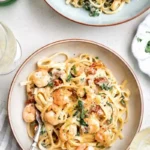
Creamy Tuscan Shrimp Linguine
- Total Time: 20 minutes
- Yield: 4 servings 1x
- Diet: General
Description
Creamy Tuscan shrimp linguine is arguably one of the world’s easiest and tastiest recipes! Only a handful of ingredients and you have a delicious meal on the table in about 20 minutes.
Ingredients
- 1 pound (450g) raw shrimp, peeled and deveined
- 1 tsp salt
- 1 tsp garlic granules
- ¼ tsp ground black pepper
- 2 tbsp olive oil
- 4 large garlic cloves, minced
- splash vegetable stock
- 1 tbsp butter
- 1 shallot, finely diced
- 3 ½ oz (150g) sun-dried tomatoes, chopped
- 1 ½ cups (300g) cream (pouring / single)
- 3 handfuls baby spinach
- Zest of 1 lemon
- 2 tbsp chopped fresh parsley
- 10 ½ oz (300g) dried linguine, cooked till al dente
Instructions
- Step 1: Pat the shrimp dry with kitchen paper, place in a bowl and add the salt, pepper and garlic granules. Stir to combine.
- Step 2: Heat the olive oil in a large pan and fry the garlic over medium-low heat for a couple of minutes.
- Step 3: Add the shrimp and stir for 2 minutes until the shrimp turns pink. Use a large slotted spoon to remove from the pan.
- Step 4: Add a splash of vegetable stock to deglaze the pan, scraping any browned bits with a wooden spoon.
- Step 5: Add the butter and melt over medium heat. Sauté the shallot for 5 minutes and then add the sun-dried tomatoes. Cook for a further 2 minutes then lower the heat.
- Step 6: Stir in the cream, add the shrimp and bring to a gentle simmer for a couple of minutes. Add the spinach, stirring it in until it wilts.
- Step 7: Taste and season with salt and pepper. Stir in the cooked pasta so that it is coated in the sauce.
- Step 8: Add the lemon zest and chopped parsley and serve immediately.
Notes
Leftovers will keep for 2-3 days in the fridge in an airtight container. Add a splash of cream or water when reheating the pasta to loosen the sauce. This recipe is not suitable for freezing as the creamy texture will degrade.
- Prep Time: 5 minutes
- Cook Time: 15 minutes
- Category: Pasta
- Method: Stovetop
- Cuisine: Italian
Nutrition
- Serving Size: 1 serving
- Calories: 735 kcal
- Sugar: 12 g
- Sodium: 1922 mg
- Fat: 35 g
- Saturated Fat: 18 g
- Unsaturated Fat: 17 g
- Trans Fat: 0 g
- Carbohydrates: 77 g
- Fiber: 6 g
- Protein: 31 g
- Cholesterol: 233 mg
Keywords: Tuscan shrimp linguine, creamy shrimp pasta, Italian seafood recipe, quick pasta dinner