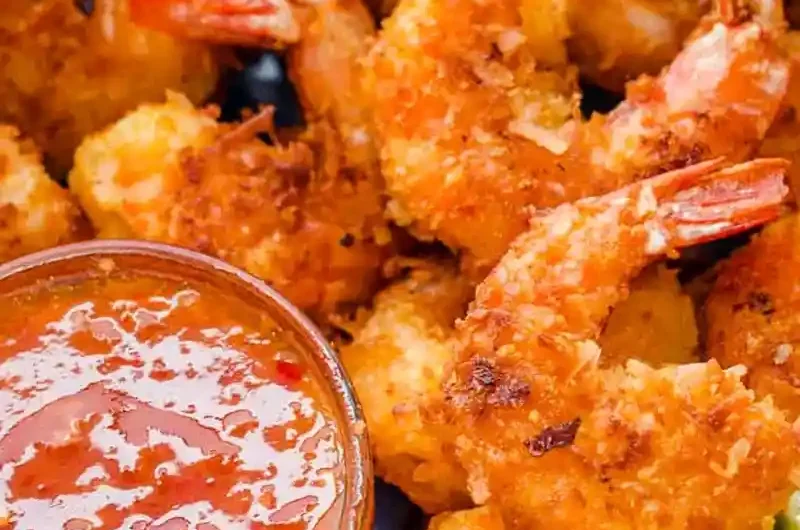
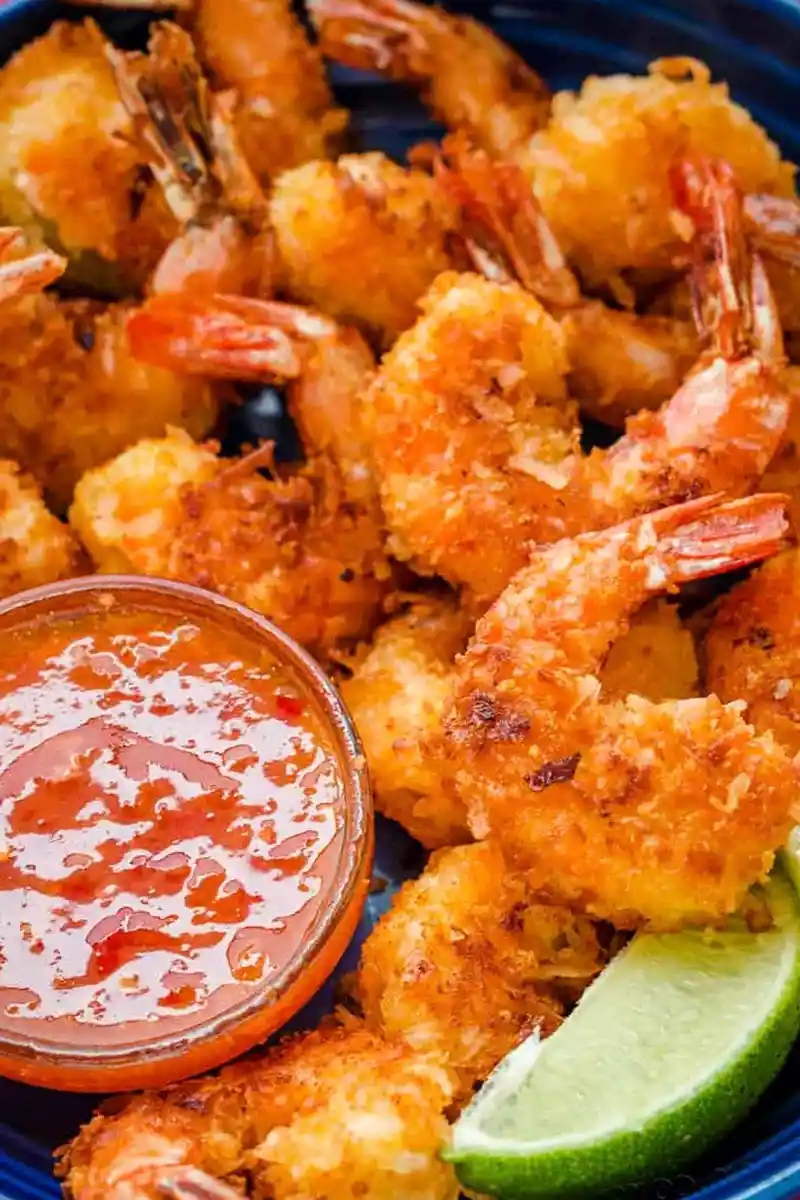
This recipe creates restaurant-style coconut shrimp with a perfectly crisp exterior and a tender center. The accompanying two-ingredient dipping sauce provides a sweet and tangy balance to the tropical flavor.
List of ingredients
- 1 lb large shrimp (21-25 count, peeled and deveined with tails left on)
- 1/4 cup all-purpose flour – used for the initial dredging layer.
- 1/2 tsp garlic powder – adds a subtle savory depth to the breading.
- 1/2 tsp salt – enhances the natural flavor of the seafood.
- 2 large eggs (beaten with a fork) – acts as the binder for the coconut.
- 1 1/2 cups sweetened shredded coconut – provides a tropical taste and sweet crunch.
- 1/2 cup panko bread crumbs – increases the overall crispiness of the coating.
- light olive oil (or vegetable oil or coconut oil) – for sautéing the shrimp.
- 1 lime (cut into wedges, to serve) – adds acidity to cut through the richness.
- 1/4 cup sweet chili sauce – the base for the dipping sauce.
- 1/4 cup apricot preserves or apricot fruit spread – adds sweetness and thickness to the dip.
step-by-step instructions
- Prepare the Shrimp: Rinse the shrimp in cold water and pat them completely dry with paper towels.
- Set Up Breading Station: Organize three shallow bowls for the assembly line. In the first bowl, stir together 1/4 cup flour, 1/2 tsp garlic powder, and 1/2 tsp salt. In the second bowl, beat 2 eggs with a fork. In the third bowl, combine 1 1/2 cups coconut flakes and 1/2 cup panko bread crumbs.
- Coat the Shrimp: Dredge each shrimp in the seasoned flour, dip it into the beaten egg, and finally press it into the coconut crumb mixture using your hands to ensure the coating adheres well. Transfer the breaded shrimp to a platter and repeat the process.
- Fry the Shrimp: Place a large pan over medium heat and add enough oil to cover the bottom by about 1/4 inch. Once the oil reaches 350°F, sauté the shrimp for 2 minutes per side until they are golden brown and the shrimp is pink and cooked through. Work in batches to avoid overcrowding the pan and use tongs to move them to a paper towel-lined plate.
- Make the Sauce: Stir together 1/4 cup sweet chili sauce with 1/4 cup apricot preserves.
- Serve: Serve the hot shrimp with the dipping sauce and a squeeze of fresh lime juice.
Optimizing the Breading Process
The Importance of Drying the Shrimp
Moisture is the primary reason breading slides off during frying. By patting the shrimp completely dry with paper towels, you allow the seasoned flour to adhere directly to the protein. This creates a stable foundation for the egg and coconut layers to cling to.
Using the Three-Step Breading Method
The sequence of flour, egg, and coconut is a standard breading procedure. The flour absorbs surface moisture and gives the egg something to grip. The egg then acts as a glue, ensuring the heavy coconut flakes and panko crumbs stay attached during the sautéing process.
Pressing the Coconut Coating
Coconut flakes are larger and more irregular than standard breadcrumbs. Using your hands to firmly press the mixture onto the shrimp ensures there are no gaps in the coating. This results in a more uniform crunch and prevents the shrimp from absorbing too much oil.
Combining Panko with Coconut
While coconut provides the flavor, panko breadcrumbs add a different structural crispness. Panko is processed to be airier and crunchier than traditional breadcrumbs. This combination creates a multi-textured crust that stays crisp longer after cooking.
Alternative Cooking Methods
Air Fryer Instructions
For a lower-oil option, use an air fryer at 400°F. Generously spray both sides of the breaded shrimp with a neutral cooking spray to help the coconut brown. Cook for 8 minutes total, flipping the shrimp halfway through the cycle.
Conventional Oven Baking
To bake these in the oven, preheat it to 400°F. Place the breaded shrimp on a baking sheet and spray both sides thoroughly with cooking spray. Bake for 15 to 20 minutes, flipping halfway through, until the coating is golden.
Comparing Frying and Baking Results
Sautéing in oil produces the most consistent golden-brown color and a superior crunch. Air frying is a close second, providing a similar texture with less oil. Oven baking typically takes longer and may result in a less crispy exterior.
Ingredient Selection and Substitutions
Choosing the Ideal Shrimp Size
The 21-25 count size is recommended because it offers the best balance between the coating and the meat. Smaller shrimp tend to overcook and become rubbery before the coconut browns. Larger shrimp may burn on the outside before the center is fully cooked.
Selecting the Right Coconut Flakes
Sweetened shredded coconut, specifically the thin ‘angel flake’ style, is ideal for this recipe. The added sugar in sweetened coconut caramelizes during frying, enhancing the golden color. Unsweetened coconut can be used, but the tropical flavor profile will be less pronounced.
Selecting High Smoke Point Oils
Use oils that can withstand heat without smoking, such as vegetable, canola, or peanut oil. Light olive oil is also a good choice. Avoid using extra virgin olive oil, as its lower smoke point can lead to a burnt taste at frying temperatures.
Apricot Preserve Substitutions
If apricot preserves are unavailable, peach preserves or mango jam serve as excellent alternatives. These fruits maintain the stone-fruit sweetness and thick consistency required for the dip. Ensure the substitute has a similar sweetness level to the original apricot spread.
Advanced Cooking Tips
Managing Oil Temperature
Maintaining a consistent 350°F is crucial for the perfect fry. If the oil is too cold, the breading will absorb excessive fat and become greasy. If it is too hot, the coconut will burn before the shrimp is cooked through.
Avoiding Pan Overcrowding
Adding too many shrimp to the pan at once drops the oil temperature rapidly. This leads to steaming rather than frying, which results in a soggy crust. Cook in small batches to keep the temperature stable and the shrimp crisp.
Preventing Overcooking
Shrimp cook very quickly and can become tough if left in the pan too long. Remove them as soon as they turn opaque and pink with a golden-brown crust. The carry-over heat will finish the cooking process on the paper towel-lined plate.
Serving and Presentation
Creating a Tropical Platter
Arrange the shrimp on a large platter with fresh lime wedges interspersed between the pieces. Adding slices of fresh pineapple or mango can enhance the tropical theme. This presentation makes the dish visually appealing for guests.
Pairing with Fresh Side Dishes
Serve these shrimp with a crisp cabbage slaw dressed in a vinegar-based dressing to balance the sweetness. A side of cucumber salad or a light mango salsa also complements the flavors well. These acidic sides cut through the richness of the fried coating.
The Role of Lime Juice
Squeezing fresh lime juice over the shrimp immediately before serving is highly recommended. The acidity brightens the overall flavor profile and balances the sugar in the coconut and dipping sauce. This small step elevates the dish from a simple snack to a gourmet appetizer.
Storage and Reheating
Refrigerating Cooked Shrimp
Place cooked shrimp in an airtight container once they have cooled completely. They can be stored in the refrigerator for up to 2 days. To maintain quality, keep the dipping sauce in a separate container.
Reheating for Maximum Crispness
Avoid using a microwave to reheat coconut shrimp, as this will make the breading soggy. Instead, arrange them on a baking sheet and heat in a 400°F oven for 8 to 10 minutes. This restores the crunch to the coconut crust.
Make-Ahead Preparation
You can prepare the breaded raw shrimp up to 4 hours in advance. Place them on a platter, cover them tightly with plastic wrap, and refrigerate. Sauté or air fry them immediately before serving for the best results.
Storing the Dipping Sauce
The apricot chili sauce can be made and stored in the fridge for up to one week. If the sauce thickens too much in the cold, let it sit at room temperature for 15 minutes before serving. Stir vigorously to re-incorporate the flavors.
Troubleshooting Common Issues
Fixing Breading Separation
If the coconut coating falls off, it is usually due to excess moisture on the shrimp or not pressing the crumbs firmly enough. Ensure the shrimp are bone-dry before the flour step. Press the coconut mixture into the shrimp with a firm motion to lock it in place.
Dealing with Chunky Sauces
Some apricot preserves contain large chunks of fruit that can make dipping difficult. To achieve a smooth consistency, pulse the preserves and sweet chili sauce in a food processor or blender. This creates a professional, uniform glaze.
Managing Burnt Coconut
If the coconut is browning too quickly, reduce the heat slightly or check your oil temperature. Sweetened coconut contains sugar, which burns faster than savory breadcrumbs. Keep a close eye on the pan and flip the shrimp frequently.
Frequently Asked Questions
Can I use frozen shrimp?
Yes, you can use frozen shrimp as long as they are completely thawed. Follow the package thawing instructions and be sure to pat them dry with paper towels before starting the breading process.
Can I use pre-cooked shrimp?
It is not recommended to use pre-cooked shrimp for this recipe. Since the shrimp are already cooked, the time required to brown the coconut will likely overcook the shrimp, making them tough and rubbery.
Is the dipping sauce spicy?
The dipping sauce is not spicy; it is primarily sweet and tangy. The sweetness of the apricot preserves balances the mild heat of the sweet chili sauce, making it suitable for most palates.
Can I use unsweetened coconut?
You can use unsweetened coconut, but the flavor will be more subtle and less ‘tropical’. To compensate, you may want to add a pinch of sugar to the flour mixture or use a slightly sweeter preserve in the sauce.
What is the best way to test oil temperature?
If you do not have a thermometer, drop a small piece of bread or a pinch of the coconut mixture into the oil. If it sizzles immediately and bubbles rapidly, the oil is ready for frying.
Print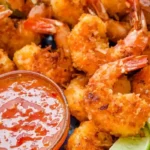
Crispy Coconut Shrimp with Sweet Apricot Chili Dip
- Total Time: 30 minutes
- Yield: 6 servings 1x
- Diet: General
Description
The Best Coconut shrimp coated in plenty of coconut flakes for superior crunch and subtle tropical flavor. Do not skip the super simple (2 ingredient) coconut shrimp sauce!
Ingredients
- 1 lb large shrimp (21–25 count, peeled and deveined with tails left on)
- 1/4 cup all-purpose flour
- 1/2 tsp garlic powder
- 1/2 tsp salt
- 2 large eggs
- 1 1/2 cups sweetened shredded coconut
- 1/2 cup panko bread crumbs
- light olive oil
- 1 lime, cut into wedges
- 1/4 cup sweet chili sauce
- 1/4 cup apricot preserves
Instructions
- Prep: Rinse shrimp in cold water and pat dry with paper towels.
- Set up: Set up 3 shallow bowls. In the first, stir together 1/4 cup flour, 1/2 tsp garlic powder and 1/2 tsp salt. In the second, beat 2 eggs with a fork. In the third, combine 1 1/2 cups coconut flakes and 1/2 cup panko bread crumbs.
- Bread: Dredge shrimp in flour, then dip in beaten egg and finally dip in crumb mixture using your hands to press the coconut crumb mixture onto your shrimp. Transfer to a platter and repeat with remaining shrimp. Once all shrimp are breaded, either sauté right away or refrigerate for later.
- Sauté: place a large pan over medium heat and add enough oil to generously cover the bottom (1/4″ deep). Once oil is hot (350˚F), add shrimp and sauté 2 minutes per side until golden brown and shrimp is pink and cooked through. Cook in batches and don’t overcrowd the pan. Use tongs to transfer to a paper towel-lined plate.
- Finish: Stir together 1/4 cup sweet chili sauce with 1/4 cup apricot preserves. Serve shrimp with dipping sauce and squeeze fresh lime juice over finished shrimp before serving if desired.
Notes
I used Baker’s brand “angel flake coconut sweetened” located in the baking section.
- Prep Time: 15 minutes
- Cook Time: 15 minutes
- Category: Appetizer
- Method: Sautéing
- Cuisine: American
Nutrition
- Serving Size: 1 serving
- Calories: 316 kcal
- Sugar: 15 g
- Sodium: 1004 mg
- Fat: 15 g
- Saturated Fat: 8 g
- Unsaturated Fat: 7 g
- Trans Fat: 0 g
- Carbohydrates: 25 g
- Fiber: 1 g
- Protein: 19 g
- Cholesterol: 245 mg
Keywords: coconut shrimp, Appetizers, Seafood, shrimp