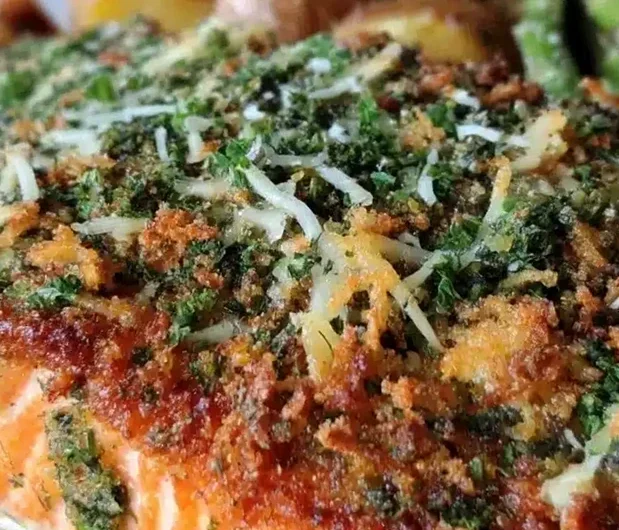
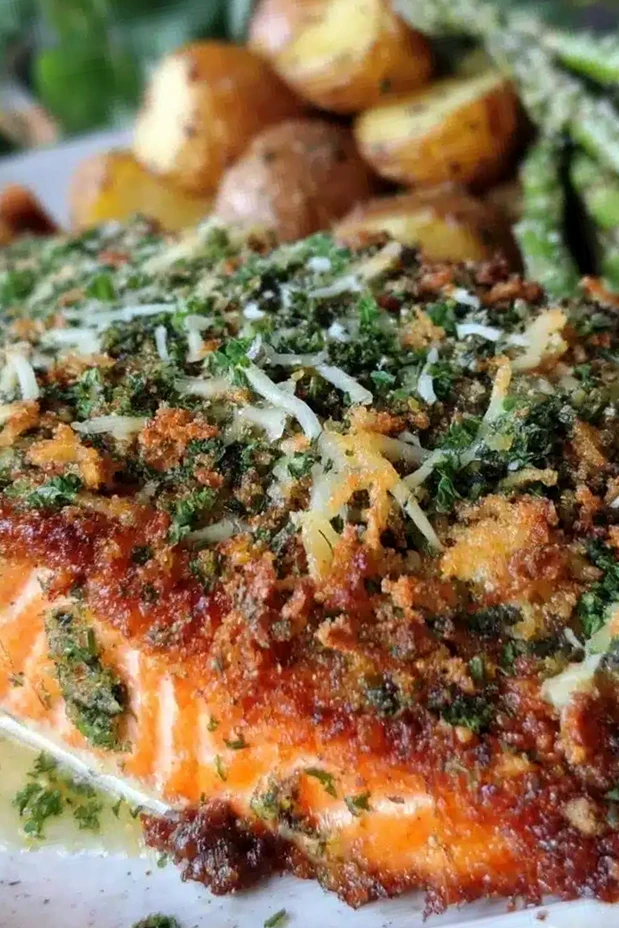
This recipe creates a perfectly seared salmon fillet with a crunchy, aromatic herb coating. It is paired with a zesty yogurt-based sauce to provide a fresh balance to the richness of the fish.
List of ingredients
- Salmon fillets (skin-on, about 6 ounces / 170 grams each) – Use fresh or fully thawed fillets for the best texture.
- Fresh parsley (1 tablespoon, finely chopped) – Adds a bright, clean herbal note.
- Fresh dill (1 tablespoon, finely chopped) – Provides a classic pairing for seafood.
- Fresh thyme (1 tablespoon, finely chopped) – Adds an earthy depth to the crust.
- Panko breadcrumbs (½ cup / 50 grams) – Japanese-style panko provides a superior crunch.
- Garlic (1 clove, minced) – Adds aromatic depth to the breading.
- Olive oil (2 tablespoons / 30 ml) – Used for both the crust binding and the searing process.
- Lemon zest (from 1 lemon) – Infuses the crust with citrus oils.
- Salt and freshly ground black pepper – Used for seasoning the fish to taste.
- Greek yogurt (½ cup / 120 ml) – The creamy base for the accompanying sauce.
- Fresh dill for sauce (1 tablespoon, chopped) – Reinforces the herbal theme.
- Lemon juice (2 tablespoons / 30 ml) – Adds essential acidity to the sauce.
- Honey (1 teaspoon) – Balances the tartness of the lemon and yogurt.
- Salt (a pinch) – Enhances the flavors of the sauce.
step-by-step instructions
- Prepare the herb crust: Combine the panko breadcrumbs, 2 tablespoons of olive oil, minced garlic, chopped parsley, dill, thyme, and lemon zest in a medium bowl. Mix until the oil lightly coats the ingredients and the mixture is slightly sticky.
- Season the fillets: Pat the salmon fillets completely dry with paper towels. Generously sprinkle salt and black pepper on both sides of the fish.
- Apply the coating: Press the herb and breadcrumb mixture firmly and evenly onto the skin side of each salmon fillet to create a thick layer.
- Heat the skillet: Place a heavy skillet, preferably cast iron, over medium-high heat. Add 1 tablespoon of olive oil and wait until it shimmers but does not smoke.
- Sear the fish: Place the salmon fillets in the pan, herb-side down. Press lightly with a spatula to ensure the crust makes full contact with the heat. Cook for 4-5 minutes until the crust is golden brown.
- Finish cooking: Carefully flip the fillets and cook for another 3-4 minutes. The fish is done when it flakes easily with a fork but remains moist in the center.
- Mix the lemon dill sauce: In a small bowl, whisk together the Greek yogurt, lemon juice, chopped dill, honey, and a pinch of salt. Taste and adjust the seasoning if needed.
- Plate and serve: Place the salmon on a plate and serve with a dollop of the sauce on the side or drizzled over the top. Garnish with fresh lemon wedges or extra dill.
Pro Cooking Techniques for Perfect Salmon
Ensure the Fish is Completely Dry
Moisture on the surface of the salmon creates steam, which prevents the crust from becoming crispy. Always use paper towels to pat the fillets dry before adding salt or the breadcrumb mixture. This step is critical for achieving a professional sear.
Avoid Overcrowding the Pan
Leaving enough space between the fillets allows hot air to circulate and moisture to evaporate. If the pan is too full, the salmon will steam instead of sear, resulting in a soggy crust. Work in batches if your skillet is small.
Maintain Consistent Heat Control
Medium-high heat is ideal for browning panko breadcrumbs without burning the delicate fish inside. If you notice the crust darkening too quickly, lower the heat slightly. If the oil isn’t shimmering, wait another minute before adding the fish.
Apply Firm Pressure During Searing
Pressing the fillets down with a spatula for the first 30 seconds ensures the entire herb crust touches the pan. This creates a uniform golden-brown layer and prevents the fish from curling. Do not press too hard to avoid crushing the fillet.
Flip the Fillets Only Once
Repeatedly moving or flipping the fish breaks the crust and releases juices prematurely. Wait until the salmon naturally releases from the pan, which indicates the crust has fully caramelized. Flip carefully using a thin fish turner.
Flavor Variations and Customizations
Using Dried Herbs as a Substitute
If fresh herbs are unavailable, you can use dried versions of parsley, dill, and thyme. Use half the quantity of dried herbs compared to fresh, as their flavor is more concentrated. Note that the color will be less vibrant than with fresh herbs.
Adding a Smoky or Spicy Kick
Stir a pinch of smoked paprika or a dash of cayenne pepper into the breadcrumb mixture. This adds a subtle warmth and a deeper color to the crust. These additions pair exceptionally well with the coolness of the lemon dill sauce.
Incorporating Nutty Textures
For additional crunch, mix finely chopped toasted almonds or walnuts into the panko breadcrumbs. This introduces a nutty flavor profile that complements the richness of the salmon. Ensure the nuts are finely chopped to maintain an even crust.
Swapping the Herb Profile
Replace the parsley and thyme with fresh chives and tarragon for a more French-inspired flavor. Tarragon has a slight anise note that works beautifully with lemon and butter. This variation keeps the dish light and aromatic.
Dietary Modifications
Dairy-Free Sauce Options
To make the sauce dairy-free, replace the Greek yogurt with an unsweetened coconut yogurt or a thick cashew cream. These alternatives provide the same creamy texture and tang. The remaining ingredients like lemon and honey stay the same.
Gluten-Free Crust Alternatives
Substitute the panko breadcrumbs with gluten-free panko or a mixture of almond meal and crushed pecans. Almond meal creates a slightly softer but very flavorful crust. Ensure the substitute is pressed firmly onto the fish to prevent it from falling off.
Low-Sugar Sauce Adjustment
If you prefer a sauce without honey, you can omit it entirely or replace it with a small amount of maple syrup. Alternatively, a pinch of stevia or monk fruit sweetener can provide sweetness without the sugar. The acidity of the lemon will still dominate the profile.
Alternative Preparation Methods
Oven-Roasting Technique
Place the crusted salmon fillets on a parchment-lined baking sheet. Roast in a preheated oven at 400°F (200°C) for 12 to 15 minutes depending on thickness. This method is more hands-off and allows for cooking larger quantities at once.
Broiling for Maximum Crispness
After oven-roasting, turn on the broiler for the final 2 minutes of cooking. This high, direct heat toasts the panko crumbs and creates a deep golden color. Watch the fish closely to prevent the herbs from burning.
Air Fryer Method
Place the crusted fillets in an air fryer basket at 380°F (190°C). Cook for 8 to 12 minutes, flipping halfway through the process. The circulating air creates a very consistent crunch on the crust.
Preserving and Reheating Your Meal
Refrigeration Guidelines
Store leftover salmon in an airtight container in the refrigerator for up to two days. Keep the lemon dill sauce in a separate container to prevent the crust from softening. The sauce will stay fresh for 3 to 4 days.
Best Reheating Techniques
Avoid using the microwave, as it makes the breadcrumb crust soggy and the fish rubbery. Instead, reheat the salmon in a non-stick skillet over low heat with a small amount of oil. This helps restore some of the original crispiness.
Sauce Preservation Tips
Store the sauce in a glass jar with a tight lid to prevent it from absorbing other fridge odors. If the sauce separates slightly after refrigeration, whisk it vigorously to reintegrate the ingredients. Fresh lemon juice helps keep the sauce bright.
Suggested Side Dishes and Serving Tips
Best Vegetable Pairings
Roasted asparagus or sautéed garlic spinach provide a healthy, vibrant contrast to the salmon. Steamed broccoli with a squeeze of lemon also complements the herb crust. These vegetables maintain the light and fresh theme of the meal.
Starch Side Suggestions
Serve the salmon over a bed of creamy parmesan risotto or a fluffy quinoa salad. For a more traditional approach, garlic mashed potatoes or wild rice work well. The starches help soak up any extra lemon dill sauce.
Plating for Presentation
Place the salmon fillet slightly off-center on a white plate to make the colors pop. Drizzle the sauce in a clean line or place a precise dollop to the side. Garnish with a fresh sprig of dill and a lemon wedge for a professional look.
Common Cooking Challenges and Solutions
Preventing the Crust from Burning
If the panko browns too quickly before the salmon is cooked, reduce the heat to medium. You can also place a lid loosely over the pan for a minute to trap heat and cook the interior. This protects the herbs from over-charring.
Dealing with Sticking Fish
If the fillet sticks to the pan, it usually means the oil wasn’t hot enough or the fish was flipped too early. Wait for the crust to caramelize fully, as it will naturally release from the surface. Use a thin metal spatula to gently lift the edges.
Fixing Overcooked Salmon
If the salmon becomes too dry, serve it with an extra generous portion of the lemon dill sauce. The creaminess of the yogurt helps mask the dryness. To prevent this in the future, use a meat thermometer to pull the fish at 145°F (63°C).
Frequently Asked Questions
Can I use frozen salmon for this recipe?
Yes, frozen fillets work well as long as they are completely thawed before preparation. It is essential to pat them very dry with paper towels to ensure the herb crust adheres and crisps properly during searing.
What if I don’t have fresh herbs?
Dried herbs can be used in a pinch, but use only half the amount specified in the recipe. While the flavor will be present, the crust will not have the same vibrant green color or fresh aroma as the fresh version.
How do I know when the salmon is cooked perfectly?
The salmon is done when the flesh changes from translucent to opaque and flakes easily with a fork. The internal temperature should reach 145°F (63°C), though some prefer it slightly under for a moister texture.
Can I prepare the lemon dill sauce ahead of time?
Yes, the sauce can be made up to 4 days in advance and stored in the refrigerator. The flavors actually meld and improve over time, making it a convenient make-ahead component for dinner parties.
What are the best sides for this salmon?
Light and acidic sides like a Mediterranean quinoa salad or roasted lemon asparagus are ideal. For something heartier, try a creamy risotto or a simple wild rice pilaf to balance the zesty sauce.
Print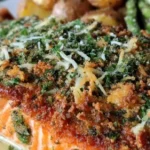
Crispy Herb-Crusted Salmon with Lemon Dill Sauce
- Total Time: 25 minutes
- Yield: 2 servings 1x
- Diet: General
Description
This crispy herb-crusted salmon features a crunchy, fragrant coating paired with a simple, bright lemon dill sauce. It’s quick, easy, and perfect for busy weeknights or entertaining.
Ingredients
- 2 salmon fillets (skin-on, about 6 ounces / 170 grams each)
- 1 tablespoon finely chopped parsley
- 1 tablespoon finely chopped dill
- 1 tablespoon finely chopped thyme
- ½ cup (50 grams) panko breadcrumbs
- 1 clove garlic, minced
- 2 tablespoons (30 ml) olive oil
- Zest of 1 lemon
- Salt to taste
- Freshly ground black pepper to taste
- ½ cup (120 ml) Greek yogurt
- 1 tablespoon chopped fresh dill
- 2 tablespoons (30 ml) lemon juice
- 1 teaspoon honey
- A pinch of salt
Instructions
- Prep the herb crust: In a medium bowl, combine ½ cup (50 grams) panko breadcrumbs, 2 tablespoons (30 ml) olive oil, 1 clove minced garlic, 1 tablespoon each of finely chopped parsley, dill, and thyme, and the zest of 1 lemon. Mix well until the olive oil lightly coats everything and the mixture feels slightly sticky.
- Season the salmon: Pat the salmon fillets dry with paper towels to remove excess moisture. Sprinkle both sides generously with salt and freshly ground black pepper.
- Apply the herb crust: Press the breadcrumb herb mixture evenly onto the skin side of each salmon fillet, gently but firmly.
- Heat the pan: Place a heavy skillet (cast iron preferred) over medium-high heat. Add 1 tablespoon (15 ml) of olive oil and let it get hot but not smoking.
- Sear the salmon: Lay the salmon fillets herb-side down in the pan. Press lightly with the spatula to ensure full contact with the pan surface. Cook for about 4-5 minutes, or until the crust is golden brown and crispy.
- Flip and finish cooking: Carefully flip the fillets over and cook skin-side up for another 3-4 minutes, depending on thickness, until the salmon is cooked through but still moist inside.
- Make the lemon dill sauce: While the salmon cooks, whisk together ½ cup (120 ml) Greek yogurt, 2 tablespoons (30 ml) lemon juice, 1 tablespoon chopped fresh dill, 1 teaspoon honey, and a pinch of salt in a small bowl. Adjust seasoning to taste.
- Serve: Plate the salmon fillets with a generous dollop of lemon dill sauce on the side or drizzled over the top. Garnish with extra dill or lemon wedges if desired.
Notes
Pat salmon dry to ensure crispiness. Avoid overcrowding the pan to keep the crust crunchy. Use olive oil or a neutral oil with a high smoke point. Press down on fillets when searing to ensure full contact. Flip carefully only once to retain crust. For dairy-free sauce, substitute Greek yogurt with coconut yogurt or cashew cream.
- Prep Time: 10 minutes
- Cook Time: 15 minutes
- Category: Main Course
- Method: Searing
- Cuisine: American
Nutrition
- Serving Size: 1 salmon fillet (6 ounces)
- Calories: 350 kcal
- Sugar: 3 g
- Sodium: 250 mg
- Fat: 20 g
- Saturated Fat: 3 g
- Unsaturated Fat: 17 g
- Trans Fat: 0 g
- Carbohydrates: 10 g
- Fiber: 1 g
- Protein: 25 g
- Cholesterol: 60 mg
Keywords: salmon, herb crust, lemon dill sauce, crispy salmon, quick dinner, healthy seafood, easy salmon recipe