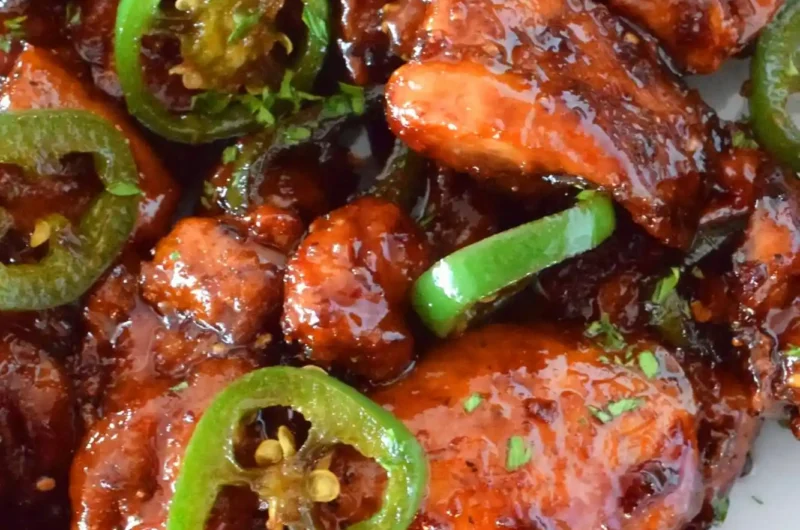
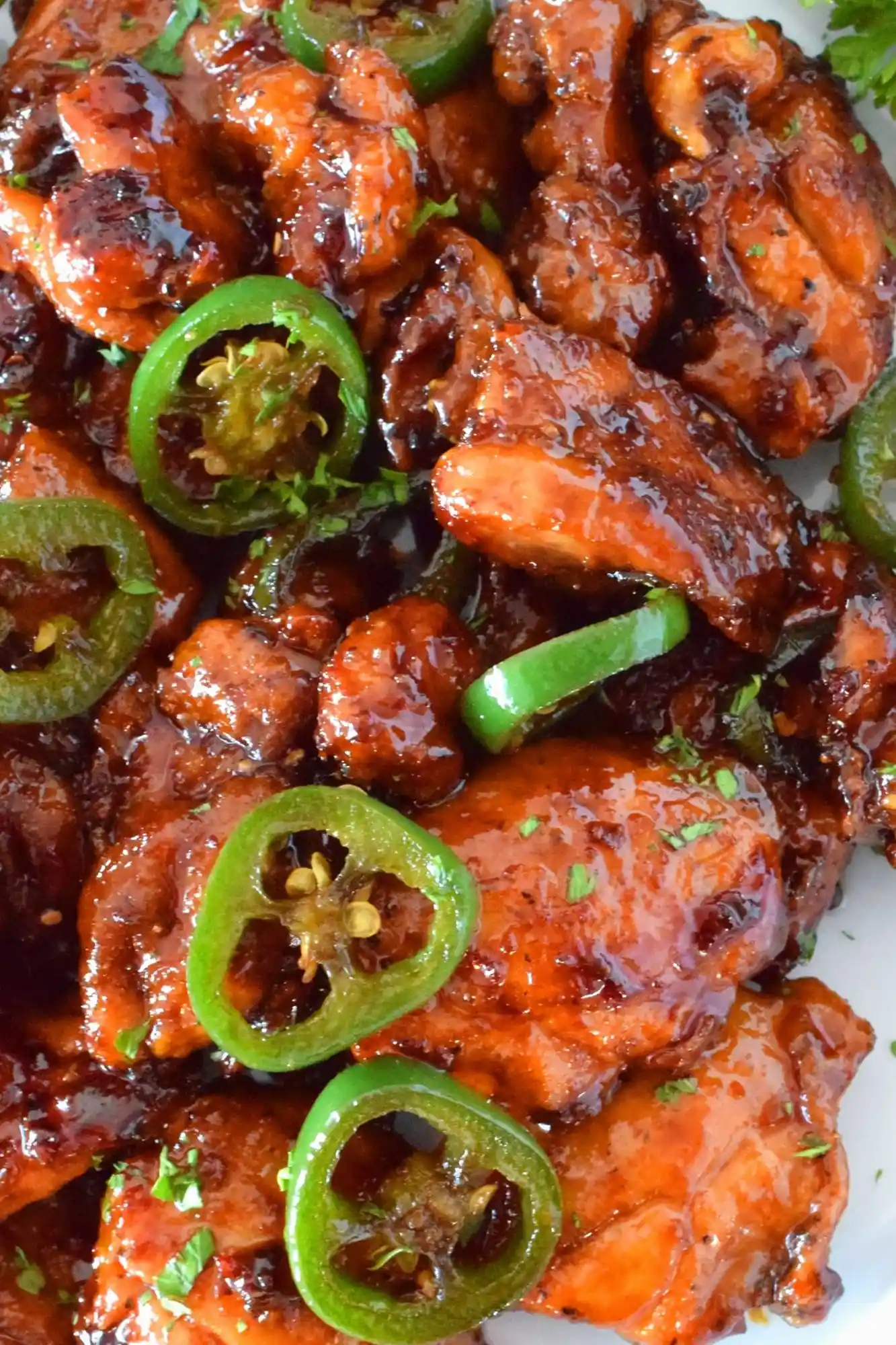
This dish features tender chicken thighs fried to a golden crisp and tossed in a sweet and savory jalapeno glaze. It is a perfect balance of heat and sweetness that works well as a main course.
List of ingredients
- 2 pounds boneless skinless chicken thighs – sliced into small pieces for even cooking.
- 1/4 cup cornstarch – ensures a light and crispy exterior.
- 1/4 teaspoon salt – basic seasoning for the meat.
- 1/2 teaspoon ground black pepper – adds a mild spice base.
- 1/4 cup low sodium soy sauce – provides umami and saltiness without oversalting.
- 1/4 cup water – thins the sauce for initial boiling.
- 1/4 cup brown sugar, lightly packed – adds sweetness and a rich caramel color.
- 4 cloves garlic, minced – fresh garlic provides the best aromatic flavor.
- 2 large jalapenos, cut into 1/4 inch slices – provides the primary heat and texture.
step-by-step instructions
- Season the Meat: Place the prepared chicken into a bowl with the salt and ground black pepper. Toss thoroughly to ensure every piece is seasoned.
- Apply Coating: Add the cornstarch to the bowl and toss until the chicken is well coated. Set the chicken aside until you are ready to start frying.
- Mix the Sauce: In a separate small bowl, combine the soy sauce, water, brown sugar, and minced garlic. Whisk the ingredients well until the sugar is dissolved and set the mixture aside.
- Prepare Jalapenos: Slice the jalapenos into 1/4 inch rounds. Remove the seeds for a milder flavor or keep them for a stronger kick.
- Heat the Oil: Pour four inches of vegetable oil into a heavy-bottomed pot. Heat the oil to exactly 315 degrees F.
- First Fry: Carefully lower the chicken into the hot oil using tongs, one piece at a time. Avoid overcrowding the pot by frying in batches of four or five pieces. Fry for 5-6 minutes, turning the pieces halfway through.
- Second Fry: Increase the oil temperature to 350 degrees F. Place all the fried chicken back into the oil for 3-4 minutes to achieve maximum crispiness. Remove the chicken and drain on a wire rack or paper towels.
- Boil Sauce: Pour the sauce mixture into a large skillet over medium-high heat and bring it to a boil.
- Combine Ingredients: Add the fried chicken and the sliced jalapenos to the boiling sauce. Toss the chicken well to coat every piece.
- Thicken Sauce: Continue to stir and move the chicken around the skillet. Do this until the sauce thickens and the water content has evaporated.
- Finish: Transfer the chicken to a serving plate and garnish as desired.
Optimizing Meat Selection
Using Boneless Skinless Chicken Thighs
Chicken thighs are the preferred choice for this recipe because of their higher fat content. This ensures the meat remains moist and tender even after two rounds of deep frying. Dark meat also carries a richer flavor that stands up well to the strong taste of jalapenos and soy sauce.
Adapting the Recipe for Chicken Breast
If you prefer white meat, you can use chicken breasts, but you must adjust the cutting technique. Cut the breast meat into larger one-inch chunks to prevent them from drying out in the high heat of the oil. Be mindful that breast meat cooks faster than thighs, so reduce the initial frying time slightly.
Proper Slicing Techniques
When preparing chicken thighs, lay the meat flat on the cutting board. Look for the thinner sections where the bone was removed and slice across those areas. This typically results in three manageable pieces per thigh, ensuring they cook evenly and quickly.
Mastering the Frying Process
The Importance of Temperature Control
Maintaining the oil at 315 degrees F during the first fry ensures the chicken cooks through to the center without burning the outside. If the oil is too hot, the cornstarch will brown too quickly, leaving the meat raw. Using a digital thermometer is the most reliable way to track this.
The Science of the Second Fry
The second fry at 350 degrees F is what creates the professional-grade crunch. By raising the temperature, you rapidly evaporate any remaining surface moisture that occurred during the first fry. This creates a harder, crispier shell that holds up better when tossed in the sauce.
Preventing Oil Overcrowding
Adding too many pieces of chicken to the pot at once will cause the oil temperature to drop sharply. When the temperature falls, the chicken absorbs more oil, resulting in a greasy texture rather than a crispy one. Fry in small batches to keep the heat stable.
Selecting the Right Frying Oil
Use an oil with a high smoke point, such as vegetable, canola, or peanut oil. These oils can withstand the 350-degree temperature without breaking down or producing acrid smoke. Avoid using extra virgin olive oil or butter, as they will burn at these temperatures.
Sauce Consistency and Flavor
Managing the Heat Levels
The spice level of this dish is primarily determined by the jalapeno seeds and membranes. For a mild version, scrape out the white pith and seeds before slicing. For maximum heat, leave the seeds intact and consider adding a pinch of cayenne pepper to the cornstarch coating.
Reducing the Sauce for Thickness
The sauce thickens through the evaporation of water and the reduction of brown sugar. Ensure the sauce reaches a full boil before adding the chicken. The goal is a syrupy consistency that clings to the meat rather than a thin liquid that pools at the bottom of the plate.
Balancing Salt and Sweetness
Low sodium soy sauce is used to provide a savory base without making the dish overly salty. If you find the sauce too sweet, add a teaspoon of rice vinegar or a squeeze of lime juice. This acidity cuts through the sugar and balances the overall flavor profile.
Enhancing Garlic Aromatics
Freshly minced garlic is essential for the depth of flavor in this sauce. Avoid using garlic powder, as it lacks the pungent, aromatic quality of fresh cloves. For an even deeper flavor, you can sauté the garlic in the skillet for 30 seconds before adding the liquid ingredients.
Serving and Pairing Guide
Ideal Grain Accompaniments
Steamed white rice or brown rice are the best bases for this dish. The neutral flavor of the rice absorbs the excess spicy sauce and balances the intensity of the jalapenos. For a variation, try jasmine rice for a slightly floral aroma that complements the brown sugar.
Vegetable Side Dish Options
Steamed broccoli or sautéed bok choy provides a fresh, crisp contrast to the fried chicken. The bitterness of these greens helps cleanse the palate between bites of the sweet and spicy glaze. A simple side of steamed carrots also adds a natural sweetness that fits the theme.
Creating Chicken Wraps
For a more casual meal, wrap the jalapeno chicken in a warm flour tortilla. Add a layer of shredded cabbage or a mild coleslaw to provide a creamy contrast to the heat. This turns the recipe into a portable meal suitable for lunches.
Garnish Suggestions
Garnish the finished plate with sliced green onions or toasted sesame seeds. These additions provide a pop of color and a subtle nutty flavor. A sprinkle of fresh cilantro can also add a bright, herbal note that complements the soy and garlic base.
Storage and Reheating Advice
Refrigeration Guidelines
Store leftover chicken in an airtight container in the refrigerator for up to three days. Allow the chicken to cool completely before sealing the lid to prevent steam from building up. Excess moisture inside the container will make the breading soft and soggy.
Freezing for Long Term Storage
This chicken freezes well if stored in a freezer-safe bag with as much air removed as possible. It can be kept in the freezer for up to two months. When freezing, consider storing the chicken and sauce separately to maintain the best possible texture upon reheating.
Restoring Crispiness During Reheating
Avoid using a microwave to reheat the chicken, as this will make the coating rubbery. Instead, use an air fryer at 350 degrees F for 3-5 minutes or an oven at 375 degrees F. This restores the crunch to the cornstarch coating before you serve it.
Reheating the Sauce
If the sauce has thickened too much in the fridge, add a teaspoon of water when reheating. Warm the sauce in a small pan over medium heat until it becomes fluid again. Then, toss the hot chicken back into the sauce for a few seconds to glaze it.
Troubleshooting Common Issues
Why is the Coating Falling Off?
If the cornstarch coating separates from the chicken, it is often because the meat was too damp when coated. Pat the chicken thighs dry with paper towels before adding salt, pepper, and cornstarch. This ensures the coating adheres firmly to the surface of the meat.
What to Do if the Sauce Doesn’t Thicken?
If the sauce remains watery after adding the chicken, continue simmering over medium-high heat. The cornstarch from the chicken coating will naturally leach into the sauce, helping it thicken. If it is still too thin, you can mix a teaspoon of cornstarch with a teaspoon of water and stir it into the boiling sauce.
Dealing with Smoking Oil
If your oil begins to smoke, it has exceeded its smoke point and needs to be cooled down. Remove the pot from the heat immediately and let it sit for a few minutes. Stir the oil and check the temperature with a thermometer before adding more chicken to prevent burning.
Fixing Over-Salty Sauce
If the sauce tastes too salty, increase the amount of brown sugar or add a small amount of unsalted butter. The fat in the butter coats the tongue and reduces the perception of salt. Alternatively, adding a splash of water and simmering it down further can sometimes help balance the flavor.
Frequently Asked Questions
Can I air fry this recipe instead of deep frying?
Yes, you can air fry the chicken, though the texture will be different. Coat the chicken as directed and spray it generously with oil. Air fry at 400 degrees F for 12-15 minutes, shaking halfway through, then toss in the boiled sauce.
What is the best oil for deep frying this chicken?
Peanut oil is widely considered the best for this purpose because of its very high smoke point and neutral taste. Canola and vegetable oils are also excellent, affordable alternatives that will not alter the flavor of the dish.
Can I use pickled jalapenos instead of fresh ones?
Pickled jalapenos can be used, but they introduce a vinegary tang that changes the flavor profile. If using pickled ones, omit them from the frying process and only stir them into the sauce at the very end to avoid overcooking them.
How do I know when the chicken is fully cooked?
The most accurate method is using a meat thermometer to ensure the internal temperature reaches 165 degrees F. Visually, the chicken should be golden brown and the juices should run clear when the thickest part is pierced.
Print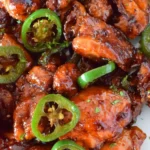
Crispy Spicy Jalapeno Chicken
- Total Time: 35 minutes
- Yield: 6 servings 1x
- Diet: General
Description
Spicy Jalapeno Chicken is a crispy fried chicken in a thick, sweet, savoury, and spicy sauce; this recipe is most certainly for the spicy food lover.
Ingredients
- 2 pounds boneless skinless chicken thighs
- 1/4 cup cornstarch
- 1/4 teaspoon salt
- 1/2 teaspoon ground black pepper
- 1/4 cup low sodium soy sauce
- 1/4 cup water
- 1/4 cup brown sugar, lightly packed
- 4 cloves garlic, minced
- 2 large jalapenos, cut into 1/4 inch slices
Instructions
- Season: Place the prepared chicken into a bowl with the salt and ground black pepper. Toss to coat well.
- Coat: Add the cornstarch and toss until all of the chicken is well coated.
- Prepare Sauce: In a separate, smaller bowl, add the soy sauce, water, brown sugar, and garlic and whisk well to combine.
- Slice Peppers: Slice the jalapenos into 1/4 inch slices.
- Heat Oil: Add four inches of vegetable oil to a heavy bottomed pot and heat the oil to 315 degrees F.
- First Fry: Lower the chicken into the oil one piece at a time; fry for 5-6 minutes, turning at the halfway mark.
- Second Fry: Increase the oil heat to 350 degrees, fry the chicken for another 3-4 minutes, then remove and drain well.
- Boil Sauce: In a large skillet over medium-high heat, add the sauce mixture and bring to a boil.
- Toss: Add the fried chicken and sliced jalapenos to the boiling sauce and toss well.
- Thicken: Move the chicken in the skillet until the sauce has thickened and the water content has evaporated.
- Serve: Transfer to a plate and garnish.
Notes
For best results, use boneless skinless chicken thighs sliced into three pieces each.
- Prep Time: 10 minutes
- Cook Time: 25 minutes
- Category: Main Course
- Method: Frying
- Cuisine: North American
Nutrition
- Serving Size: 1 serving
- Calories: 245 kcal
- Sugar: 9 g
- Sodium: 590 mg
- Fat: 6 g
- Saturated Fat: 2 g
- Unsaturated Fat: 3 g
- Trans Fat: 1 g
- Carbohydrates: 16 g
- Fiber: 1 g
- Protein: 30 g
- Cholesterol: 144 mg
Keywords: spicy jalapeno chicken, crispy fried chicken, spicy sauce, North American cuisine