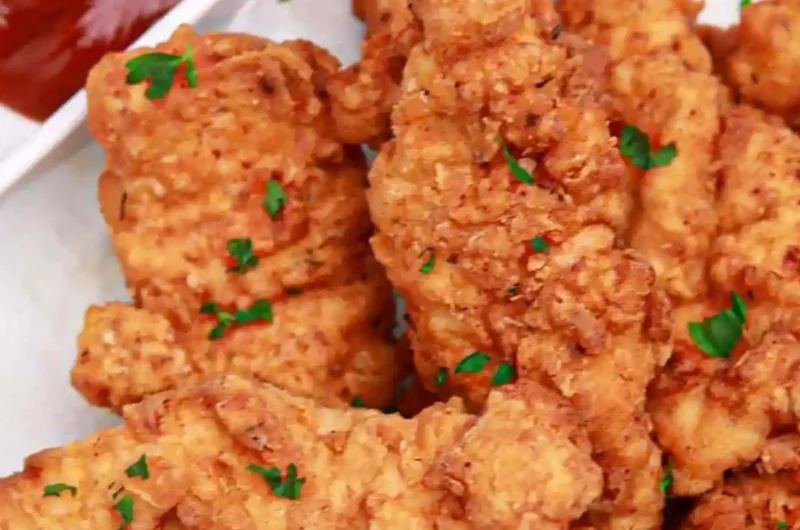
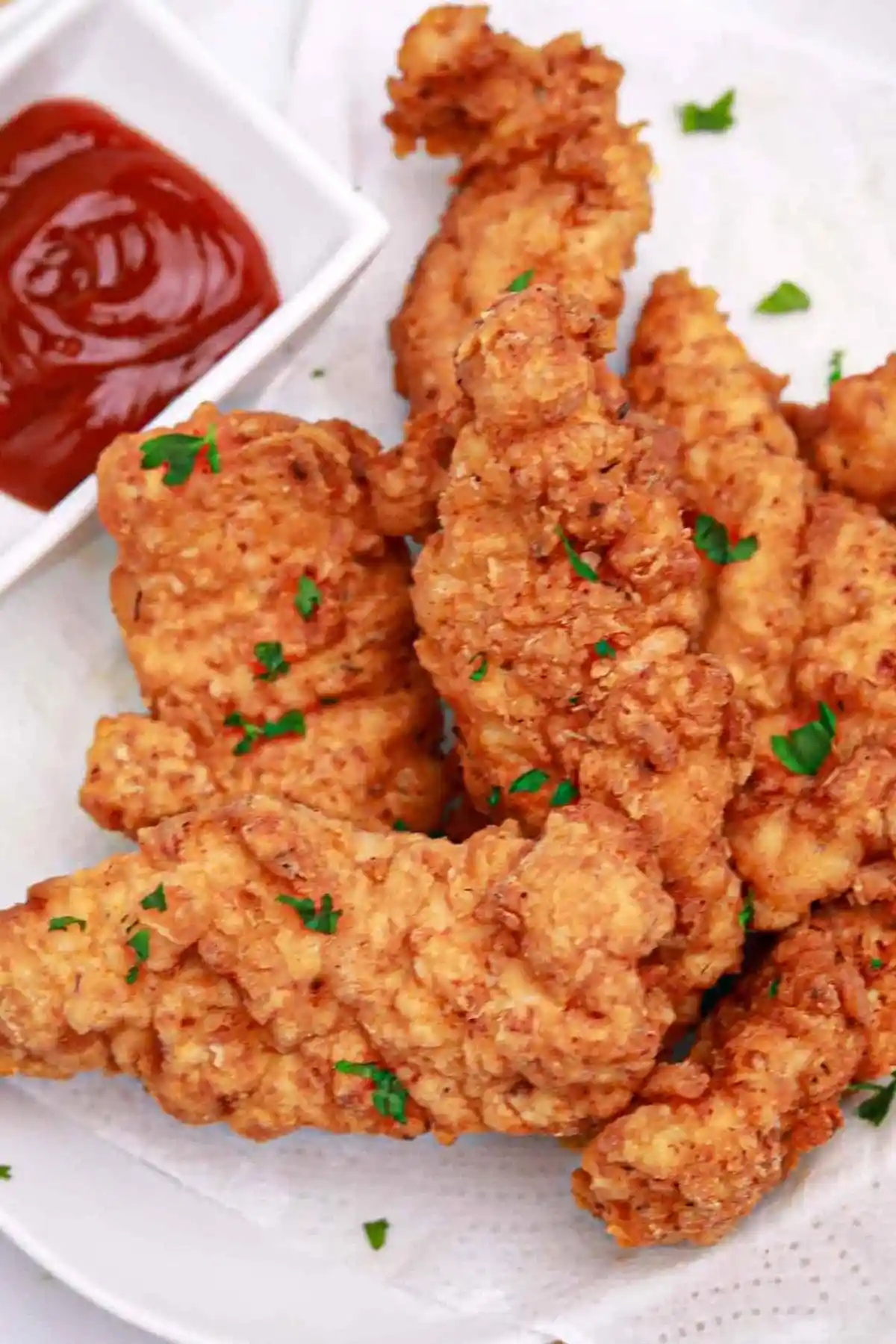
This classic deep fried chicken tenders recipe yields perfectly crispy, golden-brown strips with an incredibly juicy and flavorful interior. By utilizing a buttermilk marinade, you ensure the meat remains tender and succulent, while the double-coating process creates a satisfying crunch that rivals your favorite restaurant-style appetizers. It is a straightforward, reliable method that results in a crowd-pleasing dinner in under thirty minutes.
List of ingredients
- 1 lb (500g) Chicken tenders
- 1.5 cup Plain Flour
- 1 cup Buttermilk
- 1 medium Egg
- 1 teaspoon Paprika
- 1 teaspoon Onion granules
- 1 teaspoon Garlic granules
- 1/2 teaspoon Dried thyme
- 1/2 teaspoon Cayenne pepper
- Salt (to taste)
- Oil (For frying)
step-by-step instructions
- Step: Make the seasoning mix by combining paprika, cayenne pepper, onion granules, garlic granules, thyme, and salt in a bowl.
- Step: Add buttermilk to a bowl and stir in half of the seasoning mix.
- Step: Add chicken tenders to the buttermilk marinade, ensuring they are covered, and refrigerate for 30 minutes to 12 hours.
- Step: Bring the chicken to room temperature and combine the flour with the remaining seasoning mix in a separate bowl.
- Step: Whisk the egg in a third bowl.
- Step: Coat each chicken tender in the flour mixture, dip in the egg, and coat again in the flour mixture.
- Step: Heat 2-3 inches of vegetable oil in a deep pot to 365°F.
- Step: Fry the chicken in batches until golden brown and the internal temperature reaches 165°F.
- Step: Transfer cooked tenders to a paper towel-lined plate and serve.
Practical Frying Techniques
Testing Oil Heat Without a Thermometer
If you lack a digital thermometer, use the visual crumb test. Drop a small pinch of the seasoned flour into the oil; if it sizzles and floats to the surface immediately, the oil is at an appropriate temperature for frying. If the flour darkens instantly, the oil is too hot and needs to cool slightly before adding the chicken.
Preventing Coating Separation
The secret to keeping the breading attached to the chicken is the order of operations. Ensure the chicken is not overly wet when it hits the first flour layer, as excess moisture acts as a barrier. Always press the flour into the meat firmly during the final coating step to create a tight, uniform crust that will stay intact while frying.
Managing Pot Temperature
Frying in small batches is critical to maintaining a consistent heat level. Adding too many cold tenders to the oil at once causes the oil temperature to plummet, which leads to greasy, soggy breading instead of a crisp exterior. Always wait for the oil to return to the correct heat range between each batch.
Substitutions and Adjustments
Alternative Dry Aromatics
You can easily customize the flavor profile by adjusting the dried herbs in the flour mix. Try adding a pinch of dried oregano or rosemary for an earthy Mediterranean twist, or include a dash of white pepper for a subtle, complex heat that differs from the cayenne pepper. These adjustments do not change the frying time or structural integrity of the breading.
Flour Options for Texture
If you prefer a lighter, airier crust, replace a quarter of the plain flour with cornstarch. This small modification helps reduce gluten formation in the coating, leading to a more delicate, glass-like crunch. This is especially effective when you want the outer layer to be exceptionally crispy without becoming too dense or heavy.
Serving and Presentation Ideas
Side Dish Pairings
These tenders pair beautifully with classic comfort sides that absorb the savory seasoning. Roasted potato wedges, creamy macaroni and cheese, or simple steamed broccoli provide the necessary contrast to the crunchy texture of the chicken. For a lighter meal, serve the tenders over a bed of crisp greens tossed in a bright, acidic vinaigrette.
Dipping Sauces
Because the chicken is seasoned with garlic, onion, and paprika, it works well with a wide variety of dips. A cool ranch dressing, a honey-mustard blend, or even a basic sweet chili sauce will complement the spices in the breading. Serve these in individual small ramekins to keep the chicken from getting soft if guests prefer to dip as they eat.
Storage and Reheating Principles
Safe Refrigeration Guidelines
If you have leftovers, allow them to cool completely at room temperature before placing them in an airtight container. They can be stored in the refrigerator for up to three days. It is important to note that the crust will lose some of its crispness as it sits in the fridge, but the flavor will remain excellent.
Restoring Texture Through Reheating
To bring back the original crunch, avoid the microwave, which will turn the breading soft and chewy. Instead, place the tenders on a wire rack set over a baking sheet and heat in a preheated 400F oven for 8-10 minutes. The wire rack is vital because it allows hot air to circulate underneath the chicken, preventing a soggy bottom and ensuring the entire crust crisps up evenly.
Frequently Asked Questions
Can I make these ahead of time?
Yes, you can prepare the chicken through the marination step up to twelve hours in advance. For the best quality, bread the chicken right before you intend to fry it, as the coating can become gummy if it sits on the meat for too long before entering the hot oil.
Why did my breading fall off?
Breading typically separates if the chicken was not dried properly before the first dredge or if the oil temperature was too low. Ensure your chicken is handled gently once breaded and maintain the heat of your oil consistently throughout the entire cooking process to ensure a firm, cohesive crust.
How do I know the chicken is safe to eat?
The only reliable way to confirm doneness is using an instant-read meat thermometer to ensure the thickest part of the tender reaches an internal temperature of 165F. Visually, the meat should be opaque and white throughout, with no signs of pink juices when cut.
Can I use a different type of oil?
For frying, you must use an oil with a high smoke point that does not impart strong flavors. Canola, sunflower, or refined vegetable oils are ideal because they allow the seasonings in the breading to shine without interference. Avoid using extra virgin olive oil or butter, as they will burn long before the chicken is cooked through.
Print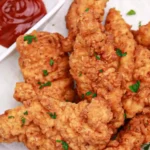
Deep Fried Chicken Tenders Recipe
- Total Time: PT12M
- Yield: 4 servings 1x
- Diet: Non-Vegetarian
Description
This deep fried chicken tenders recipe is what you need to make crispy buttermilk fried chicken tenders that are moist and tender inside with a crispy, crunchy golden outer. It is simple and quick to make with only a few basic ingredients.
Ingredients
- 1 lb (500g) Chicken tenders
- 1.5 cup Plain Flour
- 1 cup Buttermilk
- 1 medium Egg
- 1 teaspoon Paprika
- 1 teaspoon Onion granules
- 1 teaspoon Garlic granules
- 1/2 teaspoon Dried thyme
- 1/2 teaspoon Cayenne pepper
- Salt (to taste)
- Oil (For frying)
Instructions
- Step: Make the seasoning mix by combining paprika, cayenne pepper, onion granules, garlic granules, thyme, and salt in a bowl.
- Step: Add buttermilk to a bowl and stir in half of the seasoning mix.
- Step: Add chicken tenders to the buttermilk marinade, ensuring they are covered, and refrigerate for 30 minutes to 12 hours.
- Step: Bring the chicken to room temperature and combine the flour with the remaining seasoning mix in a separate bowl.
- Step: Whisk the egg in a third bowl.
- Step: Coat each chicken tender in the flour mixture, dip in the egg, and coat again in the flour mixture.
- Step: Heat 2-3 inches of vegetable oil in a deep pot to 365°F.
- Step: Fry the chicken in batches until golden brown and the internal temperature reaches 165°F.
- Step: Transfer cooked tenders to a paper towel-lined plate and serve.
Notes
You can buy chicken breasts and slice them into strips. The pepper and salt quantity can be adjusted to your taste. For frying, use an odorless oil like sunflower or vegetable oil. Do not overcrowd the pan to maintain oil temperature.
- Prep Time: PT5M
- Cook Time: PT7M
- Category: Main Course
- Method: Deep Frying
- Cuisine: American
Nutrition
- Serving Size: 1 serving
- Calories: 372 kcal
- Sugar: 3 g
- Sodium: 226 mg
- Fat: 7 g
- Saturated Fat: 2 g
- Unsaturated Fat: 4 g
- Trans Fat: 0 g
- Carbohydrates: 40 g
- Fiber: 2 g
- Protein: 35 g
- Cholesterol: 128 mg
Keywords: deep fried chicken tenders, fried chicken tenders, how to deep fry chicken tenders