
Creating a restaurant-quality Alfredo sauce in your own kitchen requires only five simple ingredients and about fifteen minutes of active time. This silky, rich sauce relies on the quality of your ingredients to provide a luxurious coating for any pasta shape. By focusing on gentle heat and fresh components, you can master a foundational sauce that elevates simple weeknight meals into something truly memorable.
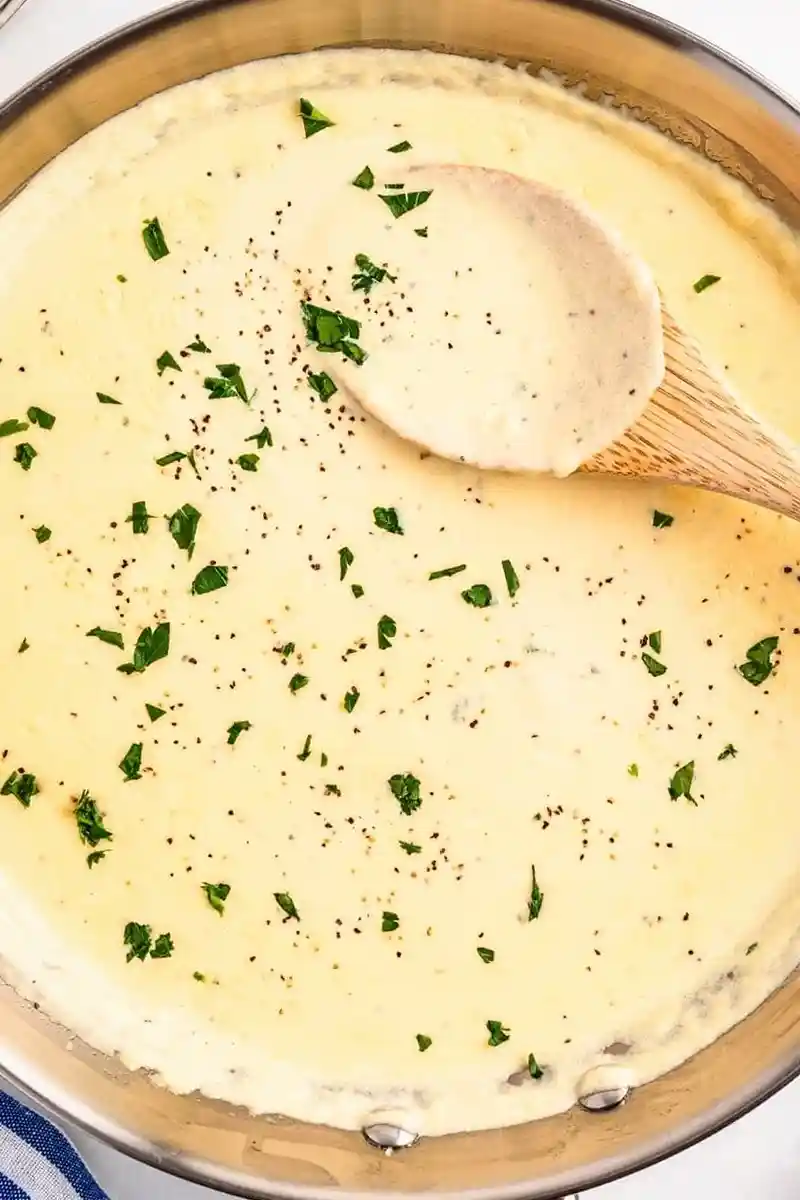
List of ingredients
- 1/2 cup butter
- 3-5 cloves garlic, finely minced
- 1 1/2 cups heavy cream
- Salt and pepper to taste
- 1 1/2 cups Parmesan cheese, freshly grated
- Fresh parsley (optional garnish)
step-by-step instructions
- Step: Start by grating your parmesan cheese finely so it melts quickly and smoothly into the sauce.
- Step: In a large skillet or saucepan over low heat, melt butter with the minced garlic, stirring occasionally until the butter is fully melted and the garlic is fragrant, about 5 minutes.
- Step: Stir in the heavy cream, salt, and pepper into the melted butter mixture. Let the sauce simmer for 5-8 minutes, stirring occasionally, until it reduces to your desired consistency. Keep the heat low to prevent the cream from breaking or curdling.
- Step: Remove the pan from heat and gradually stir in the grated parmesan cheese until it’s fully melted and the sauce is smooth. If the sauce seems too thick, whisk in a splash of milk or pasta water to thin it out.
- Step: Garnish with fresh chopped parsley if desired and serve immediately over your favorite pasta.
Refining the Texture and Flavor
Importance of Freshly Grated Cheese
Using block Parmesan cheese that you grate at home is essential for the success of this recipe. Pre-shredded varieties sold in bags are coated with anti-caking agents like cellulose or potato starch, which prevent the cheese from melting down into a smooth, emulsified sauce. When these additives heat up, they can leave the sauce feeling gritty or preventing it from becoming completely glossy and smooth.
Managing Temperature for Cream Stability
The primary reason creamy sauces break or curdle is excessive heat. By keeping your burner on low and removing the pan from the heat entirely before introducing the cheese, you protect the structure of the heavy cream. If you notice small oil droplets forming on the surface, you are likely cooking the sauce too vigorously or for too long once the cheese is added.
Balancing Sauce Thickness
If your sauce reduces too far during the simmering stage, do not panic. Simply add liquid one tablespoon at a time to restore the correct consistency. Using reserved starchy pasta water is the preferred method because the starch content helps the sauce bind even better to your noodles, while milk or extra cream can be used if you prefer a milder, richer finish.
Practical Preparation Techniques
Effective Minced Garlic Preparation
Mincing your garlic very finely ensures that you get a consistent flavor in every single bite rather than large, pungent chunks. You can use a garlic press or a very sharp chef’s knife to achieve a fine paste-like consistency. Allowing the minced garlic to cook slowly in the butter releases the aromatic oils without scorching the pieces, which would turn the sauce bitter.
Strategic Ingredient Organization
Since this sauce comes together very quickly once the cream begins to simmer, you should have all your components measured and ready near the stove. Grate your cheese while the butter and garlic are melting in the pan. This setup minimizes your time away from the stove and prevents the risk of overcooking the base while you are scrambling for ingredients.
Refining Serving and Storage
Optimizing Pasta Pairing
To ensure your meal remains high quality, cook your pasta to a true al dente stage. The sauce will continue to soften the pasta once combined, so slightly firm noodles hold up best. Always toss the hot pasta directly into the skillet with the finished sauce, stirring for about a minute so the creamy mixture coats every strand thoroughly.
Managing Leftover Refrigeration
If you have leftover sauce, transfer it to a glass container as soon as it cools to room temperature. Glass containers are superior for reheating because they do not hold onto odors and provide an even heat distribution. Ensure the lid is airtight to prevent the cream from absorbing refrigerator aromas, which can significantly alter the delicate flavor of the cheese and garlic.
Reheating Without Separation
The secret to reheating a cream-based sauce is patience. Place the sauce in a small saucepan over the lowest possible heat setting. Add a very small amount of room temperature milk to help loosen the fats, then whisk continuously in a circular motion. If the sauce looks slightly separated, whisking more vigorously while it is warm usually restores the emulsion.
Common Queries and Adjustments
How do I handle a sauce that appears too thin?
If you find that your sauce is not clinging to the pasta, you may need to simmer it for an additional two or three minutes over very low heat. Alternatively, increasing the ratio of cheese to cream will naturally thicken the mixture. Ensure you are using true heavy cream rather than a low-fat milk substitute, as the fat content is vital for the reduction process.
Can I add protein to this dish?
This sauce serves as an excellent canvas for various proteins. Grilled chicken strips, sautéed shrimp, or even roasted florets of broccoli work exceptionally well. Prepare these items separately and fold them into the sauce just before you toss in your pasta to ensure everything is heated through without overcooking the delicate cream base.
What is the benefit of using pasta water?
Pasta water contains residual starch from the cooking process. When you add a splash of this water to your Alfredo sauce, the starch acts as a natural emulsifier, helping the cheese and cream cling to the noodles. This technique creates a much more cohesive final dish where the sauce feels like a unified part of the meal rather than a topping that slides off the pasta.
Can I incorporate dried herbs?
While fresh parsley is recommended for the garnish, dried herbs can be added during the simmering stage. If you choose to use dried oregano, thyme, or basil, add them when you add the garlic to the butter. This allows the heat to release the oils from the dried herbs, which helps them hydrate and distribute their flavor throughout the cream more effectively than if added at the very end.
Why should I avoid high heat when simmering?
High heat causes the water in the heavy cream to evaporate too quickly while simultaneously causing the milk proteins to denature and coagulate. This leads to the undesirable curdled texture where the fat separates from the solids. A gentle, low bubble ensures the sauce thickens via reduction without compromising the integrity of the dairy emulsion.
Print
Easy Alfredo Sauce Recipe (5 Ingredients!)
- Total Time: 15 minutes
- Yield: 2 cups 1x
- Diet: Vegetarian
Description
This easy alfredo sauce recipe is ready in just 15 minutes and uses only 5 ingredients to create the most creamy, rich sauce you’ve ever tasted.
Ingredients
- 1/2 cup butter
- 3–5 cloves garlic, finely minced
- 1 1/2 cups heavy cream
- Salt and pepper to taste
- 1 1/2 cups Parmesan cheese, freshly grated
- Fresh parsley (optional garnish)
Instructions
- Step: Start by grating your parmesan cheese finely so it melts quickly and smoothly into the sauce.
- Step: In a large skillet or saucepan over low heat, melt butter with the minced garlic, stirring occasionally until the butter is fully melted and the garlic is fragrant, about 5 minutes.
- Step: Stir in the heavy cream, salt, and pepper into the melted butter mixture. Let the sauce simmer for 5-8 minutes, stirring occasionally, until it reduces to your desired consistency. Keep the heat low to prevent the cream from breaking or curdling.
- Step: Remove the pan from heat and gradually stir in the grated parmesan cheese until it’s fully melted and the sauce is smooth. If the sauce seems too thick, whisk in a splash of milk or pasta water to thin it out.
- Step: Garnish with fresh chopped parsley if desired and serve immediately over your favorite pasta.
Notes
Use freshly grated parmesan cheese rather than pre-shredded for the smoothest melting and best flavor. Cook on low heat throughout the process to prevent the cream from breaking. If the sauce gets too thick, add pasta water or milk one tablespoon at a time.
- Prep Time: 5 minutes
- Cook Time: 10 minutes
- Category: Sauce
- Method: Stovetop
- Cuisine: Italian
Nutrition
- Serving Size: 1 cup
- Calories: 658 kcal
- Sugar: 3 g
- Sodium: 808 mg
- Fat: 65 g
- Saturated Fat: 41 g
- Unsaturated Fat: 17 g
- Trans Fat: 0 g
- Carbohydrates: 5 g
- Fiber: 0 g
- Protein: 16 g
- Cholesterol: 188 mg
Keywords: alfredo sauce, creamy pasta sauce, easy pasta recipe, homemade alfredo