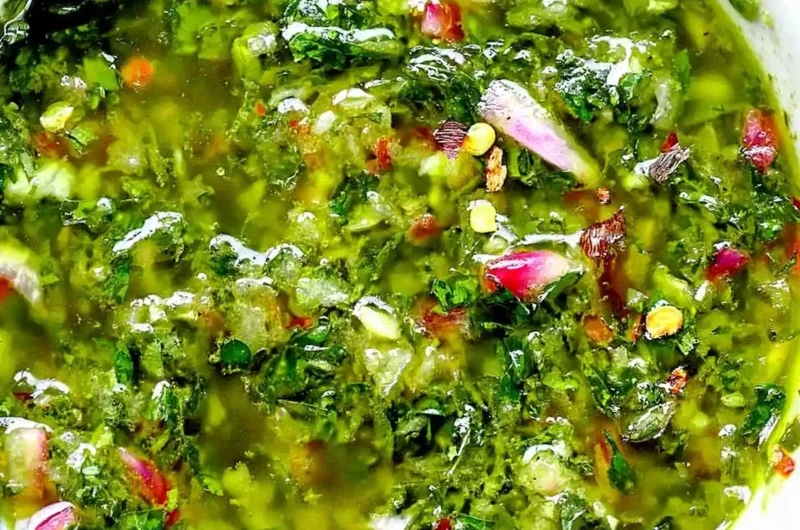
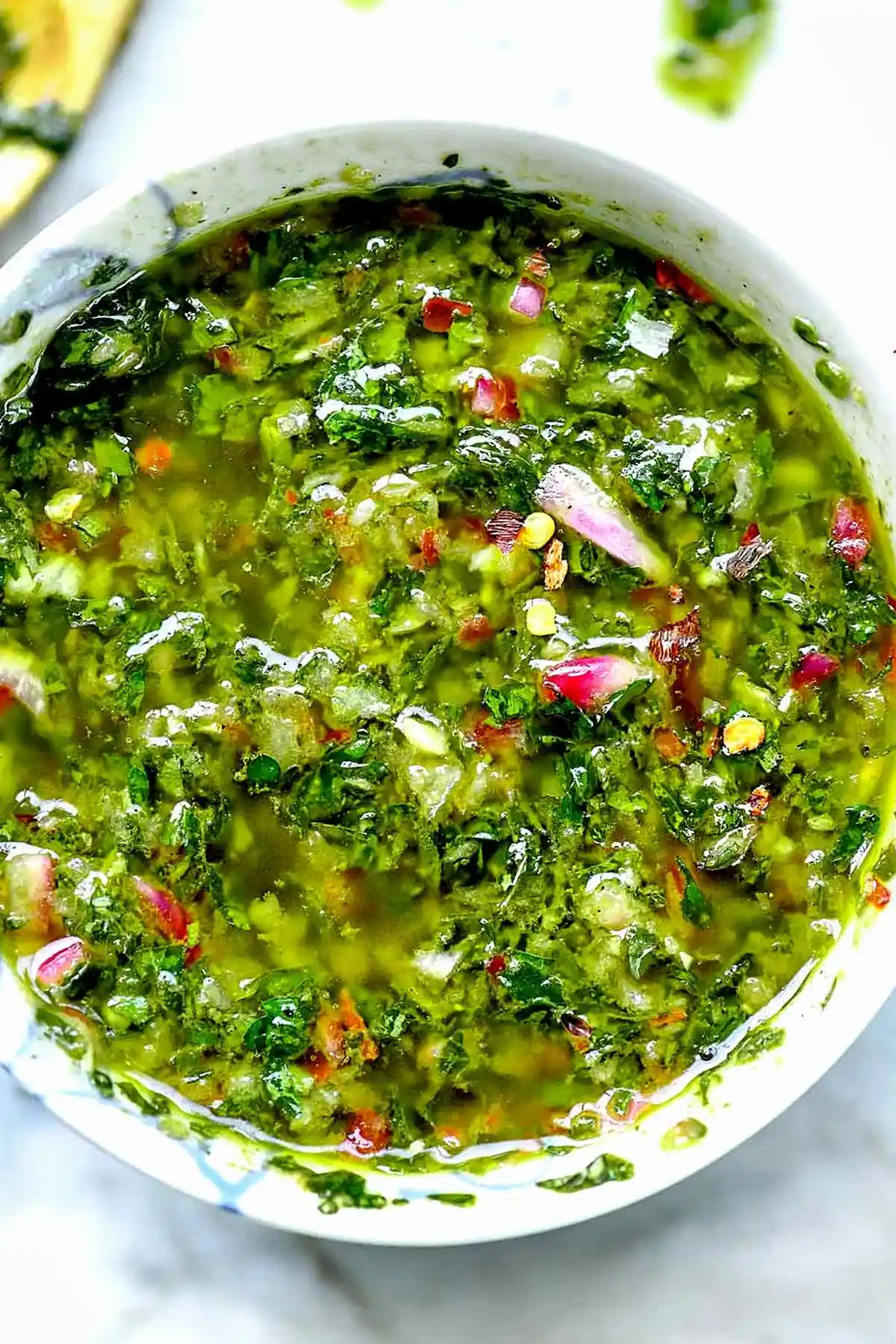
This zesty Argentinian-style herb sauce provides a bright, acidic contrast to rich grilled meats and roasted vegetables. It is a quick-prep condiment that requires no cooking, making it an ideal addition to any summer barbecue or weeknight dinner. This versatile sauce combines fresh herbs and garlic for a punchy flavor profile.
List of ingredients
- 1 cup fresh Italian flat-leaf parsley – leaves only, stems removed
- 1/4 cup fresh cilantro – leaves only, stems removed
- 1/4 cup fresh oregano – leaves only, stems removed
- 1/3 cup roughly chopped red onion or shallots – provides a mild sweetness
- 3 cloves garlic – peeled and ready for mincing
- 1/2 teaspoon red pepper flakes – adds a subtle warmth
- 1/2 cup extra-virgin olive oil – for a robust, fruity base
- 1/4 cup red wine vinegar – provides the traditional tangy bite
- 3 tablespoons fresh lemon juice – increases the brightness of the sauce
- 1 teaspoon kosher salt – enhances all the herb flavors
step-by-step instructions
- Process the aromatics: If using a blender or food processor, add the parsley, oregano, cilantro, onion, and garlic to the container. Pulse the mixture until the ingredients are finely minced but not pureed.
- Combine liquids and spices: Add the red pepper flakes, olive oil, red wine vinegar, and fresh lemon juice to the minced herbs. Pulse the mixture 2-3 times just to combine the ingredients.
- Season and adjust: Stir in the kosher salt and taste the sauce. Add additional salt if needed to reach your preferred flavor balance.
- Hand-chopping alternative: If preparing by hand, finely mince all herbs, onion, and garlic using a sharp knife. Whisk the minced ingredients with the olive oil, vinegar, and lemon juice in a mixing bowl or shake them together in a covered glass jar.
Optimizing Your Ingredient Selection
Selecting Italian Flat-Leaf Parsley
Always choose flat-leaf parsley over curly parsley for this recipe. Flat-leaf parsley has a more robust, peppery flavor and a texture that blends better into a sauce. Ensure you remove the thick stems, as they can introduce a bitter taste and a woody texture to the finished product.
Using Fresh Cilantro and Oregano
Fresh cilantro adds a citrusy, bright note that complements the parsley perfectly. Fresh oregano provides an earthy depth that is essential for an authentic South American flavor profile. If you cannot find fresh oregano, you can substitute it with more parsley, though the flavor will be slightly milder.
Choosing Red Onion or Shallots
Red onion is preferred because it is slightly sweeter and less pungent than yellow or white onions. If you prefer a more delicate flavor, shallots are an excellent alternative. Finely chopping these aromatics ensures they distribute evenly without leaving large, raw chunks in the sauce.
Managing Garlic Intensity
Three cloves of garlic provide a significant punch without overpowering the fresh herbs. Since the garlic is used raw, its flavor is much more potent than when it is cooked. Avoid adding excessive garlic, as it can mask the brightness of the lemon and vinegar.
Understanding the Acid and Oil Balance
The Role of Extra-Virgin Olive Oil
Extra-virgin olive oil is used for its fruity aroma and rich mouthfeel. The oil acts as the carrier for the flavors, helping the garlic and herbs cling to the meat. A high-quality oil will prevent the sauce from tasting greasy and instead add a layer of sophistication.
Adding Tang with Red Wine Vinegar
Red wine vinegar is the traditional acid used in chimichurri to cut through the richness of fatty meats. It provides a sharp, fermented tang that cleanses the palate between bites of steak. Ensure the vinegar is high quality to avoid an overly harsh chemical taste.
Brightening Flavor with Fresh Lemon Juice
While vinegar provides the depth of acidity, fresh lemon juice adds a top-note of brightness. The citric acid works differently than the acetic acid in vinegar, creating a more complex flavor profile. You can reduce the amount of lemon juice if you prefer a more traditional, vinegar-forward taste.
Best Food Pairings for Chimichurri
Complementing Grilled Beef Cuts
This sauce is a classic pairing for flank steak, skirt steak, and picanha. The high acidity of the chimichurri breaks down the richness of the beef fat, creating a balanced bite. Apply the sauce immediately after the meat has rested to preserve the fresh herb flavor.
Adding Zest to Grilled Chicken
Grilled chicken breast or thighs can sometimes be dry, and the olive oil base of this sauce adds necessary moisture. The garlic and oregano complement the natural flavor of the poultry. Try using it as a finishing sauce or a light glaze during the final minutes of grilling.
Enhancing Roasted Vegetables
Roasted cauliflower, asparagus, and red peppers benefit greatly from a drizzle of this herb sauce. The vinegar helps brighten the charred flavors of the vegetables. It transforms a simple side dish into a flavorful centerpiece.
Pairing with Salmon and Shrimp
The lemon and parsley in the sauce make it a natural fit for seafood. Grilled salmon fillets or sautéed shrimp pairs well with the zesty profile. The sauce acts as a fresh alternative to traditional tartar or butter-based seafood sauces.
Storage and Freshness Guidelines
Refrigeration Duration and Containers
Store the finished sauce in an airtight glass jar or a sealed plastic container in the refrigerator. The sauce typically remains fresh for one to two weeks. Using glass is recommended as it does not absorb odors and keeps the sauce tasting clean.
Freezing the Sauce for Long-Term Use
You can freeze chimichurri in ice cube trays to create convenient portion-sized servings. Once frozen, transfer the cubes to a freezer-safe bag. Thaw a cube in the refrigerator overnight before using it as a topping or a quick marinade.
Preventing Herb Oxidation
To keep the sauce from turning brown, ensure there is a thin layer of olive oil on top of the sauce in the jar. This creates a seal that prevents oxygen from reaching the herbs. If the sauce does discolor slightly, it is still safe to eat, though the bright green color is most appealing.
Flavor Variations and Tweaks
Adjusting the Heat Level
The red pepper flakes provide a gentle warmth, but you can increase the heat by adding more flakes. For a different kind of spice, finely mince a seeded jalapeño and add it during the chopping stage. This adds a fresh, grassy heat that complements the cilantro.
Substituting Herbs for Different Profiles
If you are not a fan of cilantro, you can replace it entirely with more Italian flat-leaf parsley. For a more Mediterranean twist, you can add a small amount of fresh basil or mint. Always keep the total volume of herbs the same to maintain the correct consistency.
Modifying the Acidity
If the sauce feels too sharp, you can balance it by adding a pinch of sugar or a small amount of honey. Conversely, if the sauce tastes flat, add an extra tablespoon of lemon juice. Tasting and adjusting the acid levels is key to achieving your preferred flavor.
Practical Preparation Tips
Using a Blender vs. Hand Chopping
A food processor or blender is the fastest method and creates a more uniform consistency. However, pulsing is critical to avoid turning the sauce into a smooth puree. Hand chopping results in a rustic, chunky texture that many prefer for a more traditional look.
Properly Cleaning Fresh Herbs
Wash your herbs in cold water and use a salad spinner to dry them completely. Excess water in the herbs can dilute the sauce and prevent the oil and vinegar from emulsifying properly. Dry leaves ensure that the sauce has a thick, clingy consistency.
Knife Skills for Mincing
When chopping by hand, use a rocking motion with a sharp chef’s knife. Keep your fingers tucked in and move the knife in a consistent arc. Mince the garlic and onion first, then add the herbs to avoid bruising the delicate leaves.
Frequently Asked Questions
What does chimichurri sauce taste like?
Chimichurri has a bright, zesty, and herbaceous flavor with a strong garlic presence. The combination of vinegar and lemon juice gives it a tangy acidity that cuts through savory and fatty foods.
Is chimichurri sauce spicy?
In this recipe, it is mildly spicy due to the red pepper flakes, but it is primarily herbaceous and tangy. You can easily increase the heat by adding more pepper flakes or fresh chilies.
Should it be served warm or cold?
Chimichurri is traditionally served at room temperature. This allows the flavors of the garlic and herbs to be more pronounced when topped over hot grilled meats.
Can I make this sauce in advance?
Yes, you can prepare this sauce a day or two before serving. In fact, letting it sit for a few hours allows the flavors to meld together, often improving the taste.
What is the difference between pesto and chimichurri?
Pesto is typically made with basil, pine nuts, and hard cheese, giving it a creamy, nutty profile. Chimichurri uses parsley as its base and relies on vinegar and lemon for acidity, making it thinner and tangier.
Print
Easy Argentinian Chimichurri Sauce
- Total Time: 15 minutes
- Yield: 16 servings 1x
- Diet: Vegetarian
Description
Fresh parsley and garlic give this easy Argentinian chimichurri sauce a bright and zippy flavor and is the perfect complement to lighten up grilled steak, chicken, or vegetables.
Ingredients
- 1 cup fresh Italian flat-leaf parsley, leaves only, stems removed
- 1/4 cup fresh cilantro, leaves only, stems removed
- 1/4 cup fresh oregano, leaves only, stems removed
- 1/3 cup roughly chopped red onion or shallots
- 3 cloves garlic, peeled
- 1/2 teaspoon red pepper flakes
- 1/2 cup extra-virgin olive oil
- 1/4 cup apple cider vinegar
- 3 tablespoons fresh lemon juice
- 1 teaspoon kosher salt
Instructions
- Blender Method: To the container of a blender or food processor, add the parsley, oregano, cilantro, onion, and garlic and pulse to mince.
- Mix: Add the red pepper flakes, olive oil, vinegar, and lemon juice and pulse 2-3 times to mix.
- Season: Season with kosher salt and add more to taste.
- Hand Method: Finely mince all of the ingredients with a sharp knife, then whisk with the olive oil, vinegar, and lemon juice in a bowl or shake in a covered glass jar.
Notes
Make this sauce ahead of time and refrigerate for 1-3 days before serving. Feel free to omit the cilantro or oregano, and make up the amount by using the Italian parsley instead.
- Prep Time: 15 minutes
- Cook Time: 0 minutes
- Category: sauce
- Method: Blending
- Cuisine: South American
Nutrition
- Serving Size: 2 tablespoons
- Calories: 67 kcal
- Sugar: 1 g
- Sodium: 149 mg
- Fat: 7 g
- Saturated Fat: 1 g
- Unsaturated Fat: 6 g
- Trans Fat: 0 g
- Carbohydrates: 1 g
- Fiber: 1 g
- Protein: 1 g
- Cholesterol: 0 mg
Keywords: chimichurri, sauce, South American, herbaceous, garlic, zesty