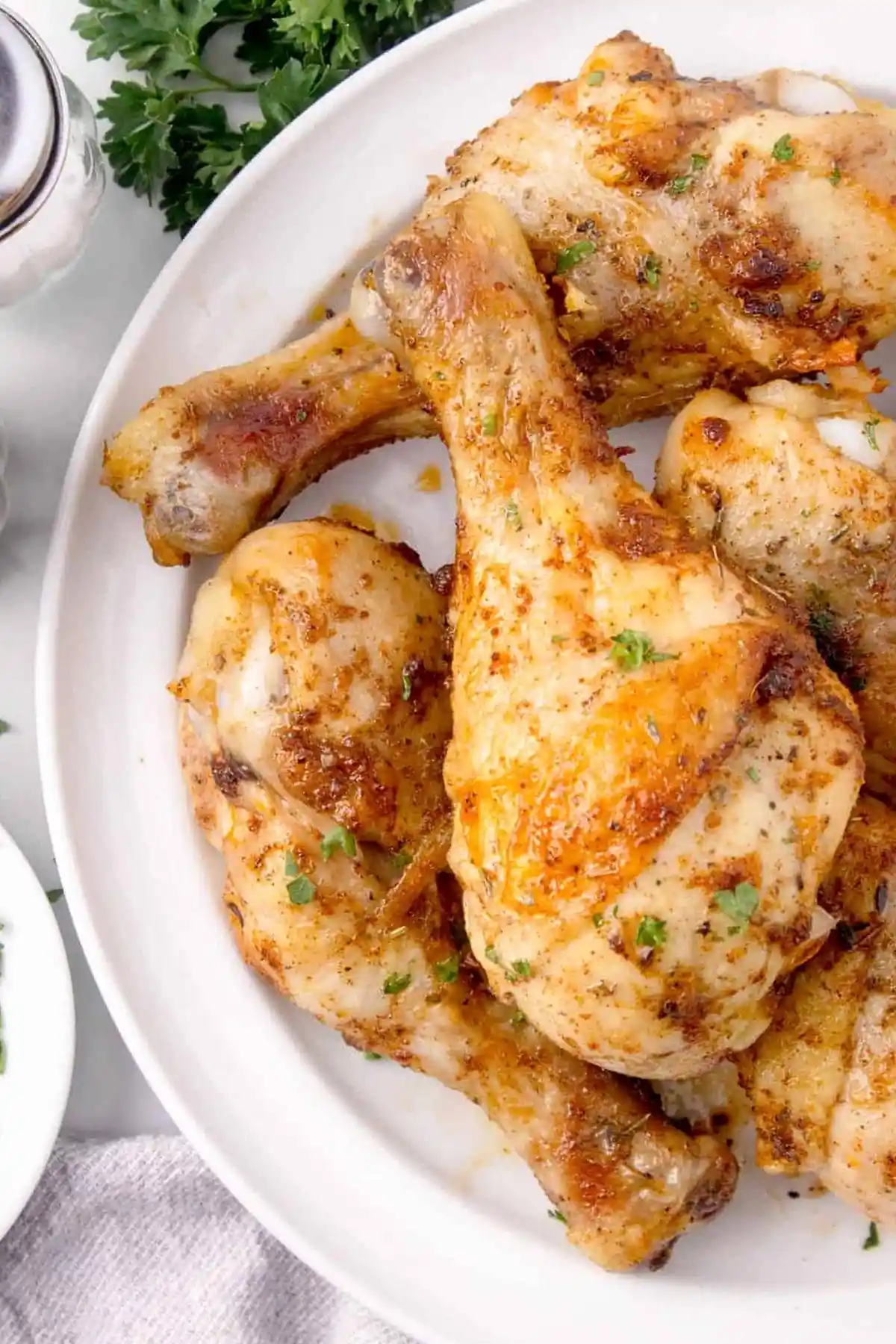
This simple oven-baked chicken recipe produces crispy skin and juicy meat using basic pantry spices. It is an efficient weeknight meal that requires minimal preparation and cleanup.
List of ingredients
- 8-12 skin-on chicken drumsticks – ensures a crispy exterior and juicy interior.
- 1/4 cup olive oil – binds the spices and helps the skin brown.
- 1 teaspoon Italian seasoning – provides a blend of aromatic herbs.
- 1 teaspoon smoked paprika – adds a deep, smoky flavor and rich color.
- 1 teaspoon garlic powder – contributes a concentrated savory taste.
- 1 teaspoon onion powder – adds a subtle sweetness and depth.
- 1/2 teaspoon salt – enhances all the other spice flavors.
- 1/4 teaspoon black pepper – adds a mild, sharp heat.
step-by-step instructions
- Prepare the oven and pan: Preheat your oven to 400 degrees F (200 degrees C). Line a large sheet pan with parchment paper or aluminum foil and set a wire cooling rack on top to allow air circulation.
- Mix the seasoning: In a small bowl, whisk together the olive oil, Italian seasoning, smoked paprika, garlic powder, onion powder, salt, and pepper until smooth.
- Coat the chicken: Place the drumsticks in a large bowl or a sealable plastic bag. Pour the oil and spice mixture over the meat and toss thoroughly until every leg is evenly coated.
- Arrange the legs: Position each chicken leg on the wire rack. Ensure there is a small gap between each piece to prevent steaming.
- Bake and flip: Bake for 40 minutes in total. Use tongs to turn the legs halfway through the cooking time to ensure even browning.
- Verify doneness: Check the internal temperature with a meat thermometer. The chicken is safe to eat when it reaches 165 degrees F.
- Optional crisping: For extra crispy skin, turn the oven to broil for 2-3 minutes immediately after baking.
- Rest the meat: Remove the pan from the oven and let the chicken rest for 5 minutes. This allows the juices to redistribute within the meat.
Expert Techniques for Optimal Results
Removing Surface Moisture for Better Crispiness
Always pat the chicken drumsticks dry with paper towels before applying the oil and spices. Excess moisture on the skin creates steam, which prevents the skin from becoming truly crispy. Removing this water allows the oil to adhere better and the skin to brown more effectively.
Maintaining Proper Airflow Around the Meat
Using a wire rack is essential for achieving an even roast on all sides of the chicken. If the legs sit directly on the pan, the bottom side often becomes soggy due to trapped moisture. Ensure at least an inch of space between each drumstick to allow hot air to circulate freely.
Using a Digital Thermometer for Accuracy
Relying on visual cues or clear juices can be misleading when cooking chicken. An instant-read digital thermometer is the only way to guarantee the meat has reached the safe internal temperature of 165 degrees F. Insert the probe into the thickest part of the leg, avoiding the bone.
Flavor Customizations and Variations
Integrating Cayenne Pepper for Spicy Heat
To add a spicy kick, incorporate 1/4 teaspoon of cayenne pepper or a pinch of crushed red pepper flakes into the dry rub. This complements the smoked paprika by adding a sharp heat that cuts through the richness of the chicken skin. Adjust the amount based on your heat tolerance.
Adding a Honey or Maple Glaze
For a sweet and savory contrast, brush the drumsticks with honey or maple syrup during the final 5 minutes of baking. Because sugar burns quickly, applying the glaze at the end prevents the skin from charring. This creates a sticky, caramelized exterior that pairs well with the savory spices.
Incorporating Fresh Citrus Notes
Adding a tablespoon of fresh lemon juice to the oil mixture provides a bright, acidic lift to the dish. The acidity helps balance the heavier flavors of the garlic and onion powders. You can also serve the finished chicken with fresh lemon wedges for an extra burst of citrus.
Using BBQ Sauce for a Tangy Finish
Transform these legs into BBQ chicken by brushing your favorite sauce over the skin in the last 5-10 minutes of cooking. The heat of the oven will thicken the sauce and create a tacky, flavorful coating. Be careful not to apply the sauce too early, as the sugars in the BBQ sauce can burn at 400 degrees F.
Ingredient Substitutions and Options
Choosing Alternative Cooking Oils
While olive oil is recommended for flavor, you can substitute it with vegetable, canola, or avocado oil. Avocado oil is particularly useful if you plan to broil the chicken longer, as it has a higher smoke point. This prevents the oil from smoking or breaking down under intense heat.
Swapping Smoked Paprika for Regular Paprika
If you do not have smoked paprika, regular sweet paprika is a suitable replacement. You will lose the wood-smoke aroma, but you will still achieve the desired reddish-brown color. For a similar depth of flavor, you can add a tiny drop of liquid smoke to the oil.
Adjusting for Skinless Drumsticks
Skinless chicken legs can be used, but they require a slightly different approach to avoid drying out. Since there is no fat from the skin to protect the meat, consider reducing the baking time by 5-10 minutes. You may also want to increase the amount of oil slightly to keep the meat moist.
Tenderizing with a Buttermilk Soak
For exceptionally tender meat, soak the drumsticks in buttermilk for up to 4 hours before seasoning. The lactic acid in the buttermilk breaks down the protein fibers in the chicken. After soaking, rinse the chicken and pat it dry before applying the spice rub.
Suggested Side Dish Pairings
Combining with Roasted Root Vegetables
Roasted carrots, parsnips, and potatoes are excellent companions to baked chicken. You can roast them on a separate tray in the same oven at 400 degrees F. Toss them in olive oil, salt, and pepper to mirror the flavors of the chicken.
Adding Fresh Green Vegetables
Steam some broccolini, asparagus, or Brussels sprouts to provide a nutritional balance to the meal. The bitterness of these greens cuts through the richness of the chicken skin. A light drizzle of lemon and butter over the vegetables complements the savory rub.
Serving with Grains and Breads
Garlic cheese bread or fluffy buttermilk biscuits are ideal for soaking up the remaining juices from the plate. Alternatively, serve the chicken over a bed of wild rice or quinoa. These hearty options make the meal more filling and satisfying.
Storage and Reheating Instructions
Safe Refrigeration Practices
Place leftover chicken legs in an airtight container or a heavy-duty freezer bag. Store them in the refrigerator for no more than 3-4 days to maintain quality and safety. Ensure the chicken is cooled slightly before sealing the container to prevent excess condensation.
Long-Term Freezer Storage
Baked chicken legs can be frozen for up to 3 months. For best results, freeze them in a single layer on a baking sheet before transferring them to a vacuum-sealed bag. This prevents the legs from sticking together and preserves the texture of the skin.
Reheating in the Oven
To maintain the crispiness of the skin, reheat leftovers in the oven at 350 degrees F. Place the chicken on a wire rack for about 15 minutes or until heated through. Avoid using a microwave, as it will make the skin rubbery and tough.
Using an Air Fryer for Leftovers
An air fryer is the fastest way to restore the texture of baked chicken. Heat the air fryer to 375 degrees F and cook the legs for 5-7 minutes. This method quickly crisps the skin while warming the interior without overcooking the meat.
Troubleshooting Common Cooking Issues
Preventing the Meat from Drying Out
If the chicken feels dry, it is likely overcooked or was not rested properly. Always use a thermometer to stop cooking exactly at 165 degrees F. Allowing the meat to rest for 5 minutes is crucial, as it lets the internal juices settle back into the muscle fibers.
Fixing Spices That Won’t Adhere
If the seasoning rub is sliding off the chicken, the skin was likely too wet when you started. Ensure the meat is patted dry with paper towels before adding the oil. You can also try adding a pinch of cornstarch to the spice mix to help it cling to the surface.
Handling Unevenly Cooked Legs
Uneven cooking usually happens when the chicken legs vary significantly in size. Place the largest legs in the center of the pan where the heat is most consistent. If some pieces finish earlier than others, remove them from the oven individually to prevent overcooking.
Frequently Asked Questions
How long should chicken legs bake?
Chicken legs typically bake for 40 minutes at 400 degrees F. The exact time may vary based on the size of the drumsticks and the type of oven used.
Can I use a different oven temperature?
You can bake them at 375 degrees F, but it will take longer, and the skin may not get as crispy. 400 degrees F is the ideal temperature for balancing a juicy interior with a browned exterior.
Why should the chicken rest?
Resting allows the muscle fibers to relax and reabsorb the juices that were pushed to the center during cooking. Cutting into the meat too early causes these juices to leak out, resulting in drier meat.
Do I need to flip the chicken?
Yes, turning the legs halfway through ensures that both sides make contact with the hot air and the rack. This prevents one side from becoming soggy while the other over-browns.
Print
Easy Baked Chicken Legs
- Total Time: 55 minutes
- Yield: 6 servings 1x
- Diet: General
Description
Baked chicken legs get a nice crispy skin and juicy meat! This classic dish is easy, comes out super flavorful every time, and is made with a handful of pantry ingredients.
Ingredients
- 8–12 skin-on chicken drumsticks
- ¼ cup olive oil
- 1 teaspoon Italian seasoning
- 1 teaspoon smoked paprika
- 1 teaspoon garlic powder
- 1 teaspoon onion powder
- 1/2 teaspoon salt
- 1/4 teaspoon black pepper
Instructions
- Preheat: Preheat the oven to 400 degrees F (200 degrees C). Line a sheet pan with aluminum foil or parchment paper and place a wire rack on it.
- Mix Seasoning: In a small mixing bowl, combine the oil, Italian seasoning, paprika, garlic powder, onion, powder, salt, and pepper.
- Coat Chicken: Place the chicken drumsticks in a large Ziploc bag or bowl. Pour the oil and seasoning mix over the chicken a toss the chicken to coat it with the seasoning mix.
- Arrange: Place each chicken leg on the wire rack making sure there is a little space between each drumstick.
- Bake: Bake the chicken legs for 40 minutes, turning them halfway through cooking using tongs. They are done when a meat thermometer reaches 165 degrees F.
- Broil: (Optional) For crispier skin, broil the chicken for 2-3 minutes after baking.
- Rest: Let the chicken rest for 5 minutes before serving.
Notes
Pat the chicken dry with a paper towel to remove any moisture to help the oil stick and get the skin crispier. Leave space between each chicken leg on the wire rack. Store any leftover chicken legs in an airtight bag or container in the refrigerator for up to 3-4 days or freeze for up to 3 months. Reheat leftovers in the oven at 350 degrees F for about 15 minutes or in the air fryer for 5-7 minutes at 375 degrees F.
- Prep Time: 10 minutes
- Cook Time: 40 minutes
- Category: Dinner Recipes
- Method: Baking
- Cuisine: American
Nutrition
- Serving Size: 1 serving
- Calories: 245 kcal
- Sugar: 0.1 g
- Sodium: 300 mg
- Fat: 18 g
- Saturated Fat: 4 g
- Unsaturated Fat: 13 g
- Trans Fat: 0.05 g
- Carbohydrates: 1 g
- Fiber: 0.4 g
- Protein: 18 g
- Cholesterol: 93 mg
Keywords: baked chicken legs, crispy chicken drumsticks, easy dinner, oven baked chicken