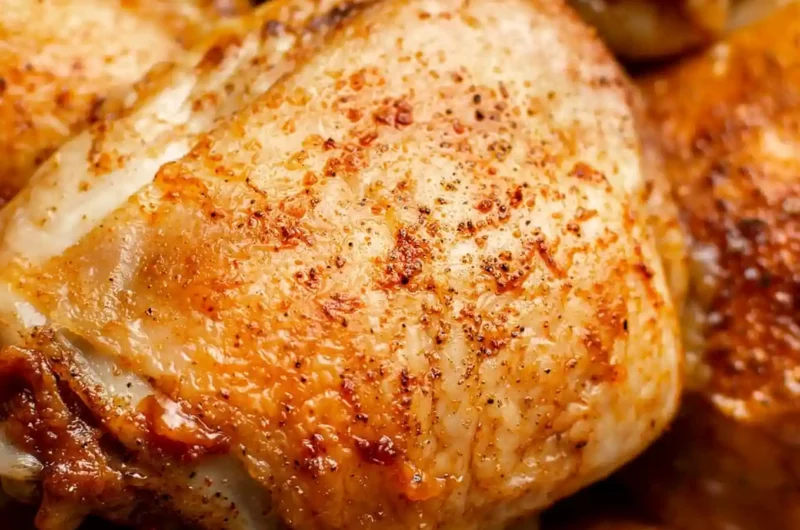
This simple method produces tender chicken with crispy skin using minimal prep. It is an ideal choice for a quick weeknight dinner that requires very little active effort.
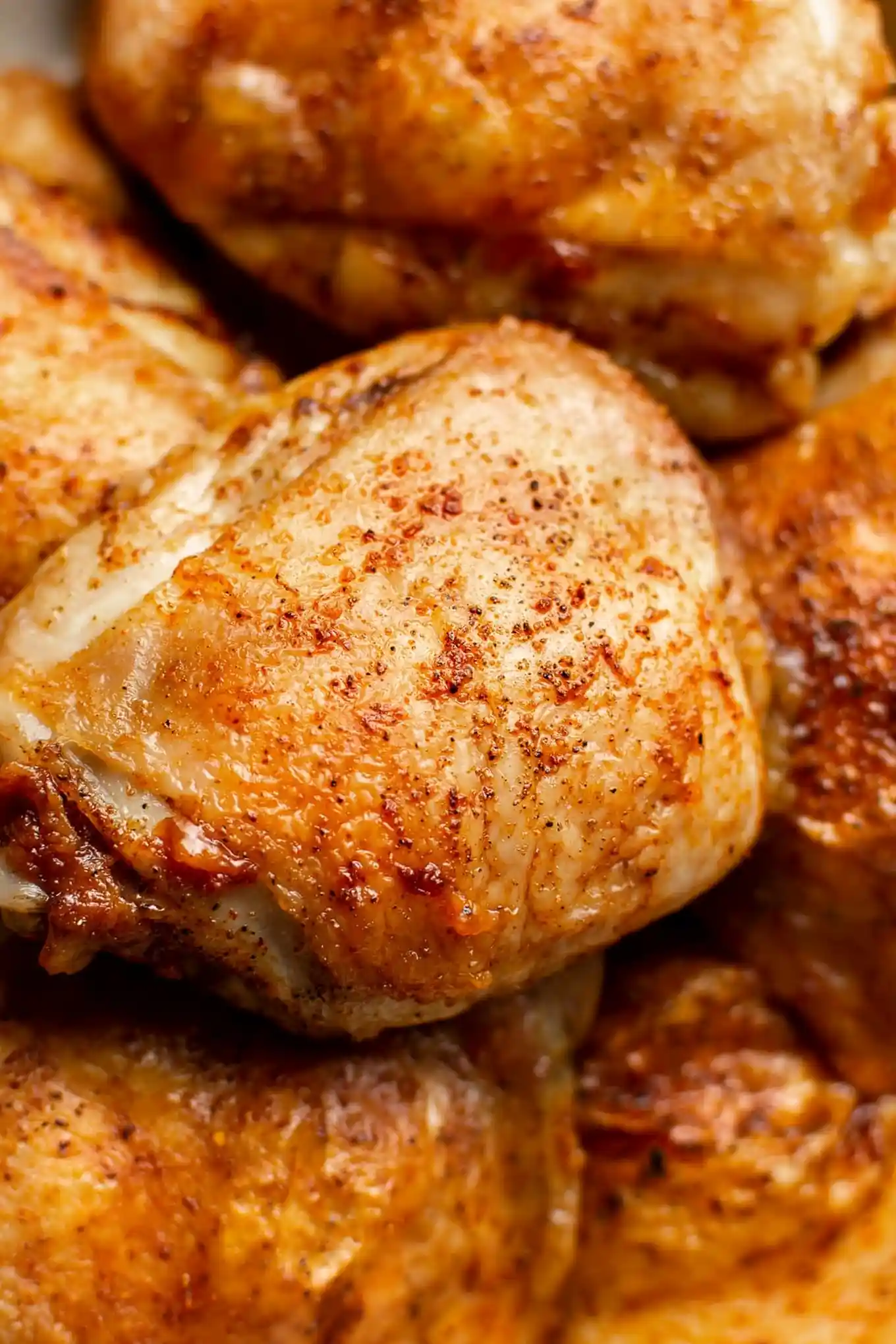
List of ingredients
- 2 pounds chicken thighs (bone-in skin on) – provides maximum flavor and juiciness.
- 2-3 tablespoons olive oil – helps the skin crisp up and distributes seasonings.
- Salt and pepper (to taste) – essential for enhancing the natural flavor of the meat.
- 1/2 teaspoon smoked paprika (or more, to taste) – adds a subtle smokiness and deep color.
step-by-step instructions
- Prepare the Oven: Preheat your oven to 400F and ensure the oven rack is placed in the middle position for even heat distribution. Line a baking sheet with aluminum foil to make cleanup easier.
- Dry the Chicken: Use paper towels to pat the chicken thighs completely dry. Place the pieces on the prepared baking sheet and coat both sides thoroughly with olive oil.
- Season the Meat: Season both sides of the chicken generously with salt and pepper. Sprinkle the smoked paprika specifically onto the skin and rub it in to ensure a rich color.
- Bake the Chicken: Place the chicken in the oven uncovered, skin side up, for 35-40 minutes until fully cooked. For additional crispiness, you can broil the chicken for a few minutes at the end, monitoring it closely to prevent burning.
- Rest the Meat: Remove the chicken from the oven and let it rest for 5-10 minutes. This allows the juices to redistribute, ensuring the meat remains tender and moist.
Optimizing Your Cooking Process
Patting the Skin Completely Dry
Removing surface moisture from the chicken skin is critical for achieving a crispy texture. Moisture on the skin creates steam in the oven, which prevents the skin from browning and crisping. Use heavy-duty paper towels to press firmly on all sides of the thighs before adding oil.
Using an Instant-Read Thermometer
A meat thermometer removes the guesswork from cooking poultry. While chicken is safe to eat at 165F, chicken thighs are most tender when they reach an internal temperature of 175F. Insert the probe into the thickest part of the thigh, making sure not to touch the bone.
Positioning the Oven Rack
Place your oven rack in the center position to ensure an even balance of heat from both the top and bottom elements. This prevents the bottom of the chicken from burning before the skin has a chance to crisp. If you are using a convection oven, you may need to lower the temperature by 25 degrees.
Avoiding the Rinsing of Raw Poultry
Do not rinse chicken thighs under the faucet before cooking them. Rinsing can splash bacteria from the raw meat onto your countertops, sink, and other kitchen surfaces. The high heat of the oven is what effectively kills any bacteria on the meat.
Lining the Pan for Efficient Cleanup
Chicken thighs release a significant amount of fat and juices during the roasting process. These juices can bake onto the pan, making it difficult to scrub clean. Lining the sheet with aluminum foil allows you to simply fold up the mess and discard it after the meal.
Flavor Variations and Substitutions
Substituting Boneless Skinless Thighs
You can use boneless, skinless chicken thighs if you prefer a leaner option or faster cook time. These typically cook 5 to 10 minutes faster than bone-in thighs depending on their thickness. Note that the result will not have the same crispy exterior since the skin is removed.
Adding Garlic and Onion Powder
For a more savory profile, add 1/2 teaspoon each of garlic powder and onion powder to your seasoning mix. These powders blend well with the smoked paprika and provide a deeper base flavor. Ensure they are mixed with the salt and pepper before applying to the chicken.
Using Italian Herb Blends
If you prefer a Mediterranean style, replace the smoked paprika with a blend of dried oregano, basil, and thyme. Alternatively, a pre-mixed Italian seasoning or Herbs de Provence works well. These herbs pair perfectly with the olive oil and provide an aromatic crust.
Incorporating Fresh Lemon
Garnish the finished chicken thighs with fresh lemon wedges before serving. Squeezing fresh lemon juice over the crispy skin adds acidity that cuts through the richness of the dark meat. You can also zest the lemon and add it to the dry rub for a citrusy note.
Using Alternative Oil Options
While olive oil is recommended, you can use avocado oil or grapeseed oil for higher heat stability. These oils have higher smoke points, which can be beneficial if you choose to broil the chicken for a longer period. Avoid using butter as a primary coating, as it can burn at 400F.
Recommended Serving Suggestions
Pairing with Fresh Green Salads
A crisp green salad provides a refreshing contrast to the rich, savory flavor of roasted chicken. Use a mix of spinach, arugula, or romaine topped with cucumbers and cherry tomatoes. A light balsamic vinaigrette or a creamy dressing complements the smoked paprika notes.
Serving with Hearty Grains
Cooked brown rice, quinoa, or couscous are excellent bases for the chicken and its natural pan juices. These grains absorb the flavors of the meat and make the meal more filling. You can stir in some fresh parsley or chopped scallions for added color.
Adding Roasted or Mashed Potatoes
Potatoes are a classic pairing for baked chicken thighs. Mashed potatoes provide a creamy texture, while roasted potato wedges can be cooked on the same tray if you have enough space. Ensure the potatoes are cut small enough to cook in the same timeframe as the chicken.
Integrating Sautéed Vegetables
Sautéed green beans, garlic mushrooms, or creamed spinach add essential nutrients and flavor to the plate. These vegetables can be prepared quickly on the stovetop while the chicken is resting. Sautéing them in a small amount of butter or olive oil keeps them tender and flavorful.
Storage and Reheating Instructions
Refrigeration Guidelines
Store leftover chicken thighs in an airtight container in the refrigerator for 3 to 4 days. Allow the chicken to cool slightly before sealing the container to prevent excessive condensation. This prevents the skin from becoming soggy during storage.
Freezing for Long Term Use
Baked chicken thighs can be frozen for up to 3 months. Wrap each piece individually in foil or place them in a vacuum-sealed bag to prevent freezer burn. Be aware that the skin will lose its crispiness during the freezing and thawing process.
Oven Reheating Method
To maintain the best quality, reheat chicken in the oven at 400F. Place the thighs in a baking dish and add a small amount of chicken broth to the bottom to keep the meat moist. Cover the dish with foil and heat until the internal temperature reaches 165F.
Microwave Reheating Tips
If using a microwave, place the chicken on a microwave-safe plate and cover it with a damp paper towel. This creates a small amount of steam that prevents the meat from drying out. Heat in 1 to 2 minute increments until the chicken is warmed through.
Troubleshooting Common Issues
Skin Not Getting Crispy
If the skin is not crisping up, ensure you have patted the chicken dry and used enough olive oil. You can also increase the oven temperature by 10 degrees or use the broiler for the last 3 minutes. Avoid crowding the pan, as too many pieces can trap steam and soften the skin.
Meat Drying Out
Overcooking is the most common cause of dry meat. Use a thermometer to ensure you are removing the chicken once it hits 175F. Resting the meat for 10 minutes is also essential to keep the juices inside the muscle fibers.
Handling Different Thigh Sizes
Very small thighs may cook in as little as 25 to 30 minutes, while jumbo thighs may take up to 45 minutes. Begin checking the internal temperature at the 30-minute mark. Adjust your cooking time based on the thickness of the meat rather than just the clock.
Managing Excess Pan Grease
If the chicken releases more oil than expected, you can carefully drain some of the fat from the pan halfway through cooking. However, leaving some fat helps the chicken fry in its own juices. Using a wire rack on top of your baking sheet can also help air circulate under the meat.
Frequently Asked Questions
Do I really need to let the chicken rest?
Yes, resting the chicken is a critical step. It allows the muscle fibers to relax and reabsorb the juices that were pushed to the center during cooking. Cutting into the meat too early will cause the juices to run out, leaving the meat drier.
Can I use skinless chicken thighs?
Yes, you can use skinless thighs, but the cooking time will decrease by about 5 to 10 minutes. Since there is no skin to protect the meat, you should monitor the internal temperature more closely to avoid overcooking. The flavor will be milder without the rendered fat from the skin.
Which oil is best for high-heat roasting?
Olive oil is excellent for flavor and works well at 400F. If you are concerned about the smoke point or are using the broiler for a long time, avocado oil is a superior choice because it can withstand much higher temperatures without breaking down.
How do I know when the chicken is fully cooked?
The most reliable method is using a meat thermometer to check for an internal temperature of 165F to 175F. Visually, the juices should run clear when the thickest part of the meat is pierced with a knife. The skin should also be golden brown and firm to the touch.
Can I cook these in a baking dish instead of a sheet?
You can use a baking dish, but a baking sheet is preferred for crispier skin. In a dish, the chicken pieces are often crowded, which traps steam and can lead to soggy skin. If using a dish, ensure there is plenty of space between each thigh.
Print
Easy Baked Chicken Thighs
- Total Time: 40 minutes
- Yield: 6 servings 1x
- Diet: General
Description
Make a fuss-free meal with this super simple baked chicken thighs recipe that has only 5 minutes of prep. They’ll end up so tender with deliciously crispy skin, and your oven does all the work!
Ingredients
- 2 pounds chicken thighs (bone-in skin on)
- 2–3 tablespoons olive oil
- Salt & pepper (to taste)
- 1/2 teaspoon smoked paprika
Instructions
- Step: Preheat the oven to 400F and move the rack to the middle position. Line a baking sheet with foil for easy clean-up.
- Step: Pat the chicken dry with paper towel. Place the chicken pieces on the baking sheet and coat them on both sides with olive oil. Season them generously with salt & pepper on both sides. Sprinkle the smoked paprika on the skin and rub it on.
- Step: Bake, uncovered, skin side up, for 35-40 minutes or until cooked through. Optional: broil for a few more minutes to really crisp up the skin.
- Step: Let the chicken thighs rest for 5-10 minutes prior to serving them.
Notes
2 pounds of chicken thighs serves 4-6. Small thighs may be done in 25-30 minutes; large thighs may take up to 45 minutes. Thighs are most tender at an internal temperature of 175F.
- Prep Time: 5 minutes
- Cook Time: 35 minutes
- Category: Main Course
- Method: Baking
- Cuisine: American
Nutrition
- Serving Size: 1 serving
- Calories: 373 kcal
- Sugar: 1 g
- Sodium: 117 mg
- Fat: 30 g
- Saturated Fat: 7 g
- Unsaturated Fat: 23 g
- Trans Fat: 0 g
- Carbohydrates: 1 g
- Fiber: 1 g
- Protein: 25 g
- Cholesterol: 148 mg
Keywords: baked chicken thighs, crispy chicken skin, easy chicken dinner, low carb chicken