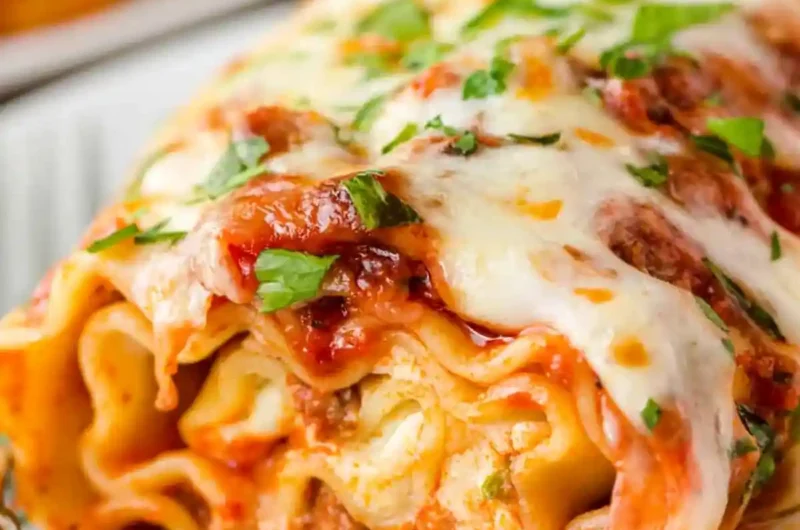
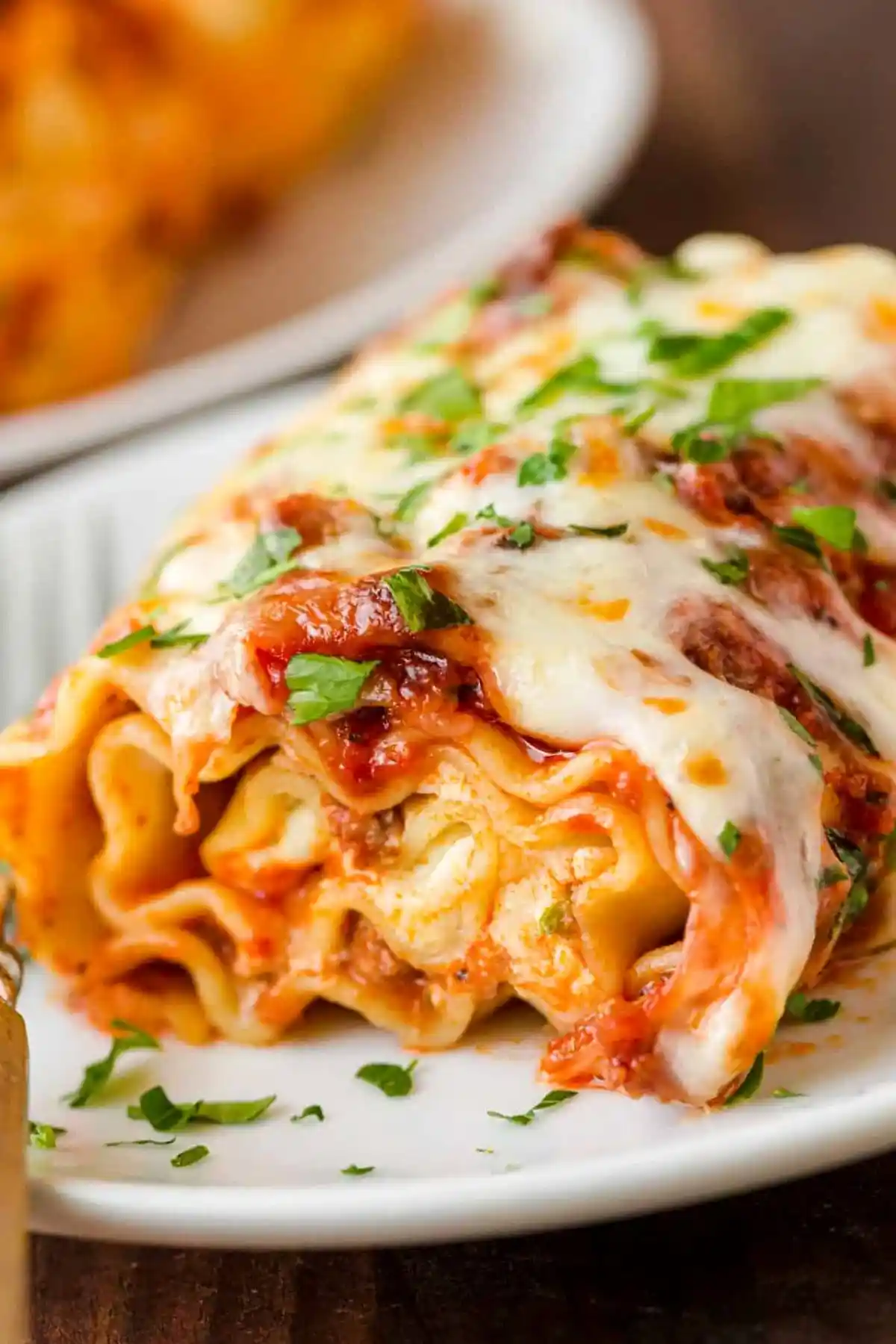
These pre-portioned lasagna rolls offer the same rich flavors as the classic version but are much easier to serve and portion. They are an excellent choice for meal prep and freeze exceptionally well for future family dinners.
List of ingredients
- 12 lasagna noodles – cooked until al dente per package instructions.
- 16 oz ground beef – 85% lean is recommended for flavor.
- 32 oz marinara sauce – store-bought or homemade.
- 1/2 cup diced onion – finely chopped for better integration.
- 3 garlic cloves – minced.
- 1 tsp sea salt – adjust to taste for the red sauce.
- 1/2 tsp black pepper – adjust to taste.
- 1/2 tsp dried oregano – adds traditional Italian aroma.
- 15 oz ricotta cheese – whole milk variety for richness.
- 1 large egg – serves as a binder for the filling.
- 1/4 cup parmesan cheese – shredded.
- 3 cups mozzarella cheese – shredded, divided into two equal parts.
- 1/4 cup parsley – freshly chopped, with extra for garnish.
step-by-step instructions
- Cook the noodles: Preheat your oven to 375°F. Boil the lasagna noodles in a large pot of salted water according to the package directions until they are al dente. Drain them immediately and fill the pot with cold water to stop the cooking process and prevent the noodles from sticking.
- Prepare the meat sauce: Heat a deep pan or Dutch oven over medium-high heat and cook the ground beef until it is no longer pink, using a spatula to break it into small crumbles. Add the diced onion and cook for 3 minutes until softened. Stir in the minced garlic, sea salt, black pepper, and dried oregano, sautéing for one more minute. Pour in the marinara sauce, bring the mixture to a simmer, and then remove from heat. Spread 1/2 cup of this sauce evenly across the bottom of a 9×13 casserole dish.
- Mix the cheese filling: In a large mixing bowl, combine the ricotta cheese, one large egg, 1/4 cup of shredded parmesan, 1 1/2 cups of shredded mozzarella, and 1/4 cup of chopped parsley. Stir until the ingredients are fully incorporated and smooth.
- Assemble the rolls: Arrange the cooked noodles in a single layer on a large baking sheet to keep the process clean. Spread 1/4 cup of the cheese mixture over each noodle. Add one heaping tablespoon of the meat sauce in a strip down the center of each noodle. Carefully roll the noodles up and place them seam-side down in the prepared casserole dish.
- Top and bake: Spread the remaining meat sauce over the top of the rolls and sprinkle with the remaining 1 1/2 cups of mozzarella cheese. Cover the dish with foil, ensuring the foil does not touch the cheese to prevent sticking. Bake at 375°F for 40 minutes.
- Final broil and garnish: Remove the foil and place the dish under the broiler for 2-3 minutes until the cheese is lightly golden and bubbling. Garnish with fresh parsley before serving.
Pasta Preparation Strategies
Preventing Noodle Sticking with Cold Water
Immediately rinsing lasagna noodles with cold water after draining removes the excess surface starch. This step is critical because it stops the cooking process and prevents the noodles from fusing together into a single mass. If you plan to assemble the rolls later, a light coating of olive oil can further ensure they remain separate.
Maintaining Al Dente Texture
It is essential to undercook the noodles slightly during the initial boil, as they will continue to cook in the oven. If the noodles are too soft when rolled, they are more likely to tear or become mushy after baking. Aim for a firm bite that still offers some resistance.
Managing Broken Noodles
Always cook two or three extra noodles beyond the required amount. Lasagna sheets are prone to breaking or tearing during the boiling process or while being handled. Having backups ensures you can complete the full yield of 12 rolls without having to restart the boiling process.
Meat Sauce Optimization
Browning Ground Beef for Flavor
Ensure the pan is sufficiently hot before adding the beef to achieve a proper sear. Browning the meat until it is deeply caramelized adds a layer of savory flavor that simmering alone cannot provide. Use a spatula to break the meat into very small crumbles so the sauce remains smooth and easy to roll.
Ordering Aromatics to Prevent Burning
Add the onions first and cook them until they are translucent before adding the minced garlic. Garlic burns much faster than onions; adding it too early can result in a bitter taste. Sautéing the garlic for just one minute before adding the marinara is enough to release its oils without scorching.
Adjusting Sauce Consistency
If your marinara sauce is too thin, let it simmer for an extra few minutes before adding it to the pan. A thicker sauce stays in place on the noodle during the rolling process and prevents the final dish from becoming watery. If the sauce is too thick, a tablespoon of water or vegetable broth can loosen it.
Cheese Filling Techniques
Using Egg as a Binding Agent
The inclusion of a large egg in the ricotta mixture is vital for the structural integrity of the roll. The egg coagulates during baking, which locks the cheeses and herbs together and prevents the filling from leaking out of the ends. This results in a cleaner slice and a more consistent texture.
Choosing the Right Ricotta
Use a whole-milk ricotta for the best creaminess and flavor. If you are using a low-fat version, be mindful that it may have a higher water content, which can make the filling runny. If the ricotta seems too liquid, you can strain it through a fine-mesh sieve for 30 minutes before mixing.
Evenly Distributing Herbs and Cheeses
Whisk the cheese mixture thoroughly to ensure the parmesan, mozzarella, and parsley are evenly distributed. If the ingredients are clumped, some rolls will be more flavorful than others. Using a rubber spatula helps fold the ingredients together without incorporating too much air.
Assembly and Rolling Guidance
Using a Baking Sheet for Cleanliness
Assembling the rolls on a large rimmed baking sheet instead of directly in the pan prevents mess. This allows you to lay the noodles flat and spread the filling evenly without the constraints of the casserole dish walls. Once rolled, you can transfer them to the dish quickly and efficiently.
Precise Filling Portioning
Use a small ice cream scoop or a consistent measuring cup to distribute the cheese mixture. Using 1/4 cup per noodle ensures that every roll has the same amount of filling and that you do not run out of cheese before reaching the 12th noodle. This creates a professional, uniform appearance.
Securing the Rolls in the Pan
Always place the rolled noodles with the seam side facing down. The weight of the noodle and the heat of the oven will naturally seal the seam. If the rolls are unstable, you can use toothpicks to hold them in place, though this is usually unnecessary if the sauce is thick enough.
Baking and Finishing Advice
Preventing Foil Sticking
When covering the casserole, be careful not to let the foil touch the melted mozzarella. If the pan is shallow, the foil will likely adhere to the cheese, pulling it off the rolls when you remove the cover. To prevent this, place small pieces of crumpled foil or toothpicks around the edges to create a gap.
Achieving the Perfect Broil
The final broiling step should be done quickly and monitored closely. A broiler can go from golden to burnt in a matter of seconds. Position the oven rack in the upper third of the oven and watch for the cheese to bubble and brown slightly before removing the dish.
Resting Before Serving
Allow the lasagna rolls to rest for 5 to 10 minutes after leaving the oven. This allows the internal temperature to stabilize and the cheese filling to set. Resting prevents the rolls from sliding apart and ensures the sauce clings to the pasta.
Customization and Substitutions
Substituting Leaner Proteins
For a lower-fat version, replace the ground beef with ground turkey or ground chicken. Since these meats have less fat, you may need to add a tablespoon of olive oil to the pan before browning to prevent the meat from sticking. The seasoning remains the same for a consistent flavor profile.
Exploring Different Cheese Options
While mozzarella is standard, you can substitute a portion of it with provolone or fontina for a sharper flavor. If you prefer a saltier profile, increase the amount of parmesan cheese. Ensure any substitute cheese has a similar melting point to avoid an oily finish.
Adding Vegetable Variations
To add nutrition, stir finely chopped spinach or sautéed mushrooms into the ricotta mixture. If adding watery vegetables like spinach, squeeze them dry in a kitchen towel first. This prevents the filling from becoming too moist and causing the rolls to collapse.
Serving Suggestions
Pairing with Crisp Salads
A fresh Caesar salad or a light garden salad with a balsamic vinaigrette balances the richness of the cheese and beef. The acidity of the dressing cuts through the fat of the ricotta and mozzarella, refreshing the palate between bites.
Choosing Accompaniments
Serve these rolls with warm garlic bread or a toasted focaccia to soak up the extra marinara sauce. A simple side of steamed broccoli or roasted zucchini provides a healthy contrast to the heavy pasta dish.
Plating for Presentation
Place two to three rolls on a plate and spoon a bit of extra sauce from the pan over the top. Garnish with a sprinkle of fresh parsley and a dusting of parmesan cheese to make the dish look restaurant-quality.
Storage and Preservation
Refrigerating Leftovers
Store cooled lasagna rolls in an airtight container or cover the casserole dish tightly with foil. They will remain fresh in the refrigerator for up to 4 days. Ensure the dish has cooled completely before sealing to prevent condensation from making the noodles soggy.
Freezing Unbaked Rolls
You can assemble the rolls and store them in the freezer before baking. Place them in a freezer-safe dish and cover tightly with plastic wrap and foil. They can be stored for up to 3 months. Bake them directly from the freezer, adding about 15-20 minutes to the total cooking time.
Freezing Baked Rolls
Once fully cooked and cooled, baked rolls can be frozen in individual portions. Wrap each roll in parchment paper and place them in a freezer bag. Thaw them in the refrigerator overnight before reheating to maintain the best texture.
Reheating Guidelines
Oven Reheating for Texture
To maintain the best consistency, reheat the rolls in the oven at 350°F. Cover the dish with foil and add a splash of water or marinara sauce to prevent the pasta from drying out. Heat until the center is warm and the cheese is bubbly.
Microwave Tips for Individuals
For a quick reheat, place one or two rolls on a microwave-safe plate. Cover them with a damp paper towel to create steam, which keeps the noodles tender. Heat on medium power in 30-second intervals until warm.
Avoiding Overheating
Be careful not to overheat the rolls in the microwave, as this can cause the cheese to separate and become oily. Stop heating as soon as the center is warm to preserve the creamy texture of the ricotta filling.
Troubleshooting Common Issues
Handling Tearing Noodles
If your noodles tear while rolling, it is usually a sign that they were overcooked. To fix a tear, you can use a small piece of another noodle as a patch or simply press more cheese filling into the gap to seal it. In the future, reduce the boiling time.
Correcting Watery Sauce
If you notice liquid pooling at the bottom of the pan, your marinara may have been too thin or the vegetables released too much water. You can drain the excess liquid carefully with a turkey baster before broiling, or simmer the sauce longer during the initial prep.
Managing Runny Fillings
If the cheese filling leaks out during baking, it is often due to too much moisture in the ricotta or the omission of the egg. Ensure the ricotta is well-drained and the egg is fully beaten into the mixture to provide the necessary structure.
Frequently Asked Questions
Can I use no-boil lasagna noodles?
It is not recommended to use no-boil noodles for roll-ups because they lack the flexibility needed to roll without snapping. Traditional boiled noodles provide the necessary pliability to wrap around the filling securely.
Can this recipe be made in a slow cooker?
While the meat sauce can be made in a slow cooker, the rolling and baking process must happen in the oven. The oven is necessary to set the cheese filling and brown the top of the rolls.
How do I stop the cheese from browning too fast?
If the cheese is browning too quickly during the bake, keep the foil on for the entire duration and skip the broiling step. Alternatively, lower the oven temperature by 25°F and increase the baking time slightly.
What is the best way to slice these rolls?
Because these are already rolled, there is no need to slice them into squares. Simply use a spatula to lift an individual roll onto a plate, keeping the roll intact for the best presentation.
Print
Easy Beef and Cheese Lasagna Roll-Ups
- Total Time: 1 hour 12 minutes
- Yield: 12 lasagna roll ups 1x
- Diet: General
Description
Lasagna Roll Ups are just as tasty as Classic Lasagna, but easier to serve and pre-portioned. This recipe makes a deliciously satisfying Ragu sauce from jarred or homemade marinara with a decadent 3-cheese sauce as filling.
Ingredients
- 12 lasagna noodles, cooked to package instructions
- 16 oz ground beef (85% lean)
- 32 oz marinara sauce
- 1/2 cup diced onion
- 3 garlic cloves, minced
- 1 tsp sea salt
- 1/2 tsp black pepper
- 1/2 tsp dried oregano
- 15 oz ricotta cheese
- 1 large egg
- 1/4 cup parmesan cheese, shredded
- 3 cups mozzarella cheese, shredded, divided
- 1/4 cup parsley, chopped, plus more to garnish
Instructions
- Cook the noodles: Preheat oven to 375°F. Cook noodles in a large pot of salted water according to package instructions for al dente, then drain and fill pot with cold water to stop the cooking process and keep noodles from sticking together.
- Meat Sauce: In a deep pan or Dutch oven, over medium-high heat, cook ground beef until no longer pink, breaking up with a spatula. Add onion and cook until softened. Add garlic, 1 tsp salt, 1/2 tsp pepper, and 1/2 tsp oregano and sauté another minute. Add marinara, bring to a simmer, and turn off the heat. Spread 1/2 cup meat sauce over the bottom of a casserole dish.
- Cheese Sauce: In a large bowl, stir together: ricotta, 1 egg, 1/4 cup Parmesan cheese, 1 1/2 cups mozzarella cheese, and 1/4 cup parsley.
- Roll: Arrange noodles over a large baking sheet in a single layer. Spread 1/4 cup of cheese mixture over the top of each noodle. Add a heaping Tbsp of meat sauce in a strip down the center of the noodle. Roll noodles up and arrange in the prepared casserole dish.
- Top: Spread remaining meat sauce over the tops of roll-ups and sprinkle on the remaining 1 1/2 cups of mozzarella cheese. Cover with foil, making sure foil isn’t touching cheese.
- Bake: Bake covered at 375°F for 40 minutes. Remove foil and broil another 2-3 minutes or until cheese is lightly golden. Garnish with parsley to serve.
Notes
Cook a few extra lasagna noodles in case they break. This dish can be stored baked and cooled in the fridge or freezer for up to 3 months. Reheat in the microwave or in the oven at 350°F until warmed through.
- Prep Time: 30 minutes
- Cook Time: 42 minutes
- Category: Main Course
- Method: Baking
- Cuisine: Italian
Nutrition
- Serving Size: 1 lasagna roll up
- Calories: 355 kcal
- Sugar: 4 g
- Sodium: 823 mg
- Fat: 16 g
- Saturated Fat: 9 g
- Unsaturated Fat: 6 g
- Trans Fat: 0.4 g
- Carbohydrates: 28 g
- Fiber: 2 g
- Protein: 24 g
- Cholesterol: 77 mg
Keywords: lasagna roll ups, lasagna roll ups recipe