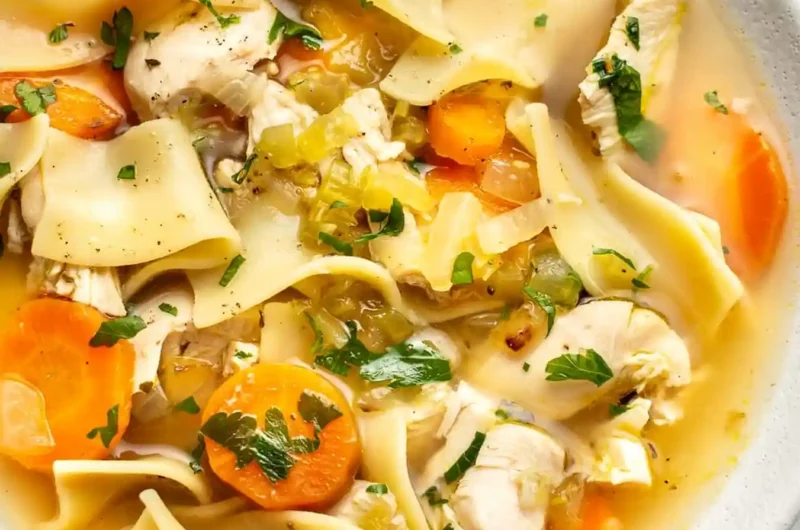
This homemade chicken noodle soup is a quick and comforting meal made from basic pantry staples. It requires minimal preparation and comes together in under an hour for a satisfying dinner.
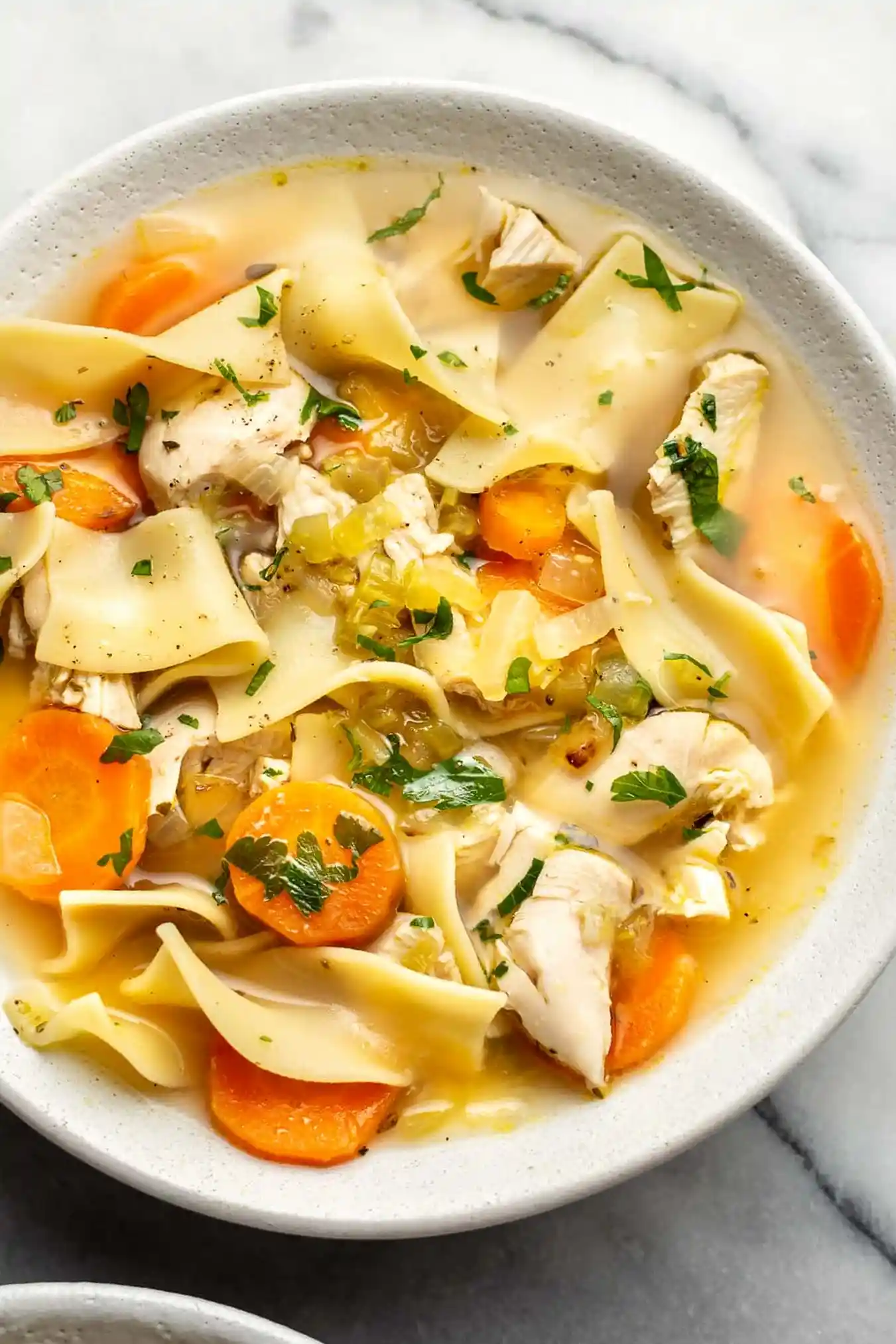
List of ingredients
- 1 tablespoon olive oil – used for sautéing the aromatic vegetables.
- 1 tablespoon butter – adds a rich, creamy flavor to the base.
- 1 medium onion, chopped – provides a sweet and savory foundation.
- 2 medium carrots, peeled and sliced – adds color and natural sweetness.
- 2 sticks celery, chopped – contributes a classic earthy flavor.
- 2 cloves garlic, minced – provides aromatic depth to the broth.
- 4 cups chicken broth – the primary savory liquid base.
- 2 cups water – balances the intensity of the broth.
- 1.5 pounds uncooked chicken breasts, boneless skinless – the main protein source.
- 1/2 teaspoon Italian seasoning – a blend of herbs for a fragrant profile.
- 2 cups uncooked egg noodles – thick pasta that holds up well in soup.
- Salt and pepper, to taste – essential for balancing and enhancing all flavors.
- 1 tablespoon fresh parsley, chopped – adds a burst of freshness at the end.
step-by-step instructions
- Sauté aromatics: Combine the olive oil, butter, chopped onion, sliced carrots, and celery in a large soup pot. Sauté over medium-high heat for 5 to 7 minutes until the vegetables begin to soften.
- Add garlic: Stir in the minced garlic and cook for approximately 30 seconds to avoid burning the garlic while releasing its aroma.
- Simmer chicken: Pour in the chicken broth and water, then add the raw chicken breasts and Italian seasoning. Increase heat to high to bring the liquid to a boil, then reduce heat to low, cover with the lid slightly ajar, and simmer for 15 minutes.
- Cook noodles: Remove the lid and stir in the uncooked egg noodles. Cook for about 8 minutes, stirring occasionally to prevent the noodles from sticking to the bottom of the pot.
- Prepare chicken: Remove the chicken breasts from the pot. Cut or shred the meat into bite-sized pieces using a knife or two forks, then return the meat to the soup. Ensure the chicken has reached an internal temperature of 165F.
- Final seasoning: Season the soup generously with salt and pepper according to your preference. Stir in the fresh chopped parsley just before serving.
Customizing Your Soup Base
Using Boneless Chicken Thighs
Chicken thighs contain more fat than breasts, which results in a richer broth and meat that is more resistant to overcooking. If you prefer a juicier texture, substitute the 1.5 pounds of breast meat with an equal weight of boneless, skinless thighs. Follow the same simmering process, as thighs remain tender even if they simmer slightly longer.
Incorporating Rotisserie Chicken
Using a pre-cooked rotisserie chicken significantly reduces the active cooking time. In this case, skip the simmering step for the raw meat and add the shredded rotisserie chicken during the final 5 minutes of cooking. This ensures the meat is heated through without becoming dry or overcooked.
Adjusting the Broth and Water Ratio
For a more intense, savory flavor, replace the 2 cups of water with an additional 2 cups of chicken broth. If you are using a broth that is very high in sodium, keeping the water in the recipe helps balance the saltiness. You can also use a low-sodium broth to have more control over the final seasoning.
Brightening the Flavor with Lemon
Adding two tablespoons of freshly squeezed lemon juice at the very end of the cooking process can transform the dish. The acidity of the lemon cuts through the richness of the butter and chicken, brightening the overall flavor profile. This is especially useful if the soup tastes too heavy or one-dimensional.
Alternative Pasta Choices
Substituting with Orzo Pasta
Orzo is a small, rice-shaped pasta that creates a denser, more porridge-like soup consistency. Because orzo is smaller than egg noodles, it typically cooks faster, so monitor the pot closely to avoid overcooking. It is an excellent choice for those who prefer a smoother texture in every spoonful.
Using Ditalini or Small Shells
Ditalini or small shell pasta are great alternatives that are easy to scoop with a spoon. These shapes provide a different mouthfeel and can hold onto the broth more effectively than flat noodles. Ensure you adjust the cooking time based on the package directions for the specific pasta shape used.
Gluten-Free Pasta Options
To make this recipe gluten-free, substitute the egg noodles with brown rice pasta, chickpea pasta, or corn-based noodles. Be aware that gluten-free pastas often release more starch or break down faster than wheat-based noodles. It is often better to cook gluten-free pasta separately and add it to the bowl before pouring the hot soup over it.
Using White or Brown Rice
Substituting pasta with cooked rice turns this into a more hearty, meal-like soup. If using raw white rice, add it during the chicken simmering stage as it requires more time and liquid to cook. For brown rice, it is highly recommended to cook it separately and stir it in at the end to avoid an overly thick consistency.
Adding Extra Vegetables
Incorporating Fresh Spinach or Kale
Adding two cups of fresh baby spinach or chopped kale provides additional nutrients and a vibrant green color. Stir these greens in during the last two minutes of cooking; the residual heat of the soup is enough to wilt them without overcooking. This keeps the greens tender and prevents them from becoming mushy.
Adding Frozen Peas and Corn
Frozen peas and corn add a touch of sweetness and extra texture to the broth. Add these vegetables along with the noodles during the final cooking phase. Since they are frozen, they only need a few minutes to heat through and maintain their bright color.
Using Parsnips for Earthy Depth
Parsnips can be added along with the carrots and celery during the initial sautéing phase. They provide a slightly spicy, peppery sweetness that complements the savory chicken broth. Ensure the parsnips are sliced thinly so they soften at the same rate as the carrots.
Adding Leeks for a Milder Onion Taste
Substituting half of the onion with sliced leeks adds a sophisticated, buttery flavor to the base. Make sure to wash leeks thoroughly to remove any grit before chopping. Sauté them with the other aromatics to soften them and integrate their flavor into the oil and butter.
Herb and Spice Adjustments
Substituting Thyme for Italian Seasoning
If you do not have an Italian seasoning blend, dried thyme is the best single-herb substitute. Use about 1/4 to 1/2 teaspoon of dried thyme to achieve a classic, woody flavor. Thyme pairs exceptionally well with chicken and carrots, offering a traditional soup taste.
Adding Fresh Rosemary for Aroma
Fresh rosemary adds a powerful, pine-like aroma that makes the soup feel more rustic. Use a small amount, such as a finely chopped teaspoon of fresh needles, as rosemary can easily overpower other flavors. Add it during the sautéing stage to allow the heat to release its essential oils.
Enhancing with Smoked Paprika
A pinch of smoked paprika can add a subtle depth and a hint of smokiness to the broth. This gives the soup a slightly different character without making it taste like a barbecue dish. Stir it in with the garlic to toast the spice before adding the liquid.
Increasing Garlic for a Bolder Taste
If you enjoy a strong garlic profile, increase the amount from two cloves to four or five. Minced garlic provides a sharp contrast to the sweetness of the carrots. To prevent the garlic from becoming bitter, ensure it only cooks for 30 seconds before the broth is added.
Achieving the Perfect Texture
Preventing Noodle Mushiness
The most common issue with noodle soup is overcooked pasta. To avoid this, cook the noodles until they are just al dente, as they will continue to soften while sitting in the hot broth. If you plan to have leftovers, consider cooking the noodles separately and adding them to individual servings.
Ensuring Tender Chicken
Using a meat thermometer is the only way to guarantee the chicken is safe but not overcooked. Remove the breasts from the pot exactly when they hit 165F. Overcooking chicken breasts leads to a rubbery, dry texture that ruins the smoothness of the soup.
Developing Flavor Through Sautéing
Do not rush the initial sautéing of the onions, carrots, and celery. Allowing the vegetables to lightly brown creates a Maillard reaction, which develops complex sugars and deepens the overall flavor of the broth. This process takes about 7 minutes on medium-high heat.
Managing Broth Thickness
If the soup becomes too thick due to the starch from the noodles, simply stir in a splash of water or extra broth. Conversely, if the soup is too thin, you can let it simmer uncovered for an additional 10 minutes to reduce the liquid. This concentrates the flavors and thickens the consistency.
Storage and Preservation Guidelines
Refrigerating Leftovers
Store the soup in airtight containers in the refrigerator for 3 to 5 days. Keep in mind that the noodles will act like sponges and absorb a significant amount of the broth while stored. This results in a thicker consistency and softer noodles upon reheating.
Strategies for Freezing
Freezing soup with noodles is not recommended because the pasta will become mushy and lose its structure upon thawing. To freeze, make the soup without the noodles and freeze the chicken and vegetable broth base. Store in freezer-safe bags or containers for up to three months.
Managing Individual Portions
When freezing, divide the broth and chicken into individual portions. This allows you to thaw only what you need for a single meal. You can then add fresh noodles to the pot when reheating the specific portion you intend to eat.
Using Glass Containers for Storage
Glass containers are preferable to plastic for storing soup because they do not absorb smells or stains. They also allow you to see the contents clearly and are safer for reheating in the microwave. Ensure the lid is sealed tightly to prevent the soup from picking up other fridge odors.
Reheating Methods for Best Results
Stovetop Reheating Process
The best way to reheat chicken noodle soup is in a small saucepan over low to medium heat. This allows you to stir the ingredients gently and prevent the noodles from breaking. Adding a tablespoon of water or broth helps restore the original consistency.
Microwave Reheating Tips
If using a microwave, heat the soup in short 1-minute intervals, stirring in between. This prevents hot spots and ensures the chicken is heated evenly throughout. Cover the bowl with a microwave-safe lid to keep the moisture from evaporating.
Adjusting Liquid During Reheating
Because noodles absorb liquid over time, leftovers often look more like a stew than a soup. Always have a bit of extra chicken broth on hand to stir in during the reheating process. This restores the soupiness and refreshes the flavor of the broth.
Preventing Overheating the Meat
Avoid boiling the soup vigorously during the reheating process. Excessive heat can cause the already-cooked chicken pieces to toughen and become dry. Gentle simmering is sufficient to bring the soup back to a serving temperature.
Serving and Pairing Ideas
Pairing with Sourdough Bread
A thick slice of toasted sourdough bread is the ideal accompaniment to this soup. The tanginess of the sourdough complements the savory chicken broth perfectly. Rubbing a raw garlic clove on the toasted bread can add an extra layer of flavor.
Serving with a Fresh Side Salad
A light salad with a vinaigrette dressing provides a crisp contrast to the warm, soft texture of the soup. Use romaine lettuce, sliced cucumbers, and a simple lemon-olive oil dressing. This balances the meal and adds a fresh element to the dining experience.
Garnishing for Professional Presentation
Beyond the parsley, you can garnish the soup with a sprinkle of cracked black pepper or a few drops of olive oil. For a more modern touch, add a few thin slices of fresh scallions. This adds a pop of color and a mild onion bite to the finish.
Adding Extra Black Pepper
Freshly cracked black pepper adds a subtle heat that enhances the savory notes of the chicken. Many people find that adding more pepper than salt brings out the herbal qualities of the Italian seasoning. Grind the pepper directly over the bowl just before eating.
Troubleshooting Common Issues
Soup is Too Thin
If the broth feels too watery, simmer the soup without a lid for an additional 10 to 15 minutes. This reduces the water content and concentrates the flavors. Alternatively, you can mash a few of the cooked carrots back into the broth to naturally thicken it.
Soup is Too Salty
If you accidentally over-salted the soup, add a peeled, halved potato and simmer it for 10 minutes. The potato acts as a sponge and absorbs some of the excess salt. You can also add a splash of water or a squeeze of lemon juice to mask the saltiness.
Chicken Texture is Tough
Tough chicken is usually a result of overcooking or boiling the meat too aggressively. To fix this in future batches, ensure you use a thermometer and remove the meat as soon as it hits 165F. If the meat is already tough, shredding it into very small pieces can make it easier to eat.
Lack of Flavor Depth
If the soup tastes bland, it usually needs more acidity or salt. Start by adding a small amount of salt and tasting again. If it still feels flat, a teaspoon of lemon juice or a dash of Worcestershire sauce can provide the missing depth.
Frequently Asked Questions
Can I use frozen vegetables instead of fresh?
Yes, you can use a frozen mirepoix blend (onion, carrots, celery). Simply sauté them in the oil and butter until they are thawed and slightly browned. Note that frozen vegetables may release more water, so you might need to simmer the soup slightly longer.
How do I make this soup low sodium?
Use a low-sodium or no-sodium chicken broth and avoid adding extra salt. Instead, increase the amount of fresh parsley, garlic, and black pepper to enhance the flavor without adding salt. You can also add more lemon juice for a zesty profile.
Can I cook this in a pressure cooker?
Yes, you can sauté the vegetables in the pot first, then add the broth and chicken and cook on high pressure for 10 minutes. Quick-release the pressure, then stir in the noodles and cook them using the sauté function for the recommended 8 minutes.
What is the best way to shred the chicken?
The easiest way to shred chicken is to use two forks, pulling the meat apart along the natural grain of the muscle. Alternatively, you can use a handheld electric mixer on low speed to shred the chicken quickly and evenly.
Print
Easy Chicken Noodle Soup
- Total Time: 45 minutes
- Yield: 6 servings 1x
- Diet: General
Description
This easy homemade chicken noodle soup recipe is cozy, satisfying, and made from scratch with simple everyday ingredients.
Ingredients
- 1 tablespoon olive oil
- 1 tablespoon butter
- 1 medium onion, chopped
- 2 medium carrots, peeled & sliced
- 2 sticks celery, chopped
- 2 cloves garlic, minced
- 4 cups chicken broth
- 2 cups water
- 1.5 pounds uncooked boneless skinless chicken breasts
- 1/2 teaspoon Italian seasoning
- 2 cups uncooked egg noodles
- Salt & pepper, to taste
- 1 tablespoon fresh parsley, chopped
Instructions
- Step 1: Add the oil, butter, onion, carrots, and celery to a soup pot and sauté over medium-high heat for 5-7 minutes.
- Step 2: Stir in the garlic and cook for about 30 seconds.
- Step 3: Add in the chicken broth, water, chicken breasts, and Italian seasoning.
- Step 4: Bring the soup to a boil, then reduce the heat, cover the pot with the lid slightly ajar, and simmer for 15 minutes.
- Step 5: Stir in the noodles and cook for another 8 minutes with the lid off, stirring occasionally.
- Step 6: Take the chicken out of the pot, cut it up or shred it, and add it back in.
- Step 7: Season the soup with salt & pepper as needed and add in the fresh parsley.
Notes
Feel free to swap chicken breasts for thighs. If using rotisserie chicken, add it toward the end. Note that noodles soak up broth during storage, so you may need to add more chicken broth when reheating.
- Prep Time: 10 minutes
- Cook Time: 35 minutes
- Category: Soup
- Method: Stovetop
- Cuisine: American
Nutrition
- Serving Size: 1 serving
- Calories: 243 kcal
- Sugar: 2 g
- Sodium: 754 mg
- Fat: 8 g
- Saturated Fat: 2 g
- Unsaturated Fat: 5 g
- Trans Fat: 1 g
- Carbohydrates: 14 g
- Fiber: 2 g
- Protein: 27 g
- Cholesterol: 88 mg
Keywords: chicken noodle soup, easy soup, homemade, comfort food