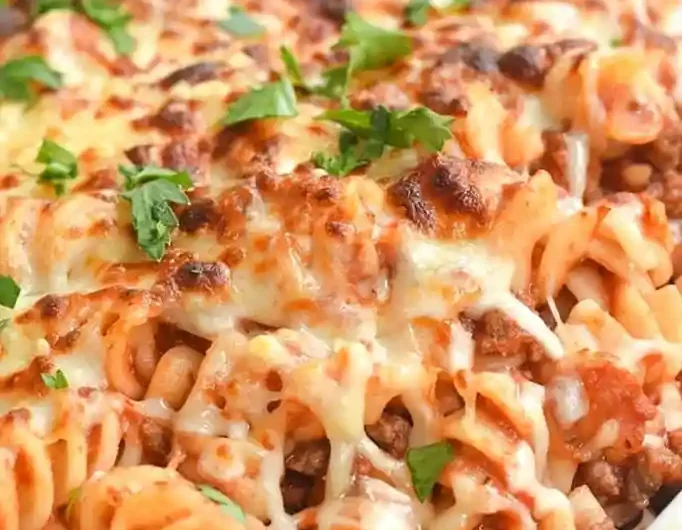
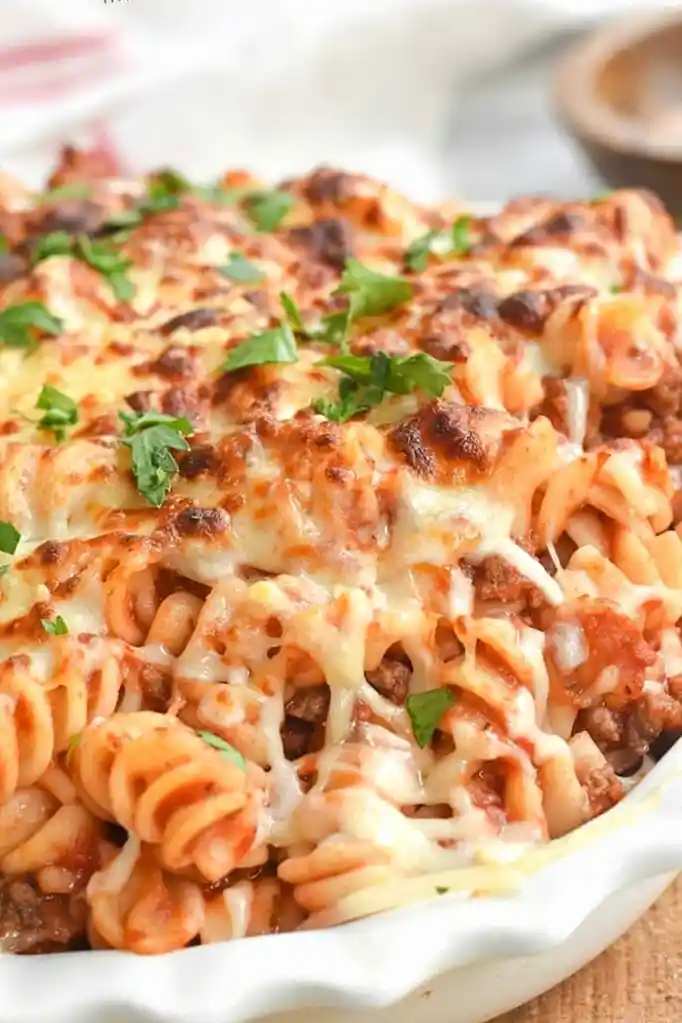
This easy lasagna casserole combines all the classic flavors of a traditional layered pasta bake in a fraction of the time. It is a perfect weeknight dinner that satisfies comfort food cravings without the tedious assembly of layers.
List of ingredients
- 1/2 cup onion, chopped – provides a savory base.
- 4 tsp garlic, minced – adds pungent aromatic flavor.
- 2 cups Mozzarella cheese, grated – for a gooey, melted topping.
- 12 oz. Fusilli pasta – spiral shape helps hold the sauce.
- 1 1/2 lbs Ground beef – the primary protein source.
- 2 tsp dried oregano – adds classic Italian herbal notes.
- 1/4 tsp red pepper flakes – provides a subtle hint of heat.
- 28 oz can crushed tomatoes, undrained – creates the rich sauce.
- 1/4 cup Parmesan cheese – adds a salty, nutty finish.
- fresh parsley – used for a bright, colorful garnish.
step-by-step instructions
- Prepare the Pasta: Bring a large pot of water to a boil. Add the fusilli pasta and cook until tender. Drain the water thoroughly.
- Brown the Meat: Place ground beef in a skillet over medium heat. Add the chopped onion, minced garlic, dried oregano, and red pepper flakes. Cook until the meat is no longer pink, then season with salt and pepper to taste.
- Assemble the Casserole: In a large mixing bowl, combine the cooked pasta, the cooked meat mixture, the undrained crushed tomatoes, and half of the mozzarella cheese. Transfer the mixture into a 9 x 13-inch baking dish.
- Add the Topping: Evenly sprinkle the remaining half of the mozzarella cheese and the Parmesan cheese over the top of the pasta mixture.
- Bake: Place the dish in an oven preheated to 350 degrees Fahrenheit. Bake for 20 minutes or until the casserole is heated through and the cheese is melted and golden brown. Garnish with fresh parsley before serving.
Selecting the Right Pasta Shape
Why Fusilli is the Ideal Choice
Fusilli pasta features a corkscrew shape that is highly effective at trapping sauce within its spirals. This ensures that every bite of the casserole is moist and flavorful. The structure also prevents the pasta from clumping together too tightly during the baking process.
Using Rotini as an Alternative
Rotini is very similar to fusilli and works equally well in this recipe. Its tight twists provide a similar surface area for the tomato sauce to cling to. It maintains its integrity well under the weight of the meat and cheese.
Choosing Campanelle for a Traditional Feel
Campanelle pasta is shaped like small cones with ruffled edges, resembling miniature lasagna noodles. Using this shape adds a visual element that mimics traditional lasagna while remaining a casserole. It offers a slightly different texture that is both tender and firm.
Using Penne for a Heartier Texture
Penne is a sturdy choice if you prefer a more substantial chew in your pasta dishes. The hollow center allows some of the sauce to enter the noodle, though it does not hold as much as the spiral shapes. It is a great option for those who want a more structured casserole.
Cooking Pasta Al Dente for Baking
When boiling your pasta, aim for an al dente texture, which means it still has a slight bite. Since the pasta will cook further in the oven with the sauce, overcooking it in the pot can lead to a mushy final product. Drain the pasta immediately once it reaches this stage.
Tips for Efficiently Draining Pasta
Use a large colander to drain your pasta quickly to stop the cooking process. Rinsing the pasta with cold water is generally not recommended for this recipe, as a bit of starch helps the sauce adhere better. Simply shake the colander to remove excess water.
Optimizing the Meat and Sauce
Selecting the Correct Beef Fat Ratio
An 80/20 blend of ground beef provides the best balance of flavor and moisture for this dish. If you use a leaner 90/10 blend, you may need to add a tablespoon of olive oil to the pan to prevent the meat from sticking. Properly browned beef adds a rich, savory depth to the sauce.
Sautéing Onions for Maximum Flavor
Cook the chopped onions until they are translucent and slightly golden. This process caramelizes the natural sugars in the onion, removing the raw bite and adding sweetness. Avoid high heat to ensure they do not burn, which would introduce bitterness.
Timing the Addition of Minced Garlic
Add the minced garlic during the final minute of browning the meat. Garlic contains volatile oils that burn quickly at high temperatures, which can ruin the flavor profile. Stirring it constantly for a short duration ensures it becomes fragrant without scorching.
Adjusting the Heat with Red Pepper Flakes
The 1/4 teaspoon of red pepper flakes provides a mild warmth rather than intense heat. If you prefer a spicier casserole, you can increase this amount to a half teaspoon. Always add the flakes during the meat-browning phase to toast them slightly in the fat.
Choosing High-Quality Crushed Tomatoes
Use a brand of crushed tomatoes that has a thick consistency and a balanced acidity. Undrained tomatoes provide the necessary moisture to keep the pasta tender during the 20-minute bake. Avoid using diced tomatoes if you want a smoother, more traditional lasagna-style sauce.
Using Spaghetti Sauce as a Shortcut
If you are short on time, you can replace the crushed tomatoes and dried oregano with a high-quality pre-made spaghetti sauce. Ensure the sauce is not overly sweetened to maintain the savory profile of the dish. This is a convenient way to simplify the ingredient list.
Adding Dried Basil for Depth
While oregano is the primary herb, adding a teaspoon of dried basil can enhance the Italian flavor profile. Basil adds a sweet, peppery note that complements the acidity of the tomatoes. Mix it in with the beef and garlic for the best results.
Perfecting the Cheese and Toppings
Benefits of Freshly Grated Mozzarella
Grate your mozzarella cheese from a block rather than using pre-shredded bags. Pre-shredded cheese is coated in cornstarch or cellulose to prevent clumping, which can hinder the melting process. Freshly grated cheese melts more smoothly and creates a better stretch.
Using Parmesan for a Salty Finish
Parmesan cheese adds a sharp, salty contrast to the mild mozzarella and sweet tomatoes. Sprinkle it on the very top to create a flavorful crust during the baking process. It provides an aromatic quality that is essential for a traditional lasagna taste.
Incorporating Ricotta for Extra Creaminess
To make the dish creamier, stir in half a cup of ricotta cheese along with the mozzarella. Ricotta adds a creamy, slightly grainy texture that is characteristic of classic lasagna. It helps bind the pasta and meat together more effectively.
Using Cottage Cheese as a Lighter Option
Cottage cheese can be used as a substitute for ricotta if you want a higher protein and lower fat alternative. For a smoother consistency, blend the cottage cheese in a food processor before adding it to the mix. It provides a similar tang and creaminess to the dish.
Achieving a Golden Brown Cheese Crust
Ensure the oven is fully preheated to 350 degrees before sliding in the casserole. The heat needs to be consistent to melt the mozzarella and brown the Parmesan evenly. If the cheese is not browning enough, you can briefly turn on the broiler for 1-2 minutes.
Using Fresh Parsley for Garnish
Freshly chopped parsley adds a bright green color and a fresh, herbal contrast to the rich cheese and meat. It should be added immediately after the dish comes out of the oven. If fresh parsley is unavailable, a pinch of dried parsley can provide a similar visual effect.
Alternative Protein Options
Substituting Ground Turkey for Leaner Results
Ground turkey is an excellent alternative for those looking to reduce saturated fats. Since turkey is leaner and milder than beef, you may want to add an extra pinch of salt or pepper. Brown it thoroughly to ensure it develops a savory crust.
Using Ground Chicken in the Casserole
Ground chicken is another lean substitute that blends well with the tomato sauce. Because it can dry out more quickly than beef, ensure you do not overcook it during the browning phase. It provides a very neutral base that allows the herbs to shine.
Integrating Ground Italian-Style Beef
If you can find ground beef that is already seasoned with Italian herbs, it can replace the standard ground beef. In this case, reduce the amount of added oregano and garlic to avoid over-seasoning. This is a quick way to add complexity to the flavor.
Baking and Assembly Techniques
Selecting the Proper Baking Dish
A 9 x 13-inch rectangular baking dish is the standard size for this recipe. Using a dish that is too large will result in a thin layer of pasta that may dry out in the oven. A dish with high sides prevents the sauce from bubbling over onto the oven floor.
Ensuring Even Ingredient Distribution
When mixing the pasta, meat, and sauce, stir gently to avoid breaking the noodles. Ensure the mozzarella is evenly distributed throughout the mixture before transferring it to the pan. This creates pockets of melted cheese throughout the entire casserole.
Monitoring the Internal Temperature
The goal of the 20-minute bake is to heat the ingredients through and melt the cheese, not to cook the pasta further. If you are using a very deep dish, you may need an extra 5 minutes. The casserole is ready when the sauce is bubbling around the edges.
Avoiding Oven Burn
Always use oven mitts when removing the heavy baking dish from the oven. Let the casserole rest for 5 minutes before serving. This allows the sauce to thicken slightly, making it easier to scoop and serve without it falling apart.
Storage and Reheating Advice
How to Store Leftovers in the Fridge
Place leftover casserole in an airtight container and refrigerate it immediately after it has cooled. It will remain fresh and tasty for up to four days. Keep the lid tightly sealed to prevent the pasta from drying out or absorbing fridge odors.
Best Practices for Freezing the Casserole
You can freeze this dish before baking by covering it tightly with two layers of heavy-duty aluminum foil. To prevent the pasta from becoming too mushy, slightly undercook the noodles during the boiling phase. Label the foil with the date and reheating instructions.
Thawing Frozen Lasagna Casserole
For the best results, thaw the frozen casserole in the refrigerator overnight before baking. This ensures the center heats through evenly without burning the cheese on top. If baking from frozen, increase the baking time and cover with foil for the first half of the process.
Reheating for Best Texture in the Oven
To reheat individual portions, place them in an oven-safe dish and cover with a splash of water or extra tomato sauce. Heat at 325 degrees until warmed through. This method preserves the texture of the pasta and the melt of the cheese better than other methods.
Using a Microwave for Quick Portions
For a fast reheat, microwave the portion on medium power for 2-3 minutes. Stir halfway through to ensure the heat is distributed evenly. Adding a teaspoon of water helps steam the pasta and prevents it from becoming hard.
Serving Suggestions and Pairings
Pairing with Homemade Garlic Bread
Warm garlic bread is the classic accompaniment to any lasagna-style dish. The crunch of the toasted bread complements the softness of the pasta. Use a baguette brushed with butter and minced garlic for a simple and effective side.
Adding a Fresh Spinach Salad
A light spinach salad with a vinaigrette dressing helps balance the richness of the cheese and beef. Use fresh baby spinach, sliced cucumbers, and cherry tomatoes. The acidity of the dressing cuts through the heaviness of the casserole.
Serving with Roasted Broccoli
Roasted broccoli provides a healthy, charred element that pairs well with Italian flavors. Toss broccoli florets in olive oil, salt, and pepper, then roast at 400 degrees for 15 minutes. This adds a necessary vegetable component to the meal.
Pairing with Baked Zucchini
Zucchini slices topped with a sprinkle of mozzarella and baked until tender are a great side choice. The mild flavor of the zucchini does not compete with the bold flavors of the lasagna. It adds a refreshing texture to the plate.
Troubleshooting Common Issues
Preventing a Watery Casserole
If your casserole seems too liquid, ensure you have drained the pasta thoroughly after boiling. Also, avoid adding extra water to the meat mixture. The crushed tomatoes provide sufficient moisture, so additional liquids can make the dish soupy.
Fixing Overcooked Pasta
If the pasta becomes too soft, it is usually due to overboiling before the baking stage. To mitigate this in future batches, reduce the boiling time by two minutes. In the current batch, avoid over-stirring the casserole to prevent further breaking the noodles.
Solving Bland Flavor Profiles
If the dish lacks flavor, increase the amount of salt and pepper in the meat mixture. You can also stir in a tablespoon of tomato paste for a deeper, more concentrated tomato taste. A squeeze of fresh lemon juice over the final dish can also brighten the flavors.
Dealing with Unmelted Cheese
If the cheese has not melted completely after 20 minutes, check your oven temperature with a thermometer. If the oven is too cool, increase the heat slightly or use the broiler for 2 minutes. Ensure the cheese is spread in a thin, even layer for optimal melting.
Frequently Asked Questions
Can I make this dish ahead of time?
Yes, you can assemble the casserole and store it in the refrigerator for up to 24 hours before baking. This allows the flavors to meld together. Just be sure to add a small amount of extra sauce if the pasta seems to have absorbed too much liquid during storage.
How do I prevent the pasta from becoming mushy?
The secret is to cook the pasta al dente, which means removing it from the boiling water slightly before it is fully tender. This ensures it retains its structure during the 20-minute baking process. Never overcook the pasta in the initial boiling stage.
Can I use whole wheat pasta?
Yes, whole wheat pasta is a healthy alternative that works well in this casserole. Keep in mind that whole wheat pasta often requires a slightly longer boiling time and has a nuttier flavor. It adds more fiber to the dish without compromising the overall structure.
What is the best way to store leftovers?
Store leftovers in a shallow, airtight container in the refrigerator. Using a shallow container allows the dish to cool faster and more evenly, which is safer for food storage. This will keep the pasta fresh for up to four days.
Can I use a different meat like ground turkey?
Absolutely, ground turkey or ground chicken can be used as a lean substitute for beef. Make sure to brown the meat thoroughly to develop a savory flavor. You may want to add a bit more oregano or basil to compensate for the milder taste of the poultry.
Print
Easy Lasagna Casserole
- Total Time: 40 minutes
- Yield: 6 servings 1x
- Diet: General
Description
Lasagna Casserole has all the elements of the traditional lasagna. It has the noodles, the meat, the cheese, the sauce but the process is quick and easy!
Ingredients
- 1/2 cup onion (chopped)
- 4 tsp garlic (minced)
- 2 cups Mozzarella cheese (grated)
- 12 oz. Fusilli pasta
- 1 1/2 lbs Ground beef
- 2 tsp dried oregano
- 1/4 tsp red pepper flakes
- 28 oz can crushed tomatoes (undrained)
- 1/4 cup Parmesan cheese
- fresh parsley (for garnish)
Instructions
- Step: Bring a large pot of water to a boil. Add pasta and cook until tender. Drain water.
- Step: Brown ground beef over medium heat. Add in chopped onion, garlic, oregano and red pepper flakes. Cook until meat is no longer pink. Salt and pepper to taste.
- Step: In a bowl, combine pasta, meat mixture, crushed tomatoes and half the mozzarella cheese. put in a baking dish (9 x 13″). Sprinkle with other half of mozzarella cheese and Parmesan cheese.
- Step: Bake at 350 degrees for 20 minutes or until heated through and cheese is golden brown.
Notes
Instead of hamburger you could also use ground chicken or turkey. Use whole wheat pasta instead. You can also switch up your seasoning blend using Italian seasoning or adding in some dried basil. You can also use petite diced tomatoes instead of crushed if you prefer.
- Prep Time: 20 minutes
- Cook Time: 20 minutes
- Category: Main Dish
- Method: Baking
- Cuisine: Italian
Nutrition
- Serving Size: 1 serving
- Calories: 635 kcal
- Sugar: 8 g
- Sodium: 850 mg
- Fat: 30 g
- Saturated Fat: 12 g
- Unsaturated Fat: 18 g
- Trans Fat: 0 g
- Carbohydrates: 46 g
- Fiber: 4 g
- Protein: 35 g
- Cholesterol: 95 mg
Keywords: lasagna casserole, easy lasagna, beef casserole, fusilli pasta, Italian dinner