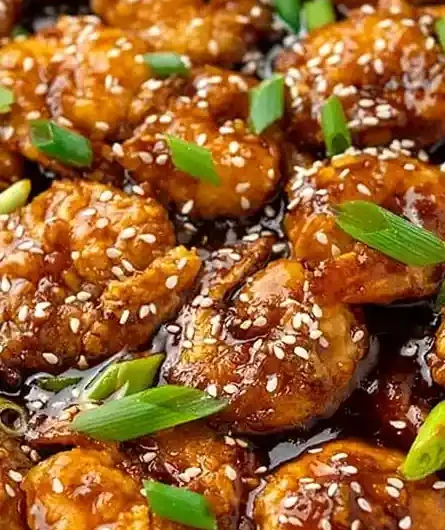
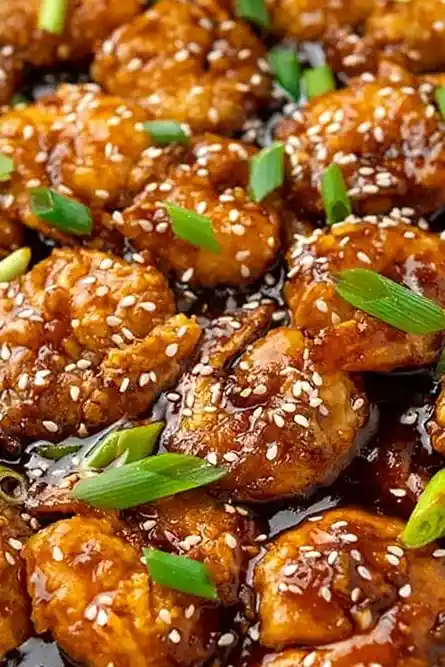
This Mongolian shrimp recipe brings a restaurant-quality meal to your kitchen in less than 30 minutes. It features succulent shrimp coated in a light, crispy starch batter, tossed in a signature sweet and savory sauce that caramelizes perfectly in the pan. Perfectly balanced and deeply flavorful, this dish is a fantastic way to elevate a weeknight dinner with minimal effort.
List of ingredients
- 1 lb large shrimp (deveined and shell off)
- 2 egg whites (whisked)
- ½ cup tapioca (or arrowroot flour, potato starch or cornflour)
- ⅓ cup avocado oil (or melted coconut oil for frying)
- 1 tablespoon garlic (finely minced or diced)
- 2 teaspoons ginger (freshly grated)
- ¼ cup water
- ⅓ cup soy sauce (or Tamari or coconut aminos)
- ¼ cup Hoisin sauce
- 2 tablespoons honey
- 1 tablespoon sesame oil
- 0.5 teaspoon chilli flakes or red chilli pepper powder
- ¼ cup chopped green onions (scallions)
- 1 teaspoon sesame seeds (optional)
step-by-step instructions
- Step: Peel and devein the shrimp. Pat the shrimp dry with a clean paper towel.
- Step: Butterfly the shrimp by cutting the flesh along the back, ensuring not to cut through the shrimp.
- Step: Whisk the egg whites until frothy in one bowl and place the flour/starch in a second bowl.
- Step: Heat the oil in a skillet over medium-high heat. Dip the shrimp in the egg-white mixture, roll in the flour, and add to the hot oil. Cook for about 2 minutes on each side until golden brown. Remove and drain on a paper towel.
- Step: Whisk the sauce ingredients (water, soy sauce, hoisin, honey, sesame oil, and chilli flakes) together in a bowl.
- Step: Pour out excess oil from the pan, leaving a small amount. Sauté the minced garlic and ginger for 30-60 seconds.
- Step: Pour in the sauce and stir until it bubbles and caramelizes. Return the shrimp to the pan, toss to coat, and turn off the heat. Sprinkle with green onions and sesame seeds before serving.
Essential Techniques for Crispy Shrimp
Importance of Surface Moisture
Patting your shrimp dry is the most critical step for achieving a satisfying crunch. If the shrimp are wet when you dip them into the flour, the coating will turn into a gummy, pasty texture rather than a crisp layer. Use a high-quality paper towel to ensure every crevice is dry before you begin the dredging process.
Managing Pan Temperature
Since shrimp cook very quickly, you need the oil to be at the correct temperature before they touch the pan. If the oil is too cool, the batter will absorb too much fat and result in a greasy final dish. Test your oil by dropping a tiny piece of bread or a speck of flour in; if it sizzles immediately, your pan is ready for the first batch.
Refining the Flavor Profile
Balancing Sweet and Salty Notes
The characteristic flavor of this dish comes from the contrast between the savory soy and the sweetness of the honey or sugar. If you find the flavor too intense, simply increase the amount of water in the sauce by a tablespoon at a time to mellow the saltiness. Conversely, add a tiny bit more ginger if you prefer a sharper, more pungent flavor profile.
Adjusting the Heat Level
The chili flakes provide a subtle warmth that complements the sweetness of the hoisin sauce. You can easily modify the heat by either omitting the flakes entirely for a child-friendly version or doubling the amount if your family prefers a spicy kick. Freshly ground pepper can also be used as a supplementary spice if you want a different type of slow-building heat.
Practical Serving Suggestions
Selecting the Right Sides
Steamed jasmine rice or brown rice is the classic pairing for this dish, as it perfectly soaks up the excess sauce. For a lighter approach, serve the shrimp over a bed of cauliflower rice or wilted Asian greens like bok choy or gai lan. These sides add texture and bulk without overpowering the delicate flavor of the shrimp.
Adding Fresh Garnishes
The garnish is not just for show; it provides a necessary crunch and fresh flavor that cuts through the rich sauce. Freshly chopped green onions should be added at the very last second before serving to maintain their bite. If you enjoy extra heat, thin slices of fresh Thai chili peppers can also be added as a decorative and flavorful topping.
Handling and Storage Advice
Maintaining Texture During Storage
If you have leftovers, store them in an airtight container in the refrigerator for no more than one day. The starch-coated shrimp will inevitably lose some of their crispness as they soak up the sauce over time. It is best to treat this dish as a single-sitting meal whenever possible to enjoy the texture as intended.
Reheating Methods for Best Results
Avoid the microwave if possible, as it tends to make the shrimp rubbery and the coating mushy. Instead, reheat the shrimp in a hot skillet over medium heat for 2-3 minutes. A quick splash of water or a tiny bit of extra soy sauce can help loosen the sauce as it warms up and re-caramelizes.
Frequently Asked Questions
Can I use frozen shrimp for this recipe?
Yes, frozen shrimp is a convenient choice. Simply defrost it by submerging the shrimp in a bowl of cool water for 15 minutes, then ensure they are completely patted dry before you start the cooking process. Using cold water is important as it prevents the shrimp from starting to cook prematurely.
How do I prevent the starch from clumping?
Ensure you use a shallow, wide bowl for the starch and spread it out evenly. When dredging the shrimp, roll them gently and tap off any large clumps of flour before placing them into the hot oil. This keeps the coating delicate and prevents uneven pockets of raw starch.
What is a suitable substitute for Hoisin sauce?
If you do not have Hoisin sauce, you can create a quick substitute by mixing equal parts miso paste and honey with a dash of five-spice powder. While the flavor profile will shift slightly, it provides a similar thickness and complex, umami-rich sweetness that makes this Mongolian shrimp dish so memorable.
Is this dish suitable for those with gluten sensitivities?
By using Tamari or coconut aminos instead of traditional soy sauce, and ensuring your starch is purely tapioca or potato-based, this recipe can be easily made gluten-free. Always check the labels on your sauces, as some commercial brands of Hoisin or soy sauce contain hidden gluten ingredients.
Print
Easy Mongolian Shrimp Stir-Fry
- Total Time: 25 minutes
- Yield: 4 servings 1x
- Diet: Gluten-free
Description
Mongolian shrimp is a delicious Chinese-American dish made by stir-frying succulent shrimp with a sweet and savoury Mongolian sauce. The result is a mouthwatering dish with tender shrimp coated in a flavourful sauce that is great served over a bed of steamed rice or veggies.
Ingredients
- 1 lb large shrimp (deveined and shell off)
- 2 egg whites (whisked)
- ½ cup tapioca (or arrowroot flour, potato starch or cornflour)
- ⅓ cup avocado oil (or melted coconut oil for frying)
- 1 tablespoon garlic (finely minced or diced)
- 2 teaspoons ginger (freshly grated)
- ¼ cup water
- ⅓ cup soy sauce (or Tamari or coconut aminos)
- ¼ cup Hoisin sauce
- 2 tablespoons honey
- 1 tablespoon sesame oil
- 0.5 teaspoon chilli flakes or red chilli pepper powder
- ¼ cup chopped green onions (scallions)
- 1 teaspoon sesame seeds (optional)
Instructions
- Step: Peel and devein the shrimp. Pat the shrimp dry with a clean paper towel.
- Step: Butterfly the shrimp by cutting the flesh along the back, ensuring not to cut through the shrimp.
- Step: Whisk the egg whites until frothy in one bowl and place the flour/starch in a second bowl.
- Step: Heat the oil in a skillet over medium-high heat. Dip the shrimp in the egg-white mixture, roll in the flour, and add to the hot oil. Cook for about 2 minutes on each side until golden brown. Remove and drain on a paper towel.
- Step: Whisk the sauce ingredients (water, soy sauce, hoisin, honey, sesame oil, and chilli flakes) together in a bowl.
- Step: Pour out excess oil from the pan, leaving a small amount. Sauté the minced garlic and ginger for 30-60 seconds.
- Step: Pour in the sauce and stir until it bubbles and caramelizes. Return the shrimp to the pan, toss to coat, and turn off the heat. Sprinkle with green onions and sesame seeds before serving.
Notes
Ensure shrimp are completely dry before coating to achieve the best crispy texture. This recipe is suitable for gluten-free diets if using Tamari or coconut aminos.
- Prep Time: 15 minutes
- Cook Time: 10 minutes
- Category: Main
- Method: Stir-frying
- Cuisine: Asian
Nutrition
- Serving Size: 1 serving
- Calories: 416 kcal
- Sugar: 14 g
- Sodium: 2023 mg
- Fat: 23 g
- Saturated Fat: 3 g
- Unsaturated Fat: 18 g
- Trans Fat: 0 g
- Carbohydrates: 33 g
- Fiber: 1 g
- Protein: 20 g
- Cholesterol: 142 mg
Keywords: Stir-Fry, Shrimp Recipes, Asian Shrimp Recipe, Mongolian Shrimp, Mongolian Prawns, Mongolian Sauce