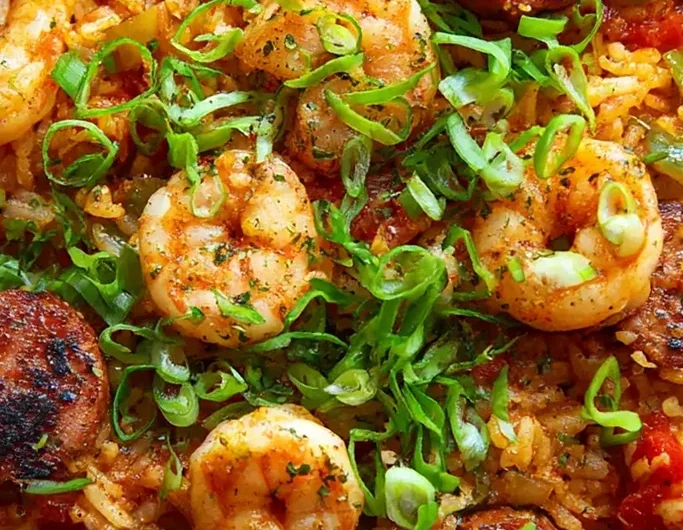
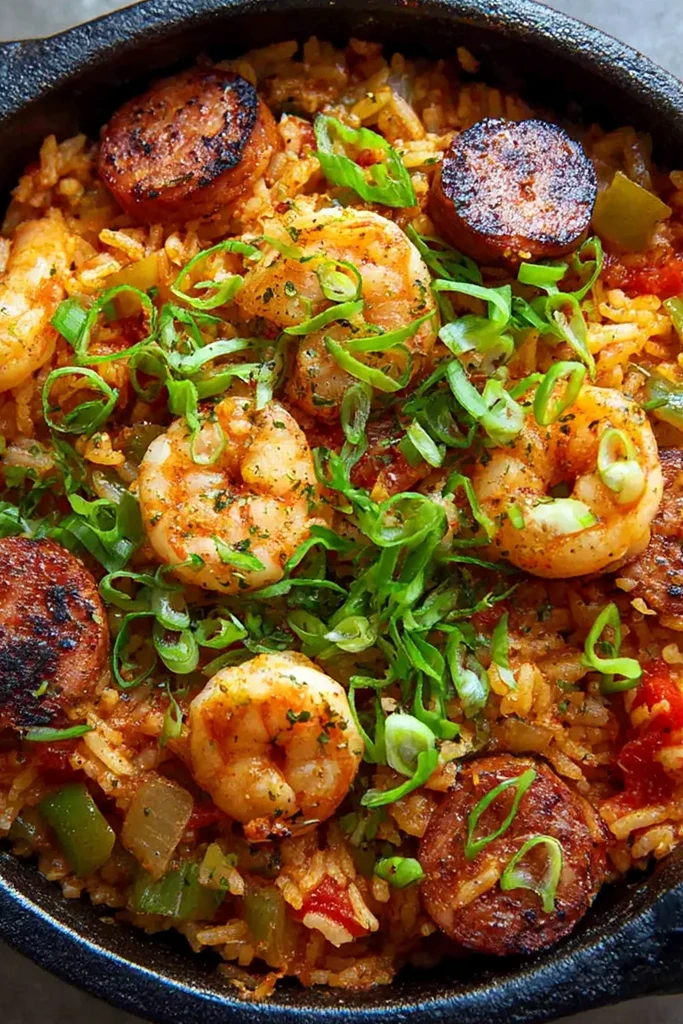
This oven baked jambalaya brings the bold, savory flavors of Southern cooking right to your home kitchen with a simplified, hands-off approach. By utilizing a heavy Dutch oven, you ensure each grain of rice absorbs the rich, smoky stock while remaining perfectly fluffy and distinct. This one-pot method removes the stress of constant monitoring, delivering a restaurant-quality meal featuring succulent shrimp and fragrant aromatics.
List of ingredients
- 2 cups (400g) Long-grain white rice (Rinsed thoroughly)
- 1 lb (450g) Large shrimp (Peeled and deveined)
- 12 oz (340g) Plant-based smoky protein links (Sliced into rounds)
- 1 cup (150g) Onion (Diced)
- 1 cup (150g) Green bell pepper (Diced)
- 0.5 cup (75g) Celery (Diced)
- 2 tbsp (32g) Tomato paste
- 3.5 cups (840ml) Chicken stock (Low sodium)
- 2 tbsp (30g) Creole seasoning
- 0.5 cup (50g) Green onions (Sliced for garnish)
step-by-step instructions
- Step: Preheat oven to 350°F (175°C).
- Step: In a Dutch oven, brown the plant-based protein rounds in a little oil until charred. Remove and set aside.
- Step: Sear the shrimp for 60 seconds per side until pink and opaque. Set aside.
- Step: Sauté the onion, bell pepper, and celery in the same pot until translucent.
- Step: Stir in the tomato paste and Creole seasoning, cooking for 2 minutes.
- Step: Add the rice and toast for 2-3 minutes.
- Step: Pour in the chicken stock, scrape the bottom of the pot, and stir in the plant-based protein.
- Step: Cover and bake for 25-30 minutes.
- Step: Remove from oven, tuck the shrimp into the rice, and replace the lid for 5 minutes.
- Step: Fluff with a fork, garnish with green onions, and serve.
Refining Your Rice Texture
Importance of Thoroughly Rinsing Grains
Rinsing your long-grain rice is the most critical step in achieving a professional result. By removing the excess starch on the surface of the grains, you prevent them from sticking together or becoming gummy in the oven. Aim to rinse until the water runs crystal clear through your sieve before beginning the cooking process.
Why Toasting Matters for Flavor
Toasting the dry rice grains in the aromatic vegetable base for a few minutes before adding the liquid develops a nutty, complex flavor. This process also helps the grains maintain their structure while they hydrate during the extended baking time. You will know you have achieved the correct toast when you hear a faint crackling sound coming from the pot.
Managing Heat and Aromatics
Building the Flavor Base Correctly
The trio of onion, pepper, and celery is the backbone of this dish. Cooking these vegetables until they are soft and translucent creates a sweet foundation that permeates every bite of the jambalaya. Take your time during this stage, as the moisture released from these vegetables is vital for the overall seasoning balance.
Controlling the Spice Profile
Creole seasoning varies significantly in heat depending on the specific blend you purchase. If you prefer a milder version, check the label for salt content and pepper intensity before adding the full amount. You can always increase the heat at the table with fresh sliced chilies or hot sauce if some guests prefer a punchier bite.
Handling Proteins for Best Quality
Perfecting the Protein Sear
Searing the plant-based links and the shrimp serves two purposes: texture and flavor development. The Maillard reaction on the surface of the links adds a deep, savory char that mimics the traditional slow-cooked method. Ensure your pot is sufficiently hot before adding the items to get that essential golden-brown crust without steaming them.
Finishing Shrimp at the Right Time
Shrimp have a very narrow window of doneness and can easily become tough if cooked too long. By adding them to the pot only after the rice has finished its main bake, you utilize the remaining heat to finish them gently. This technique guarantees the shrimp remain succulent and maintain their characteristic shape rather than curling into tight, rubbery rings.
Storage and Serving Advice
Managing Leftover Portions
This dish stores very well in the refrigerator for up to three days when placed in an airtight container. Because rice continues to absorb liquid, leftovers may appear slightly drier the next day. To restore the texture, add a tablespoon of water or broth to the container before reheating in the microwave or on the stovetop.
Freezing Recommendations for Future Meals
If you want to prepare this in advance, you can freeze the rice and vegetable base successfully. It is highly recommended to freeze the base without the shrimp, as cooked shrimp often lose their texture upon thawing and reheating. Simply sear fresh shrimp quickly and fold them into the thawed and reheated rice base for a freshly made feel.
Selecting Ideal Accompaniments
The complexity of this one-pot meal pairs perfectly with light, acidic side dishes. A quick cabbage slaw dressed with lime juice and fresh herbs provides a crisp, cooling counterpoint to the warm spices. Alternatively, serving a side of simple steamed greens or a chilled cucumber salad adds refreshing hydration and texture to your plate.
Common Questions Addressed
Can I use different varieties of rice?
Long-grain white rice is strongly recommended for this recipe because of its starch content and ability to remain fluffy. Avoid short-grain, jasmine, or basmati rice, as these varieties have different hydration requirements and are more likely to result in a sticky or clumped final texture.
What is the role of the tomato paste?
The tomato paste is responsible for the deep, rich color and a concentrated umami punch that defines this specific style of jambalaya. Because it is highly concentrated, it coats the rice grains individually, ensuring the signature look without introducing excessive liquid that could make the dish mushy.
How can I ensure the bottom does not burn?
Using a heavy-duty Dutch oven is the best way to distribute heat evenly and prevent hot spots on the bottom of the pot. Ensure your oven rack is in the center position and that your lid is tightly sealed to maintain a consistent environment for the rice to steam properly throughout the cooking process.
Are there options for adding more vegetables?
You can easily incorporate more vegetables, such as diced carrots or okra, into the aromatic base. If you choose to add extra ingredients, keep in mind that they may release additional moisture. You might need to adjust the stock amount slightly if you find the mixture looks too wet before you begin the baking phase.
Print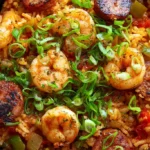
Easy Oven Baked Jambalaya with Seared Shrimp and Smoked Plant-Based Links
- Total Time: PT60M
- Yield: 6 servings 1x
- Diet: Pescatarian
Description
This Oven Baked Jambalaya features fluffy, reddish-orange long-grain rice, charred plant-based protein, and succulent seared shrimp. A foolproof one-pot Dutch oven meal that delivers authentic Creole flavor with perfect texture every time.
Ingredients
- 2 cups (400g) Long-grain white rice (Rinsed thoroughly)
- 1 lb (450g) Large shrimp (Peeled and deveined)
- 12 oz (340g) Plant-based smoky protein links (Sliced into rounds)
- 1 cup (150g) Onion (Diced)
- 1 cup (150g) Green bell pepper (Diced)
- 0.5 cup (75g) Celery (Diced)
- 2 tbsp (32g) Tomato paste
- 3.5 cups (840ml) Chicken stock (Low sodium)
- 2 tbsp (30g) Creole seasoning
- 0.5 cup (50g) Green onions (Sliced for garnish)
Instructions
- Step: Preheat oven to 350°F (175°C).
- Step: In a Dutch oven, brown the plant-based protein rounds in a little oil until charred. Remove and set aside.
- Step: Sear the shrimp for 60 seconds per side until pink and opaque. Set aside.
- Step: Sauté the onion, bell pepper, and celery in the same pot until translucent.
- Step: Stir in the tomato paste and Creole seasoning, cooking for 2 minutes.
- Step: Add the rice and toast for 2-3 minutes.
- Step: Pour in the chicken stock, scrape the bottom of the pot, and stir in the plant-based protein.
- Step: Cover and bake for 25-30 minutes.
- Step: Remove from oven, tuck the shrimp into the rice, and replace the lid for 5 minutes.
- Step: Fluff with a fork, garnish with green onions, and serve.
Notes
Always rinse the rice to ensure the grains stay separate and fluffy. Use a high-quality stock to ensure depth of flavor.
- Prep Time: PT20M
- Cook Time: PT40M
- Category: Dinner
- Method: Baking
- Cuisine: American, Cajun, Creole
Nutrition
- Serving Size: 1 serving
- Calories: 420 kcal
- Sugar: 4 g
- Sodium: 850 mg
- Fat: 9 g
- Saturated Fat: 1.5 g
- Unsaturated Fat: 6 g
- Trans Fat: 0 g
- Carbohydrates: 58 g
- Fiber: 3 g
- Protein: 28 g
- Cholesterol: 120 mg
Keywords: jambalaya, oven baked, creole, cajun, one pot, rice, shrimp