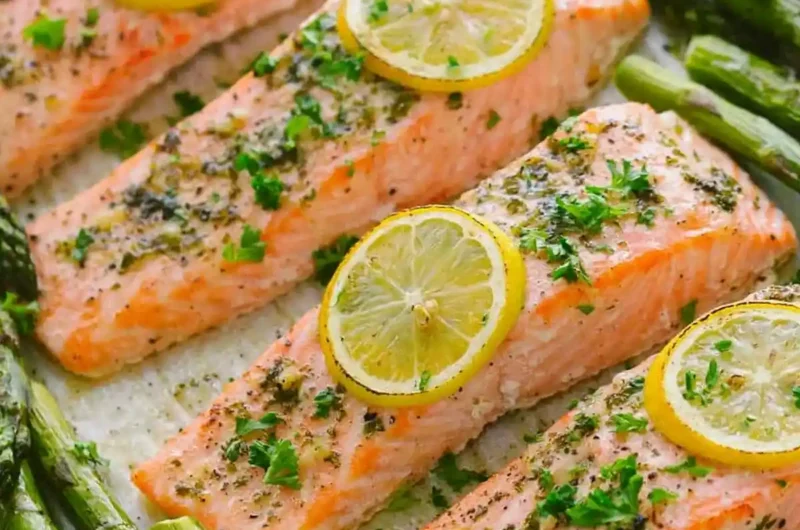
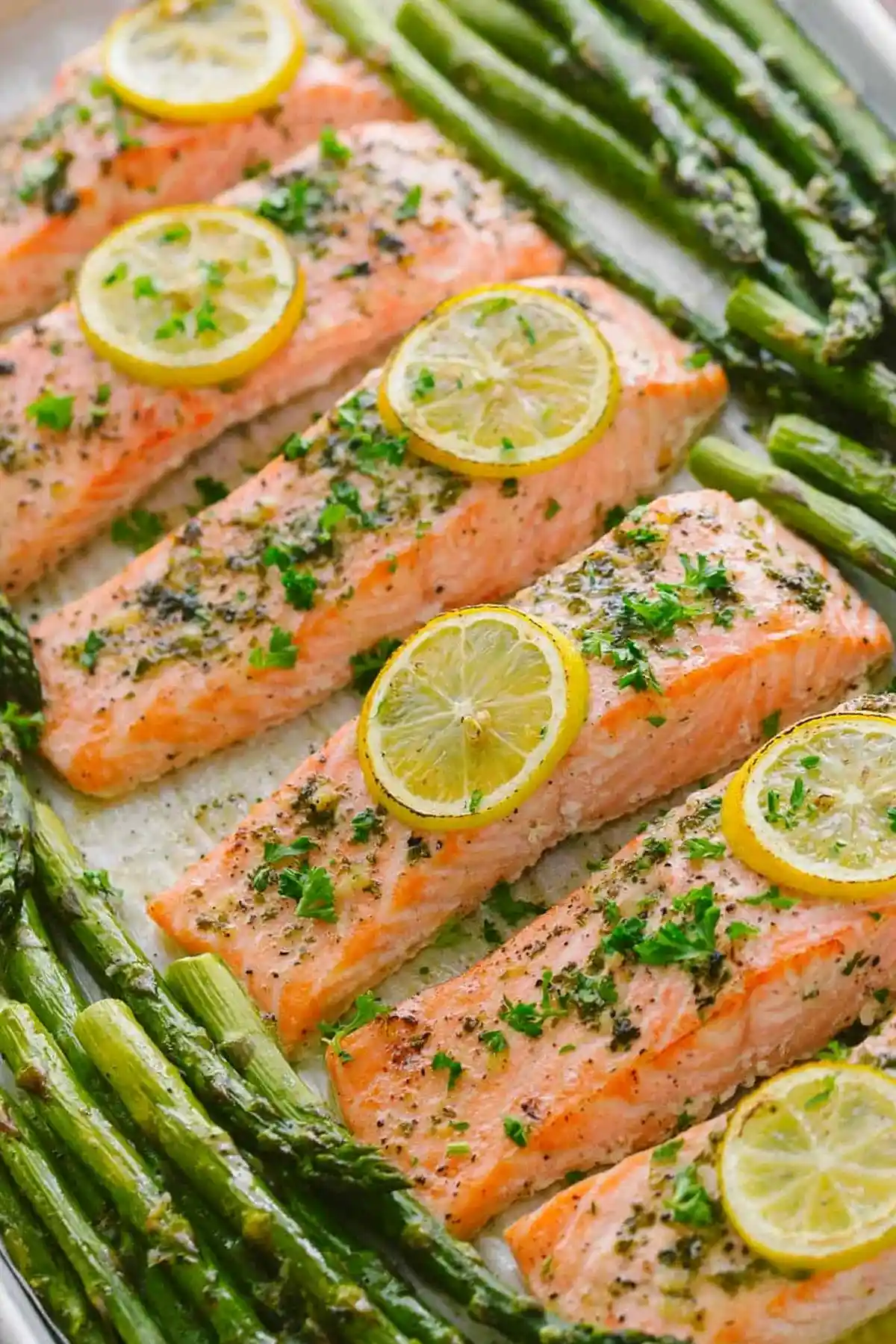
This simple sheet pan meal combines fresh salmon and crisp asparagus for a fast, healthy dinner. The lemon-garlic-herb butter adds a rich flavor that melts into the ingredients as they bake.
List of ingredients
- 2 lbs salmon filet – cut into six 6 oz portions.
- 2 lbs asparagus – fibrous ends removed.
- Salt and black pepper – added to taste.
- 1 Tbsp olive oil – for coating the asparagus.
- 1 small lemon – sliced into rings for garnish.
- 6 Tbsp unsalted butter – softened.
- 2 Tbsp fresh lemon juice – from 1 small lemon.
- 2 garlic cloves – pressed or minced.
- 2 Tbsp fresh parsley – finely chopped.
- 1 tsp salt – sea salt preferred.
- 1/4 tsp black pepper – for the butter mixture.
step-by-step instructions
- Prepare the Oven and Pan: Preheat your oven to 450°F with the rack positioned in the top third. Line a large rimmed baking sheet with parchment paper, trimming it to fit the pan edges to prevent charring under the broiler.
- Arrange the Ingredients: Place the salmon filets in a row down the center of the pan and arrange the trimmed asparagus on both sides. Drizzle the asparagus with olive oil, roll to coat, and season both the fish and vegetables with salt and pepper.
- Mix the Flavored Butter: In a medium bowl, mash together the softened butter, lemon juice, minced garlic, chopped parsley, salt, and black pepper using a fork. Alternatively, use a food processor for a smoother consistency.
- Apply the Topping: Spread about 3/4 of the flavored butter evenly over the salmon filets. Dab the remaining butter mixture over the asparagus spears.
- Bake and Broil: Top each filet with a lemon slice and bake uncovered at 450°F for 10-12 minutes. Switch the oven to BROIL for another 2-3 minutes to achieve a golden color.
- Check for Doneness: Ensure the salmon is flaky and has reached an internal temperature of 145°F using an instant-read thermometer.
Essential Cooking Tips
Use Parchment Paper for Easy Cleanup
Lining the pan with parchment paper prevents the salmon from sticking to the metal. It also makes cleanup significantly faster by catching the melted butter and juices.
Trim the Asparagus Correctly
Remove the woody, fibrous ends of the asparagus by snapping them or slicing them off. The bottom 1-2 inches are usually too tough to eat and should be discarded.
Ensure Even Salmon Portions
Cut your salmon into equal 6 oz portions so they all cook at the same rate. This prevents smaller pieces from drying out while larger ones remain undercooked.
Speed Up Butter Softening
If your butter is too cold, place the wrapped stick in a ziploc bag and submerge it in warm water for 10-15 minutes. This softens the butter without melting it completely, making it easier to mash.
Customizing Your Meal
Adjusting for Thin Asparagus
Thin asparagus spears cook much faster than thick ones and may overcook. Add them to the pan halfway through the baking process or cook them on a separate sheet.
Substituting the Herbs
While parsley is the standard, you can use fresh dill or chives for a different flavor profile. These herbs pair exceptionally well with the lemon and garlic base.
Adding Extra Vegetables
You can add sliced zucchini or cherry tomatoes to the pan for more color and nutrients. Ensure they are placed away from the salmon to allow for proper air circulation.
Choosing Different Salmon Types
Atlantic salmon is common and fatty, while Sockeye is leaner and more intense in flavor. Adjust your baking time slightly for leaner cuts to avoid overcooking.
Best Sides to Pair
Combine with Fluffy White Rice
White rice is a neutral accompaniment that absorbs the lemon-garlic butter from the pan. Use basmati or jasmine rice for a light, aromatic side dish.
Serve with Roasted Potatoes
Air fryer roasted potatoes or traditional oven-roasted cubes add a satisfying crunch. The starchiness of the potatoes balances the richness of the salmon.
Pair with a Creamy Risotto
Parmesan risotto adds a sophisticated touch for special occasions. The creaminess of the rice complements the acidity of the lemon butter perfectly.
Add a Fresh Garden Salad
A light salad with a vinaigrette helps cut through the richness of the butter. Use mixed greens, cucumbers, and a simple lemon-olive oil dressing.
Storage and Reheating Guidelines
Store Leftovers Properly
Place cooked salmon and asparagus in airtight containers and refrigerate them immediately. They will stay fresh and safe to eat for up to three days.
Avoid Overcooking During Reheating
Reheat salmon in the oven at 275°F until warmed through to maintain the moisture. Avoid using a high-power microwave setting, which can make the fish rubbery.
Restore Texture to Asparagus
Sauté leftover asparagus in a pan with a small amount of butter for a few minutes. This restores some of the original crispness that is often lost during refrigeration.
Freezing Considerations
While salmon can be frozen, the asparagus will lose its texture and become mushy. It is recommended to freeze only the salmon portions and cook fresh vegetables.
Troubleshooting Common Issues
Preventing Salmon from Drying Out
Avoid overcooking the fish by using a digital thermometer to hit exactly 145°F. If the fillets are very thin, reduce the baking time by 2-3 minutes.
Fixing Separated Butter
If the lemon juice causes the butter to separate, keep mashing with a fork or use an immersion blender. This forces the fats and liquids to emulsify into a smooth paste.
Handling Burnt Parchment
Ensure the parchment paper is trimmed and does not extend over the edges of the baking sheet. Paper that hangs over the edge can catch fire or char under the broiler.
Fixing Bland Vegetables
If the asparagus lacks flavor, spoon extra pan juices over the vegetables before serving. The melted herb butter contains the majority of the seasoning.
Frequently Asked Questions
Can I use frozen salmon for this recipe?
Yes, but you must thaw the salmon completely in the refrigerator before baking. Baking frozen fillets will lead to uneven cooking and a watery texture.
How do I know if the salmon is perfectly cooked?
The salmon should be opaque and flake easily with a fork. An internal temperature of 145°F is the safest and most reliable indicator of doneness.
Can I use a different oil for the asparagus?
You can substitute olive oil with avocado oil or melted coconut oil. Avocado oil is particularly good because it has a higher smoke point for high-heat roasting.
Is it possible to make this in an air fryer?
Yes, you can cook the salmon and asparagus in an air fryer at 400°F. Check them frequently, as the air fryer usually cooks faster than a traditional oven.
Do I have to use unsalted butter?
Unsalted butter is recommended so you can control the salt levels. If using salted butter, reduce the additional salt in the butter mixture by half.
Can I substitute the lemon juice?
Fresh lemon juice is best, but a high-quality bottled lemon juice can work in a pinch. Avoid using vinegar as it will change the flavor profile of the herb butter.
Print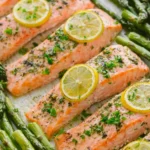
Easy Sheet Pan Salmon and Asparagus
- Total Time: 20 minutes
- Yield: 6 servings 1x
- Diet: Gluten Free, Keto
Description
A one-pan easy salmon dinner idea. The lemon-garlic-herb butter is GOLD!! It melts into the salmon and asparagus as it bakes and every bite is so flavorful.
Ingredients
- 2 lbs salmon filet, cut into six 6 oz portions
- 2 lbs asparagus, fibrous ends removed
- Salt and black pepper, added to taste
- 1 Tbsp olive oil
- 1 small lemon, sliced into rings for garnish
- 6 Tbsp unsalted butter, softened
- 2 Tbsp fresh lemon juice
- 2 garlic cloves, pressed or minced
- 2 Tbsp fresh parsley, finely chopped
- 1 tsp salt
- 1/4 tsp black pepper
Instructions
- Prep: Preheat oven to 450˚F with oven rack in top third. Line large rimmed baking sheet with parchment paper. Place salmon filets in a row down the center and arrange trimmed asparagus on the sides. Drizzle asparagus lightly with olive oil and roll to coat. Sprinkle both asparagus and salmon with salt and pepper.
- Make Flavored Butter: Mash together softened butter, lemon juice, garlic, parsley, salt, and black pepper. Spoon 3/4 of the flavored butter over the salmon and spread evenly, then dab the remaining butter over the asparagus.
- Bake: Top each salmon filet with a slice of lemon and bake uncovered at 450˚F for 10-12 minutes. Set oven to BROIL and bake another 2-3 minutes until salmon is flaky and reaches an internal temperature of 145˚F.
Notes
For thin asparagus, add it to the sheet pan halfway through baking to prevent overcooking. To soften butter quickly, place a wrapped stick in a ziploc bag and submerge in warm (100˚F) water for 10-15 minutes.
- Prep Time: 5 minutes
- Cook Time: 15 minutes
- Category: Main Course
- Method: Baking
- Cuisine: American
Nutrition
- Serving Size: 1 serving
- Calories: 374 kcal
- Sugar: 3 g
- Sodium: 460 mg
- Fat: 24 g
- Saturated Fat: 9 g
- Unsaturated Fat: 13 g
- Trans Fat: 0.5 g
- Carbohydrates: 8 g
- Fiber: 4 g
- Protein: 34 g
- Cholesterol: 113 mg
Keywords: salmon and asparagus, Salmon Asparagus, sheet pan salmon and asparagus