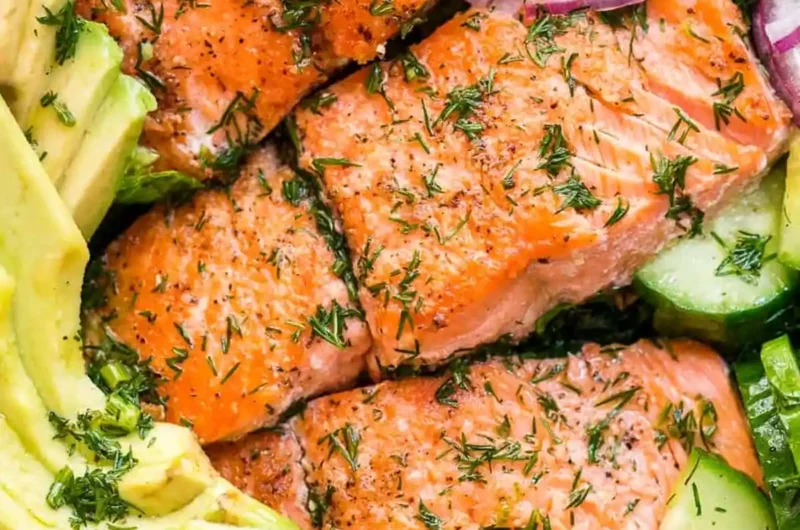
This nutrient-dense salad combines perfectly seared salmon fillets with a crisp blend of fresh vegetables. A bright lemon-dill dressing enhances the richness of the avocado and provides a refreshing finish. It is an ideal meal for those seeking a healthy, high-protein dinner that takes less than 30 minutes to prepare.
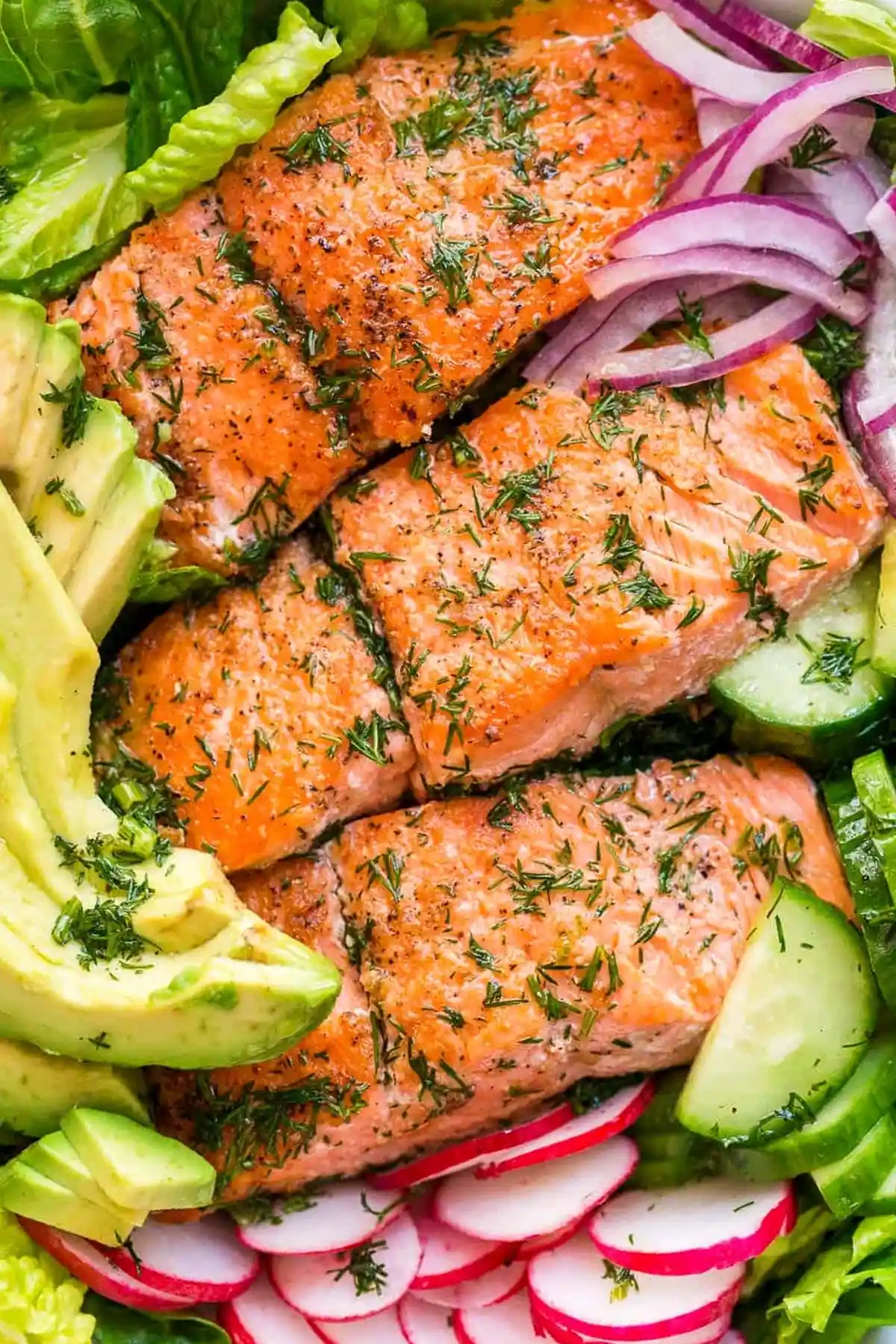
List of ingredients
- 1 lb salmon filets, boneless, skinless (Cut into 4 fillets) – ensures equal cooking time.
- 1 tsp garlic salt – adds a savory depth to the fish.
- 1/8 tsp freshly ground black pepper – provides a mild heat.
- 1/2 Tbsp olive oil – used for sautéing the fillets.
- 3 Tbsp lemon juice (from 2 medium lemons) – creates a bright, acidic base for the dressing.
- 3 Tbsp extra virgin olive oil – emulsifies with the lemon for a smooth texture.
- 2 Tbsp dill (finely chopped) – adds a classic herbal flavor to the salmon.
- 1 tsp sea salt – balances the acidity of the dressing.
- 1/8 tsp black pepper – adds a subtle spice to the dressing.
- 1 romaine lettuce (1 medium head or 6 cups chopped) – provides a crunchy, neutral base.
- 1/2 English cucumber (sliced) – adds hydration and freshness.
- 6 radishes (thinly sliced) – introduces a peppery crunch.
- 1/2 small red onion (1/2 cup thinly sliced) – offers a sharp, colorful contrast.
- 2 avocados (pitted, peeled and sliced) – adds creamy healthy fats to the bowl.
step-by-step instructions
- Prepare the dressing: In a small bowl, whisk together 3 Tbsp lemon juice, 3 Tbsp olive oil, 2 Tbsp dill, 1 tsp sea salt, and 1/8 tsp black pepper. Stir until well combined and set aside to allow flavors to meld.
- Season the salmon: Pat the salmon filets dry with a paper towel. Season both sides of each filet with 1 tsp garlic salt and 1/8 tsp pepper, adjusting to your taste preference.
- Sear the salmon: Heat 1/2 Tbsp oil in a large nonstick pan over medium heat. Once the oil is shimmering, add the salmon and cook for 3-4 minutes per side or until golden and cooked through.
- Finish the fish: Remove the salmon to a plate. Spoon 1 teaspoon of the prepared lemon dill dressing over each filet and set aside to cool to room temperature.
- Assemble the salad: In a large salad bowl, combine 6 cups of chopped romaine lettuce, sliced English cucumber, sliced radishes, 1/2 cup thinly sliced red onion, and sliced avocados.
- Toss and serve: Drizzle the remaining lemon dressing over the vegetables and toss gently to combine. Divide the salad between 4 plates and place one salmon filet on top of each.
Salmon Searing Techniques
Choosing the Right Salmon Cut
Select center-cut fillets for the most consistent thickness across all pieces. This ensures that every piece of salmon finishes cooking at the exact same time. Avoid fillets with significant tapering to prevent the thin ends from overcooking.
Achieving a Golden Crust
Pat the salmon fillets completely dry with paper towels before seasoning. Moisture on the surface of the fish creates steam, which prevents the proteins from browning. A dry surface allows for a crisp, golden-brown sear.
Preventing Overcooking
Use a meat thermometer to check the internal temperature of the salmon. Aim for 145 degrees Fahrenheit, or slightly lower if you prefer a more moist center. Remove the fish from the heat just before it reaches this temperature as it will continue to cook while resting.
Using a Non-Stick Pan
A high-quality non-stick pan is essential to prevent the delicate fish from tearing. Ensure the pan is fully preheated before adding the oil and the salmon. This creates an immediate sear that releases the fish easily from the surface.
Vegetable Preparation Tips
Keeping Romaine Crisp
Wash your romaine lettuce in cold water and use a salad spinner to remove all excess moisture. Wet leaves dilute the dressing and cause the salad to become soggy quickly. Store washed greens in a perforated bag with a paper towel to absorb moisture.
Slicing Radishes and Onions Thinly
Use a mandoline slicer or a very sharp chef’s knife to get translucent slices of radishes and red onion. Thin slices distribute the flavor more evenly throughout the salad without overpowering other ingredients. This also improves the overall texture and visual appeal.
Preventing Avocado Browning
Toss the sliced avocado in a small amount of the lemon dressing immediately after cutting. The citric acid in the lemon juice prevents oxidation, which keeps the avocados bright green. This is especially important if you are preparing the salad in advance.
Selecting English Cucumbers
Choose English cucumbers over standard garden cucumbers for their thinner skins and smaller seeds. This eliminates the need for peeling and reduces the amount of water released into the salad. They provide a more consistent crunch and a milder flavor.
Dressing Variations and Enhancements
Adding Honey for Balance
If the lemon dressing feels too tart, stir in one teaspoon of honey or maple syrup. The sweetness balances the acidity of the lemon and the saltiness of the garlic. This creates a more complex flavor profile that complements the fatty salmon.
Using Fresh vs Dried Dill
Fresh dill provides a bright, citrusy aroma that is superior for raw dressings. If you must use dried dill, reduce the quantity by half as the flavor is more concentrated. Fresh herbs always yield a more vibrant and professional result.
Adjusting the Acidity
For a tangier dressing, replace one tablespoon of lemon juice with apple cider vinegar. This adds a fermented depth to the flavor that cuts through the creaminess of the avocado. Taste the dressing frequently and adjust the acid levels to your preference.
Adding a Garlic Punch
Whisk a small amount of freshly minced garlic into the dressing for extra depth. This complements the garlic salt used on the salmon and ties the whole dish together. Let the dressing sit for 10 minutes after adding garlic to let the flavors infuse.
Serving and Presentation Ideas
Plating for a Dinner Party
Use wide, shallow bowls instead of flat plates to keep the salad ingredients contained. Place the salmon fillet centrally on top of the greens for a professional look. Garnish with an extra sprig of fresh dill or a lemon wedge on the side.
Serving as a Meal-Prep Bowl
Pack the salad components in separate containers to maintain freshness. Keep the greens and vegetables together and store the salmon and dressing in separate airtight containers. Combine all elements only at the time of consumption.
Pairing with Side Grains
Serve this salad alongside a scoop of cooked quinoa or farro for extra heartiness. The grains soak up the excess lemon-dill dressing and add complex carbohydrates to the meal. This transforms the dish from a light lunch into a filling dinner.
Garnishing with Seeds
Sprinkle toasted sesame seeds or hemp seeds over the top of the finished dish. These seeds add a nutty flavor and an extra layer of textural contrast. They also provide additional omega-3 fatty acids to the meal.
Storage and Freshness Guide
Storing the Dressing Separately
Keep the lemon-dill dressing in a glass jar in the refrigerator for up to five days. Shake the jar vigorously before each use to re-emulsify the olive oil and lemon juice. This prevents the ingredients from separating during storage.
Storing Cooked Salmon
Place cooked salmon fillets in an airtight container and refrigerate immediately after they reach room temperature. The salmon will stay fresh for 3 to 4 days in the fridge. Avoid freezing cooked salmon as it can change the texture and make it dry.
Managing the Salad Greens
Store chopped romaine in a large container lined with damp paper towels. This keeps the lettuce hydrated while preventing it from sitting in pools of water. Keep the container tightly sealed to avoid wilting from fridge airflow.
Reviving the Salad for Day Two
If the salad has been stored and seems flat, add a fresh squeeze of lemon juice. This reactivates the flavors and brightens the taste of the vegetables. Toss gently to redistribute the dressing before serving.
Reheating and Serving Temperature
Warming the Salmon
If serving the salmon warm, use a low-heat oven at 275 degrees Fahrenheit for a few minutes. Avoid using a high-power microwave, which can make the fish rubbery and overcooked. Gently warm the fillet just until it is lukewarm.
Keeping the Salad Chilled
Place your serving bowls in the freezer for 10 minutes before assembling the salad. This keeps the romaine and cucumbers crisp and refreshing. The contrast between the chilled salad and the room-temperature salmon is highly desirable.
Room Temperature Serving
Allow the salmon to cool to room temperature before placing it on the greens. Putting steaming hot fish directly on lettuce will cause the leaves to wilt instantly. This ensures the structural integrity of the salad remains intact.
Common Troubleshooting
Salmon Sticking to the Pan
If the salmon sticks, it is usually because the pan was not hot enough or the fish was moved too soon. Wait for the fish to naturally release from the pan once a crust has formed. Ensure you are using a sufficient amount of oil for the sauté.
Dressing Separating
Natural vinaigrettes separate over time as oil and acid do not naturally mix. Use a whisk or a closed jar to shake the dressing immediately before drizzling. Adding a tiny bit of mustard can help act as an emulsifier to keep it stable.
Bland Flavors
If the salad tastes bland, increase the sea salt or add an extra tablespoon of lemon juice. The acidity of the lemon acts as a flavor enhancer for all the other ingredients. Always taste a small leaf of the dressed salad before plating.
Soggy Lettuce
Sogginess occurs when the dressing is added too early or the greens are not dried. Only add the dressing seconds before serving the salad to the table. Ensure the romaine has been properly spun dry after washing.
Frequently Asked Questions
Can I use frozen salmon?
Yes, you can use frozen salmon fillets. Thaw them completely in the refrigerator overnight and pat them very dry with paper towels before seasoning and searing.
What is the best substitute for dill?
If you do not have dill, fresh parsley or chives are excellent alternatives. These herbs provide a similar fresh, green flavor that pairs well with lemon and salmon.
Can I use a different lettuce?
You can replace romaine with baby spinach, arugula, or a spring mix. Arugula will add a peppery note, while spinach provides a softer texture and more iron.
How do I know when the salmon is done?
The salmon is cooked through when it flakes easily with a fork and the center is opaque. The internal temperature should reach 145 degrees Fahrenheit for food safety.
Print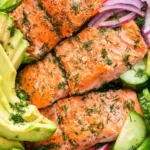
Fresh Avocado and Pan-Seared Salmon Salad
- Total Time: 25 minutes
- Yield: 4 servings 1x
- Diet: Pescatarian
Description
This avocado salmon salad is loaded with all of the best salad ingredients; crisp cucumber and lettuce, and juicy pan seared salmon. The lemon dill dressing is so easy and gives this salad amazing fresh flavor.
Ingredients
- 1 lb boneless, skinless salmon filets, cut into 4 fillets
- 1 tsp garlic salt
- 1/8 tsp freshly ground black pepper
- 1/2 Tbsp olive oil
- 3 Tbsp lemon juice
- 3 Tbsp extra virgin olive oil
- 2 Tbsp finely chopped dill
- 1 tsp sea salt
- 1/8 tsp black pepper
- 1 medium head romaine lettuce, chopped (6 cups)
- 1/2 English cucumber, sliced
- 6 radishes, thinly sliced
- 1/2 small red onion, thinly sliced (1/2 cup)
- 2 avocados, pitted, peeled and sliced
Instructions
- Step: In a small bowl, whisk together 3 Tbsp lemon juice, 3 Tbsp olive oil, 2 Tbsp dill, 1 tsp sea salt and 1/8 tsp black pepper; stir and set aside.
- Step: Season both sides of salmon filets with 1 tsp garlic salt and 1/8 tsp pepper.
- Step: Heat 1/2 Tbsp oil in a large nonstick pan over medium heat, add salmon and cook 3-4 minutes per side until golden and cooked through.
- Step: Remove salmon to a plate, spoon 1 teaspoon of the dressing over each filet, and set aside to cool to room temperature.
- Step: Arrange 6 cups romaine lettuce, sliced English cucumber, sliced radishes, 1/2 cup thinly sliced red onion, and sliced avocados in a salad bowl.
- Step: Drizzle with remaining lemon dressing, toss to combine, divide between 4 plates and top each plate with a salmon filet.
Notes
For variety, the cooked salmon can be broken into bite-sized chunks and tossed into the salad. To keep the vegetables crisp, do not add the dressing until ready to serve.
- Prep Time: 22 minutes
- Cook Time: 8 minutes
- Category: Salad
- Method: Pan-Searing
- Cuisine: American
Nutrition
- Serving Size: 1 serving
- Calories: 440 kcal
- Sugar: 2 g
- Sodium: 1224 mg
- Fat: 33 g
- Saturated Fat: 4 g
- Unsaturated Fat: 29 g
- Trans Fat: 0 g
- Carbohydrates: 12 g
- Fiber: 7 g
- Protein: 25 g
- Cholesterol: 62 mg
Keywords: Avocado Salmon Salad