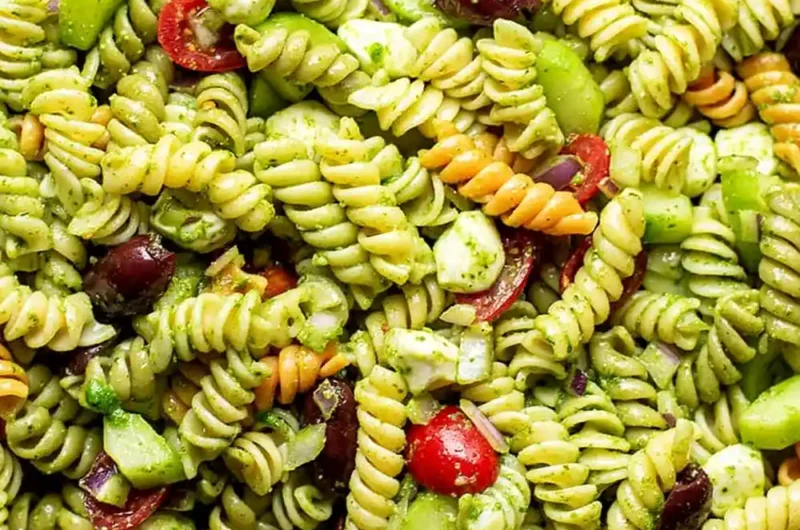
This vibrant pesto pasta salad combines tender rotini with the bold, herbaceous punch of fresh basil pesto and the creamy indulgence of mozzarella pearls. It serves as an ideal side dish for outdoor gatherings or as a light lunch, offering a perfect balance of textures through crisp cucumbers, juicy cherry tomatoes, and briny kalamata olives. Making your own pesto elevates the flavor profile significantly, though high-quality store-bought varieties can be used when time is limited. With its bright colors and crowd-pleasing taste, this dish remains a staple for anyone seeking a quick, fresh, and consistently delicious meal.
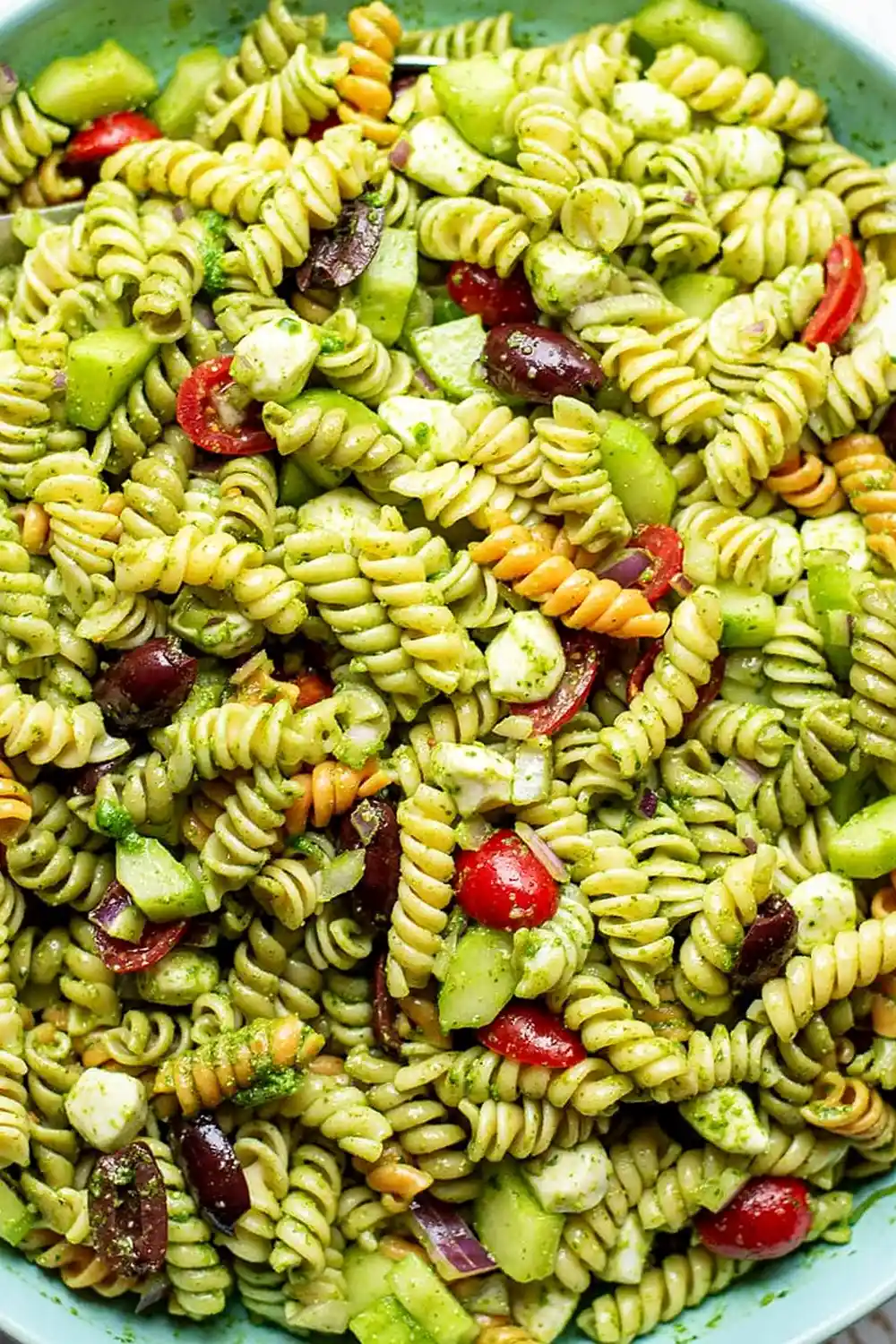
List of ingredients
- 1 pound regular or tricolor rotini
- 8 ounces fresh mozzarella pearls
- 1 cup basil pesto
- 1 medium cucumber, quartered and chopped
- 1 cup cherry tomatoes, halved
- 1 cup chopped red onion
- 1/2 cup pitted kalamata olives
- 3 cups loosely packed basil leaves
- 3 tablespoons pine nuts
- 2 garlic cloves
- 2/3 cup grated parmesan cheese
- 2/3 cup olive oil
- Salt and pepper to taste
step-by-step instructions
- Step: Bring a large pot of salted water to a boil. Cook pasta al dente. Strain and rinse with cool water. Place in a large bowl.
- Step: Combine all pesto ingredients except for the olive oil in a food processor or blender. Blend/pulse until mixed and smooth. With the motor running, add olive oil in a slow stream until combined.
- Step: Add all remaining ingredients to the pasta bowl and toss until fully coated in pesto sauce. Start with about 1 cup and add more to taste. Add additional olive oil if the sauce is too thick.
Practical tips for handling pasta
Choosing the right pasta shape is essential for a high-quality salad. Rotini, with its spiral structure, acts as a vessel for the pesto, trapping the thick sauce in every crevice and ensuring each bite is flavorful. Avoid using long, thin noodles like spaghetti or linguine, as they tend to tangle and clump, making it difficult to distribute the chopped vegetables and cheese pearls uniformly throughout the serving bowl. Ensure the water remains at a high, rolling boil before adding the pasta to prevent a gummy texture, which often occurs when the water temperature drops significantly upon the addition of the grain.
Preventing pasta from becoming mushy
The secret to a perfect texture lies in rinsing the pasta immediately after draining. This step is non-negotiable for cold pasta salads, as it removes the excess surface starch that would otherwise cause the pasta to turn sticky and soft as it sits in the dressing. By cooling the rotini quickly, you maintain the structural integrity of the noodle, keeping it firm and satisfying to chew even after the salad has been refrigerated for several hours.
Ensuring optimal ingredient distribution
When preparing your vegetables, consistency in size is key to achieving a professional-looking and tasting salad. By cutting your cucumbers and mozzarella to match the size of the rotini, you guarantee that every forkful contains a variety of textures. Use a sharp knife for the cherry tomatoes to avoid crushing them, as you want the juice to remain inside the skins rather than leaking out and thinning your pesto sauce too early.
Substitutions and ingredient adjustments
This recipe is highly adaptable and can be easily modified to suit your pantry inventory or dietary needs. If you do not have pine nuts, walnuts or toasted sunflower seeds offer a similar texture and earthy flavor profile that works beautifully in homemade basil pesto. For a creamier overall result, you can substitute a portion of the olive oil with a dollop of Greek yogurt, which introduces a subtle tang that complements the sharp parmesan and fresh basil perfectly.
Modifying the aromatic base
If you find red onions too sharp, try using shallots instead. Shallots have a more refined, sweet flavor that provides depth without the intense pungency associated with raw red onion. For those who find garlic overpowering, try using garlic-infused olive oil instead of raw cloves, which yields a more mellow, consistent flavor throughout the sauce without the risk of biting into a sharp chunk of raw garlic.
Choosing alternative cheeses
While fresh mozzarella pearls are ideal for this dish, you can substitute them with cubed bocconcini or even small cubes of feta if you prefer a saltier profile. Feta adds a sharp, acidic punch that cuts through the richness of the pesto, creating a bolder Mediterranean influence. If using feta, ensure you reduce the amount of salt added to the final dish, as the cheese will contribute a significant amount of sodium.
Effective storage and advance preparation
Pesto pasta salad is a fantastic option for meal prep because the flavors actually improve as they sit, allowing the pasta to absorb the aromatic oils from the basil. To store, keep the salad in an airtight container in the coldest part of your refrigerator. To keep the basil from turning dark, press a piece of plastic wrap directly onto the surface of the leftover salad before securing the lid, which limits the amount of air exposure that leads to oxidation.
Managing shelf life
While the salad will stay fresh for up to three days, it is best enjoyed within the first 24 hours. Because fresh basil is highly perishable, the bright green color of the sauce will naturally dull over time. This does not necessarily mean the salad has spoiled, but the freshness of the herb aroma will decrease as the days pass. If you plan to serve this for a party, it is best to mix the pesto and vegetables into the pasta no more than four hours before the event to ensure maximum visual appeal.
Reheating concerns
This dish is specifically intended to be served cold or at room temperature. It is strongly recommended that you do not attempt to reheat the salad, as the heat will cause the mozzarella pearls to melt and the pesto to separate, resulting in a greasy, clumpy mess. If you prefer your pasta warm, you should reserve some plain, cooked pasta and toss it with the sauce immediately before serving, rather than mixing it with the cold vegetables and cheese in advance.
FAQs
Can I freeze this pasta salad?
Freezing this salad is not recommended. The texture of the fresh mozzarella changes significantly after being frozen, becoming rubbery and losing its soft, milky quality. Additionally, the vegetables, specifically the cucumbers and tomatoes, will release a large amount of water upon thawing, resulting in a soggy, diluted dish that lacks the vibrant flavor of the original mixture.
How do I stop my pesto from turning brown?
Oxidation is the enemy of fresh pesto. To maintain the bright green color, ensure your basil is thoroughly dried after washing, as any residual moisture can lead to rapid browning. Additionally, you can add a small squeeze of fresh lemon juice to the pesto blend; the acid helps preserve the bright color of the herbs while also adding a necessary brightness to the final salad profile.
Can I use dried basil if fresh is unavailable?
Dried basil does not have the same aromatic oils or vibrant color as fresh leaves, and it will not yield the same result for a pesto-based salad. If you cannot find fresh basil, it is better to purchase a high-quality, pre-made refrigerated pesto from the grocery store deli section rather than attempting to construct a sauce with dried herbs. The flavor intensity required for this dish relies almost entirely on the freshness of the basil.
Is it okay to use a different type of olive oil?
Always use the best quality extra virgin olive oil you can find for this recipe. Because the oil makes up a significant portion of the sauce, a low-quality or rancid oil will be immediately noticeable. Avoid using refined oils or light cooking oils, as they lack the fruity, peppery notes that contrast effectively with the salty parmesan and fragrant garlic found in the pesto.
What is the purpose of the pasta water?
While this recipe instructs you to drain the pasta, keeping a small amount of starchy pasta water can be helpful if your pesto is too thick. If you add a tablespoon or two of this liquid to the pesto as you toss it with the pasta, the starch helps the sauce emulsify and cling better to the rotini. This results in a more cohesive dish where the sauce feels like a proper dressing rather than a separate component coating the ingredients.
Print
Fresh Basil Pesto Pasta Salad
- Total Time: 20 minutes
- Yield: 10 servings 1x
- Diet: Vegetarian
Description
A simple rotini pasta salad recipe made with fresh basil pesto as the dressing. Cucumber, kalamata olives, red onion, cherry tomatoes, and fresh mozzarella all come together for a fresh and flavorful side dish.
Ingredients
- 1 pound regular or tricolor rotini
- 8 ounces fresh mozzarella pearls
- 1 cup basil pesto
- 1 medium cucumber, quartered and chopped
- 1 cup cherry tomatoes, halved
- 1 cup chopped red onion
- 1/2 cup pitted kalamata olives
- 3 cups loosely packed basil leaves
- 3 tablespoons pine nuts
- 2 garlic cloves
- 2/3 cup grated parmesan cheese
- 2/3 cup olive oil
- Salt and pepper to taste
Instructions
- Step: Bring a large pot of salted water to a boil. Cook pasta al dente. Strain and rinse with cool water. Place in a large bowl.
- Step: Combine all pesto ingredients except for the olive oil in a food processor or blender. Blend/pulse until mixed and smooth. With the motor running, add olive oil in a slow stream until combined.
- Step: Add all remaining ingredients to the pasta bowl and toss until fully coated in pesto sauce. Start with about 1 cup and add more to taste. Add additional olive oil if the sauce is too thick.
Notes
Pesto can be made a day in advance and stored in the fridge in a tightly sealed container. Keep plastic wrap pressed directly against the surface of the pesto to prevent browning.
- Prep Time: 10 minutes
- Cook Time: 10 minutes
- Category: Side
- Method: Boiling/Blending
- Cuisine: Italian
Nutrition
- Serving Size: 1 serving
- Calories: 334 kcal
- Sugar: 3.1 g
- Sodium: 321 mg
- Fat: 15.2 g
- Saturated Fat: 4.1 g
- Unsaturated Fat: 11.1 g
- Trans Fat: 0 g
- Carbohydrates: 35.7 g
- Fiber: 4.1 g
- Protein: 14.3 g
- Cholesterol: 32 mg
Keywords: pasta salad, pesto, vegetarian, side dish, Italian