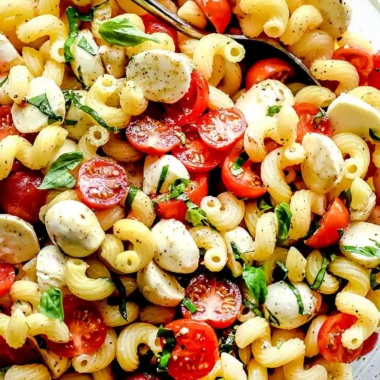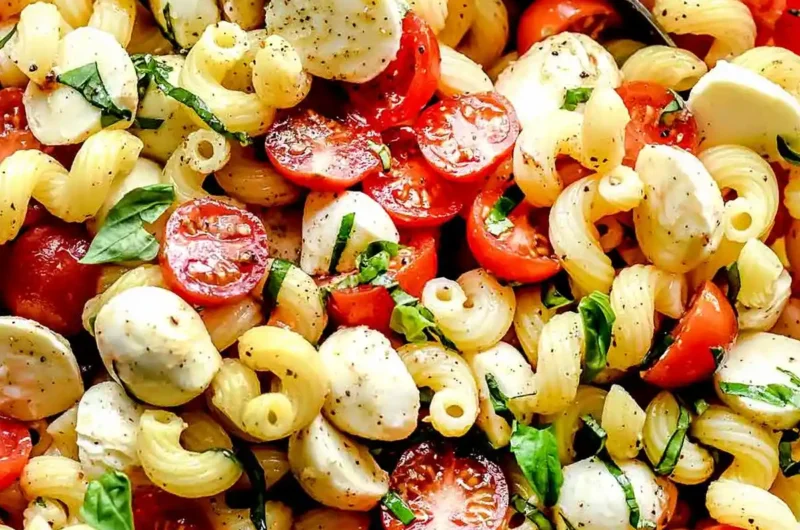
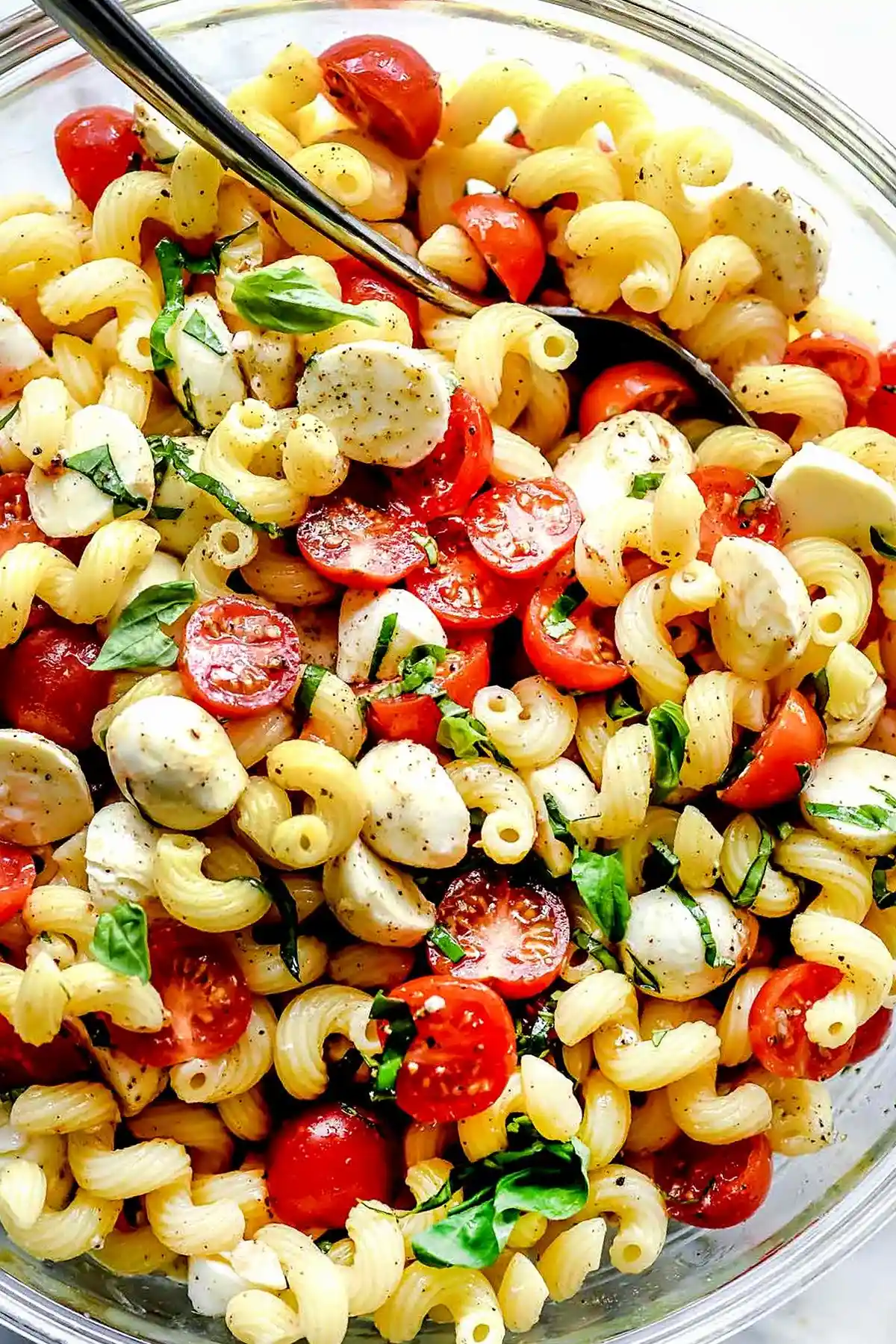
This quick and refreshing pasta salad brings together classic Italian flavors in under 30 minutes. It is an ideal side dish for summer gatherings or a light main course.
List of ingredients
- 1 pound short pasta – use fusilli, orecchiette, or penne for the best texture.
- 16 ounces mozzarella balls – ciliegine or pearls work best.
- 3 cups cherry tomatoes – sliced in half.
- 1/2 cup fresh basil – slivered into thin strips.
- 1/3 cup extra virgin olive oil – use a high-quality oil for finishing.
- 3 tablespoons white balsamic vinegar – provides a sweet, light color.
- 1 teaspoon kosher salt – plus additional salt for the boiling pasta water.
- 1 teaspoon freshly ground black pepper – for a sharp, aromatic spice.
- 1 garlic clove – pressed or finely minced.
step-by-step instructions
- Cook the Pasta: Bring a large pot of water to a boil and season it generously with kosher salt. Add the short pasta and cook until it reaches an al dente texture. Drain the pasta in a colander and rinse it lightly with cold water to stop the cooking process and prevent sticking. Set it aside to cool completely.
- Prepare the Produce: While the pasta is cooking, drain the mozzarella balls and cut them in half. Slice the cherry tomatoes in half. Place both the tomatoes and mozzarella into a large mixing bowl.
- Combine Base Ingredients: Add the cooled pasta and the slivered fresh basil to the bowl with the tomatoes and cheese.
- Make the Dressing: In a small bowl or a mason jar with a lid, combine the extra virgin olive oil, white balsamic vinegar, pressed garlic, 1 teaspoon of kosher salt, and black pepper. Shake or whisk the mixture until well emulsified.
- Final Toss: Drizzle the dressing over the pasta mixture. Toss all ingredients gently to ensure every piece is evenly coated. Taste and adjust the seasoning if necessary. For best results, let the salad sit for 30 minutes before serving.
Pasta Shape Selection Guide
Using Fusilli or Rotini for Maximum Sauce Adherence
Spiral pastas like fusilli or rotini are excellent choices for this recipe. The twists and grooves capture the dressing and small bits of garlic and pepper more effectively than smooth pastas. This ensures a more consistent flavor in every bite.
Choosing Orecchiette for Ingredient Pockets
Orecchiette, which translates to “little ears,” provides a unique concave shape. These small pockets are perfect for holding a halved cherry tomato or a pearl of mozzarella. This creates a balanced distribution of ingredients throughout the bowl.
Utilizing Penne for a Classic Texture
Penne is a sturdy option that maintains its structure well even after being refrigerated. The hollow center allows some of the balsamic dressing to seep inside the noodle. It is a great choice if you plan to serve the salad several hours after preparation.
Considering Farfalle for Visual Appeal
Farfalle, or bow-tie pasta, adds a decorative element to the salad. While it has less surface area for the dressing compared to spirals, it provides a pleasant chew. It is often preferred for formal potlucks or catered events.
Ingredient Optimization and Selection
The Advantage of White Balsamic Vinegar
White balsamic vinegar is preferred over traditional dark balsamic to keep the salad looking bright and fresh. It offers a similar tang and sweetness but does not stain the mozzarella or pasta brown. This preserves the vibrant red, white, and green aesthetic of the Caprese style.
Selecting the Right Mozzarella
Fresh mozzarella stored in water is the best choice for this dish. Ciliegine or pearl-sized balls are convenient and provide the correct ratio of cheese to pasta. If you only have a log of fresh mozzarella, dice it into small, uniform cubes to mimic the pearl shape.
Choosing Vine-Ripened Cherry Tomatoes
For the best flavor, use vine-ripened cherry tomatoes that have a natural sweetness. If you are cooking outside of the summer season, look for grape tomatoes as a consistent alternative. Slicing them in half allows their juices to mingle with the dressing, enhancing the overall taste.
Properly Preparing Fresh Basil
Slivering basil into thin ribbons, known as chiffonade, maximizes the release of aromatic oils. To prevent the basil from bruising or turning black, use a very sharp knife and avoid over-chopping. Add the basil at the very end to maintain its bright green color.
Dressing Emulsification and Flavor
Using a Mason Jar for Mixing
Shaking the dressing in a mason jar is the most efficient way to emulsify the oil and vinegar. The vigorous motion breaks the oil into smaller droplets, creating a stable mixture that clings better to the pasta. This prevents the oil from separating and pooling at the bottom of the bowl.
The Role of Pressed Garlic
Pressing the garlic clove creates a paste that distributes more evenly than roughly chopped garlic. This ensures that no single bite has an overwhelming amount of raw garlic. The fine texture allows the flavor to infuse into the oil and vinegar more quickly.
Adjusting Salt and Pepper Balance
Since the amount of salt in pasta water varies, always taste the final salad before serving. If the flavors feel muted, a small pinch of extra salt can brighten the tomatoes. Freshly ground black pepper is essential for adding a woody depth that complements the sweetness of the balsamic.
Selecting Extra Virgin Olive Oil
A light and fruity extra virgin olive oil is best for raw applications like salad dressings. Avoid heavily roasted or pungent oils that might overpower the delicate flavor of the fresh basil. The oil acts as the carrier for the garlic and acid, rounding out the dish.
Protein Pairings and Serving Ideas
Adding Grilled Chicken for a Main Course
To turn this side dish into a full meal, add sliced grilled chicken breast. Season the chicken with salt, pepper, and a touch of dried oregano before grilling. Toss the warm or cooled chicken into the salad for added protein and satiety.
Incorporating Sautéed Shrimp
Garlic-sautéed shrimp pair exceptionally well with the Caprese flavors. Ensure the shrimp are cooked through and chilled slightly before adding them to the pasta. This adds a luxurious texture and a boost of omega-3 fatty acids.
Complementing with Grilled Salmon
Serving the pasta salad alongside a fillet of grilled salmon creates a sophisticated meal. The acidity of the balsamic dressing cuts through the richness of the salmon. You can also flake the cooked salmon directly into the salad for a integrated seafood pasta.
Pairing with Light Sandwiches
This salad works well as a side for turkey burgers or tuna melts. The freshness of the tomatoes and basil provides a cooling contrast to toasted bread and melted cheese. It is also a great accompaniment to a simple garden salad.
Storage and Preservation Methods
Refrigeration Guidelines
Store the assembled pasta salad in an airtight container in the refrigerator for up to three days. Ensure the lid is tight to prevent the salad from absorbing other odors from the fridge. Keep it chilled until the moment of serving to maintain food safety.
Managing Basil Oxidation
Basil leaves naturally oxidize and turn dark when exposed to air and acid over time. To keep the salad looking fresh for longer, you can stir in a fresh handful of slivered basil right before serving. This restores the vibrant green color and fresh scent.
Preventing Pasta from Drying Out
Pasta tends to absorb the dressing as it sits in the refrigerator, which can leave the salad feeling dry. If the salad seems dry on day two, drizzle a small amount of extra olive oil or white balsamic vinegar over it. Toss gently to redistribute the moisture.
Make-Ahead Preparation Steps
For the best texture, prep the vegetables and dressing up to 24 hours in advance. Keep the dressing in a separate jar and the sliced produce in a container. Combine everything with the cooked pasta only an hour before serving to prevent the noodles from becoming too soft.
Common Troubleshooting
Solving the Issue of Sticky Pasta
If your pasta clumps together after cooking, it is likely due to residual surface starch. Rinsing the pasta under cold water removes this starch and cools the noodles instantly. This is a critical step for pasta salads, unlike hot pasta dishes where starch helps sauces cling.
Reducing Excess Moisture in the Salad
Watery pasta salad often occurs if the mozzarella is not drained properly. Always pat the mozzarella pearls dry with a paper towel after draining. Additionally, avoid adding the tomatoes too early if you are prepping the salad many hours in advance.
Fixing a Bland Dressing
If the dressing lacks punch, check the acidity level. Adding an extra teaspoon of white balsamic vinegar can wake up the other flavors. A small amount of lemon zest can also add a bright, citrusy note that complements the basil.
Preventing Overcooked Pasta
Pasta that is too soft will break apart when tossed with heavy ingredients like mozzarella and tomatoes. Always cook the pasta 1-2 minutes less than the package directions. This ensures it remains al dente and holds its shape throughout the mixing process.
Frequently Asked Questions
Can I substitute the mozzarella with another cheese?
Yes, you can use a high-quality chunky feta or goat cheese if mozzarella is unavailable. Feta will add a saltier, tangier profile, while goat cheese provides a creamier, earthier taste. Keep in mind that these will change the traditional Caprese flavor profile.
Should the cherry tomatoes be left whole?
It is recommended to slice the tomatoes in half. This prevents the tomatoes from popping or “exploding” when you bite into them. Slicing also allows the balsamic dressing to penetrate the tomato and distribute the juice throughout the salad.
Can I use regular balsamic vinegar instead of white?
You can use regular balsamic vinegar, but it will significantly change the appearance of the dish. The dark color will stain the pasta and the mozzarella balls a brownish hue. The flavor will also be more intense and caramelized compared to the light sweetness of white balsamic.
Is it possible to freeze this pasta salad?
No, this salad does not freeze well. The fresh mozzarella will change texture and become rubbery, and the fresh basil will turn black. The tomatoes will also lose their structure and become mushy upon thawing.
Print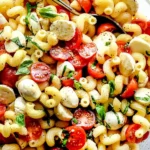
Fresh Caprese Pasta Salad
- Total Time: 25 minutes
- Yield: 10 servings 1x
- Diet: Vegetarian
Description
Ready in under 30 minutes, this easy caprese pasta salad is loaded with mini mozzarella pearls, fresh basil, and juicy cherry tomatoes.
Ingredients
- 1 pound short pasta (such as fusilli, orrechiette, or penne)
- 16 ounces mozzarella balls (ciliegine or pearls)
- 3 cups cherry tomatoes
- 1/2 cup slivered fresh basil
- 1/3 cup extra virgin olive oil
- 3 tablespoons white balsamic vinegar
- 1 teaspoon kosher salt (plus more for salting the pasta water)
- 1 teaspoon freshly ground black pepper
- 1 garlic clove, pressed or minced
Instructions
- Step 1: Bring a pot of water to a boil and season generously with kosher salt. Add the pasta and cook just until al dente. Drain in a colander and rinse lightly with cold water. Set aside to cool.
- Step 2: While the pasta is cooking, drain the mozzarella balls then cut in half. Slice the cherry tomatoes in half and add to a mixing bowl with the mozzarella balls. Add the cooled pasta and slivered basil.
- Step 3: In a small bowl or mason jar with a lid, add the olive oil, white balsamic vinegar, garlic, 1 teaspoon of kosher salt, and freshly ground black pepper. Mix well then drizzle over the pasta. Toss to coat and taste for seasoning.
Notes
The salad is best after about 30 minutes and can be refrigerated for 3 days. Add diced chicken or cooked shrimp to make this an all-in-one meal.
- Prep Time: 15 minutes
- Cook Time: 10 minutes
- Category: Salad
- Method: Boiling, Mixing
- Cuisine: Italian
Nutrition
- Serving Size: 1 serving
- Calories: 359 kcal
- Sugar: 3 g
- Sodium: 274 mg
- Fat: 18 g
- Saturated Fat: 4 g
- Unsaturated Fat: 14 g
- Trans Fat: 0 g
- Carbohydrates: 37 g
- Fiber: 2 g
- Protein: 15 g
- Cholesterol: 16 mg
Keywords: caprese pasta salad, balsamic vinegar, basil, mozzarella, tomatoes