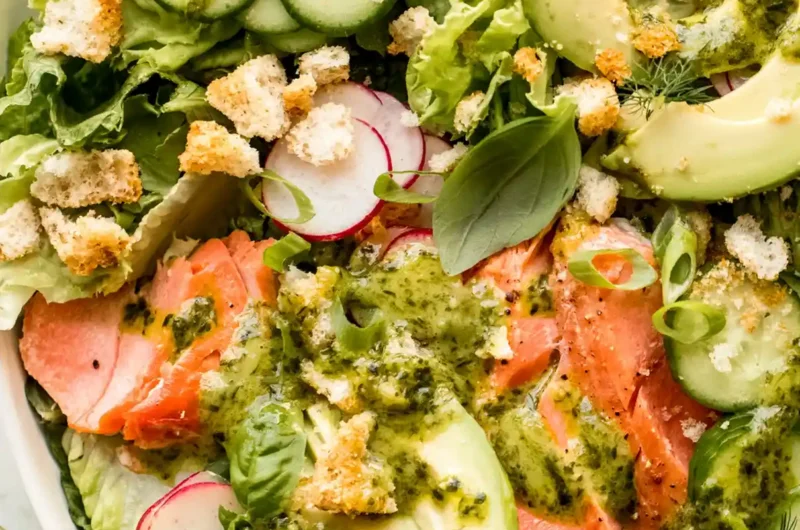
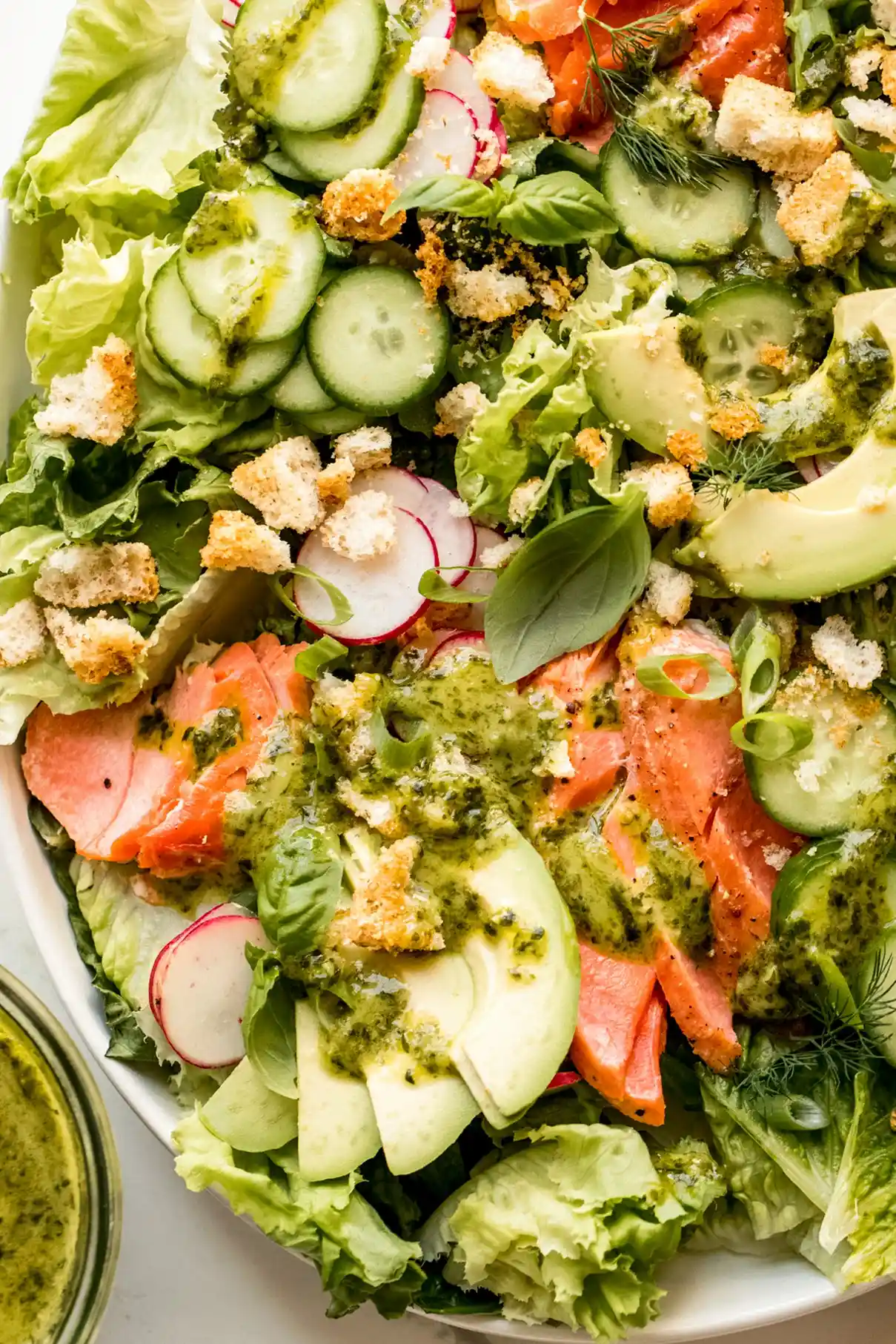
This nutrient-dense salad combines warm roasted salmon with refreshing spring vegetables and creamy avocado. It is an ideal all-in-one meal that works perfectly for a healthy lunch or a light dinner.
List of ingredients
- 1 lb salmon fillet, with or without skin – the main protein source.
- Olive oil – for roasting and moisture.
- Kosher salt and fresh ground black pepper – for basic seasoning.
- Fresh lemon, optional – to add a bright citrus note.
- 2-3 heads romaine lettuce, about 8 cups chopped – provides a crisp base.
- 5 radishes, thinly sliced – adds a peppery crunch.
- 2 Persian cucumbers or 1/2 seedless cucumber, thinly sliced – adds freshness.
- 1 large ripe avocado, sliced or chopped – provides creaminess.
- 1/2 – 1 cup croutons – adds a toasted texture.
- 2 green onions, sliced – provides a mild onion flavor.
- Fresh chopped dill, to taste – adds a herby aroma.
- Fresh chopped basil, to taste – adds a sweet, peppery note.
- Cilantro Vinaigrette – for the final flavor layer.
step-by-step instructions
- Prepare the oven and pan: Preheat your oven to 425F and line a baking sheet with parchment paper for easy cleanup.
- Season the fish: Pat the salmon fillet dry with paper towels, drizzle it with olive oil to coat, and season generously with salt and pepper.
- Bake the salmon: Place the salmon skin-side down and bake for 10-12 minutes, or until the fish is cooked through and flakes easily with a fork.
- Finish the protein: Remove the salmon from the oven and optionally squeeze fresh lemon juice over the top for extra brightness.
- Flake the salmon: Use a fork to lightly break the salmon into bite-size chunks and let it cool slightly before adding to the salad.
- Assemble the base: In a large serving bowl or on a platter, combine the chopped romaine, sliced radishes, sliced cucumbers, avocado, croutons, and green onions.
- Combine and serve: Top the vegetable mixture with the flaked salmon, fresh dill, and basil, then drizzle the cilantro vinaigrette over everything.
Professional Salmon Selection Guide
Wild-Caught Salmon Options
Wild Alaskan salmon is caught in the open ocean and typically has a more intense flavor. It is often leaner than farmed varieties and provides a distinct taste that pairs well with acidic dressings.
Farmed Salmon Characteristics
Farmed salmon is raised in controlled environments, resulting in a higher fat content and a milder taste. This makes the fillets very buttery and forgiving during the roasting process.
Benefits of Using Frozen Fillets
Frozen salmon is often flash-frozen immediately after being caught, preserving its quality for long periods. If you do not live near the coast, this is often the most practical way to get high-quality fish.
How to Thaw Salmon Safely
Always thaw frozen fillets in the refrigerator overnight rather than on the counter. This ensures the fish maintains its texture and stays at a safe temperature before cooking.
Identifying High-Quality Fresh Fillets
Look for fillets that exhibit a bright, saturated color and a glossy appearance. Avoid any fish that looks dull or has grayish tints on the flesh.
The Touch and Smell Test
Fresh salmon should feel firm to the touch and spring back when pressed. It should smell like the ocean or a light brine, never possessing a strong or unpleasant fishy odor.
Avocado Ripeness and Preparation
Identifying Ripeness via Skin Color
Check the skin of the avocado to see if it has transitioned from bright green to a darker, brownish-green hue. A very black skin can sometimes indicate that the fruit is overripe inside.
Using the Gentle Squeeze Method
Press the avocado gently with the palm of your hand to feel for a slight give. Avoid pressing with your fingertips, as this can cause bruising and brown spots in the flesh.
Checking the Stem Tip
Gently flick the small stem nub off the top of the avocado. If the color underneath is green, the avocado is perfectly ripe and ready for your salad.
Dicing for Uniform Distribution
Cut the avocado into consistent cubes or slices so that every bite of the salad contains a bit of creaminess. This prevents one area of the bowl from being overloaded with avocado.
Vegetable Preparation Tips
Choosing Persian Cucumbers
Persian cucumbers are preferred for this recipe because they have thinner skins and fewer seeds. This results in a crunchier texture and a cleaner taste compared to large seedless varieties.
Slicing Radishes for Texture
Slice radishes as thinly as possible using a sharp knife or a mandoline. Thin slices allow the peppery flavor to integrate without overpowering the other fresh ingredients.
Preparing Romaine for Maximum Crunch
After chopping the romaine, wash it in cold water and spin it dry thoroughly. Excess water on the leaves will dilute the vinaigrette and make the salad soggy.
Utilizing Green Onions Correctly
Focus on using the green parts of the onion for a milder, fresher taste. The white bulbs are more pungent and may overwhelm the delicate flavor of the salmon.
Creative Ingredient Substitutions
Alternative Seafood Proteins
If you prefer other seafood, you can replace the salmon with grilled shrimp or lump crab meat. Ensure the shrimp is cooked just until pink to maintain a tender texture.
Leafy Green Variations
While romaine provides a classic crunch, you can swap it for a mix of baby spinach and arugula. This adds a slightly peppery and earthy dimension to the overall flavor profile.
Adding Tropical Fruit Elements
For a sweeter contrast, add diced mango, papaya, or fresh blueberries to the mix. These fruits pair exceptionally well with the cilantro vinaigrette and the richness of the avocado.
Creating a Mediterranean Version
Transform the dish into a Mediterranean salad by adding crumbled feta cheese, halved cherry tomatoes, and kalamata olives. This shifts the flavor profile toward a salty, tangy experience.
Boosting Protein with Eggs
Add sliced hard-boiled eggs to the salad to increase the protein content. This makes the meal more filling and adds another layer of creaminess to complement the avocado.
Dressing and Vinaigrette Variations
Simple Lemon and Olive Oil Mix
If you lack the ingredients for cilantro vinaigrette, whisk together fresh lemon juice, extra virgin olive oil, salt, and pepper. This provides a clean, acidic finish that highlights the salmon.
Creamy Mango Dressing
Blend ripe mango with a splash of lime juice and a bit of olive oil for a tropical twist. This is particularly effective if you have added fruit to your salad base.
Honey Apple Cider Vinaigrette
Combine apple cider vinegar, a teaspoon of honey, and olive oil for a tangy-sweet dressing. This version works well if you are using a mix of spinach and romaine.
Using a Balsamic Reduction
A drizzle of thick balsamic glaze can add a rich, sweet depth to the salad. This pairs best with the Mediterranean variation involving feta and olives.
Serving and Meal Ideas
Converting to a Salmon Sandwich
Place the flaked salmon and salad components onto toasted slices of sourdough bread. This turns the salad into a hearty sandwich perfect for a portable lunch.
Creating a Nutrient-Dense Grain Bowl
Serve the salad ingredients over a bed of cooked quinoa, farro, or brown rice. The grains absorb the vinaigrette and make the meal more substantial.
Low-Carb Lettuce Wrap Style
Use large, intact romaine leaves as shells instead of chopping them. Fill the leaves with salmon, avocado, and vegetables for a handheld, low-carb alternative.
Complementary Side Dish Pairings
Pair this salad with a bowl of creamy broccoli soup or some roasted sweet potato wedges. These sides add warmth and different textures to the dining experience.
Storage and Freshness Guidelines
Separating Components for Storage
To keep the salad fresh, store the cooked salmon and the chopped vegetables in separate airtight containers. This prevents the fish from wilting the greens.
Managing Avocado Oxidation
Toss avocado chunks in a small amount of lemon or lime juice before storing. The acidity slows down the oxidation process and keeps the avocado green longer.
Freezing Leftover Salmon
Wrap extra cooked salmon tightly in plastic wrap and place it in a freezer-safe zip-top bag. It can be stored for up to three months and thawed in the fridge before reheating.
Maximum Refrigeration Window
Keep the prepared vegetable components in the refrigerator for no more than three days. Beyond this, the romaine and cucumbers will lose their characteristic crispness.
Cooking Troubleshooting and FAQs
Preventing Dry Salmon Fillets
Dry salmon is usually the result of overcooking. Use a meat thermometer to ensure the internal temperature reaches 145F, or cook until it just begins to flake.
Stopping the Salmon from Being Watery
Always pat the salmon fillets completely dry with a paper towel before adding oil and seasoning. This allows the fish to sear and roast rather than steam in its own moisture.
Adjusting Baking Time for Thickness
The 10-12 minute guideline is for standard fillets; thicker cuts may require an additional 2-4 minutes. Always check the center of the thickest part of the fillet.
Can I use canned salmon in avocado salad?
Yes, you can substitute fresh salmon with canned salmon. Choose a brand that is wild-caught, skinless, and boneless for the best texture and flavor.
Why is my salmon too dry?
This happens when the fish is left in the oven too long. Because salmon is a fatty fish, it can dry out quickly once the moisture evaporates.
How do I keep the salad from getting soggy?
Avoid adding the cilantro vinaigrette until the exact moment you are ready to serve. The salt and acid in the dressing break down the cell walls of the lettuce, causing it to wilt.
Print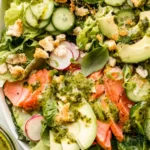
Fresh Roasted Salmon and Avocado Salad with Cilantro Vinaigrette
- Total Time: 30 minutes
- Yield: 4–6 servings 1x
- Diet: Dairy Free
Description
Spring inspired salad with roasted salmon, creamy avocado, and crisp vegetables, tossed in fresh cilantro vinaigrette.
Ingredients
- 1 lb salmon fillet
- Olive oil
- Kosher salt
- Fresh ground black pepper
- Fresh lemon, optional
- 2–3 heads romaine lettuce, chopped
- 5 radishes, thinly sliced
- 2 Persian cucumbers, thinly sliced
- 1 large ripe avocado, sliced or chopped
- 1/2 – 1 cup croutons
- 2 green onions, sliced
- Fresh chopped dill, to taste
- Fresh chopped basil, to taste
- Cilantro Vinaigrette
Instructions
- Step: Preheat the oven to 425F and line a sheet pan with parchment paper.
- Step: Pat the salmon dry with a paper towel, drizzle with olive oil, and season with salt and pepper.
- Step: Bake for 10-12 minutes or until cooked through and easily flaked.
- Step: Remove the salmon from the oven, squeeze with fresh lemon juice (optional), and flake into bite-size chunks.
- Step: In a large serving bowl or platter, add romaine, radishes, cucumbers, avocado, croutons, and green onions.
- Step: Top the salad with the flaked salmon, dill, and basil.
- Step: Serve with Cilantro Vinaigrette drizzled on top.
Notes
Pat the salmon dry before baking to prevent it from being watery. Add dressing right before serving.
- Prep Time: 15 minutes
- Cook Time: 15 minutes
- Category: Salad
- Method: Baked
- Cuisine: American
Nutrition
- Serving Size: 1 serving
- Calories: 333 kcal
- Sugar: 2.9 g
- Sodium: 161.5 mg
- Fat: 19 g
- Saturated Fat: 3 g
- Unsaturated Fat: 16 g
- Trans Fat: 0 g
- Carbohydrates: 15.6 g
- Fiber: 5 g
- Protein: 29 g
- Cholesterol: 58.3 mg
Keywords: salmon, avocado salad, cilantro vinaigrette, healthy lunch, roasted salmon, dairy free