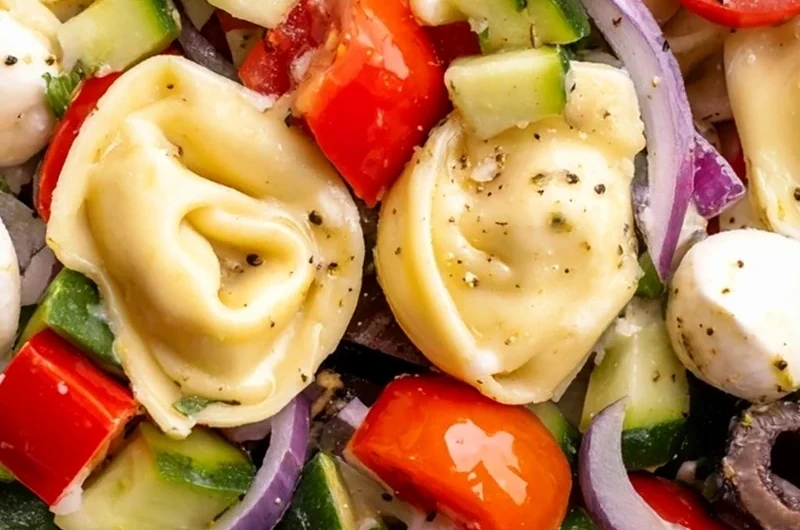
This zesty tortellini salad combines chilled cheese pasta with a colorful array of garden vegetables and a tangy homemade dressing. It is an efficient meal solution that requires minimal cooking and can be prepared in under 25 minutes.
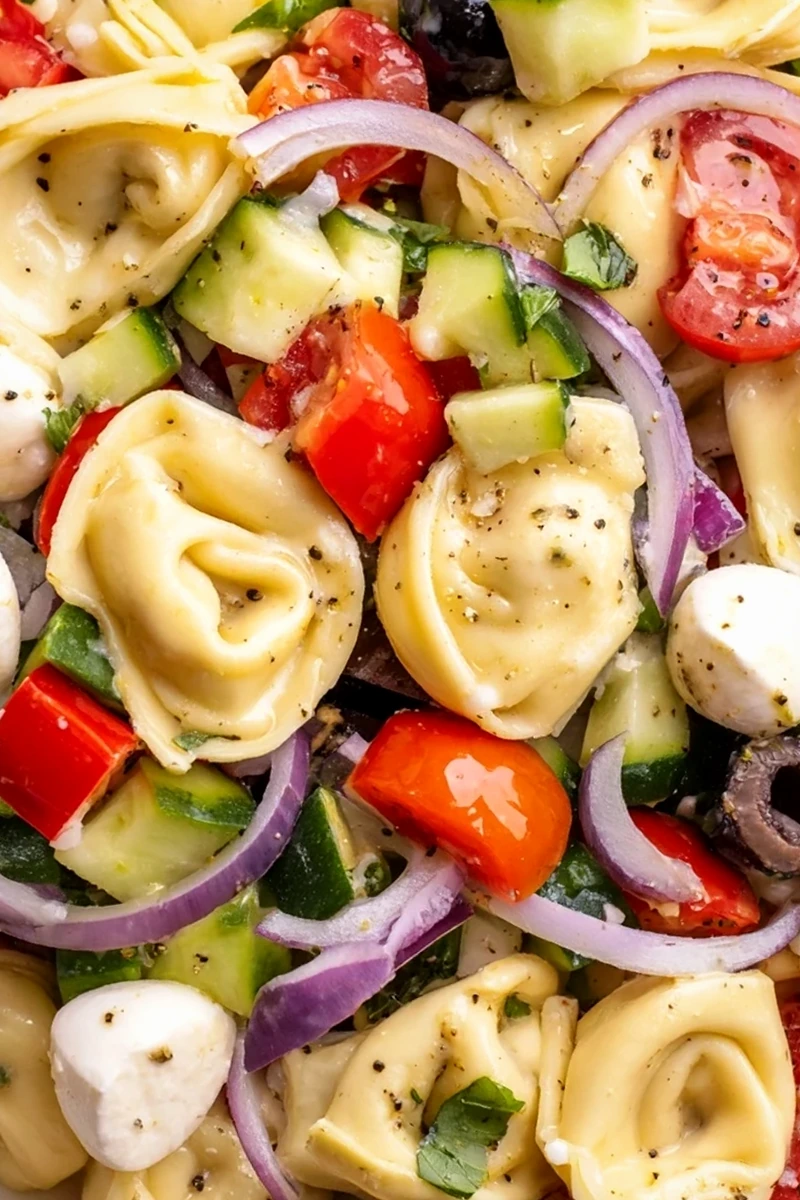
List of ingredients
- 12 oz fresh cheese tortellini (use microbial-rennet cheese) – the main hearty base.
- 1 cup cherry tomatoes, halved – adds bursts of sweetness.
- 1 cup cucumber, diced – provides a refreshing crunch.
- 1/2 cup red bell pepper, diced – adds bright color and sweetness.
- 1/4 cup red onion, thinly sliced – adds a sharp, savory contrast.
- 1/4 cup black olives, sliced – provides a salty, briny depth.
- 1/3 cup fresh mozzarella balls, halved – adds creamy texture.
- 1/4 cup grated Parmesan cheese (use microbial-rennet) – adds savory umami.
- 2 tbsp fresh basil leaves, torn – adds aromatic herbal notes.
- 3 tbsp extra-virgin olive oil – creates a smooth dressing base.
- 2 tbsp apple cider vinegar – provides the necessary acidity.
- 1 tsp Dijon mustard – helps emulsify the dressing.
- 1 clove garlic, minced – adds pungent flavor.
- 1/2 tsp dried oregano – provides a classic Italian profile.
- Salt and freshly ground black pepper to taste – enhances all other flavors.
step-by-step instructions
- Cook the pasta: Boil the fresh cheese tortellini according to the package directions until tender. Drain the pasta thoroughly and rinse immediately under cold running water to stop the cooking process and cool the pasta. Transfer the cooled tortellini to a large mixing bowl.
- Prepare the vegetables: Halve the cherry tomatoes. Dice the cucumber and red bell pepper into uniform, bite-sized pieces. Thinly slice the red onion and the black olives. Add all these prepared vegetables into the bowl with the cooled tortellini.
- Add cheese and herbs: Cut the fresh mozzarella balls in half. Tear the fresh basil leaves into small pieces by hand. Add both the mozzarella and the basil to the salad bowl.
- Mix the dressing: In a separate small bowl, whisk together the extra-virgin olive oil, apple cider vinegar, Dijon mustard, minced garlic, dried oregano, salt, and black pepper. Continue whisking until the ingredients are fully emulsified.
- Toss the salad: Pour the prepared dressing over the pasta and vegetable mixture. Gently toss all ingredients with spoons to ensure every piece is evenly coated.
- Final touch: Sprinkle the grated Parmesan cheese over the top and toss lightly one last time. Serve immediately or refrigerate for up to 2 hours before serving.
Mastering the Preparation Process
Shocking the Pasta with Cold Water
Rinsing the cooked tortellini under cold water is a critical step. This process, known as shocking, immediately stops the carry-over cooking that occurs after the pasta is drained. It prevents the delicate cheese-filled pasta from becoming overcooked or gummy.
Ensuring Uniform Vegetable Dicing
Cutting the cucumber and red bell pepper into uniform, small cubes ensures a consistent texture in every bite. This allows the vegetables to distribute evenly throughout the bowl. It also ensures that the dressing coats each piece of produce effectively.
Tearing Basil Instead of Chopping
Tearing fresh basil leaves by hand instead of using a knife helps preserve the integrity of the herb. Chopping with a blade can bruise the leaves and cause them to oxidize or turn brown more quickly. Tearing releases the aromatic oils more naturally.
Achieving a Stable Emulsion
The Dijon mustard in the dressing serves as an emulsifier, binding the olive oil and vinegar together. Without it, the oil and acid would separate quickly, leaving some parts of the salad greasy and others too tart. Whisk vigorously to create a smooth, cohesive sauce.
Ingredient Substitutions and Modifications
Using Plant-Based Tortellini and Cheese
For a dairy-free version, replace the cheese tortellini with vegan-certified pasta. Substitute the mozzarella and Parmesan with plant-based alternatives or omit them entirely. The vegetables and zesty dressing provide enough flavor to maintain the dish’s appeal.
Alternative Acidic Bases for the Dressing
While apple cider vinegar provides a balanced tang, you can use lemon juice for a brighter, more citrusy flavor. White wine vinegar is another option for a sharper profile. Adjust the quantity slightly as lemon juice is often less acidic than vinegar.
Swapping Fresh Mozzarella for Other Cheeses
Feta cheese is an excellent substitute for mozzarella, offering a saltier and tangier taste. Goat cheese can also be used for a creamier, more earthy flavor. If using Feta, reduce the amount of added salt in the dressing to avoid over-seasoning.
Incorporating Different Vegetable Options
You can replace the red bell pepper with yellow or orange peppers for a different color palette. Artichoke hearts, sun-dried tomatoes, or blanched asparagus are also great additions. These options add a Mediterranean flair and additional nutritional value.
Adding Protein for a Main Meal
Integrating Grilled Chicken Breast
To turn this side dish into a full meal, add sliced grilled chicken breast. Ensure the chicken is fully cooked and cooled to room temperature before adding it to the salad. This prevents the heat from wilting the fresh basil and mozzarella.
Adding Protein-Rich Chickpeas
For a plant-based protein boost, add a can of rinsed and drained chickpeas. These add a nutty flavor and an extra layer of texture. They also make the salad more filling for lunch meal prep.
Incorporating Sautéed Shrimp
Chilled sautéed shrimp pair beautifully with the Italian-style dressing. Season the shrimp with a bit of garlic and lemon before cooking. Once cooled, fold them gently into the salad to avoid breaking the shrimp.
Storage and Longevity Guidelines
Selecting the Right Airtight Container
Store leftovers in a glass airtight container to keep the vegetables crisp. Plastic containers can sometimes retain odors or allow air to seep in, which speeds up the oxidation of the fresh basil. Glass helps maintain a consistent temperature in the fridge.
Understanding Refrigeration Timelines
This salad stays fresh in the refrigerator for approximately 2 to 3 days. Over time, the pasta will absorb more of the dressing, which can make the salad taste drier. The vegetables may also lose some of their initial crunch.
Refreshing the Salad Before Serving
If the salad has been refrigerated overnight, it may require a dressing refresh. Add a small drizzle of extra-virgin olive oil and a splash of vinegar before serving. Toss gently to redistribute the flavors and restore the glossy appearance.
Optimal Serving Techniques
Managing Temperature for Best Flavor
While this is a cold salad, serving it slightly above refrigerator temperature allows the flavors of the garlic and herbs to be more prominent. Let the salad sit on the counter for 15 to 20 minutes before serving. This prevents the fats in the cheese from feeling too firm.
Applying the Final Garnish
Add the grated Parmesan and fresh basil just before the dish hits the table. This ensures the cheese doesn’t dissolve into the dressing and the basil remains vibrant green. A final crack of black pepper on top adds a professional finishing touch.
Ideal Side Dish Pairings
This salad pairs well with grilled fish or roasted vegetables. It also serves as a refreshing accompaniment to a light soup or a crusty piece of toasted sourdough bread. The acidity of the salad cuts through the richness of grilled proteins.
Common Troubleshooting Solutions
Preventing a Watery Salad
Cucumbers can release a significant amount of water after being salted in the dressing. To prevent this, scoop out the watery seeds with a spoon before dicing the cucumber. This keeps the dressing thick and prevents the salad from becoming diluted.
Correcting the Dressing Balance
If the dressing tastes too acidic, add a tiny pinch of sugar or a drop of maple syrup to balance the vinegar. If it tastes bland, increase the amount of salt or add another pinch of dried oregano. Taste the dressing separately before pouring it over the salad.
Avoiding Pasta Clumping
If the tortellini sticks together after cooling, toss them with a teaspoon of olive oil before adding the vegetables. This creates a thin barrier that keeps the pasta pieces separate. It also ensures the final dressing adheres more evenly to the pasta.
Frequently Asked Questions
Can I make tortellini salad ahead of time?
Yes, this salad can be prepared several hours in advance. Chilling for 1 to 2 hours allows the pasta to absorb the flavors of the dressing. However, add the fresh basil and Parmesan right before serving to maintain their freshness.
What type of tortellini is best for this recipe?
Fresh cheese tortellini from the refrigerated section is recommended for the best texture. Dried tortellini can be used, but they often have a firmer bite and may require longer cooking times. Ensure the filling is a simple cheese blend.
How do I keep the salad fresh for a picnic?
Keep the salad in an insulated cooler bag with ice packs to maintain a safe temperature. Transport the dressing in a separate container and toss it with the salad just before serving. This prevents the vegetables from softening during transport.
Should I rinse the tortellini after cooking?
Yes, rinsing is essential for cold pasta salads. It removes excess surface starch that would otherwise cause the pasta to clump together. It also cools the pasta instantly, preventing the mozzarella and basil from wilting.
Can I use a store-bought Italian dressing?
You can use a bottled dressing, but homemade is preferred for better control over ingredients. Store-bought versions often contain preservatives and high amounts of sugar. If using bottled, choose one made with olive oil and a balanced vinegar base.
Print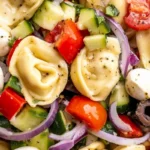
Garden Fresh Cheese Tortellini Salad
- Total Time: 22 minutes
- Yield: 4 portions 1x
- Diet: Vegetarian
Description
Tender cheese tortellini tossed with crisp vegetables, fresh mozzarella, and zesty Italian dressing for a satisfying cold pasta dish.
Ingredients
- 12 oz fresh cheese tortellini
- 1 cup cherry tomatoes, halved
- 1 cup cucumber, diced
- 1/2 cup red bell pepper, diced
- 1/4 cup red onion, thinly sliced
- 1/4 cup black olives, sliced
- 1/3 cup fresh mozzarella balls, halved
- 1/4 cup grated Parmesan cheese
- 2 tbsp fresh basil leaves, torn
- 3 tbsp extra-virgin olive oil
- 2 tbsp red wine vinegar
- 1 tsp Dijon mustard
- 1 clove garlic, minced
- 1/2 tsp dried oregano
- Salt and freshly ground black pepper to taste
Instructions
- Step 1: Prepare tortellini according to package directions. Drain thoroughly and rinse under cold running water to stop cooking and cool pasta. Transfer to a large bowl and set aside.
- Step 2: Halve the cherry tomatoes. Dice cucumber and red bell pepper into uniform pieces. Thinly slice red onion. Slice black olives. Add all prepared vegetables to the bowl with cooled tortellini.
- Step 3: Cut mozzarella balls in half. Tear fresh basil leaves into small pieces. Add mozzarella and basil to the salad bowl.
- Step 4: In a small bowl, whisk together olive oil, red wine vinegar, Dijon mustard, minced garlic, dried oregano, salt, and black pepper until emulsified.
- Step 5: Pour dressing over salad mixture. Gently toss to coat all ingredients evenly. Sprinkle grated Parmesan over top and toss lightly once more.
- Step 6: Serve immediately at room temperature, or refrigerate for up to 2 hours to allow flavors to develop. Toss again before serving if chilled.
Notes
Rinse cooked tortellini immediately to prevent a gummy texture. Let the salad chill for at least 30 minutes for flavors to meld.
- Prep Time: 15 minutes
- Cook Time: 7 minutes
- Category: Lunch
- Method: Boiling
- Cuisine: Italian-American
Nutrition
- Serving Size: 1 portion
- Calories: 415 kcal
- Sugar: 6 g
- Sodium: 620 mg
- Fat: 24 g
- Saturated Fat: 8 g
- Unsaturated Fat: 14 g
- Trans Fat: 0 g
- Carbohydrates: 36 g
- Fiber: 4 g
- Protein: 16 g
- Cholesterol: 45 mg
Keywords: tortellini salad, pasta salad, Italian salad, cold pasta, vegetarian lunch