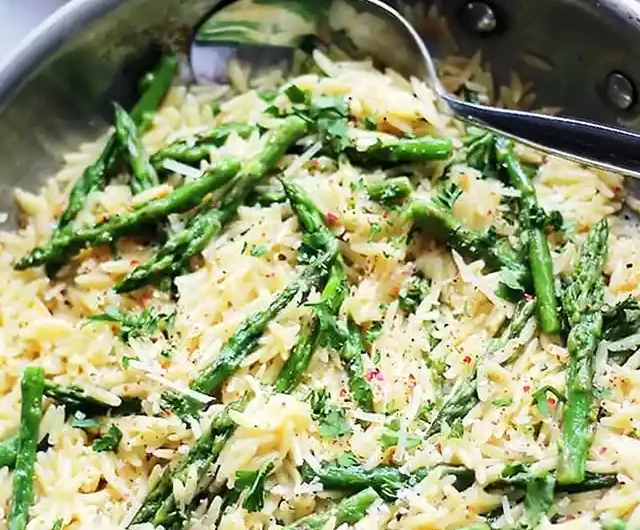
This quick garlic butter orzo with asparagus is a creamy, savory side dish that comes together in just 20 minutes. It pairs perfectly with proteins like grilled chicken or salmon for a complete, balanced meal.
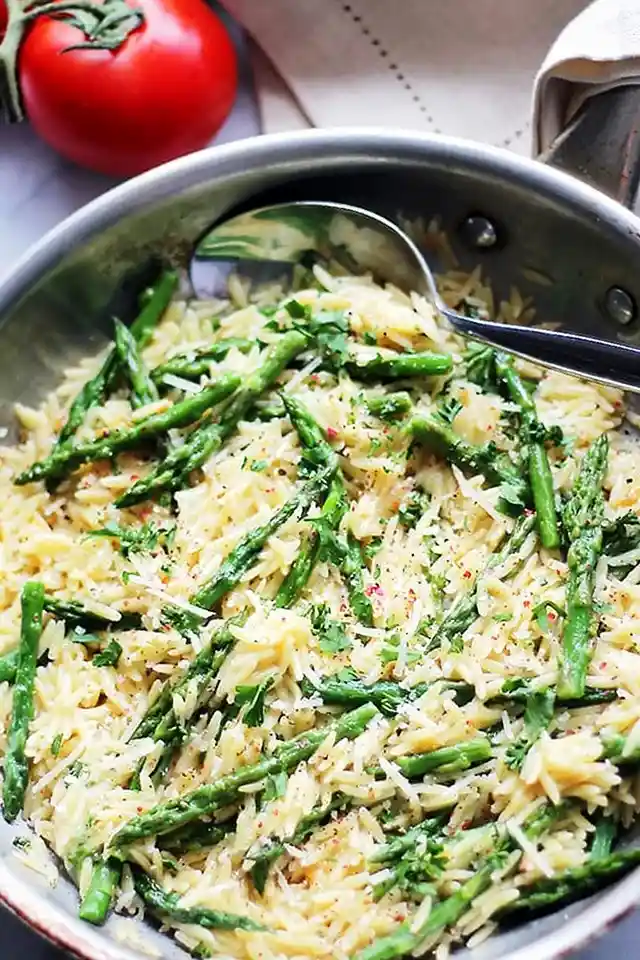
List of ingredients
- 1 cup dry orzo – a small rice-shaped pasta that adds a hearty base.
- 1 pound fresh asparagus – use only the tips, cut about 2 to 3 inches from the top.
- 4 tablespoons butter – provides the rich, creamy base for the sauce.
- 3 garlic cloves – minced finely for a strong, aromatic flavor.
- 1/4 cup grated parmesan cheese – adds a salty, nutty depth to the dish.
- 2 tablespoons milk – helps emulsify the sauce for a smoother consistency.
- 1 tablespoon fresh parsley – chopped finely for a pop of color and freshness.
- Salt and freshly ground black pepper – adjusted to taste for seasoning.
- Shredded parmesan cheese – optional for garnish before serving.
step-by-step instructions
- Cook the pasta: Prepare the dry orzo according to the directions on the package. Use a large pot of salted water to ensure the pasta is seasoned from within.
- Blanch the asparagus: Add the cut asparagus tips to the boiling orzo during the final 2 minutes of the cooking process. Once finished, remove the pot from the heat and drain both the pasta and vegetables together.
- Sauté the garlic: Place butter in a skillet and melt it over medium heat. Stir in the minced garlic and cook for about 4 minutes, stirring frequently to ensure the garlic browns lightly without burning.
- Combine and simmer: Add the drained orzo and asparagus to the skillet with the garlic butter. Stir in the grated parmesan, milk, parsley, salt, and pepper, cooking for 1 minute until the sauce is heated through and coats the pasta.
- Garnish and serve: Remove the skillet from the heat immediately. Garnish with additional shredded parmesan cheese if desired and serve while hot.
Cooking Techniques for the Best Results
Selecting the Right Asparagus Stalks
Choose asparagus spears that are firm and bright green with tightly closed tips. Avoid any stalks that look woody or have shriveled tips, as these will be tough to chew. Thinner stalks are generally more tender and blend better with the small size of orzo pasta.
Precision Cutting for Uniform Cooking
Instead of snapping the asparagus by hand, use a sharp knife to slice the tips 2 to 3 inches from the top. This method allows for more precision and ensures all pieces are the same size. Uniform pieces cook evenly in the final minutes of boiling, preventing some from being mushy while others remain raw.
Preventing Garlic from Burning
Garlic burns quickly and can develop a bitter taste if exposed to high heat for too long. Maintain a consistent medium heat and stir the garlic frequently as it browns. Remove the skillet from the heat the moment the garlic becomes fragrant and golden.
Managing Orzo Texture
Orzo can easily overcook and become gummy if left in the water too long. Aim for al dente, meaning it still has a slight bite to it, since it will cook for another minute in the butter sauce. Draining it immediately and tossing it with butter prevents the grains from sticking together.
Ingredient Substitutions for Different Diets
Substitute Orzo with Other Small Pastas
If you do not have orzo, you can use other small pasta shapes like penne, ditalini, or acini di pepe. If using a larger shape like penne, you may need to increase the cooking time for the asparagus. Ensure the pasta size complements the size of the asparagus tips for a balanced bite.
Dairy-Free Butter Alternatives
For a dairy-free version, replace the butter with an equal amount of plant-based butter or a neutral oil like avocado oil. Plant-based butter usually provides a closer flavor profile to the original recipe. If using oil, you may want to add a pinch of nutritional yeast to mimic the richness of butter.
Plant-Based Parmesan Options
Substitute the parmesan cheese with a vegan parmesan alternative or a mixture of ground cashews and nutritional yeast. These options provide the salty, umami flavor necessary for the garlic butter sauce. Ensure the substitute is finely grated so it melts smoothly into the pasta.
Non-Dairy Milk Substitutes
Replace the milk with an unsweetened almond or soy milk to keep the sauce creamy without using dairy. Avoid using sweetened plant milks, as the sugar will clash with the savory garlic and asparagus. Unsweetened cashew milk is particularly effective due to its naturally creamy texture.
Flavor Variations to Try
Adding Fresh Lemon Zest and Juice
To add a bright, citrusy note, stir in one tablespoon of fresh lemon juice and a teaspoon of lemon zest at the very end. The acidity of the lemon cuts through the richness of the butter and parmesan. This is particularly effective when serving the dish alongside seafood.
Incorporating Red Pepper Flakes for Heat
For a spicy kick, add a pinch of red pepper flakes to the butter while sautéing the garlic. This infuses the oil with heat and adds a subtle glow to the sauce. Adjust the amount based on your preference for spice levels.
Adding Sautéed Mushrooms
Sauté sliced cremini or button mushrooms in the butter before adding the garlic. The earthy flavor of the mushrooms complements the freshness of the asparagus and the nuttiness of the parmesan. This addition makes the side dish feel more like a substantial meal.
Adding Toasted Pine Nuts for Crunch
Toss in a handful of toasted pine nuts just before serving to add a buttery crunch. Toasting the nuts separately in a dry pan for 2-3 minutes maximizes their flavor. The contrast in texture between the soft orzo and crunchy nuts enhances the dish.
Using Different Fresh Herbs
While parsley is traditional, you can substitute it with fresh basil or chives for a different aromatic profile. Basil provides a sweet, peppery taste, while chives offer a mild onion flavor. Always add fresh herbs at the end of cooking to preserve their color and scent.
Perfect Pairing Suggestions
Pairing with Baked Chicken Breasts
The creamy garlic profile of this pasta pairs exceptionally well with lean proteins like oven-baked chicken breasts. The butter sauce acts as a complementary accompaniment to the chicken’s natural juices. Consider seasoning the chicken with thyme or rosemary to match the herbal notes of the pasta.
Serving with Pan-Seared Salmon
Salmon and asparagus are a classic combination, and the addition of orzo makes it a complete plate. The richness of the salmon is balanced by the fresh asparagus and the salty parmesan. Serve the salmon fillet directly on top of a bed of the pasta for an elegant presentation.
Combining with Grilled Steak
The savory garlic butter in the pasta mirrors the flavors often used when basting a steak. This makes it an ideal side for ribeye or sirloin steaks grilled to medium-rare. The brightness of the asparagus helps cut through the heaviness of the red meat.
Creating a Vegetarian Main Course
To turn this side dish into a vegetarian main, add extra vegetables such as frozen peas or sautéed spinach. You can also top the dish with a poached egg or roasted chickpeas for added protein. This transforms a simple side into a filling, nutrient-dense lunch or dinner.
Storage and Reheating Guide
Refrigeration Best Practices
Store any leftover pasta in an airtight container and place it in the refrigerator immediately after cooling. It will stay fresh and safe to eat for 2 to 3 days. Keep the container tightly sealed to prevent the pasta from absorbing other smells from the fridge.
Best Methods for Reheating
The best way to reheat the pasta is in a skillet over medium-low heat with a small splash of water or milk. This helps loosen the starches and restores the creamy texture of the sauce. Stirring frequently ensures the asparagus doesn’t overcook and become mushy during the reheating process.
Microwave Reheating Tips
If using a microwave, place the pasta in a microwave-safe bowl and cover it with a damp paper towel. Heat in short 30-second intervals, stirring between each session to distribute the heat evenly. Be aware that the asparagus may lose some of its crispness when microwaved.
Freezing Considerations
This dish is not recommended for freezing because the asparagus and milk-based sauce do not freeze well. Upon thawing, the asparagus often becomes watery and the sauce may separate. It is best enjoyed fresh or from the refrigerator.
Make-Ahead Advice
Preparing Ingredients in Advance
You can mince the garlic and chop the parsley several hours before you plan to cook. Store them in small containers in the fridge to save time during the actual preparation. Cutting the asparagus tips ahead of time and storing them in a damp paper towel also speeds up the process.
Partial Pre-Cooking Strategies
You can cook the orzo and blanch the asparagus up to a day in advance. After draining, toss them with a teaspoon of oil to prevent them from sticking together in the fridge. When ready to serve, simply skip to the garlic butter sauce step and combine the pre-cooked ingredients.
Troubleshooting Common Issues
Handling Overcooked Asparagus
If the asparagus becomes too soft, it is likely due to over-boiling or overheating during the final stir. To avoid this, strictly follow the 2-minute boiling rule and remove the pan from the heat as soon as the sauce is warm. If it happens, serve the dish immediately so the texture is less noticeable.
Fixing a Sauce That Is Too Thick
The sauce can sometimes thicken too much if the pasta absorbs the milk and butter too quickly. Stir in an extra tablespoon of milk or a splash of pasta water to loosen the consistency. Do this over low heat to ensure the liquid incorporates smoothly without breaking the emulsion.
Addressing Bland Flavor
If the dish tastes flat, it usually needs more salt or acidity. Add a small pinch of salt or a squeeze of fresh lemon juice to brighten the flavors. Since parmesan varies in saltiness, always taste the dish before adding extra seasoning.
Preventing Orzo from Clumping
Orzo can clump if it is not stirred frequently while boiling or if it sits too long after draining. Stir the pasta occasionally during the boiling process and toss it with the butter sauce immediately after draining. This coats the grains in fat, which keeps them separate and slippery.
Frequently Asked Questions
Can I use frozen asparagus?
Yes, you can use frozen asparagus, but do not boil it with the pasta. Instead, sauté the frozen tips in the butter and garlic until they are heated through and any excess moisture has evaporated. This prevents the pasta from becoming watery.
Is orzo a rice or a pasta?
Despite its appearance, orzo is a pasta made from semolina flour. It is shaped like large grains of rice, which is why it is often used in soups and salads where rice would typically be used. It cooks faster than most traditional pasta shapes.
Can I use garlic powder instead of fresh?
You can use garlic powder in a pinch, but the flavor is less pungent and aromatic than fresh garlic. Use about 1/4 teaspoon of garlic powder for every clove required. Add the powder directly to the melted butter and stir for only 30 seconds before adding the pasta.
How do I keep the asparagus bright green?
The key to keeping asparagus bright green is to avoid overcooking it. Boiling it for only 2 minutes and then immediately mixing it with the butter sauce helps lock in the color. Shocking the asparagus in ice water after boiling is an option, but it is unnecessary for this specific recipe.
Print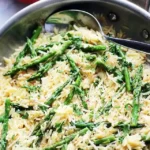
Garlic Butter Asparagus Orzo
- Total Time: 20 minutes
- Yield: 4 servings 1x
- Diet: General
Description
Orzo pasta and fresh asparagus are tossed in a garlic butter sauce with parmesan cheese. It’s a 20-minute, garlicky, cheesy, and amazing side dish!
Ingredients
- 1 cup dry orzo
- 1 pound fresh asparagus tips
- 4 tablespoons butter
- 3 garlic cloves, minced
- ¼ cup grated parmesan cheese
- 2 tablespoons milk
- 1 tablespoon fresh parsley
- salt and freshly ground black pepper to taste
- shredded parmesan cheese for garnish (optional)
Instructions
- Cook the orzo: Prepare the orzo according to the directions on the package.
- Cook the asparagus: Add the asparagus tips to the orzo during the last 2 minutes of cooking. Remove from heat and drain.
- Prepare the garlic butter sauce: Add butter to a skillet and melt over medium heat. Stir in garlic and cook for 4 minutes or until lightly browned, stirring very frequently. Do not burn the garlic.
- Combine: Add the cooked orzo and asparagus to the skillet; stir in the cheese, milk, parsley, salt, and pepper. Cook for 1 minute or until heated through.
- Finish and serve: Remove from heat. Garnish with parmesan cheese and serve.
Notes
Store leftovers in an airtight container in the fridge for 2-3 days. Reheat in a skillet with a touch of oil over medium-low heat for best texture, or use a microwave.
- Prep Time: 5 minutes
- Cook Time: 15 minutes
- Category: Side Dish
- Method: Stovetop
- Cuisine: Italian
Nutrition
- Serving Size: 1 serving
- Calories: 295 kcal
- Sugar: 3 g
- Sodium: 204 mg
- Fat: 13 g
- Saturated Fat: 8 g
- Unsaturated Fat: 5 g
- Trans Fat: 0 g
- Carbohydrates: 33 g
- Fiber: 3 g
- Protein: 10 g
- Cholesterol: 35 mg
Keywords: garlic butter asparagus orzo, asparagus pasta, cheesy side dish, italian side dish