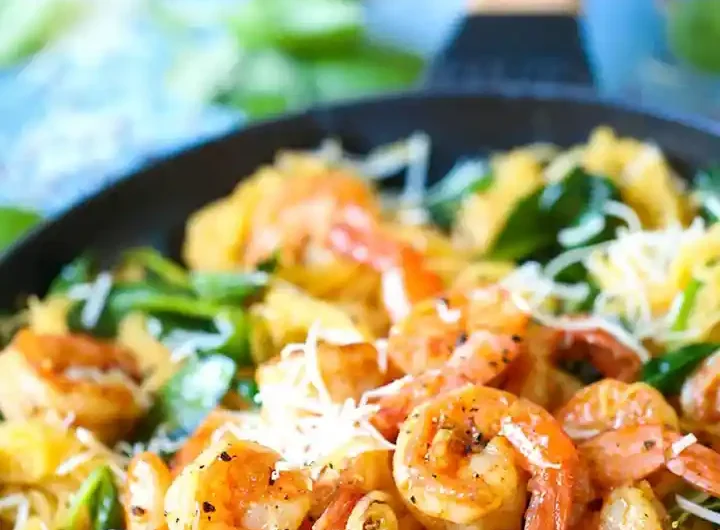
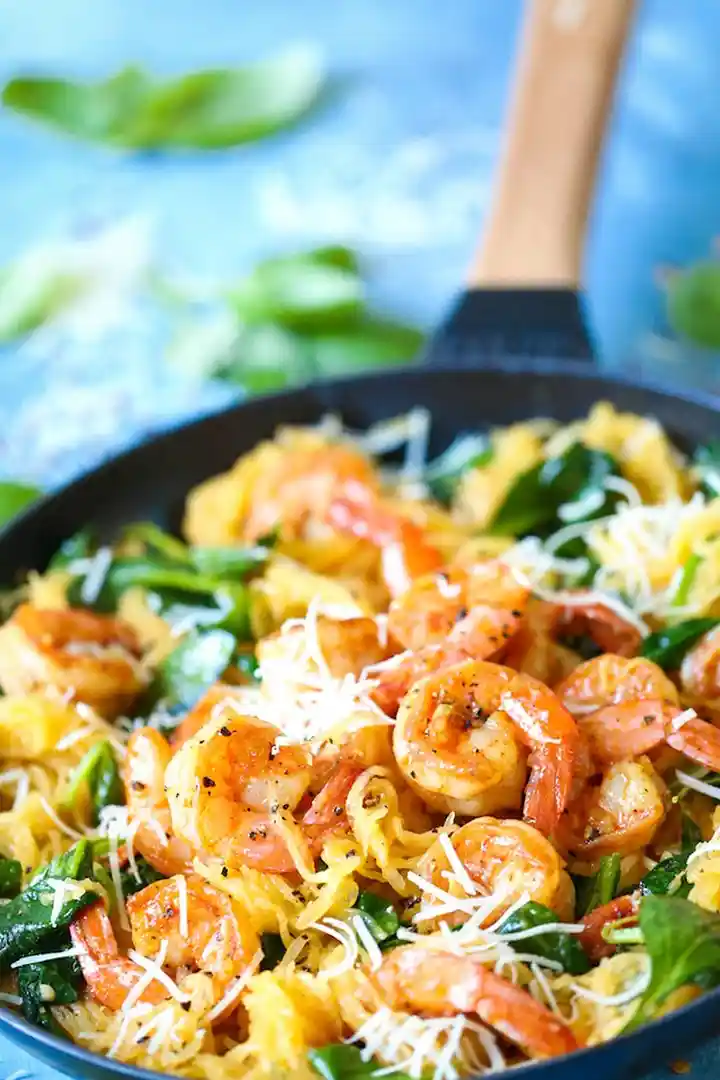
This low-carb dinner replaces traditional pasta with nutrient-dense spaghetti squash. It retains the classic garlic butter flavor of shrimp scampi while significantly reducing the overall calorie count.
List of ingredients
- 1 1/4 pounds large shrimp (peeled and deveined) – ensures quick cooking and easy eating.
- 1 1/2 teaspoons smoked paprika – adds a subtle depth and color to the shrimp.
- Kosher salt and freshly ground black pepper – used for seasoning all components.
- 2 tablespoons unsalted butter – provides the rich, creamy base for the scampi sauce.
- 1 tablespoon olive oil – used for sautéing to prevent butter from burning.
- 3 cloves garlic (minced) – provides the essential pungent flavor.
- 1 shallot (minced) – adds a delicate sweetness compared to regular onions.
- 3 cups baby spinach – adds color and nutritional value.
- 1/2 cup fresh basil leaves (chiffonade) – adds a fresh, aromatic finish.
- 1 tablespoon freshly squeezed lemon juice – cuts through the richness of the butter.
- 2 tablespoons freshly grated Parmesan – adds a salty, nutty finish.
- 1 (2-3 pounds) spaghetti squash – serves as the low-carb pasta replacement.
- 2 tablespoons olive oil (for squash) – helps the squash roast evenly.
- Kosher salt and freshly ground black pepper (to taste) – for roasting the squash.
step-by-step instructions
- Prepare Oven and Pan: Preheat your oven to 375 degrees F. Lightly oil a baking sheet or coat it with nonstick spray to prevent the squash from sticking.
- Prepare the Squash: Cut the spaghetti squash in half lengthwise from stem to tail and scrape out the seeds. Drizzle the flesh with olive oil and season with salt and pepper to taste.
- Roast the Squash: Place the squash cut-side down on the prepared baking dish. Roast in the oven until the flesh is tender, which typically takes about 35-45 minutes.
- Cool and Shred: Remove the squash from the oven and let it rest until it is cool enough to handle. Use a fork to scrape the flesh, creating long, spaghetti-like strands.
- Season the Shrimp: In a bowl, toss the peeled and deveined shrimp with smoked paprika, salt, and black pepper until evenly coated.
- Cook the Shrimp: Melt butter in a large skillet over medium-high heat. Add the seasoned shrimp, minced garlic, and minced shallot. Cook, stirring occasionally, until the shrimp turn pink, approximately 2-3 minutes, then remove them from the pan and keep warm.
- Sauté the Squash and Spinach: In the same skillet, add the scraped squash strands and the baby spinach. Cook, stirring occasionally, until the squash is heated through and the spinach has wilted, which takes about 2-3 minutes.
- Final Seasoning: Stir in the fresh basil and lemon juice. Season the mixture with additional salt and pepper to taste.
- Serve: Immediately plate the squash mixture, top with the cooked shrimp, and garnish with freshly grated Parmesan cheese.
Optimizing Your Squash Preparation
Selecting the Best Spaghetti Squash
Choose a squash that feels heavy for its size, which indicates a dense, moisture-rich interior. The skin should be a vibrant, uniform yellow without any soft spots or deep bruises.
Safe Slicing Techniques
Cut the squash lengthwise from the stem to the tail to create two stable halves. If the skin is too tough to slice easily, carefully cut a thin slice off the bottom to create a flat base for stability.
Managing Roasting Temperature
Maintaining the oven at 375 degrees F ensures the squash softens without burning the exterior. Roasting the squash cut-side down allows the moisture to stay trapped, effectively steaming the flesh from within.
Efficient Stranding Methods
Use a sturdy metal fork to scrape the flesh from the outer edges toward the center. Apply moderate pressure to create long, noodle-like strands without crushing the vegetable into a mash.
Mastering the Shrimp Component
Thawing Frozen Shrimp Safely
If using frozen shrimp, thaw them in the refrigerator overnight for the best texture. For faster results, place them in a sealed bag and submerge the bag in a bowl of cold water, changing the water every 30 minutes.
Preventing Rubbery Texture
Cook shrimp over medium-high heat only until they turn opaque and form a ‘C’ shape. Overcooking causes the proteins to tighten, resulting in a rubbery and tough consistency.
Maintaining Heat While Resting
Set the cooked shrimp aside in a warm bowl or covered plate while you sauté the vegetables. This prevents them from cooling down too much before they are reunited with the hot squash.
Using Fresh versus Frozen Shrimp
Fresh shrimp typically offer a firmer snap and cleaner ocean flavor. Frozen shrimp are often peeled and deveined, providing a significant time-saving advantage during the prep phase.
Flavor Customization and Enhancements
Adding a Spicy Kick
Incorporate a half-teaspoon of red pepper flakes into the butter while sautéing the garlic. This adds a heat element that complements the lemon juice and buttery sauce perfectly.
Experimenting with Citrus
While lemon is traditional, you can substitute half of the lemon juice with lime juice for a zestier, brighter profile. Adding a small amount of citrus zest can further intensify the aromatic quality of the dish.
Alternative Herb Pairings
If basil is unavailable, fresh parsley is an excellent substitute that provides a clean, grassy taste. A combination of parsley and chives can add a more complex onion-like depth to the sauce.
Substituting the Butter
For a different richness, use a high-quality plant-based butter or a tablespoon of ghee. Ghee has a higher smoke point, which allows for slightly higher heat when searing the shrimp.
Vegetable Variations and Add-ons
Integrating Hearty Greens
Replace baby spinach with chopped kale or Swiss chard for a more robust texture. These greens may require an extra minute of cooking time to soften completely in the skillet.
Adding Sautéed Mushrooms
Slice baby bella or cremini mushrooms and sauté them alongside the shallots. Mushrooms add an earthy, savory element that pairs well with the garlic butter and shrimp.
Combining Different Squash Types
You can mix spaghetti squash with zucchini noodles for a variety of textures. Sauté the zucchini noodles for only 1-2 minutes to prevent them from releasing too much water.
Incorporating Bell Peppers
Finely diced red or yellow bell peppers can be added during the shallot sauté phase. This introduces a sweetness and a pop of color that enhances the overall presentation.
Storage and Preservation Guide
Refrigeration Standards
Store any leftover shrimp and squash in a glass airtight container. Keep it in the coldest part of the refrigerator for up to three days to ensure food safety.
Managing Excess Moisture
Spaghetti squash tends to release water as it sits in the fridge. Before reheating, drain any accumulated liquid from the container to prevent the dish from becoming watery.
Avoiding the Freezer
It is not recommended to freeze this dish once fully cooked. The texture of the roasted squash becomes mushy upon thawing, and the shrimp can become overly tough.
Cooling Down Properly
Allow the cooked meal to cool slightly before sealing the container. Trapping too much steam inside the lid can lead to soggy vegetables and condensed moisture on the shrimp.
Effective Reheating Methods
The Stovetop Approach
Place the squash and shrimp in a skillet over medium heat with a small knob of butter. Stir gently until heated through, which preserves the texture better than other methods.
Using the Oven
Spread the leftovers in a baking dish and cover with foil. Heat at 325 degrees F for about 10-15 minutes to warm the components evenly without overcooking the shrimp.
Microwave Instructions
Heat the dish in short 30-second bursts, stirring in between. This prevents the shrimp from rubberizing due to concentrated microwave heat in certain spots.
Refreshing the Flavor
Add a squeeze of fresh lemon juice or a sprinkle of fresh parsley after reheating. This restores the bright, fresh notes that can fade during refrigeration.
Troubleshooting Common Issues
Dealing with Watery Squash
If the squash releases too much liquid in the pan, increase the heat to medium-high to evaporate the excess. You can also pat the strands dry with a paper towel before adding them to the skillet.
Preventing Burnt Garlic
Add the minced garlic and shallots only after the butter has melted and the shrimp are partially cooked. Garlic burns quickly and becomes bitter if exposed to high heat for too long.
Correcting Bland Flavors
If the dish tastes flat, increase the acidity with an extra teaspoon of lemon juice. A small pinch of extra salt can also help bring out the natural sweetness of the squash.
Fixing Clumping Parmesan
Use a fine grater or a microplane to get a light, fluffy consistency. Avoid pre-shredded cheeses, as they often contain anti-caking agents that prevent them from melting smoothly.
Frequently Asked Questions
Can I use a different type of squash?
While butternut squash is delicious, it does not have the strand-like texture of spaghetti squash. For a similar experience, stick to spaghetti squash or use zoodles.
How do I stop the shrimp from sticking?
Ensure the skillet is sufficiently hot and the butter is fully melted before adding the shrimp. Avoid stirring them too frequently; let them sear for a minute before moving them.
Is it possible to make this dairy-free?
Yes, replace the butter with olive oil or a vegan butter substitute. Use nutritional yeast or a dairy-free Parmesan alternative for the garnish.
What side dishes pair best with this?
A simple side salad with a vinaigrette or roasted asparagus works well. A slice of toasted sourdough bread can also be used to soak up the remaining garlic butter sauce.
Can the squash be prepared in advance?
Yes, roast and shred the squash a day early and store it in the fridge. Simply add it to the skillet during the final cooking step to heat it through.
Which shrimp size is best for this recipe?
Large or jumbo shrimp are ideal because they hold up better during the sauté process. Smaller shrimp cook very quickly and may overcook before the garlic is fragrant.
Can I add a cream sauce instead of butter?
You can stir in a splash of heavy cream or coconut milk at the end for a creamier texture. Reduce the amount of butter used initially to balance the overall fat content.
Print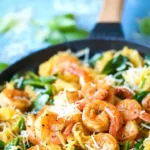
Garlic Butter Shrimp with Spaghetti Squash
- Total Time: 75 minutes
- Yield: 4 servings 1x
- Diet: Low-Carb
Description
Everyone’s favorite shrimp scampi with a low-carb, healthier alternative to pasta using spaghetti squash! It’s still amazingly buttery and garlicky with half the calories!
Ingredients
- 1 1/4 pounds large shrimp, peeled and deveined
- 1 1/2 teaspoons smoked paprika
- Kosher salt and freshly ground black pepper
- 2 tablespoons unsalted butter
- 1 tablespoon olive oil
- 3 cloves garlic, minced
- 1 shallot, minced
- 3 cups baby spinach
- 1/2 cup fresh basil leaves, chiffonade
- 1 tablespoon freshly squeezed lemon juice
- 2 tablespoons freshly grated Parmesan
- 1 2-3 pounds spaghetti squash
- 2 tablespoons olive oil
- Kosher salt and freshly ground black pepper, to taste
Instructions
- Step: Preheat oven to 375 degrees F. Lightly oil a baking sheet or coat with nonstick spray.
- Step: Cut the squash in half lengthwise from stem to tail and scrape out the seeds. Drizzle with olive oil and season with salt and pepper, to taste.
- Step: Place squash, cut-side down, onto the prepared baking dish. Place into oven and roast until tender, about 35-45 minutes.
- Step: Remove from oven and let rest until cool enough to handle.
- Step: Using a fork, scrape the flesh to create long strands.
- Step: Season shrimp with paprika, salt and pepper, to taste.
- Step: Melt butter in a large skillet over medium high heat. Add shrimp, garlic and shallot. Cook, stirring occasionally, until pink, about 2-3 minutes; set aside and keep warm.
- Step: Add squash and spinach to the skillet. Cook, stirring occasionally, until the squash is heated through and the spinach has wilted, about 2-3 minutes. Stir in basil and lemon juice; season with salt and pepper, to taste.
- Step: Serve immediately, topped with shrimp and garnished with Parmesan, if desired.
Notes
A low-carb alternative to traditional pasta that retains the buttery, garlicky flavor of classic shrimp scampi.
- Prep Time: 20 minutes
- Cook Time: 55 minutes
- Category: Main Course
- Method: Roasting, Sautéing
- Cuisine: American
Nutrition
- Serving Size: 1 serving
- Calories: 310 kcal
- Sugar: 7 g
- Sodium: 620 mg
- Fat: 17 g
- Saturated Fat: 6 g
- Unsaturated Fat: 11 g
- Trans Fat: 0 g
- Carbohydrates: 15 g
- Fiber: 4 g
- Protein: 23 g
- Cholesterol: 175 mg
Keywords: shrimp scampi, spaghetti squash, low carb, keto friendly, healthy dinner