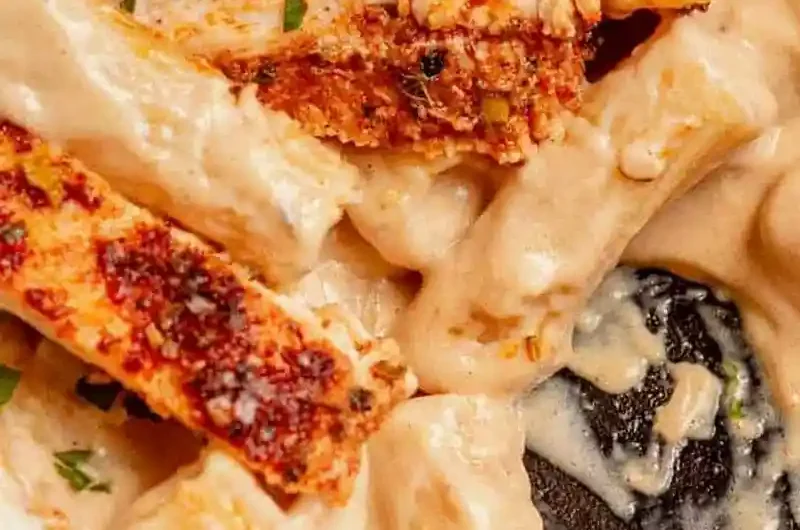
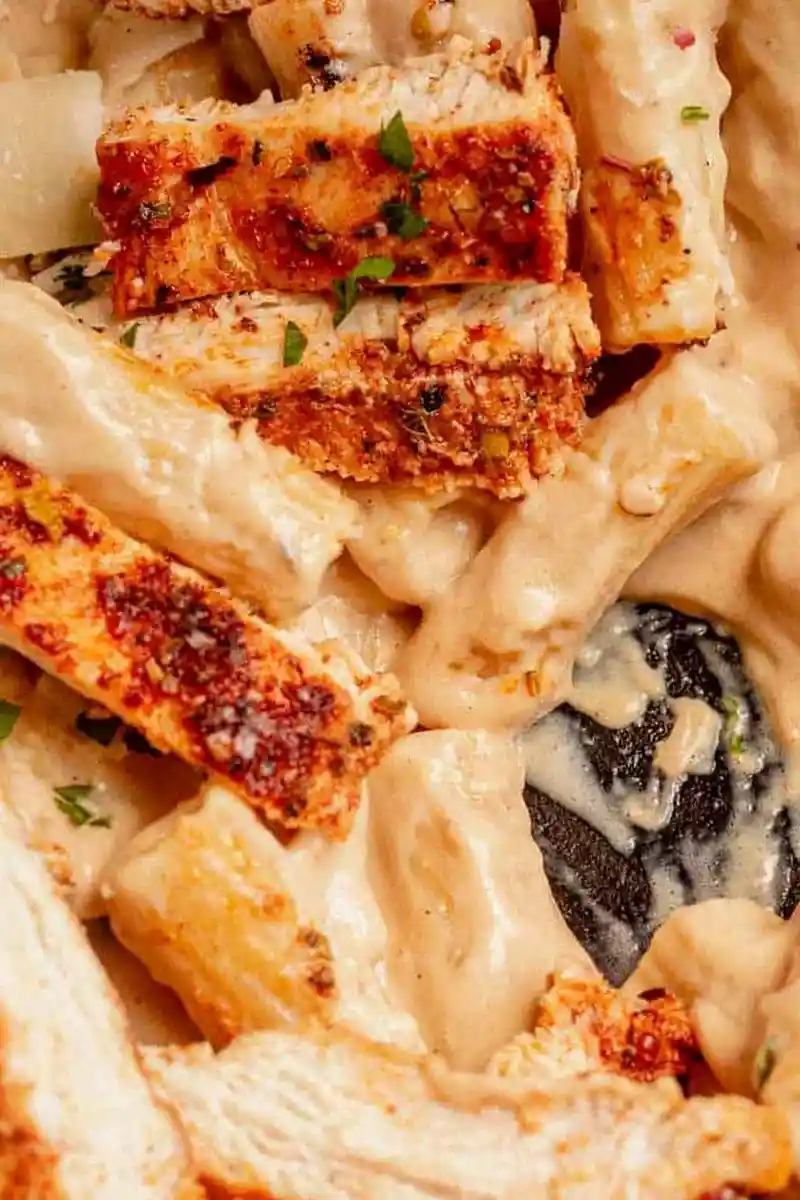
This creamy one-pan dinner combines seasoned chicken breasts with a rich garlic parmesan sauce and hearty rigatoni. It is a comforting meal that comes together in just 30 minutes, making it ideal for busy weeknights.
List of ingredients
- 1 lb shortcut pasta, such as Rigatoni (gluten-free if needed)
- 1 lb chicken breast, pounded to even thickness
- 2 Tablespoons olive oil – used for searing
- 2 teaspoons oregano – dried
- 1 teaspoon paprika – for color and flavor
- 2 teaspoons garlic powder
- 1 teaspoon dried sage
- 1/4 teaspoon red pepper flakes (adjust to taste)
- 3 Tablespoons unsalted butter
- 5 cloves minced garlic – fresh
- 3 Tablespoons flour (gluten-free if needed)
- 1/2 cup chicken broth
- 2 cups milk (any variety)
- 1/2 cup heavy cream
- 1 1/2 cups fresh grated parmesan cheese – avoid pre-shredded
- Parsley, extra parmesan, and red pepper flakes for garnish
step-by-step instructions
- Prepare the pasta: Boil a large pot of salted water. Cook the pasta until al dente according to the package directions. Reserve 1 cup of the starchy pasta water before draining. Do not rinse the pasta.
- Season the chicken: While the pasta boils, combine the chicken breasts with olive oil, oregano, paprika, garlic powder, dried sage, and red pepper flakes. Toss until the meat is evenly coated in the spice rub.
- Sear the chicken: Heat a deep, heavy-bottomed skillet (like cast iron) over medium-high heat with a drizzle of olive oil. Once the oil shimmers, sear the chicken for 8-10 minutes, flipping halfway through. If the exterior browns too quickly, add a tablespoon of water to the pan. Remove chicken when it reaches 160-165 degrees F and let it rest on a plate.
- Develop the roux: Over medium heat, melt the butter in the same skillet. Add the minced garlic and cook for 1 minute until fragrant. Whisk in the flour and cook until a thick paste forms.
- Deglaze the pan: Slowly pour in the chicken broth while whisking constantly. Use your whisk to scrape up the brown caramelized bits from the bottom of the pan to incorporate those flavors into the sauce.
- Thicken the sauce: Reduce heat to medium-low. Pour in the milk and heavy cream, whisking consistently. Simmer for 2-3 minutes until the sauce bubbles slightly around the edges and thickens enough to coat a spoon.
- Incorporate the cheese: Remove the pan from the heat. Stir in the freshly grated parmesan cheese, salt, and pepper until the cheese is completely melted and the sauce is glossy.
- Combine pasta and sauce: Add the cooked pasta to the skillet and toss to coat. Stir in reserved pasta water a few tablespoons at a time if the sauce needs thinning.
- Final assembly: Slice the rested chicken thinly and place it on top of the pasta. Garnish with fresh chopped parsley, shaved parmesan, or extra red pepper flakes.
Secrets for the Perfect Chicken Sear
Pounding Chicken to Even Thickness
Using a meat mallet to pound chicken breasts ensures that the meat is the same thickness from end to end. This prevents the thinner edges from overcooking and drying out while the center remains underdone. Even thickness leads to a consistent internal temperature throughout the meat.
Achieving a Golden Brown Crust
Always pat your chicken dry with paper towels before applying the oil and spices. Moisture on the surface of the meat creates steam, which prevents a proper sear from forming. A high-heat skillet, such as cast iron, is essential for creating that deep golden-brown crust that adds savory depth to the dish.
Using a Meat Thermometer for Precision
Pull the chicken from the pan when it reaches 160 to 163 degrees F. Because of carryover cooking, the internal temperature will continue to rise to the safe target of 165 degrees F while the meat rests. This technique ensures the chicken remains juicy and tender rather than becoming rubbery.
Mastering the Creamy Garlic Sauce
The Role of the Roux
The combination of butter and flour creates a roux, which acts as the thickening agent for the sauce. Cooking the roux for a minute after adding flour removes the raw taste of the grain and creates a nutty aroma. This structure prevents the sauce from separating when stored or reheated.
Deglazing for Depth of Flavor
The browned bits left in the pan after searing the chicken are known as fond. By adding chicken broth and scraping the pan, you release these concentrated flavors into the sauce. This step transforms a simple cream sauce into a rich, savory glaze that tastes like it simmered for hours.
Temperature Control for Dairy
Keep the heat at medium-low when adding milk and cream to avoid scorching the dairy. Small, steady bubbles are a sign that the sauce is thickening correctly. Avoid a rolling boil, as excessive heat can cause the fats in the cream to separate.
Adding Cheese Off the Heat
Always stir in the parmesan cheese after removing the skillet from the burner. If the sauce is boiling when the cheese is added, the proteins in the parmesan can seize, resulting in a grainy or clumpy texture. Residual heat is sufficient to melt the cheese into a silky, glossy finish.
Pasta Selection and Preparation Tips
Why Rigatoni is the Best Choice
Rigatoni features a wide hollow center and exterior ridges that are perfect for capturing thick cream sauces. Unlike long noodles like spaghetti, which can be slippery, rigatoni holds the sauce both inside and out. This ensures every bite has a balanced ratio of pasta to sauce.
The Importance of Al Dente Cooking
Cook your pasta slightly under the package directions so it remains firm. The pasta will finish cooking as it tosses in the hot sauce, allowing it to absorb some of the garlic and parmesan flavors. Overcooked pasta can become mushy when combined with a heavy cream sauce.
Utilizing Reserved Pasta Water
The cloudy water left over from boiling pasta is rich in starch. Adding a few tablespoons of this liquid to the final sauce helps emulsify the fats and liquids. This creates a tighter bond between the sauce and the noodle, preventing the sauce from pooling at the bottom of the plate.
High Protein Pasta Substitutes
Chickpea or lentil-based pastas work well in this recipe because the sauce is substantial enough to complement their earthier taste. Be aware that these pastas often cook faster than wheat-based versions. Check the package timing carefully to avoid overcooking.
Ingredient Substitutions and Variations
Using Boneless Skinless Chicken Thighs
Chicken thighs can be used instead of breasts for a richer flavor and more moisture. Thighs are more forgiving during the searing process and are less likely to dry out if overcooked. The higher fat content in thighs blends seamlessly with the creamy parmesan sauce.
Dairy-Free Alternatives
To make this recipe dairy-free, replace the butter with a plant-based butter alternative. Use unsweetened oat milk or almond milk for the base and coconut cream in place of heavy cream. Use a vegan parmesan alternative or nutritional yeast for the cheesy element.
Gluten-Free Modifications
Use a gluten-free 1:1 baking flour for the roux to maintain the same thickening properties. Pair this with your favorite gluten-free rigatoni or penne. Most high-quality gluten-free pastas hold up well in cream sauces as long as they are not overboiled.
Substituting Heavy Cream
If heavy cream is unavailable, you can use softened cream cheese or increase the amount of whole milk. Cream cheese adds a slight tang and thickness to the sauce. If using only milk, the sauce will be thinner, so allow it to simmer slightly longer to reduce.
Adding Fresh Vegetables for Nutrition
Stir in a handful of fresh baby spinach or frozen peas during the last minute of sauce preparation. The heat of the sauce will wilt the spinach instantly without requiring an extra pan. Roasted broccoli florets also pair exceptionally well with garlic parmesan flavors.
Serving and Storage Advice
Recommended Side Dish Pairings
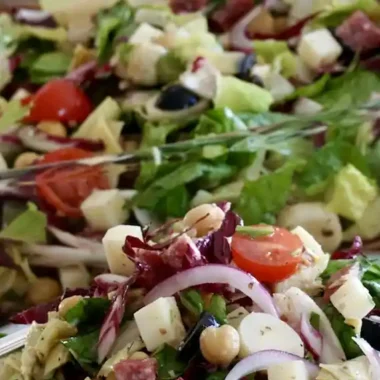
Serve this pasta with a side of toasted garlic bread to soak up the extra sauce. A crisp Italian chopped salad with vinaigrette provides a refreshing acid balance to the rich creaminess of the dish. Steamed green beans or roasted asparagus are also excellent vegetable pairings.
Garnish for Professional Presentation
Freshly chopped parsley adds a pop of color and a clean, herbaceous note that cuts through the richness. A sprinkle of red pepper flakes adds visual contrast and a subtle hint of heat. Shaved parmesan curls provide a sophisticated finish and extra salty punch.
Proper Refrigeration and Shelf Life
Store leftovers in an airtight container in the refrigerator for up to five days. Because the pasta continues to absorb moisture over time, the sauce will thicken significantly as it cools. Ensure the container is sealed tightly to prevent the pasta from drying out.
The Best Way to Reheat
Reheat the pasta in a skillet over medium-low heat rather than the microwave. Add a splash of milk or chicken broth to the pan and stir gently until the sauce returns to its original creamy consistency. This prevents the dairy from breaking or becoming oily.
Why Freezing is Not Recommended
Cream-based sauces often separate or become grainy during the freezing and thawing process. The emulsion of butter, flour, and dairy is unstable at very low temperatures. For the best quality and texture, enjoy this meal fresh or from the refrigerator.
Common Recipe Questions
How do you make garlic parmesan sauce for pasta from scratch?
Begin by melting butter and sautéing fresh minced garlic until fragrant. Whisk in flour to create a roux, then slowly blend in chicken broth to deglaze the pan. Gradually stir in milk and heavy cream, simmering until the sauce thickens, then stir in freshly grated parmesan cheese off the heat.
Why does my parmesan sauce turn grainy?
Graininess usually occurs for two reasons: the heat was too high when the cheese was added, or pre-shredded cheese was used. Pre-shredded cheese contains cellulose or anti-caking agents that prevent it from melting smoothly. Always use a block of cheese and stir it in after the pan is off the heat.
Can you use rotisserie chicken for a faster meal?
Yes, rotisserie chicken is a great time-saver. Skip the searing process and the spice rub, and simply shred the pre-cooked chicken. Stir the shredded meat into the sauce after the parmesan has melted but before adding the pasta.
What is the best way to avoid burning the garlic?
Keep the heat at a medium level and only sauté the garlic for about 60 seconds. Garlic burns quickly and becomes bitter if it turns dark brown. As soon as the garlic smells fragrant and looks translucent, immediately add the flour to lower the temperature of the pan.
Print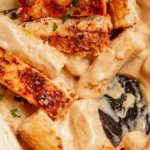
Garlic Parmesan Chicken and Pasta
- Total Time: 30 minutes
- Yield: 6 servings 1x
- Diet: General
Description
Tender chicken seared with a savory garlic spice rub, rigatoni that holds every drop of sauce, and a glossy garlic parmesan cream that comes together in one skillet.
Ingredients
- 1 lb shortcut pasta (Rigatoni)
- 1 lb chicken breast, pounded to even thickness
- 2 Tablespoons olive oil
- 2 teaspoons oregano
- 1 teaspoon paprika
- 2 teaspoons garlic powder
- 1 teaspoon dried sage
- 1/4 teaspoon red pepper flakes
- 3 Tablespoons unsalted butter
- 5 cloves minced garlic
- 3 Tablespoons flour
- 1/2 cup chicken broth
- 2 cups milk
- 1/2 cup heavy cream
- 1 1/2 cups fresh grated parmesan cheese
- Parsley, parmesan, and red pepper flakes for garnish
Instructions
- Cook the pasta: Bring a large pot of salted water to a boil. Cook the pasta al dente, according to package directions. Reserve 1 cup of pasta water then drain the pasta.
- Season: Toss the chicken breast together with olive oil, oregano, paprika, garlic powder, dried sage, and red pepper flakes.
- Sear the chicken: Heat a deep, heavy-bottomed skillet over medium-high heat with a drizzle of olive oil. Pan sear chicken for 8-10 minutes, flipping halfway through. Remove the cooked chicken to a clean plate.
- Make the roux: Melt the butter over medium heat in the same pan then add the fresh garlic and cook until fragrant, 1 minute. Whisk in the flour to create a thick paste. Slowly pour in the chicken broth until no lumps remain.
- Finish the sauce: Turn the heat down to medium-low and pour in the milk and heavy cream, whisking consistently. Cook for 2-3 minutes to thicken. Add the parmesan cheese, salt, and pepper and stir until melted.
- Toss the sauce and pasta: Add the cooked pasta to the sauce and toss to coat. Add the reserved pasta water a few tablespoons at a time as needed to thin the sauce.
- Combine and finish: Slice the chicken thinly and serve on top of the garlic parmesan pasta. Garnish with red pepper flakes, shaved parmesan, or fresh chopped parsley.
Notes
For large chicken breasts, slice them in half lengthwise to ensure even cooking. Always use freshly grated parmesan from a block to prevent the sauce from becoming grainy. For dairy-free, use plant-based butter, almond milk, and coconut cream. For gluten-free, use gluten-free pasta and a 1:1 gluten-free flour.
- Prep Time: 10 minutes
- Cook Time: 20 minutes
- Category: Dinner
- Method: Pan-searing
- Cuisine: Italian-American
Nutrition
- Serving Size: 1 serving
- Calories: 633 kcal
- Sugar: 6.9 g
- Sodium: 494 mg
- Fat: 22.9 g
- Saturated Fat: 12 g
- Unsaturated Fat: 10.9 g
- Trans Fat: 0 g
- Carbohydrates: 67 g
- Fiber: 3 g
- Protein: 38.5 g
- Cholesterol: 98.2 mg
Keywords: garlic parmesan chicken pasta, creamy pasta dinner, one skillet meal, rigatoni