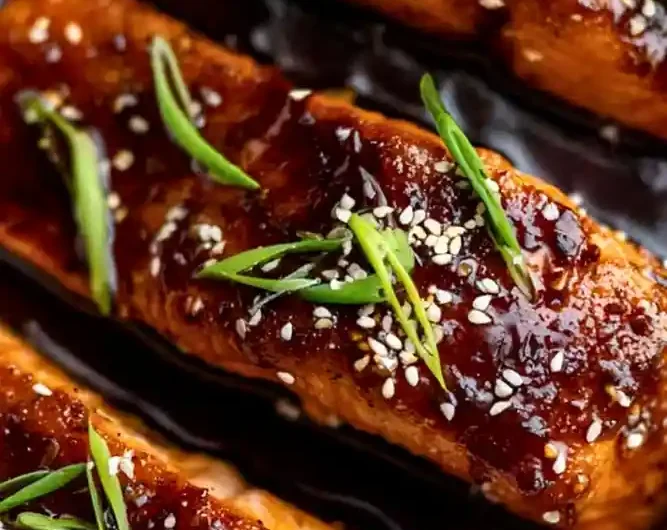
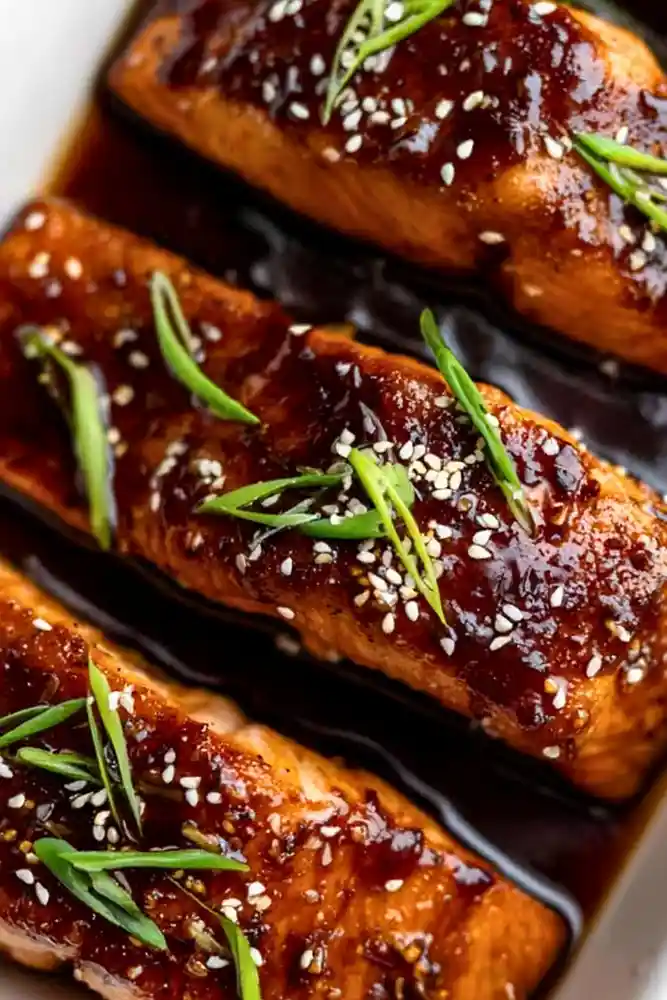
This easy teriyaki salmon dish features tender, flaky fillets coated in a rich, homemade glaze that balances sweetness with savory depth. By preparing the sauce from scratch, you achieve a professional, glossy finish that makes this meal feel special despite its minimal effort. It serves as an ideal solution for busy weeknights when you want a healthy, restaurant-quality dinner without spending hours in the kitchen.
List of ingredients
- 1 ½ lbs salmon fillet (cut into 4 pieces)
- 1 tablespoon olive oil
- ½ teaspoon salt
- ½ teaspoon black pepper
- ⅓ cup soy sauce
- 3 tablespoons honey or brown sugar
- 2 tablespoons rice vinegar
- 1 tablespoon sesame oil
- 2 cloves garlic, minced
- 1 teaspoon ginger, grated
- 1 tablespoon cornstarch
- 1 tablespoon water
- Sesame seeds (for garnish)
- Green onions (for garnish)
- Lime or lemon wedges (for serving)
- Red pepper flakes (optional)
step-by-step instructions
- Step: Preheat your oven to 400°F (200°C) and line a baking sheet with foil or parchment paper.
- Step: Place the salmon pieces on the sheet and pat them dry. Season lightly with salt, pepper, and a drizzle of olive oil.
- Step: In a small saucepan, combine the soy sauce, honey (or brown sugar), rice vinegar, sesame oil, garlic, and ginger.
- Step: Heat over medium for 2–3 minutes until warm and the sugar dissolves. Add the cornstarch slurry and stir until the sauce thickens.
- Step: Spoon half of the teriyaki sauce over the salmon, coating the tops well. Save the rest for serving.
- Step: Bake for 12–15 minutes, depending on the thickness of the fish, until the salmon flakes easily with a fork.
- Step: Remove the salmon from the oven and brush it with extra teriyaki sauce for a shiny, flavorful glaze.
- Step: Add sesame seeds, green onions, or a squeeze of lime if you like, and serve warm.
Refining Your Salmon Technique
Ensuring Even Cooking Through Uniform Portioning
To achieve the most consistent results, try to cut your salmon fillets into equal rectangular portions. When the pieces are similar in thickness and surface area, they will reach the appropriate internal temperature at the exact same time. This prevents smaller, thinner tail ends from becoming overcooked while you wait for the thicker center cuts to finish.
The Role of Surface Moisture in Glaze Adhesion
Always take the time to pat the surface of your salmon completely dry with paper towels before seasoning or glazing. Moisture on the exterior of the fish creates steam, which can prevent the glaze from adhering properly and result in a washed-out appearance. A dry surface allows the oil and the initial layer of sauce to bond more effectively, resulting in a cleaner, more intense flavor profile.
Managing Sauce Thickness for Better Coverage
The cornstarch slurry is the secret to a professional-looking teriyaki glaze. If you prefer a thicker coating that remains heavy on the fish, add the slurry slowly while the sauce is bubbling. You can test the consistency by dipping the back of a spoon into the sauce; if the glaze coats the metal without running off instantly, it is ready for application.
Customizing Your Flavor Profile
Balancing Sweetness with Tangy Components
If you find that your palate prefers a less sugary profile, increase the amount of rice vinegar by a half-teaspoon or add a splash of freshly squeezed lime juice into the sauce mixture. These acidic elements balance the honey or brown sugar, providing a sharper contrast that highlights the savory notes of the soy sauce. Always taste your sauce before thickening to ensure it aligns with your specific preferences.
Adjusting Heat Levels for Personalized Palates
While traditional teriyaki focuses on sweet and savory notes, adding heat can transform the dish into a more complex experience. You can incorporate finely minced fresh chili or a small amount of chili paste directly into the saucepan during the simmering stage. For those who prefer a flexible approach, keeping red pepper flakes as a table-side garnish allows each person to control their own spice level.
Infusing Aromatics for Deeper Complexity
The garlic and ginger act as the aromatic backbone of this recipe. For a more intense infusion, let the minced garlic and grated ginger sit in the warm soy sauce mixture for a minute before turning up the heat. This short resting period allows the essential oils in the aromatics to meld with the liquids, creating a more robust foundation for the overall glaze.
Serving and Presentation Strategies
Choosing Appropriate Starch Bases
Serving this salmon over a bed of steamed white rice is the traditional method because the grains act like a sponge for any excess sauce. However, if you are looking for alternatives, consider pairing the dish with chilled buckwheat noodles or brown rice. These options provide different textural experiences while maintaining the balance of the meal.
Adding Freshness with Vegetable Sides
Because the salmon is rich and glazed with sugar, pairing it with something fresh or bitter is highly recommended. Steamed bok choy, roasted asparagus, or a simple cucumber salad with vinegar dressing provides a sharp contrast. These vegetable sides add crunch and help cleanse the palate between bites of the savory, sweet fish.
Maximizing Visual Appeal
The presentation of the final dish often influences the enjoyment of the meal. Using bright, thin ribbons of green onion and toasted sesame seeds adds a vibrant contrast to the dark, glossy mahogany finish of the teriyaki glaze. Arranging the fillets neatly on a platter rather than individual plates can also make for a more communal, elegant dining experience.
Handling Leftovers and Food Storage
Effective Cooling Practices
Before storing your salmon, allow it to cool down to room temperature for about 20 to 30 minutes, but do not leave it out for longer than two hours. Placing hot fish into a container can create excess condensation, which leads to soggy skin and a diluted glaze texture. Once cooled, transfer the salmon to a shallow, airtight container to keep it as fresh as possible.
Maximizing Quality in the Refrigerator
Properly sealed in an airtight container, the leftover salmon will maintain its quality for up to three days in the refrigerator. If you anticipate having leftovers, try to store the glaze separately from the fish if possible, though this is not strictly necessary. If you store them together, the fish will continue to absorb the sauce, which may slightly alter the texture over time.
Gentle Warming Methods
When reheating, aim for a low and slow approach rather than high-intensity heat. Using an oven set to 300°F (150°C) allows the salmon to warm through without drying out the muscle fibers. A quick splash of water or a few extra drops of soy sauce in the bottom of the pan can create a steam effect, which helps revive the glaze and keep the fish moist during the warming process.
Addressing Common Cooking Concerns
How do I identify when the salmon is perfectly cooked?
The most reliable way to check for doneness is to use a fork to gently press down on the thickest part of the fillet. If the flesh separates easily along the natural white lines (the flakes), it is finished cooking. If the flesh remains firm or translucent, it requires a few more minutes in the heat.
Can I utilize this recipe for large group gatherings?
This recipe is highly scalable for larger groups because it utilizes a simple baking method. You can easily double or triple the ingredients to accommodate more salmon fillets on a larger sheet pan or multiple racks in the oven. Ensure there is enough space between the fillets to allow for proper air circulation, which ensures the glaze caramelizes instead of just steaming.
Why is my sauce not coating the fish evenly?
If the sauce runs off the salmon, it is likely too thin or the salmon surface was too wet. Ensure your sauce reaches the desired consistency with the cornstarch slurry before applying it. Additionally, brushing the fish halfway through the baking process, rather than only at the beginning, allows the glaze to build up in layers and creates a thicker, more adherent coating.
Print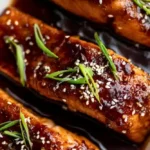
Glazed Teriyaki Salmon Fillets
- Total Time: 25 minutes
- Yield: 4 servings 1x
- Diet: Pescatarian
Description
This Teriyaki Salmon is tender, flaky, and coated in a glossy homemade glaze that’s sweet, savory, and full of flavor. It cooks fast and uses simple ingredients, making it perfect for weeknight dinners.
Ingredients
- 1 ½ lbs salmon fillet (cut into 4 pieces)
- 1 tablespoon olive oil
- ½ teaspoon salt
- ½ teaspoon black pepper
- ⅓ cup soy sauce
- 3 tablespoons honey or brown sugar
- 2 tablespoons rice vinegar
- 1 tablespoon sesame oil
- 2 cloves garlic, minced
- 1 teaspoon ginger, grated
- 1 tablespoon cornstarch
- 1 tablespoon water
- Sesame seeds (for garnish)
- Green onions (for garnish)
- Lime or lemon wedges (for serving)
- Red pepper flakes (optional)
Instructions
- Step: Preheat your oven to 400°F (200°C) and line a baking sheet with foil or parchment paper.
- Step: Place the salmon pieces on the sheet and pat them dry. Season lightly with salt, pepper, and a drizzle of olive oil.
- Step: In a small saucepan, combine the soy sauce, honey (or brown sugar), rice vinegar, sesame oil, garlic, and ginger.
- Step: Heat over medium for 2–3 minutes until warm and the sugar dissolves. Add the cornstarch slurry and stir until the sauce thickens.
- Step: Spoon half of the teriyaki sauce over the salmon, coating the tops well. Save the rest for serving.
- Step: Bake for 12–15 minutes, depending on the thickness of the fish, until the salmon flakes easily with a fork.
- Step: Remove the salmon from the oven and brush it with extra teriyaki sauce for a shiny, flavorful glaze.
- Step: Add sesame seeds, green onions, or a squeeze of lime if you like, and serve warm.
Notes
Pat the salmon dry before baking so the teriyaki glaze sticks better. For a caramelized top, broil the salmon for 1–2 minutes at the end of the baking time, watching closely to prevent burning.
- Prep Time: 10 minutes
- Cook Time: 15 minutes
- Category: Main
- Method: Baking
- Cuisine: Japanese-American
Nutrition
- Serving Size: 1 fillet
- Calories: 320 kcal
- Sugar: 12 g
- Sodium: 780 mg
- Fat: 15 g
- Saturated Fat: 3 g
- Unsaturated Fat: 10 g
- Trans Fat: 0 g
- Carbohydrates: 14 g
- Fiber: 0 g
- Protein: 32 g
- Cholesterol: 85 mg
Keywords: Teriyaki Salmon, easy salmon recipe, healthy dinner, Japanese-American, homemade teriyaki sauce