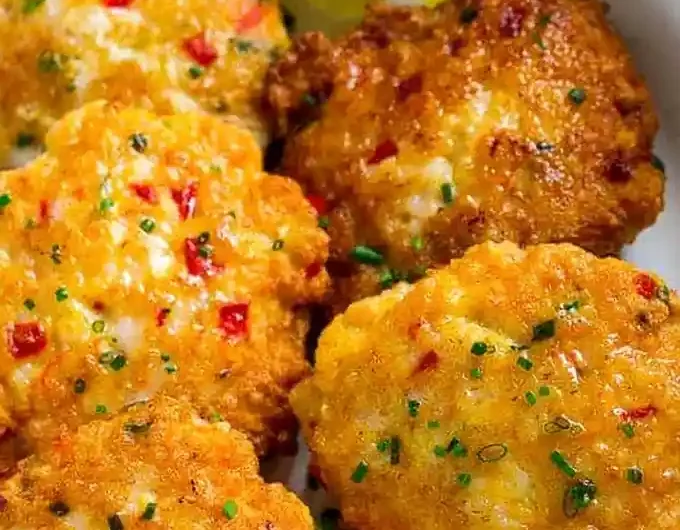
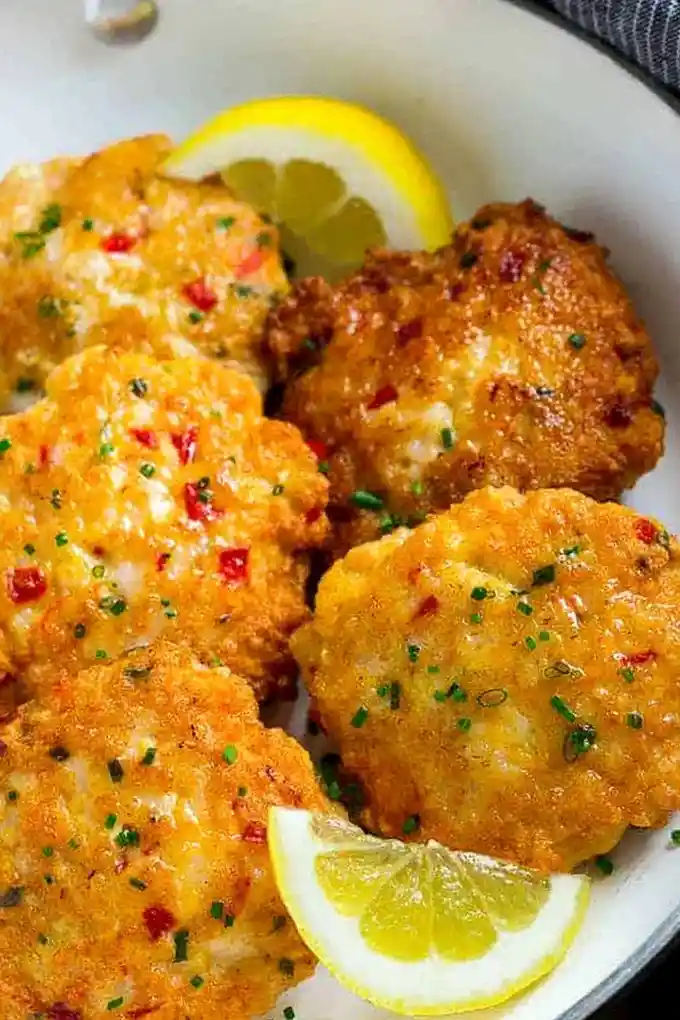
These savory shrimp cakes are combined with fresh vegetables and herbs for a balanced flavor. They are quickly pan-seared to achieve a golden-brown exterior while remaining tender inside.
List of ingredients
- 1 pound raw shrimp (peeled and deveined) – ensures a clean base for the cakes.
- 3/4 cup panko breadcrumbs – provides a light, crispy binding.
- 1/4 cup red bell pepper (finely diced) – adds color and a mild sweetness.
- 3 tablespoons chives (sliced, plus more for garnish) – contributes a subtle onion flavor.
- 1/2 teaspoon salt – enhances all the savory elements.
- 1/4 teaspoon pepper – adds a light, foundational spice.
- 2 eggs – acts as the primary binder for the patties.
- 1 teaspoon lemon zest – brings a bright, citrusy note to the seafood.
- 4 tablespoons olive oil – used for high-heat pan searing.
step-by-step instructions
- Chop the shrimp: Place the raw shrimp in a food processor and pulse until they are coarsely chopped. Be careful not to over-process, as the goal is small chunks rather than a smooth paste.
- Combine ingredients: Transfer the chopped shrimp into a large mixing bowl. Add the panko breadcrumbs, diced red bell pepper, sliced chives, salt, pepper, eggs, and lemon zest, then stir gently until the mixture is evenly combined.
- Shape the patties: Use your hands to divide the shrimp mixture into six equal portions. Firmly press each portion into a round patty shape to ensure they do not break during cooking.
- Sear the cakes: Heat the olive oil in a large skillet over medium-high heat until shimmering. Place the patties in the pan in a single layer and cook for 4-5 minutes per side, or until they are golden brown and cooked through.
- Garnish and serve: Remove the cakes from the pan and serve immediately. Garnish with extra chives, a dollop of sour cream, and lemon wedges for added brightness.
Professional Cooking Techniques
Maintain Coarse Shrimp Texture
Pulse the shrimp sparingly in the food processor to avoid creating a paste. Keeping small pieces of shrimp intact ensures the cakes have a meaty, substantial bite. Over-processing leads to a mushy interior that lacks the desired seafood structure.
Optimize Oil Temperature
Wait until the olive oil is shimmering but not smoking before adding the patties. If the oil is too cold, the cakes will absorb excess fat and become greasy. If it is too hot, the outside will burn before the center is fully cooked.
Apply Firm Pressure When Shaping
Press the mixture firmly with your palms when forming the patties. This compression helps the panko and eggs lock together, reducing the risk of the cakes falling apart in the pan. Even thickness across all patties ensures consistent cooking times.
Chill the Mixture for Stability
If the shrimp mixture feels too soft or sticky, place it in the refrigerator for 30 minutes before shaping. Chilling firms up the proteins and the binder, making the patties easier to handle. This step is especially helpful in warm kitchen environments.
Avoid Pan Overcrowding
Cook the patties in batches if your skillet is not large enough to hold them with space in between. Overcrowding the pan drops the oil temperature and traps steam between the cakes. This results in steamed edges rather than a crispy, golden-brown sear.
Limit Flipping to Once
Let the cakes sear undisturbed for the full 4-5 minutes before turning them over. Flipping too frequently prevents a proper crust from forming and can break the patties. One clean flip per cake is sufficient for a perfect finish.
Ingredient Substitutions and Customizations
Using Alternative Breadcrumbs
If panko is unavailable, you can use traditional dried breadcrumbs or crushed cornflakes for a different crunch. Traditional breadcrumbs result in a denser cake, while cornflakes add a sweeter, toastier flavor. Adjust the quantity slightly as panko is airier than standard crumbs.
Swapping Fresh Herbs
Fresh parsley or coriander are excellent replacements for chives if you prefer a different herbal profile. Parsley offers a clean, peppery taste, while coriander provides a citrusy, aromatic quality. Use an equal measurement to maintain the balance of the recipe.
Incorporating Diced Celery
Adding two tablespoons of finely diced celery introduces an extra layer of crunch and a fresh, salty note. Celery pairs naturally with seafood and helps break up the richness of the eggs and shrimp. Ensure the dice is very small so the celery doesn’t disrupt the patty structure.
Adding Minced Garlic
One to two cloves of minced garlic can be stirred into the mixture for a deeper, savory aromatic quality. Garlic enhances the natural sweetness of the shrimp and bell pepper. For a milder taste, use garlic powder instead of fresh cloves.
Substituting Greek Yogurt for Eggs
Replacing one of the eggs with two tablespoons of thick Greek yogurt creates a more tender, moist interior. The acidity in the yogurt slightly tenderizes the shrimp proteins. This substitution makes the cakes feel slightly lighter while maintaining a strong bind.
Adding Smoked Paprika or Chili Flakes
A pinch of smoked paprika adds a woody, charred depth to the cakes without adding significant heat. If you prefer a spicy kick, add a small amount of red chili flakes during the mixing stage. This creates a contrast against the bright lemon zest.
Using Different Colored Peppers
Yellow or orange bell peppers can be used instead of red peppers for a different visual appeal. These colors offer a similar sweetness and crunch to the red variety. You can even use a mix of colors for a more vibrant appearance.
Serving Suggestions and Pairings
Pairing with Arugula Salad
A simple arugula salad dressed with lemon juice and olive oil provides a peppery contrast to the rich cakes. The bitterness of the greens cuts through the fried exterior of the shrimp. This combination makes the dish feel lighter and more balanced.
Serving with Tangy Coleslaw
A vinegar-based coleslaw adds a crisp, acidic element that complements the seafood. The crunch of raw cabbage and carrots provides a textural difference from the soft interior of the cakes. This is a classic pairing for seafood cakes and sliders.
Adding a Greek Chickpea Salad
Pairing the cakes with a salad of chickpeas, cucumbers, and feta cheese adds heartiness and saltiness. The protein in the chickpeas makes the meal more filling. Use a lemon-oregano vinaigrette to tie the flavors together.
Side of Garlic Roasted Potatoes
Crispy roasted potatoes with minced garlic and rosemary serve as a satisfying starch accompaniment. The earthy flavor of the potatoes grounds the brightness of the lemon and shrimp. Ensure the potatoes are roasted until golden to match the texture of the cakes.
Roasted Asparagus Pairing
Tender-crisp roasted asparagus spears provide a clean, vegetal side that doesn’t overpower the shrimp. Drizzle the asparagus with a bit of melted butter and lemon juice. This pairing is ideal for a more formal dinner presentation.
Serving with Rice Pilaf
A fluffy rice pilaf cooked in vegetable broth is an excellent base for the shrimp cakes. The neutral flavor of the rice absorbs any extra juices from the cakes. Add a few sautéed carrots or peas to the rice for extra color.
Classic Tartar Sauce Dip
A homemade tartar sauce made from mayonnaise, capers, and minced pickles provides a creamy, tangy dip. The acidity of the capers highlights the sweetness of the shrimp. Serve the sauce chilled in a small ramekin on the side.
Zesty Remoulade Option
Remoulade sauce, featuring mustard, paprika, and herbs, offers a more complex flavor profile than tartar sauce. The mustard adds a slight zing that pairs well with the lemon zest in the cakes. This is a traditional pairing for coastal seafood dishes.
Lemon Aioli Dip
For a simpler but elegant dip, mix garlic aioli with a squeeze of fresh lemon juice. The creamy garlic base complements the pan-seared crust of the patties. This dip emphasizes the citrus notes already present in the recipe.
Serving in Buns as Sliders
Place a shrimp cake inside a toasted brioche bun with a slice of tomato and a piece of lettuce. Add a swipe of remoulade or aioli to the bun for extra moisture. This transforms the appetizer into a substantial meal option.
Preservation and Storage
Refrigeration Methods
Store leftover cooked shrimp cakes in an airtight container in the refrigerator for up to three days. Ensure the cakes are completely cooled before sealing the lid to prevent moisture buildup. This prevents the cakes from becoming soggy during storage.
Freezing Raw Patties
You can freeze the shaped raw patties by placing them on a parchment-lined tray and freezing them individually first. Once frozen solid, transfer them to a freezer-safe bag to prevent them from sticking together. This allows you to cook them directly from the freezer.
Freezing Cooked Cakes
Cooked cakes can be frozen for up to two months if wrapped tightly in plastic wrap and foil. To maintain quality, avoid reheating them more than once. Label the bag with the date to ensure they are used while the flavor is still fresh.
Oven Reheating for Crispness
To reheat cakes while maintaining the crust, place them on a wire rack in a 350F (175C) oven for 5-10 minutes. The rack allows hot air to circulate under the cake, preventing the bottom from getting soft. Avoid using a microwave, as it makes the panko rubbery.
Air Fryer Reheating
An air fryer is the most efficient way to restore the golden exterior of a shrimp cake. Heat them at 375F (190C) for 3-5 minutes until they are hot through. This method mimics the original pan-fry without needing extra oil.
Stovetop Refresh
Reheating on a skillet with a teaspoon of fresh olive oil can bring back the original sear. Use medium heat and warm the cakes for 2 minutes per side. This is the best method for those who want the exact texture of the first cook.
Planning and Preparation
Preparing the Mixture Early
The shrimp and vegetable mixture can be prepared up to 24 hours in advance. Store the combined ingredients in a sealed bowl in the coldest part of the refrigerator. Stir the mixture gently before shaping to redistribute any settled liquids.
Shaping Patties in Advance
You can shape the patties a few hours before you plan to cook them. Place them on a tray lined with parchment paper and cover them loosely with plastic wrap. This saves time during the actual meal preparation and allows the binder to set.
Thawing Frozen Shrimp Safely
Always thaw frozen shrimp in the refrigerator overnight or under cold running water. Never thaw shrimp at room temperature to avoid bacterial growth. Once thawed, pat the shrimp very dry with paper towels to prevent the cakes from becoming too wet.
Common Issues and Fixes
Preventing Patties from Falling Apart
If the patties break during frying, it is often due to insufficient binding or too much moisture. Add an extra tablespoon of panko breadcrumbs to the mixture to absorb excess liquid. Ensure you are pressing the patties firmly during the shaping phase.
Managing Excess Moisture
Wet shrimp can dilute the binder and lead to a soft, mushy cake. Always pat the shrimp dry with a lint-free towel after thawing and before pulsing. If the mixture seems watery after adding the eggs, stir in a small amount of additional breadcrumbs.
Avoiding Rubbery Shrimp
Overcooking shrimp leads to a rubbery, tough texture. Stick to the 4-5 minute per side guideline and use a meat thermometer to check for an internal temperature of 145F (63C). Remove them from the pan immediately once they reach this temperature.
Preventing Oil Smoke
If the olive oil begins to smoke, the heat is too high and may burn the outside of the cakes. Reduce the burner to medium and let the pan cool for a minute before adding the patties. Using a high-smoke point oil like avocado oil can also prevent this issue.
Frequently Asked Questions
Can I use frozen shrimp for this recipe?
Yes, frozen shrimp work perfectly as long as they are completely thawed and patted dry. Excess water from frozen shrimp can make the batter too loose, so drying them is a critical step for the structure of the cake.
Can I make these without a food processor?
You can chop the shrimp by hand using a sharp chef’s knife. Cut the shrimp into small, uniform pieces until they are finely diced. While this takes more time, the resulting texture is often even more consistent than using a processor.
What is the best oil for frying these cakes?
Olive oil is a great choice for flavor, but any oil with a medium-to-high smoke point works well. Grapeseed oil or avocado oil are excellent alternatives if you prefer a more neutral taste or are cooking at higher temperatures.
Can I bake these instead of pan-frying?
Yes, you can bake them at 400F (200C) on a greased baking sheet for 12-15 minutes. Turn them halfway through the cooking time to ensure both sides are brown. Note that the texture will be slightly less crispy than the pan-fried version.
How do I know when the shrimp cakes are done?
The cakes are done when they have a deep golden-brown crust and the shrimp inside is opaque. An internal temperature of 145F (63C) is the safest and most accurate indicator of doneness.
Can I use gluten-free breadcrumbs?
Yes, gluten-free panko or crushed gluten-free crackers are suitable substitutes. These alternatives generally hold the shape well and provide a similar crunch. Ensure the binder (eggs) is well-mixed to compensate for the different absorbent properties of GF crumbs.
Print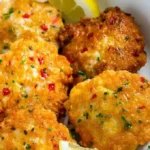
Golden Pan-Seared Shrimp Cakes
- Total Time: 25 minutes
- Yield: 6 patties 1x
- Diet: General
Description
These easy shrimp cakes are loaded with veggies and herbs and pan seared to golden brown perfection. A simple and easy meal option that the whole family is sure to love!
Ingredients
- 1 pound raw shrimp (peeled and deveined)
- 3/4 cup panko breadcrumbs
- 1/4 cup red bell pepper (finely diced)
- 3 tablespoons chives (sliced, plus more for garnish)
- 1/2 teaspoon salt
- 1/4 teaspoon pepper
- 2 eggs
- 1 teaspoon lemon zest
- 4 tablespoons olive oil
Instructions
- Step: Place the shrimp in the bowl of a food processor. Pulse until coarsely chopped – do not grind into a paste.
- Step: Transfer the shrimp to a large bowl and add the panko breadcrumbs, red bell pepper, chives, salt, pepper, eggs, and lemon zest. Stir gently to combine.
- Step: Form the shrimp mixture into 6 patties.
- Step: Heat the olive oil in a large pan over medium high heat. Add the shrimp patties in a single layer and cook for 4-5 minutes on each side or until golden brown.
- Step: Serve immediately, topped with additional chives and sour cream if desired. Garnish with lemon wedges if desired.
Notes
I like to garnish my shrimp cakes with more fresh chives and a dollop of sour cream.
- Prep Time: 10 minutes
- Cook Time: 15 minutes
- Category: Appetizer
- Method: Pan-searing
- Cuisine: American
Nutrition
- Serving Size: 1 patty
- Calories: 189 kcal
- Sugar: 1 g
- Sodium: 698 mg
- Fat: 12 g
- Saturated Fat: 2 g
- Unsaturated Fat: 9 g
- Trans Fat: 0.01 g
- Carbohydrates: 7 g
- Fiber: 1 g
- Protein: 13 g
- Cholesterol: 150 mg
Keywords: shrimp cakes, appetizer, easy seafood, pan-seared shrimp