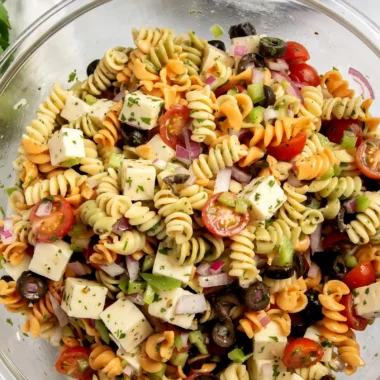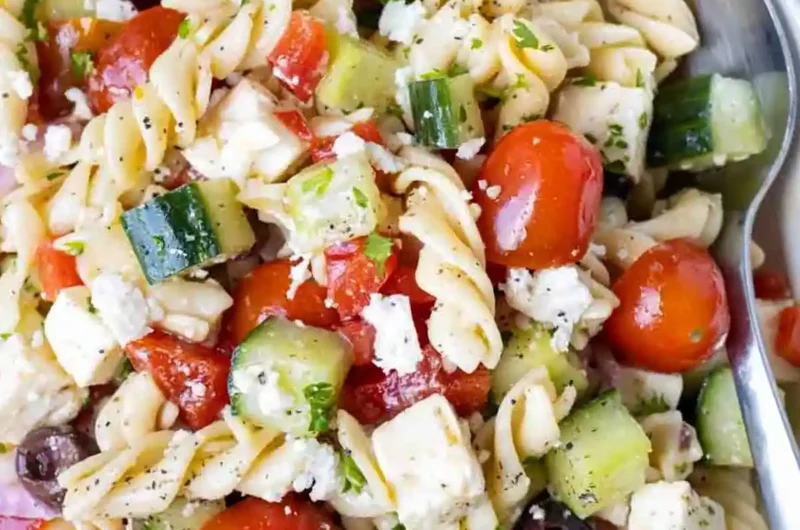
This Greek pasta salad combines tender rotini with a zesty homemade vinaigrette and fresh, crisp vegetables. It is an ideal side dish for picnics, summer BBQs, or a light lunch. The balance of salty feta and tangy olives creates a refreshing flavor profile.
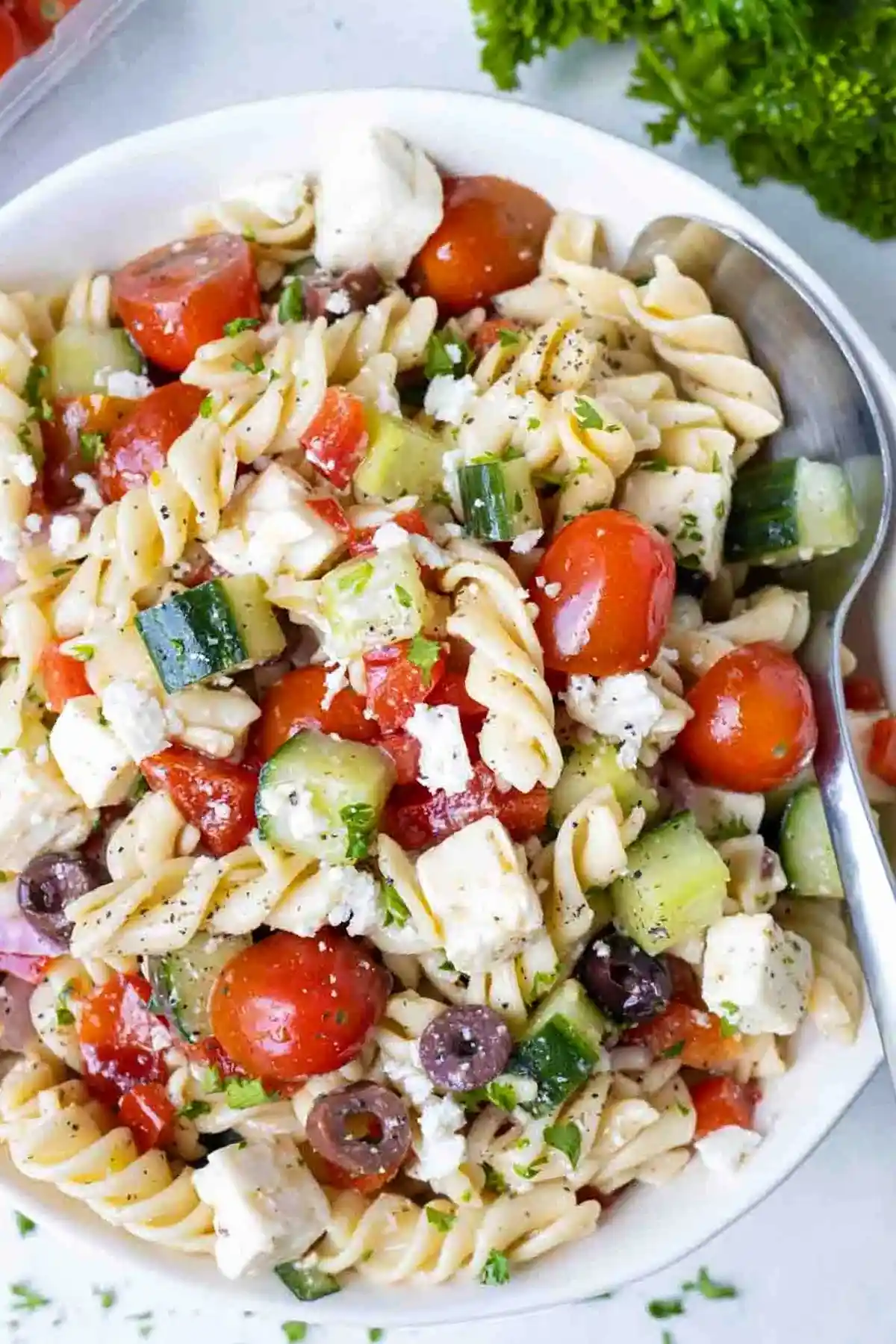
List of ingredients
- 10 oz. rotini pasta – provides a great texture for holding sauce.
- 8 oz. block Feta cheese – cut into small, uniform cubes.
- 1 pint grape tomatoes – halved for a burst of sweetness.
- 1 English cucumber – diced into bite-sized pieces.
- 1 red bell pepper – diced for color and crunch.
- ½ cup Kalamata olives – sliced and thoroughly drained.
- ½ red onion – thinly sliced for a sharp contrast.
- ½ cup olive oil – the base of the dressing.
- 3 Tbsp. red wine vinegar – provides the signature tang.
- 2 tsp. honey – optional, to balance the acidity.
- 1 clove garlic – finely minced for depth.
- 1 tsp. Dijon mustard – helps emulsify the dressing.
- ¼ tsp. dried oregano – essential Greek flavor.
- ¼ tsp. dried parsley – adds a mild herbal note.
- ¼ tsp. dried basil – adds a sweet aromatic touch.
- 1 tsp. salt – plus more to taste.
- ¾ tsp. black pepper – for a hint of spice.
step-by-step instructions
- Prepare the pasta: Cook pasta according to package directions. Rinse under cool running water, drain well, and then add to a large bowl.
- Mix the dressing: Combine all dressing ingredients in a mason jar or blender. Blend or shake for 10-20 seconds, or until emulsified. Pour salad dressing over the pasta and toss until pasta is well coated.
- Combine components: Add the Feta cheese, tomatoes, cucumber, bell pepper, olives, onion, and any additional salt, to taste. Toss until everything is just combined.
- Finish and serve: Serve immediately or refrigerate for a few hours to enjoy chilled.
Optimal Pasta Selection
Selecting the Right Pasta Shape
Rotini or penne are the most effective choices for this salad. These shapes feature ridges and spirals that trap the vinaigrette, ensuring every bite is flavorful. Avoid smooth pastas like spaghetti, as the dressing will simply slide off the surface.
Preparing Gluten-Free Pasta
If you require a gluten-free option, opt for pasta made from brown rice or quinoa. These varieties maintain their structure better than corn-based pastas, which can become mushy. Be careful not to overcook gluten-free noodles, as they have a narrower window of perfection.
The Importance of Rinsing Pasta
Unlike hot pasta dishes, cold pasta salads require rinsing. Running the cooked noodles under cold water removes excess surface starch, which prevents them from clumping together. This step also stops the cooking process immediately to maintain an al dente texture.
Vegetable Preparation Techniques
Removing Cucumber Seeds to Prevent Wateriness
When using a standard cucumber, scoop out the seeds before dicing. English cucumbers typically have fewer seeds, but removing them still helps. This prevents the salad from becoming watery after it sits in the refrigerator.
Choosing the Best Tomatoes
Grape or cherry tomatoes are superior for this recipe because they are firmer than large slicing tomatoes. Their smaller size ensures they don’t break down during the tossing process. Halving them allows the dressing to penetrate the interior for better flavor.
Dicing Peppers for Consistent Flavor
Red bell peppers provide the best visual contrast and a mild sweetness. Dice them into sizes similar to the cucumber and feta cubes. Uniform pieces ensure that you get a bit of every ingredient in each spoonful.
Slicing Red Onions to Reduce Pungency
Slice the red onion as thinly as possible. This allows the vinegar in the dressing to mellow out the sharp bite of the onion. If the onion is still too strong, you can soak the slices in cold water for ten minutes before adding them.
Dressing Composition and Emulsion
How to Emulsify the Dressing
Using a mason jar or a blender is crucial for creating a stable emulsion. Shaking or blending forces the oil and vinegar to bond, creating a creamy consistency that clings to the pasta. A simple stir with a spoon often results in a separated dressing.
The Role of Dijon Mustard in Stability
Dijon mustard acts as a natural emulsifier in this vinaigrette. It helps keep the oil and vinegar together even after the dressing has been refrigerated. Beyond stability, it adds a subtle tang that complements the feta cheese.
Balancing Acidity with Honey
The optional honey is used to cut through the sharpness of the red wine vinegar. It does not make the salad sweet, but rather rounds out the flavor profile. This balance is key to achieving a professional-tasting dressing.
Preparing the Garlic
Mince the garlic as finely as possible or use a garlic press. Large chunks of raw garlic can be overpowering and unpleasant in a cold salad. Fine mincing ensures the garlic flavor is distributed evenly throughout the dressing.
Practical Ingredient Substitutions
Substituting Feta Cheese
If you cannot find block feta, crumbled feta is a suitable alternative. However, block feta holds its shape better during tossing. For a dairy-free version, use a firm tofu marinated in lemon juice and salt.
Alternative Vinegar Options
While red wine vinegar is traditional, apple cider vinegar is a great substitute. It offers a slightly fruitier taste while maintaining the necessary acidity. Avoid using balsamic vinegar, as it will discolor the pasta and change the flavor profile too significantly.
Using Different Olive Varieties
Kalamata olives provide the classic salty, tangy taste associated with Greek cuisine. If you prefer a milder flavor, you can use green Manzanilla olives. Always ensure the olives are pitted and drained to avoid excess brine.
Serving and Pairing Suggestions
Pairing with Grilled Proteins
This salad pairs exceptionally well with grilled chicken breast or lemon-garlic shrimp. The acidity of the salad cuts through the richness of grilled meats. It also works well alongside grilled salmon for a heart-healthy meal.
Serving as a Main Course
To turn this side dish into a full meal, add a protein like chickpeas or grilled tofu. Increasing the amount of vegetables and adding a hard-boiled egg can also make it more filling. This makes it a convenient option for office lunches.
Ideal Side Dish Combinations
Serve this salad alongside garlic bread or warm pita with hummus. It also complements other Mediterranean dishes like lamb kofta or falafel. The cold temperature provides a refreshing contrast to hot, savory appetizers.
Storage and Freshness Guidelines
Using Airtight Containers for Freshness
Store leftovers in a high-quality airtight container to prevent the salad from absorbing other odors in the fridge. This also keeps the vegetables from oxidizing too quickly. Glass containers are often better than plastic for maintaining freshness.
Determining the Shelf Life
The salad is best consumed within three to four days. After this point, the vegetables may lose their crunch and the pasta can become overly soft. If the salad looks dry, a quick stir can redistribute the dressing.
Why Freezing is Not Recommended
Never freeze this pasta salad. The freezing process destroys the cell walls of the cucumbers and tomatoes, leading to a mushy texture upon thawing. Additionally, the emulsion of the dressing will break, leaving an oily residue.
Advanced Make-Ahead Strategies
Timing Your Make-Ahead Preparation
The ideal time to prepare this salad is two to four hours before serving. This allows the pasta to absorb the flavors without becoming too soft. If you prepare it more than 12 hours in advance, the noodles may harden.
Managing Pasta Absorption
Pasta tends to soak up dressing as it sits in the refrigerator. To prevent the salad from becoming dry, reserve a small amount of dressing. Stir in the remaining dressing just before serving to refresh the glossy appearance.
Separate Storage Method
For maximum crispness, store the dressing and the chopped vegetables separately. Mix them with the pasta only when you are ready to serve. This is the best method for catering large events where the salad may sit out for hours.
Common Troubleshooting Solutions
Fixing a Watery Salad
If your salad becomes watery, it is usually due to the cucumbers or tomatoes releasing moisture. You can drain the excess liquid from the bottom of the bowl. Next time, ensure you remove the cucumber seeds and pat the vegetables dry.
Adjusting Bland Flavors
If the salad tastes bland, add a pinch more salt or a squeeze of fresh lemon juice. The salt enhances all the other flavors, while the lemon adds a fresh top note. Avoid adding more oil, as this can make the salad feel greasy.
Preventing Pasta Clumping
If the pasta clumps together, it was likely not rinsed well enough or not dressed immediately. To fix this, gently toss the salad with a small amount of olive oil. This will lubricate the noodles and help them separate.
Frequently Asked Questions
Can I use a store-bought dressing?
Yes, you can use a store-bought Greek vinaigrette if you are short on time. However, homemade dressing is recommended for better flavor control and fewer preservatives. If using store-bought, taste it first to see if it needs extra herbs.
How do I keep the feta from crumbling?
Use a firm block of feta and cut it into cubes using a sharp knife. Fold the cheese in gently at the very end of the mixing process. Avoid over-tossing once the feta has been added.
What is the best way to store leftovers?
Place leftovers in a glass airtight container and keep them in the coldest part of your refrigerator. Give the salad a gentle stir before serving the next day to redistribute the vinaigrette. Let it sit at room temperature for 10 minutes before eating for better flavor.
Print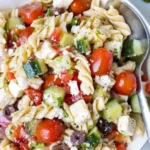
Greek Pasta Salad with Homemade Vinaigrette
- Total Time: 30 minutes
- Yield: 6 servings 1x
- Diet: Vegetarian
Description
This flavor-packed Greek Pasta Salad is always the talk of our summer BBQs and picnics, and it’s all thanks to a simple homemade Greek salad dressing. Rotini pasta is tossed with crisp cucumbers, juicy tomatoes, salty feta, and tangy olives, making it impossible for guests to resist going back for seconds!
Ingredients
- 10 oz. rotini pasta
- 8 oz. block Feta cheese, cut into cubes
- 1 pint grape tomatoes, halved
- 1 English cucumber, diced
- 1 red bell pepper, diced
- ½ cup Kalamata olives, sliced and drained
- ½ red onion, thinly sliced
- ½ cup olive oil
- 3 Tbsp. red wine vinegar
- 2 tsp. honey
- 1 clove garlic, finely minced
- 1 tsp. Dijon mustard
- ¼ tsp. dried oregano
- ¼ tsp. dried parsley
- ¼ tsp. dried basil
- 1 tsp. salt
- ⅛ tsp. black pepper
Instructions
- Cook: Cook pasta according to package directions. Rinse under cool running water, drain well, and then add to a large bowl.
- Dress: Combine all dressing ingredients in a mason jar or blender. Blend or shake for 10-20 seconds, or until emulsified. Pour salad dressing over the pasta and toss until pasta is well coated.
- Combine: Add the Feta cheese, tomatoes, cucumber, bell pepper, olives, onion, and any additional salt, to taste. Toss until everything is just combined.
- Serve: Serve immediately or refrigerate for a few hours to enjoy chilled.
Notes
Gluten-free pasta may be substituted. If you salted your pasta water, you may need to add less salt to the dressing. For best flavor, prep at least 4 hours ahead of time.
- Prep Time: 20 minutes
- Cook Time: 10 minutes
- Category: Side Dish
- Method: Mixing
- Cuisine: Greek, American
Nutrition
- Serving Size: 1 serving
- Calories: 451 kcal
- Sugar: 6 g
- Sodium: 943 mg
- Fat: 29 g
- Saturated Fat: 8 g
- Unsaturated Fat: 21 g
- Trans Fat: 0 g
- Carbohydrates: 38 g
- Fiber: 3 g
- Protein: 12 g
- Cholesterol: 34 mg
Keywords: Greek pasta salad, rotini, feta cheese, summer side dish, homemade Greek dressing