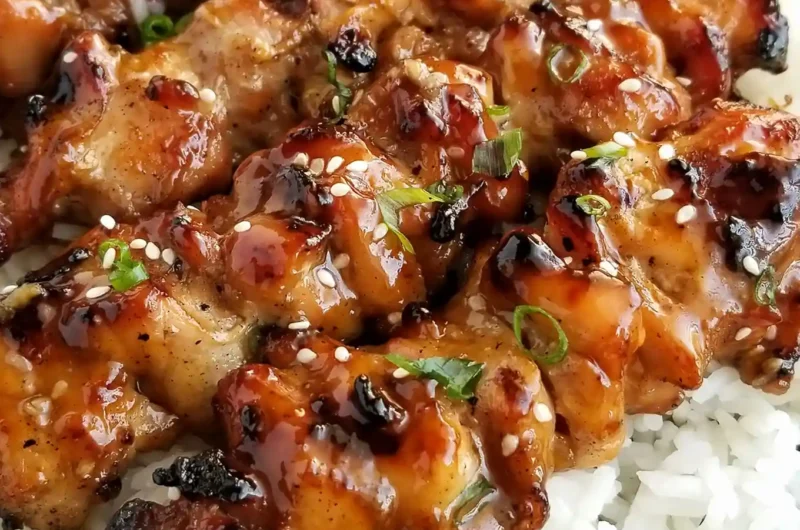
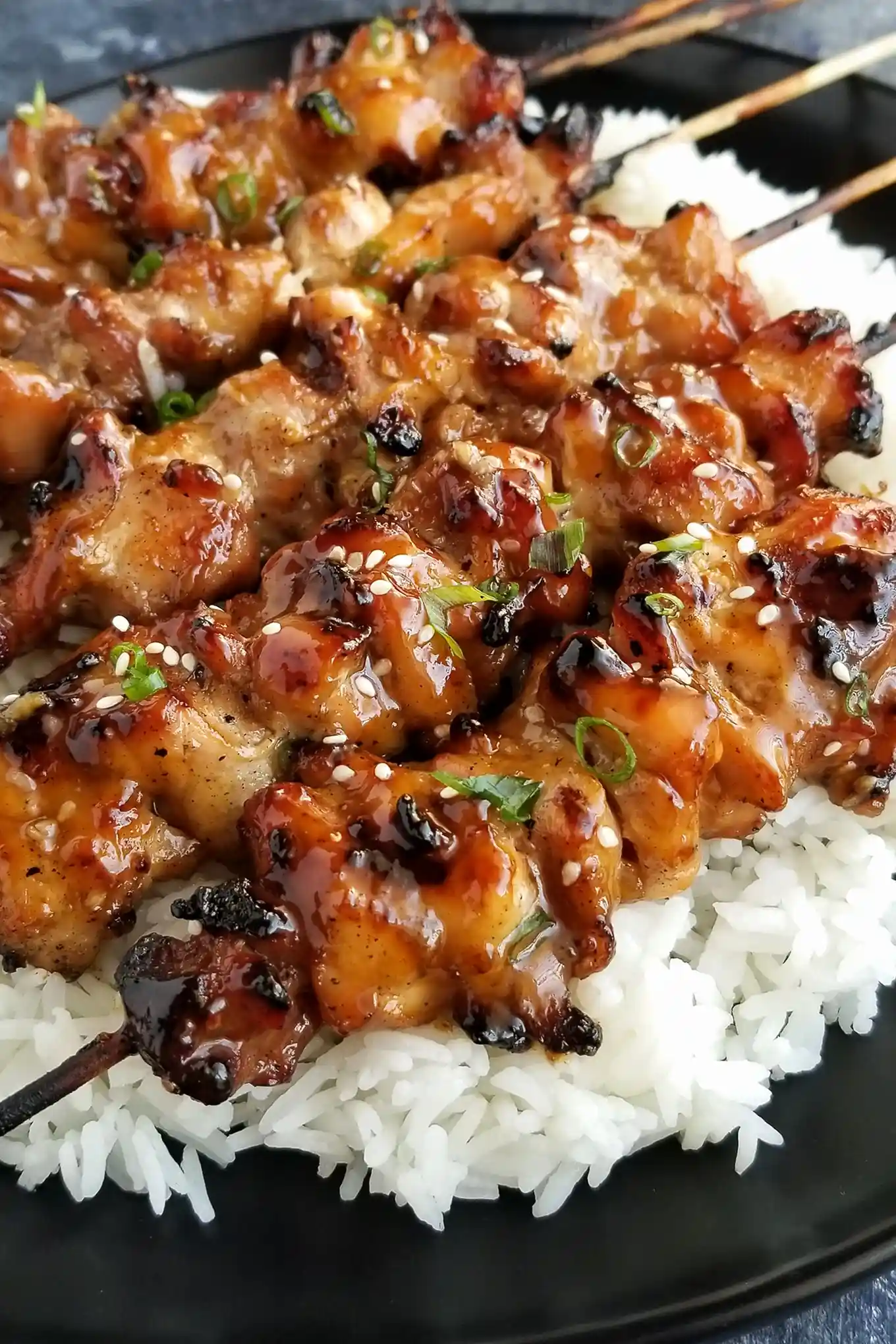
This recipe features tender chicken pieces marinated in a sweet and savory glaze, then grilled for a charred finish. It is a practical meal that pairs perfectly with steamed rice and fresh vegetables.
List of ingredients
- 2 lbs. chicken thighs (or breasts) – cut into 1″ cubes for even cooking.
- 2 tbsp cornstarch – used to thicken the glaze.
- 1 cup water – the base for the sauce.
- 1/3 cup brown sugar – adds sweetness and color.
- 1/3 cup soy sauce – low sodium is recommended for flavor balance.
- 2 cloves garlic – minced finely.
- 1 tbsp rice vinegar – provides necessary acidity.
- 1/2 tbsp fresh ginger – minced to add a zesty note.
- 1 tbsp honey – creates a sticky texture.
- 1/2 tsp sesame oil – adds a nutty aromatic quality.
- 8 skewers – for holding the chicken.
- Sesame seeds – for optional garnish.
- Chopped green onion – for optional garnish.
step-by-step instructions
- Prepare the sauce: Combine cornstarch and water in a small bowl. In a medium saucepan, add the remaining sauce ingredients and the cornstarch mixture. Stir frequently and bring to a simmer until the sauce thickens and turns dark brown. Remove from heat and let it cool completely, using the fridge to speed up the process.
- Marinate the meat: Place the cubed chicken in a large ziplock bag. Pour half of the cooled sauce over the chicken and shake gently to coat. Marinate in the refrigerator for at least 30 minutes. Keep the remaining sauce separate for basting.
- Assemble skewers: Thread the marinated chicken onto the skewers. Heat your grill to medium heat.
- Grill the chicken: Place skewers on a lightly oiled grill. Turn them every 3-4 minutes until the chicken reaches an internal temperature of 165 degrees, which usually takes 20-30 minutes. Baste with the remaining teriyaki sauce during the last few turns.
- Finish and serve: Remove skewers from the grill. Garnish with chopped green onion and sesame seeds if desired.
Essential Preparation Tips
Soak Wooden Skewers Before Use
If using bamboo or wooden skewers, soak them in water for at least 30 minutes before threading the meat. This prevents the wood from burning or catching fire on the hot grill. It ensures the skewers remain intact throughout the cooking process.
Ensure Consistent Chicken Cube Sizes
Cut the chicken into uniform 1-inch cubes to ensure every piece cooks at the same rate. Irregular sizes lead to some pieces being overcooked and dry while others remain raw. Consistent sizing allows for a predictable grilling time.
Use a Digital Meat Thermometer
Relying on visual cues can be misleading when grilling. Use a digital thermometer to confirm the internal temperature has reached 165 degrees Fahrenheit. This guarantees the chicken is safe to eat without overcooking it.
Allow the Sauce to Cool Fully
Never pour hot sauce directly onto raw chicken in a plastic bag. Cooling the sauce first prevents the chicken from partially cooking and keeps the marinade stable. Chilling the sauce also helps it adhere better to the meat.
Ingredient Substitutions and Alternatives
Replacing Rice Vinegar
If rice vinegar is unavailable, white wine vinegar is a suitable substitute. It provides a similar level of acidity to balance the sugar in the glaze. Avoid using distilled white vinegar as it can be too harsh for this flavor profile.
Using Ground Ginger Instead of Fresh
Ground ginger can be used if fresh root is not available. Use half the amount of ground ginger compared to the fresh measurement, as the dried powder is more concentrated. Fresh ginger provides a brighter, more pungent flavor.
Soy Sauce Alternatives for Dietary Needs
Tamari or coconut aminos can be used as a replacement for soy sauce. Tamari provides a similar rich taste, while coconut aminos offer a slightly sweeter, lower-sodium alternative. Adjust the salt content if using coconut aminos.
Substituting Honey for Other Sweeteners
Maple syrup or agave nectar can replace honey for a different sweetness profile. Honey is preferred for its ability to create a sticky, glossy glaze on the grill. Ensure the substitute has a similar viscosity for best results.
Grilling Techniques for Better Results
Managing Medium Heat Levels
Maintain a steady medium heat to avoid burning the sugars in the teriyaki sauce. If the grill is too hot, the outside will char before the center is cooked. If too low, the chicken will steam rather than sear.
Preventing Sauce Flare-ups
Teriyaki sauce has high sugar content, which can drip and cause flames on the grill. To minimize flare-ups, clean the grill grates thoroughly and keep a spray bottle of water nearby. Baste sparingly during the final minutes.
Optimal Basting Timing
Wait until the chicken is nearly cooked through before applying the final layers of sauce. Applying sugar-heavy glazes too early leads to burnt, bitter exteriors. The last 5-10 minutes are ideal for creating a caramelized crust.
Oiling the Grill Grates
Apply a light layer of neutral oil to the grill grates using a paper towel held by tongs. This prevents the chicken from sticking and tearing when you turn the skewers. A clean, oiled surface produces better sear marks.
Indoor Cooking Alternatives
Using the Oven Broiler
If you do not have a grill, use the oven broiler on high. Place skewers on a parchment-lined baking sheet and broil for 5-8 minutes per side. Monitor closely to prevent the glaze from burning.
Air Fryer Adaptation
Place skewers (or loose cubes) in the air fryer basket at 400 degrees Fahrenheit. Cook for 10-12 minutes, shaking or turning halfway through. Baste with the remaining sauce in the final 2 minutes of cooking.
Stovetop Grilling with a Cast Iron Pan
Use a cast iron grill pan over medium-high heat for a similar effect to an outdoor grill. Sear the chicken for 4-5 minutes per side. This method provides excellent heat retention and a deep char.
Serving Suggestions and Pairings
Pairing with Grains
Serve these skewers over a bed of steamed jasmine or basmati rice to soak up extra sauce. Brown rice or quinoa provide heartier, nuttier alternatives. For a more traditional feel, try short-grain sushi rice.
Complementary Fresh Salads
A chilled cucumber salad with rice vinegar and sesame oil cuts through the richness of the teriyaki. A creamy coleslaw or a simple shredded cabbage salad also provides a refreshing crunch. These sides balance the sweet glaze.
Incorporating Steamed Vegetables
Pair the chicken with steamed broccoli, bok choy, or snap peas for a complete meal. Toss the vegetables in a small amount of sesame oil and salt. This adds color and nutritional value to the plate.
Adding Vegetables to the Skewers
Thread chunks of red bell pepper, red onion, or pineapple between the chicken pieces. Ensure the vegetables are cut to the same size as the chicken for even cooking. Pineapple adds a tropical sweetness that complements teriyaki.
Storage and Reheating Advice
Refrigerating Leftovers
Store leftover chicken skewers in an airtight container in the refrigerator for up to 3-4 days. Ensure the chicken is completely cooled before sealing the container to prevent moisture buildup. This keeps the meat from becoming mushy.
Freezing Cooked Chicken
Cooked teriyaki chicken can be frozen for up to two months. Wrap the skewers tightly in foil and place them in a heavy-duty freezer bag. Thaw overnight in the refrigerator before reheating.
Best Reheating Methods
Reheat skewers in the oven at 350 degrees Fahrenheit for 10 minutes to maintain the texture. If using a microwave, use a medium power setting and add a teaspoon of water to prevent the glaze from drying out. Avoid overcooking during reheating to keep the meat juicy.
Storing Extra Sauce
The homemade teriyaki sauce can be stored in a glass jar in the fridge for up to two weeks. Gently shake or stir the sauce before using, as cornstarch may settle at the bottom. It can also be used as a marinade for other proteins.
Troubleshooting Common Issues
Dealing with Thin Sauce
If the sauce does not thicken during the simmering process, simmer it for an additional 2-5 minutes. If it remains thin, mix an extra teaspoon of cornstarch with water and stir it in. Heat until the mixture bubbles and coats the back of a spoon.
Preventing Dry Chicken Breast
Chicken breasts dry out faster than thighs. If using breasts, reduce the grilling time slightly and monitor the internal temperature closely. Remove them from the heat immediately upon reaching 165 degrees.
Fixing Burnt Glaze
If the glaze burns, gently scrape off the charred bits with a knife before serving. To prevent this next time, lower the grill heat or baste less frequently. Ensure you are using a medium heat rather than high.
Managing Over-Salty Flavor
If the sauce tastes too salty, add a small amount of honey or brown sugar to balance the flavor. Adding a splash of water or a squeeze of lime juice can also mellow the intensity. Always taste the sauce after it has thickened.
Frequently Asked Questions
Can I use chicken breasts instead of thighs?
Yes, chicken breasts can be used, though they are leaner and can dry out more quickly. To keep them juicy, ensure you do not overcook them and consider a slightly shorter marinating time.
How long can the chicken marinate in the sauce?
For best results, marinate for 30 minutes to 4 hours. Marinating for too long (over 24 hours) can cause the acids in the vinegar to break down the meat fibers, making the texture mushy.
Do I need to oil the grill?
Yes, oiling the grill is highly recommended. Teriyaki sauce contains sugars that stick to metal surfaces, and oiling prevents the meat from tearing when you flip the skewers.
Can I make the sauce in advance?
Yes, the sauce can be made several days ahead of time. Store it in an airtight container in the refrigerator and bring it to room temperature before using it as a baste.
What if I don’t have a ziplock bag?
A glass bowl or a stainless steel container with a tight lid works perfectly. Ensure the chicken is fully submerged in the marinade and turn the pieces occasionally to ensure even coating.
Print
Grilled Teriyaki Chicken Skewers with Homemade Glaze
- Total Time: 90 minutes
- Yield: 4 people 1x
- Diet: General
Description
The most delicious marinated teriyaki chicken grilled to perfection and finished with a delicious teriyaki sauce. Serve with a sprinkle of sesame seeds, fresh chopped green onions over steamed rice.
Ingredients
- 2 lbs. chicken thighs (or breasts), cut into 1″ cubes
- 2 tbsp cornstarch
- 1 cup water
- 1/3 cup brown sugar
- 1/3 cup low sodium soy sauce
- 2 cloves garlic, minced
- 1 tbsp rice vinegar
- 1/2 tbsp fresh ginger, minced
- 1 tbsp honey
- 1/2 tsp sesame oil
- 8 skewers
- sesame seed
- chopped green onion
Instructions
- Step 1: Combine cornstarch and water in a small bowl. In a medium saucepan, add remaining ingredients along with the cornstarch/water mixture. Stirring frequently, bring sauce to a simmer. Cook until sauce lightly thickens. Once sauce has thickened up, remove from heat and let cool completely.
- Step 2: Once the sauce is completely cooled, place cubed chicken in a large ziplock bag. Pour half of the sauce over the chicken and gently shake to coat chicken. Let chicken marinate in the fridge for at least 30 minutes. Place remaining sauce aside for later.
- Step 3: When the chicken is done marinating, place your chicken on skewers and heat the grill to medium heat.
- Step 4: Once the grill is hot, place skewers on lightly oiled grill. Turn the skewers every 3-4 minutes until the chicken is cooked through (internal temp 165 degrees), about 20-30 minutes. During the last few turns baste with remaining teriyaki sauce.
- Step 5: Remove skewers from grill and serve with chopped green onion and a sprinkle of sesame seeds (optional).
Notes
Soaking your skewers in water will help to prevent burning while grilling!
- Prep Time: 60 minutes
- Cook Time: 30 minutes
- Category: Main Course
- Method: Grilling
- Cuisine: Asian
Nutrition
- Serving Size: 2 skewers
- Calories: 390 kcal
- Sugar: 22 g
- Sodium: 1291 mg
- Fat: 10 g
- Saturated Fat: 2 g
- Unsaturated Fat: 5 g
- Trans Fat: 0.04 g
- Carbohydrates: 28 g
- Fiber: 0.3 g
- Protein: 46 g
- Cholesterol: 215 mg
Keywords: grilled teriyaki chicken skewers, teriyaki chicken kabobs